Blog Archives
Rabbi, Your Cleavage is Showing


Rabbi, Your Cleavage Is Showing is a memoir about becoming whole while being told, again and again, to make yourself smaller. Michal Mendelsohn begins with a lonely childhood in New York, where family silence, emotional distance, books, and music shape her inner life. “Books nourished my soul, much as music did,” she writes, and that line captures one of the book’s steady currents: even when people fail her, language, learning, and song keep opening doors.
The book then widens into a vivid coming-of-age story in Israel. Mendelsohn’s arrival during wartime, her kibbutz life, her struggle to learn Hebrew, and her service as a lone soldier in the IDF all give the memoir an urgency that feels lived-in rather than polished for effect. She writes about fear, hunger, illness, homesickness, danger, and belonging with the same matter-of-fact candor, which makes those chapters some of the most absorbing in the book. Israel isn’t treated as a backdrop. It’s the place where she starts to recognize her own toughness.
At its center, though, this is the story of a woman entering the rabbinate when the room was still arranged for men. Mendelsohn doesn’t frame her path as symbolic from a distance. She brings us into interviews, classrooms, pulpits, hospital rooms, funerals, gossip-filled hallways, and board politics. The title moment, when someone tells her, “Rabbi, your cleavage is showing,” becomes more than an awkward comment. It stands in for the constant scrutiny placed on a woman whose body, voice, clothing, authority, and ambition are treated as public property.
What makes the memoir engaging is Mendelsohn’s voice. She can be blunt, funny, wounded, reflective, and argumentative, sometimes all on the same page. She’s especially strong when writing about the daily work of being a rabbi: the teaching, the rituals, the pastoral care, the strange requests, the emotional weight, and the unexpected comedy. The later chapters, especially those on Jewish women, feminism, and “firsts,” give the personal story a broader context without losing the conversational feel that runs through the book.
By the end, Rabbi, Your Cleavage Is Showing feels like a memoir of vocation as much as survival. Mendelsohn isn’t only recounting what happened to her. She’s asking what it means to build a life of service when the institutions you love don’t always know how to love you back. “This is my story, and mine alone,” she says early on, and the book honors that promise. It’s intimate, opinionated, searching, and deeply rooted in the belief that faith is most alive when it’s wrestled with honestly.
Pages: 312 | ASIN : B0GML87Y17

Rabbi, Your Cleavage is Showing


Rabbi, Your Cleavage Is Showing follows Mikki Mendelsohn’s life from a cold, silent childhood on the twenty-sixth floor of a Manhattan hotel, through a sudden flight to Israel during the 1967 war, where she served as a lone soldier in the paratroopers’ entertainment corps, to her groundbreaking ordination as one of the first female rabbis in America. It’s a story about the fierce, non-linear search for community by someone who was routinely made to feel like an outsider, whether by her own parents or by a male-dominated religious establishment. She simply didn’t fit the mold. Mendelsohn unspools her memories with a blunt, refreshing honesty, offering a rare glimpse into the grit required to shatter glass ceilings when the rest of the world is desperately trying to keep them intact.
What I liked most about the narrative is how beautifully the writing captures the raw friction of her early years without ever sliding into self-pity. Her recollections of a smoke-filled childhood, where love was a scarce commodity and locking herself in a bathroom to read War and Peace was a survival mechanism, carry a haunting, sensory resonance. There’s a sharp, rhythmic burstiness to her prose when she describes the shift from Manhattan’s relative luxury to the dusty realities of kibbutz life. The transition is jarring. I was particularly moved by her account of seeing a blue Auschwitz tattoo on a waitress’s arm in a Jerusalem café, a moment she writes about with a quiet, devastating reverence that completely sidesteps melodrama. Her style alternates between the brisk pace of a seasoned storyteller and the rich, reflective pauses of a poet, allowing the reader to feel the literal heat of a Sinai sandstorm or the terrifying silence of a trench during an unexpected mortar attack.
The ideas driving the latter half of the book are equally compelling, particularly her nuanced examination of faith intersecting with a deeply entrenched systemic misogyny. She doesn’t filter the indignities she faced as a female pioneer in the rabbinate, recounting everything from petty comments about her appearance to a harrowing assault by a senior colleague with a stark, unsettling clarity. It’s heavy material. Yet, what prevents the book from becoming an unremitting chronicle of trauma is her brilliant deployment of Yiddish humor and an unyielding devotion to the core text of her heritage. When she juxtaposes the absurdity of working as a go-go dancer or delivering singing telegrams with her ultimate desire to teach Torah, she reveals a remarkably resilient spirit. I appreciate that she acknowledges her own flaws and early naivete, making her critique of the religious establishment feel balanced, authentic, and profoundly human rather than merely bitter.
Rabbi, Your Cleavage Is Showing functions as an intimate and beautifully textured look at a life forged through sheer resilience and a refusal to be compartmentalized. Mendelsohn’s voice is assured and warm, carrying the wisdom of someone who has wrestled with both holy scriptures and the messy, often cruel realities of human nature. This book is a wonderful fit for anyone interested in feminist history, Jewish studies, or simply a beautifully told story of personal reinvention. It reminds us that spiritual leadership isn’t about conforming to a pre-packaged mold, but about having the courage to show up exactly as you are.
Pages: 295 | ASIN : B0GKZCKML3
Little Edna’s War

Little Edna’s War follows the life of Edna Szurek, a young girl whose world collapses when the Germans invade Warsaw in 1939. The book moves through her early childhood in a loving Jewish family, the terror of the bombings, the creation of the Warsaw Ghetto, and the years she survives by hiding, disguising herself, and relying on her wits. It traces her shifting identities, her impossible choices, and her struggle to stay alive as the city around her crumbles. By weaving Edna’s memories with historical detail, the book creates a vivid, painful, and hopeful record of one child’s endurance during the Holocaust.
This was a very emotional book for me. The writing is direct and heartfelt, and I felt pulled into Edna’s world with a force that surprised me. The author keeps the language clean and clear, which makes the fear and confusion in those early scenes even more powerful. I kept pausing, letting the weight of simple moments sink in. A child worrying about getting to a birthday party on time. A sister brushing dust from her eyes after a bombing. A mother trying to hide her terror during Shabbat dinner. These small pieces made the horror feel close and personal, and I found myself dizzy from potent emotions more than once. The story isn’t dressed up with complicated language. It just lets the emotional truth stand on its own, and that honesty worked on me.
I found myself thinking a lot about how identity shifts under pressure. Edna changes names and roles. She becomes a Catholic girl, then a street kid, then a resistance courier. The writing never turns this into a grand point. It shows how a child adapts because she has no other choice. That quiet, matter-of-fact tone made the whole journey feel even more heartbreaking. The book also captures how memory can be both a lifeline and a wound, and I felt that each time Edna reached for a song her mother once sang or tried to remember something about the home she lost. I kept wanting to reach into the pages and steady her. The storytelling brings out that kind of protective instinct.
I was moved by both the writing and the spirit behind it. The book is written with deep care, and you can feel the author’s love for Edna in every scene. I’d recommend this book to readers who want a personal lens on the Holocaust, especially those who connect more with intimate, character-driven stories than with broad historical overviews. It’s also a strong choice for anyone who wants to understand how children survive the unthinkable. It’s painful, yes, but also full of strength, and I’m glad I read it.
Pages: 544 | ASIN : B0FZX3JHYG
Straight Outta Skokie
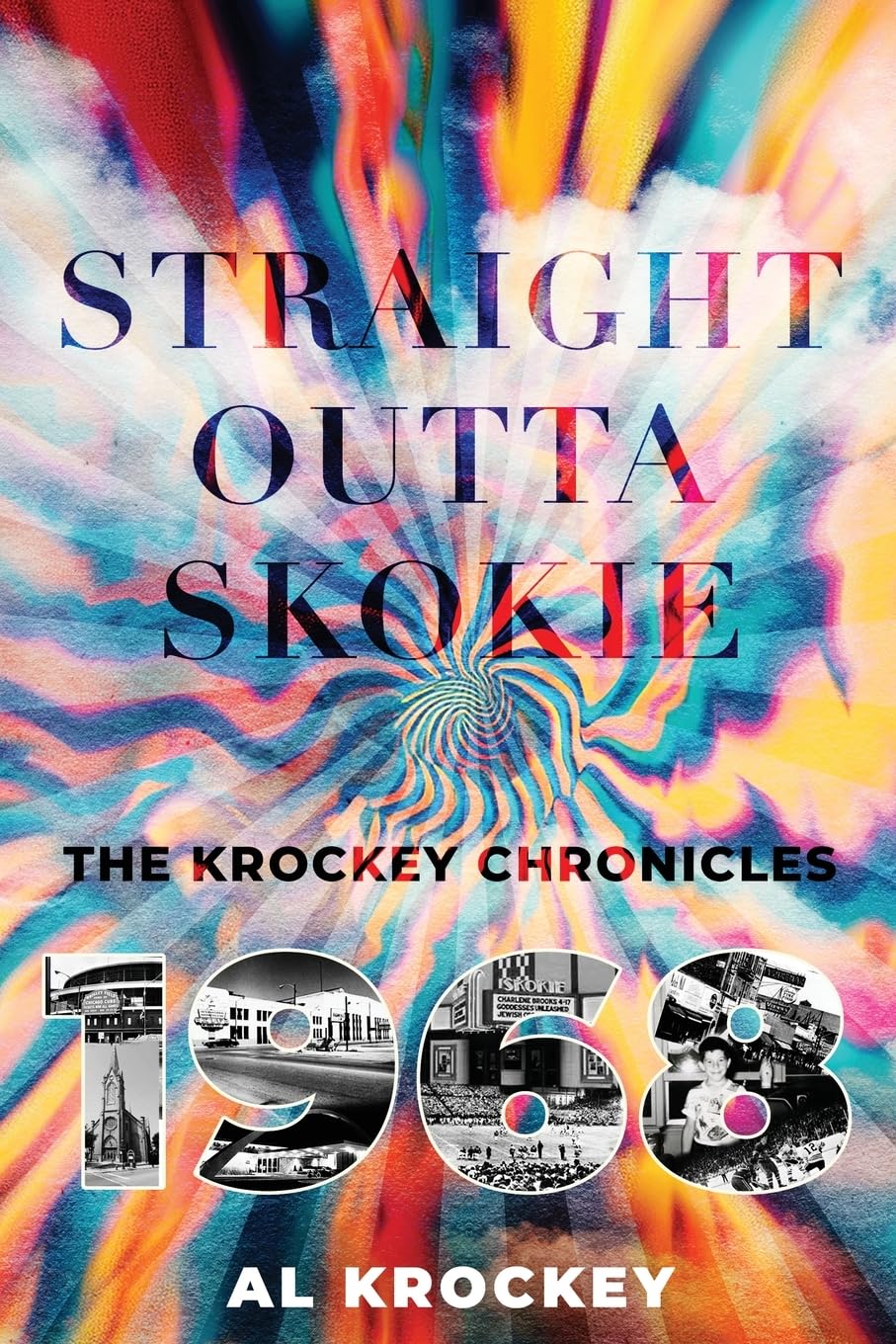
Straight Outta Skokie is a memoir that follows Al Krockey through a pivotal year in his life, starting in 1968 and echoing backward to the Chicago and Skokie of his youth. The book moves from his pandemic-era reflections to vivid scenes of adolescence and early adulthood filled with deli counters, bowling alleys, pool halls, protests, street hustles, and the ever-present soundtrack of soul and rock. It captures a moment in American history when neighborhoods felt small and the world around them shook from events far bigger than anyone could see coming. The pages drift through family struggles, the thrill of hustling souvenirs at Wrigley Field, the chaos after Dr. King’s assassination, and the budding counterculture that tugged him into adulthood.
The writing has a loose, conversational rhythm that made me feel like he was talking right to me. Sometimes the stories rushed forward, squeezing decades into a few pages, and sometimes they slowed into tiny moments that were emotionally resonant. I enjoyed how grounded it all felt. The details about Skokie diners, late-night runs to Jack’s, Maxwell Street blues drifting in the air near the hot dog stands, and the characters he knew from the ballpark made the world feel lived in and real. The way he told stories about scraping together money, wandering from job to job, and learning from the people around him made me root for him without even noticing I was doing it.
I also felt a weight in the way the book handled the darker turns. The shock of Dr. King’s assassination, the violence on the West and South Sides, and the way Krockey realized how insulated his own community was hit me right in the gut. There was a raw honesty there that surprised me. He didn’t try to wrap those moments in pretty language. He just let them sit. And that directness made me trust him as a narrator. There were times when the book meandered, or when the slang and side stories spun around a bit, but I didn’t mind. It felt like hanging out with someone who has lived a lot and is eager to tell you everything because each story still means something to him.
If you like memoirs that feel like a long, winding conversation full of humor, grit, music, and heart, then this book will hit the spot. It is especially fitting for readers who enjoy stories about Chicago history, coming-of-age in the late sixties, or simply digging into a life shaped by both ordinary moments and historic upheavals. It would also resonate with anyone who finds comfort in nostalgia or who grew up in a neighborhood that felt like its own little planet.
Pages: 281 | ASIN : B0FTTLJ6L3
Little Boy, I Know Your Name: A Second-Generation Memoir from Inherited Holocaust Trauma
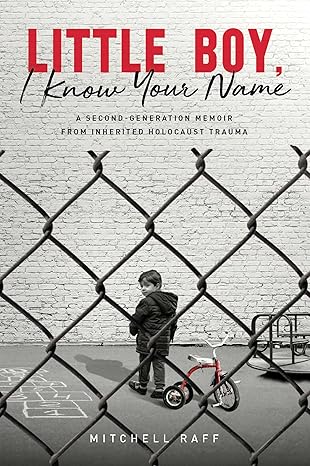
Readers looking for a book that hits you right in the feels and leaves you thinking long afterward, will not want to miss Little Boy, I Know Your Name by Mitchell Raff. This memoir dives into the author’s life, showing how inherited trauma from the Holocaust shaped him and the people around him. It’s raw, emotional, and brutally honest, painting a picture of a childhood full of pain, survival, and moments of unexpected love.
From the first chapter, this book pulls no punches. Raff shares heartbreaking stories of his abusive mother and the chaos that surrounded his young life. One scene that will stick with me forever is when his mom threw him out of the house into the cold night. It’s gut-wrenching, and I couldn’t help but feel for the little boy he was. But there’s balance in the way he writes. He also talks about the kindness and stability he found with his uncle and aunt, who stepped in as surrogate parents. Their love gave the story some much-needed light, and I found myself rooting for them just as much as for Raff.
The focus on his childhood trauma is the primary focus of the book, and I found myself wishing for more information about his father’s struggles or his adult life. But maybe that’s the point, though. It really allows readers to sit with the weight of everything he went through. A moment I remember was when his therapist called him a “well-dressed poser.” It was a wake-up call for Raff and, honestly, a moment that made me reflect on my own life, too. We all wear masks, don’t we?
What really makes this book special to me is how it tackles inherited trauma. Raff’s family, like so many Holocaust survivors, tried to bury the pain. But it seeped through in ways they couldn’t control. It’s these quiet and powerful memories that make the book more than just a story about one man’s struggles.
By the time I finished, I felt a mix of heartbreak and hope. The ending, where Raff reflects on his son Joshua and the possibility of breaking free from the cycle of pain, strikes just the right note. It’s not a happily-ever-after, but it’s real, and it left me believing healing is possible.
I’d recommend Little Boy, I Know Your Name to anyone who loves memoirs that dig deep. If you liked The Glass Castle or Night, Raff’s writing will resonate with you. It’s not a breezy read, but it’s the kind of book that reminds you of the strength it takes to confront the past and move forward.
Pages: 235 | ASIN : B0CLL22MMG
The Importance of Perspectives

You Are Allowed: A Story of Finding Where You Belong, Not Where You Began shares your story of searching for your birth mom while exploring your own emotions and memories of growing up and how it has impacted your personal identity. Why was this an important book for you to write?
It was an incredibly important book to write because I was feeling lost and without a true sense of belonging. Living that way, without roots or a solid foundation, is incredibly difficult. Writing this book helped me process those feelings and begin to find my own place in the world. Ultimately, I found my sense of belonging within the pages of my memoir—within myself.
I appreciated the candid nature with which you told your story. What was the hardest thing for you to write about?
I think the whole book was difficult to write. Initially, I started writing from the perspective of a victim—being adopted made me feel like I had been abandoned. But as I wrote, the manuscript led me to face some of the hardest stories of my life. When I began, I never imagined I would share such intimate parts of my journey, but doing so allowed me to forgive and release. By the time I finished, I was grateful for my adoption. I let go of judgment and found internal peace and freedom.
What were some ideas that were important for you to share in this book?
One of the most important ideas I wanted to share is the importance of perspectives. We all see things differently, and I believe this is an opportunity for connection between people. I’m sure my parents, my birth mom, and my sister all have very different views of what really happened with my adoption. But that’s the beauty and freedom that writing gives us—space to explore our own perspectives. Another key theme for me was the complexity of the relationship between a mother and her daughter, particularly being both a daughter and a mother myself. That dual experience really shaped my writing.
What do you hope is one thing readers take away from your story?
I hope readers understand that they have the power to reflect on their own lives, release past hurts, and experience rebirth. But most importantly, I want them to take away that it’s essential to forgive themselves first, love themselves first, and respect themselves first.
Author Links: GoodReads | Facebook | Website | Freegiftfromodelia | Amazon
Esther, a young woman living in a kibbutz in the south of Israel, undertakes a journey to find her biological mother who abandoned her at birth in Paris. She is fueled with the belief that reuniting with her birth mother will provide the answers she’s been searching for and will fill the void she’s been feeling her entire life.
In careful and precise writing, You ARE Allowed takes the reader through turbulent pieces of Esther’s life journey: her childhood in France, a relationship with an Israeli woman that exposes her to a world of crime and danger, an unplanned pregnancy, and a seemingly routine life in Israel filled with secrets and old wounds.
Survival, Hope, and Resilience

The Lilacs I Once Knew: Friddie’s Poems is more than a collection of poetry; it is the story of a woman who was unjustly impressed and her story of survival against inhumane conditions. What inspired you to share her works with the world?
The Lilacs I Once Knew: Friddie’s Poems is inspired by a deep commitment to honoring Friddie’s incredible journey of resilience and hope amidst the horrors of unjust imprisonment. Her powerful story of survival against inhumane conditions needed to be shared to give voice to the silenced and highlight the enduring human spirit. By sharing her works, I aim to preserve her legacy and shed light on the historical atrocities she endured.
How did you go about deciding what photos and quotes to include along with Friddie’s poetry?
Deciding which photos and quotes to include with Friddie’s poetry involved meticulous curation to ensure each element complemented and enhanced the emotional depth of her poems. I selected images that visually represent the themes of her poetry, such as survival, hope, and resilience. The quotes were chosen for their ability to encapsulate the essence of Friddie’s experiences and to provide context, creating a powerful and immersive reading experience.
What do you hope is one thing readers take away from Friddie’s poetry collection?
I hope readers take away a profound sense of empathy and awareness of the historical injustices faced by Friddie and countless others. Through her poetry, I aim to inspire readers to recognize the strength and resilience of the human spirit in the face of unimaginable adversity. Additionally, I hope Friddie’s story encourages reflection on the importance of preserving and sharing personal histories to ensure that such stories are never forgotten.
Are there more poems or writings from Friddie that you plan to publish in the future?
Yes, I plan to publish more of Friddie’s poems and writings in the future, but for a different audience. While in prison, Friddie also wrote books and poems for children, each carrying a greater message about pursuing justice, kindness, and dealing with adversity. I am currently working on this project to ensure that her inspiring words reach a broader audience and continue to impart important lessons and values.
Author Links: GoodReads | Facebook | Website | LinkedIn | Amazon
At 18, Friddie married a charming, charismatic scientist named Freddy; but their union was tragically short.
Just two weeks after the wedding, Freddy disappeared, and Friddie was unjustly accused of a crime she had never committed. She spent nine years in a Romanian prison, followed by four years in a communist labor camp.
Despite the harsh and inhumane conditions, Friddie found solace in writing poetry.
Friddie’s poems reflect her journey through life, imprisonment, and hope. They speak of joy, loss, fear, resilience, and the indomitable human spirit.
After her death, her family discovered hundreds of letters and postcards where Friddie shared her poems with her cousin, Aaurica.
Friddie’s story was first told in the award-winning novel Where the Lilacs Bloom Again(StoryTime World, 2022). Now, her powerful words are brought to life in this collection.
The Lilacs I Once Knew: Friddie’s Poems

The Lilacs I Once Knew: Friddie’s Poems is a captivating poetry collection with a compelling backstory. Roni Rosenthal meticulously restored and translated these works to share Friddie’s tale with the world—an account of a talented Romanian poet unjustly imprisoned during the war and communist era.
Each poem in the collection breathes life into Friddie’s emotions, evoking a spectrum of feelings such as hope, love, betrayal, and misery. One of the most poignant sections depicts Friddie’s journey of healing and self-forgiveness. Her profound words create a sense of shared healing with the reader. Through her reflections and vivid contrasts of nature and war, readers gain a renewed appreciation for life. The collection’s variety of rhyming patterns and unique structural elements keep readers engaged and curious throughout. Roni Rosenthal’s translation skillfully preserves the original message and rhythm of the poems, ensuring their impact remains intact. The book’s design complements Friddie’s touching words beautifully. Impactful images, quotes, and photos of Friddie and her family are thoughtfully placed throughout the book, enhancing the emotional resonance of each section and bringing Friddie’s story to life.
The Lilacs I Once Knew is heartbreaking, promising, and beautiful. It honors the memory of one of the many victims of inhumanity and serves as a testament to the enduring power of poetry and resilience.
Pages: 167 | ASIN : B0D9RK929F