Blog Archives
In Vitro


M.J. Kuhar’s In Vitro is a medical drama built around one of the most intimate hopes a couple can carry: the hope of becoming parents. The novel opens with McArthur Fertility Institute already under investigation, then moves back two months to show how the crisis began. That structure gives the story an immediate sense of tension, but the heart of the book is personal. Evie and Leon Coleman’s longing for a baby, Joyce Porter’s devotion to her patients, and the quiet pressure inside a prestigious fertility clinic all come together in a story about trust, ambition, consent, and the emotional weight of reproductive medicine.
Joyce is the character who holds the book together. She’s smart, compassionate, anxious, ambitious, and deeply human in the way she second-guesses herself while still trying to do right by her patients. Her work at McArthur puts her in the middle of ethical questions that grow more serious with every chapter, but Kuhar also makes room for her marriage to Bill, her friendship with Sally, her attraction to Dominique, and her ongoing struggle to be heard in a workplace shaped by hierarchy and ego. The smaller domestic details, like phone calls, coffee, cats, and rushed lunches, make Joyce feel like a real person rather than just the doctor at the center of a scandal.
The strongest parts of the novel are the scenes where medicine and emotion collide. Kuhar clearly understands the procedures, the language, and the rhythms of a fertility clinic, but the book stays grounded in the people whose lives are changed by those procedures. Evie and Leon’s early tenderness gives the story its emotional anchor, especially when Leon tells her, “Evie, I love you. No matter what.” That line captures the couple’s sweetness while also foreshadowing how much their love will be tested once the clinic’s secrets begin to surface.
The darker thread of the book comes through Owen Hicks, whose obsession with reputation and success poisons the culture around him. His command to “Stay the course and keep those pregnancy rates up” says a lot about the world he’s created, one where numbers matter more than people. Kuhar builds the tension steadily as Joyce begins to understand that the problems at McArthur aren’t isolated mistakes. They’re part of a larger pattern of abuse, secrecy, and institutional self-protection. The result is a story that reads like a workplace drama, a medical mystery, and a moral reckoning all at once.
In Vitro is a compassionate and accessible novel about infertility, medical ethics, and the courage it takes to challenge powerful people. It gives readers the emotional reality of IVF from several angles: the couples who want children, the doctors who want to help, and the administrators who want the clinic’s success story to stay intact. Kuhar’s conversational style keeps the story easy to follow even when the stakes get heavy, and the ending gives the characters space to reckon with what happened and imagine a life beyond McArthur. It’s the kind of book that invites readers to care about the science because they already care about the people.
Pages: 332 | ASIN : B0G1BKZQMY

Wilbur’s Heart


Wilbur’s Heart begins with a premise that sounds like a dare and then keeps following it: a failing patient receives a pig-heart transplant, a bold Boston surgeon teams up with an eccentric New Hampshire device crew to make xenotransplantation viable, and what starts as a medical long shot sprawls into a story about risk, attachment, politics, romance, and the unnerving possibility that an organ may carry more than tissue. By the time the novel reaches its late turns, the book has braided together operating-room tension, public controversy, and the strange afterlife of Wilbur himself with a confidence that is half earnest, half gleefully audacious.
I read it expecting a straightforward medical thriller and got something more oddball and more animated: a novel with scalpels and immunosuppressants in one hand and a streak of mischief in the other. The dialogue often has an old-fashioned, talky vigor; characters banter, flirt, needle one another, and occasionally sound larger than life, but that expansiveness is part of the book’s charm. I was especially pulled in by the way the novel keeps returning to the emotional absurdity of the central act: not merely “can this surgery work?” but “what does it do to the people who consent to it, perform it, defend it, fear it, or begin to believe in it?” When the book leans into cellular-memory eeriness and Wilbur’s lingering presence, it acquires a pleasantly uncanny shimmer.
I also admired the book’s refusal to become antiseptic. For all its technical talk, it is not bloodless; it is emotional, sometimes sentimental, sometimes wry, and willing to be a little pulpy in the best sense. The final stretch won me over because it commits fully to its own peculiar weather: high-stakes surgery, grief, political fallout, romantic crosscurrents, and a last note that is genuinely strange rather than neatly explanatory. The novel throws a lot onto the table, and not every subplot lands with equal force. But Wilbur’s Heart has a kind of unabashed narrative appetite, and I found that invigorating.
I’d hand this to readers who enjoy medical thrillers, speculative thrillers, science-inflected fiction, and character-driven suspense with a taste for ethical provocation and a dash of romantic turbulence. It should especially appeal to people who like medicine in fiction not as wallpaper but as the engine of consequence. In spirit, it feels closer to Robin Cook than to Michael Crichton: less icy, less purely mechanistic, and more interested in the human ache and eccentricity around the science.
Pages: 263 | ASIN : B0FLVS2TVN

The Pharmaceutical Industry

Poison Pill centers around a hospital internist who discovers a common thread between the cases of two young patients who present with serious health issues. What was the inspiration for the setup of your story?
Believe it or not, the ultimate inspiration for this novel goes all the way back to a single day in medical school. During my second-year pharmacology course, there was one lecture that departed from the usual lectures on pharmaceutical drugs. It presented an introductory overview of major herbal supplements, not to turn us medical students into herbal experts, but to let us know what else is out there. That, in turn, got me curious about the parallel industry of herbal medicine and the differences between that industry and the pharmaceutical industry. One of the biggest differences is related to regulation: pharmaceutical products undergo a stringent approval process through the Food and Drug Administration (FDA), yet the FDA treats herbal supplements the same way they do foods, so that regulations for those products are more lax.
Many years later, when it came time for me to write my third Mark Lin medical thriller, I knew I had to touch upon these two topics. Plenty of past medical thrillers have already tackled the pharmaceutical industry alone, and few have taken on herbal medicine. As far as I know, there isn’t another medical thriller where both the herbaceutical and pharmaceutical industries are presented in parallel within the same novel, in order for readers to compare and contrast the two. I like to think of myself as a trailblazer with this type of story in the genre.
Can you share with us a little about the research required to get the medical aspects of your storyline just right?
With any medical thriller I write, my research involves reviewing facts about the medical conditions I feature in the story, plus stuff about nonmedical topics that are integrated into the plot. For Poison Pill, that means ensuring no factual inaccuracies related to, for example, kidney failure and atherosclerosis, as well as certain procedures with the FDA. Also, I took a look at where things stood with weight loss medications, so that incorporating references to Ozempic and Wegovy in this novel grounded the story in realism and achieved the feeling that the story’s events could very well come true. Interestingly enough, the fictional pharmaceutical weight loss drug and its manufacturer in my novel, Naxipil by Tixerix Pharmaceuticals, is an oral GLP-1 medication, and this comes on the heels of real-life oral weight loss medications hitting the market to replace injectable weight loss drugs.
What is one thing you hope readers take away from Poison Pill?
I hope that readers understand that medicine has risks, whether they are herbal supplements or pharmaceuticals. Herbal supplements may seem safe because they are natural, but that is not always true. Pharmaceuticals may seem safe because they undergo a rigid FDA approval process, but side effects can still come to light in postmarket surveillance. In the end, is one form of medicine really better than the other, or are they just equally risky in different ways?
Can you give us a peek inside the next book in the Dr. Mark Lin Medical Thrillers series? Where will it take readers?
Usually, I prefer not to go into plot specifics for a novel I am writing until I officially unveil it for preordering. What I will do, though, is provide a vague and general overview of what this next book entails.
The upcoming fourth novel of the Dr. Mark Lin Medical Thrillers series will be a two-part saga where the events of the first part lay the groundwork for events in the second part. It will also dive into two kinds of issues where the world of medicine crosses into other professions. Specifically, one deals with medicolegal matters, and the other looks at medicine crossing paths with the world of business and finance. I am sure that readers will enjoy brainstorming the many possibilities of what this will entail. But rest assured. The story I have in mind is one that I believe will be very thrilling because it’s highly original. It’s another medical thriller tale that has never been written before, by any author, and I intended to be the first to tell it.
Author Links: GoodReads | Website | Amazon
Dr. Mark Lin hates greedy drug companies, along with herbal supplements that can sometimes do more harm than good. Two medical mysteries force him to confront both.
First, a young man, only in his twenties, suffers from debilitating kidney failure. The only clue is his use of a mysterious herbal product for weight loss. Meanwhile, a patient has trouble breathing for unclear reasons, though Mark worries about the anti-obesity drug he started taking. Things truly get nightmarish when one of those pills strikes with lethal force, compelling Mark to take action.
Mark now finds himself navigating a web of deceit within the shadows of two rival industries: herbaceutical and pharmaceutical. He will uncover secrets about their so-called miracle cures, confront a company spokesman, and face a pair of aggressive salespeople. But once he puts everything on the line and discovers the true conspiracy, his only mission is to prevent catastrophic death, not just for the public but also himself.
Poison Pill is Anthony Lee’s medical thriller tackling dual methods of healing and the shady practices that do real harm to everyday people.
Poison Pill

Poison Pill is a medical thriller that follows Dr. Mark Lin, a hospital internist in Southern California, after two young patients land in his care with problems that feel too extreme, too early: a 24-year-old in kidney failure and a severely obese man with worsening breathing issues. When Mark notices a common thread, both men have been using weight-loss products, one an herbal supplement called Motileaf and the other a prescription drug called Naxipil, his curiosity turns into an off-the-clock investigation that pulls him from hospital rounds into supplement shops, corporate hallways, and a much bigger fight over how “help” gets sold, regulated, and sometimes weaponized.
What I liked right away is how the book opens with the body, not the conspiracy. There’s this clear-eyed attention to blood, organs, and the quiet terror of hearing a patient ask if they’re going to die. The medical detail is frequent and confident, but it usually lands in a way that serves the tension instead of showing off. You can almost smell the dialysis unit and feel the fluorescent stillness of a hospital hallway. And the first-person voice works here. Mark can be compassionate with patients, prickly with colleagues, and blunt in his private thoughts, sometimes all in the same scene. That mix made him feel authentic to me, which matters in a genre where the lead can easily turn into a walking lab coat.
Author Anthony Lee also makes a deliberate choice to bring the reader into the systems around medicine, not just the bedside moments. You get a lot about how herbal supplements slide through looser oversight, how pharma messaging moves, and how “evidence” can be both a shield and a sales tool. The plot escalates the way good thrillers do: one unsettling link becomes two, then suddenly Mark is watching the supply chain and realizing how many hands touch a “simple” capsule before it reaches someone’s kitchen counter. The story occasionally pauses to explain processes and terminology, which will work for some readers, but I found it mostly grounded because it’s framed as how a clinician thinks when the pattern won’t let go.
Poison Pill reminds me of author Tess Gerritsen, where the pace comes from a doctor pushing past polite boundaries because the official story does not add up, like in Harvest. And if you like Michael Crichton’s “this could actually happen” vibe, especially the procedural, systems-focused suspense of The Andromeda Strain, Lee’s interest in process, oversight, and unintended consequences will feel familiar, just grounded more in everyday medicine and consumer health than in big sci-fi set pieces.
I’d recommend Poison Pill to readers who like medical thrillers with a strong “how did this happen” spine, especially if you enjoy stories that blend clinical realism with corporate and regulatory pressure. If you’re into slow-burn unease that builds into a wider conspiracy, and you don’t mind learning a little along the way, this one will hit the spot.
Pages: 383 | ASIN : B0GGZG155T
The Goldilocks Genome

The Goldilocks Genome blends grief, science, and revenge into a fast, unsettling medical thriller. It opens with Wendy Watanabe von Gelden’s suicide from the Golden Gate Bridge, a scene written with heartbreaking clarity as she weighs her odds, studies the geology around her, and quietly accepts her choice. Her death pulls the story into motion, setting up a chain reaction that exposes how a mismatch between her genetics and her prescribed antidepressant, fluoxetine, may have doomed her from the start.
Wendy’s voice is sad, sharp, and painfully rational, and the writing pulls you into her head without melodrama. The small scientific observations she made, even minutes from death, got to me the most because they felt like the last sparks of the person she was. That restraint in the writing made the moment linger long after I turned the page.
Jonas, her husband, is a totally different emotional experience. He’s arrogant, rigid, and weirdly fragile, and watching him spiral after Wendy’s death was both frustrating and compelling. His disbelief feels delusional, and yet very human. When Anne later explains the “Goldilocks effect,” the shock and fury Jonas feels actually rubbed off on me. The data about CYP2D6 variants and how Wendy couldn’t metabolize Prozac correctly made the tragedy feel maddeningly preventable.
The book really hooked me once Jonas shifts from grieving to calculating. His transformation into a methodical avenger is slow enough that I caught myself almost sympathizing before remembering he’s crossing lines he can’t uncross. His “gift” to Wendy’s psychiatrist, a rare 1811 port that becomes his chosen method of revenge, was one of those scenes where I literally whispered “oh no, don’t open that.” It’s twisted, but in the gripping, can’t-look-away way.
What surprised me most is how entertaining the science is. Pharmacogenomics, enzyme polymorphisms, metabolizer types, none of this should feel dramatic, but it does because the book keeps tying the technical details to emotional stakes. By the end, I was thinking less about the murders and more about how often real-world medicine relies on guesswork.
I’d recommend The Goldilocks Genome to readers who enjoy thrillers grounded in real science, fans of Crichton, medical mysteries, or anything that mixes brains with adrenaline. It’s sharp, tense, and surprisingly moving.
Pages: 306 | ASIN : B0CJBQX6WR
Sick
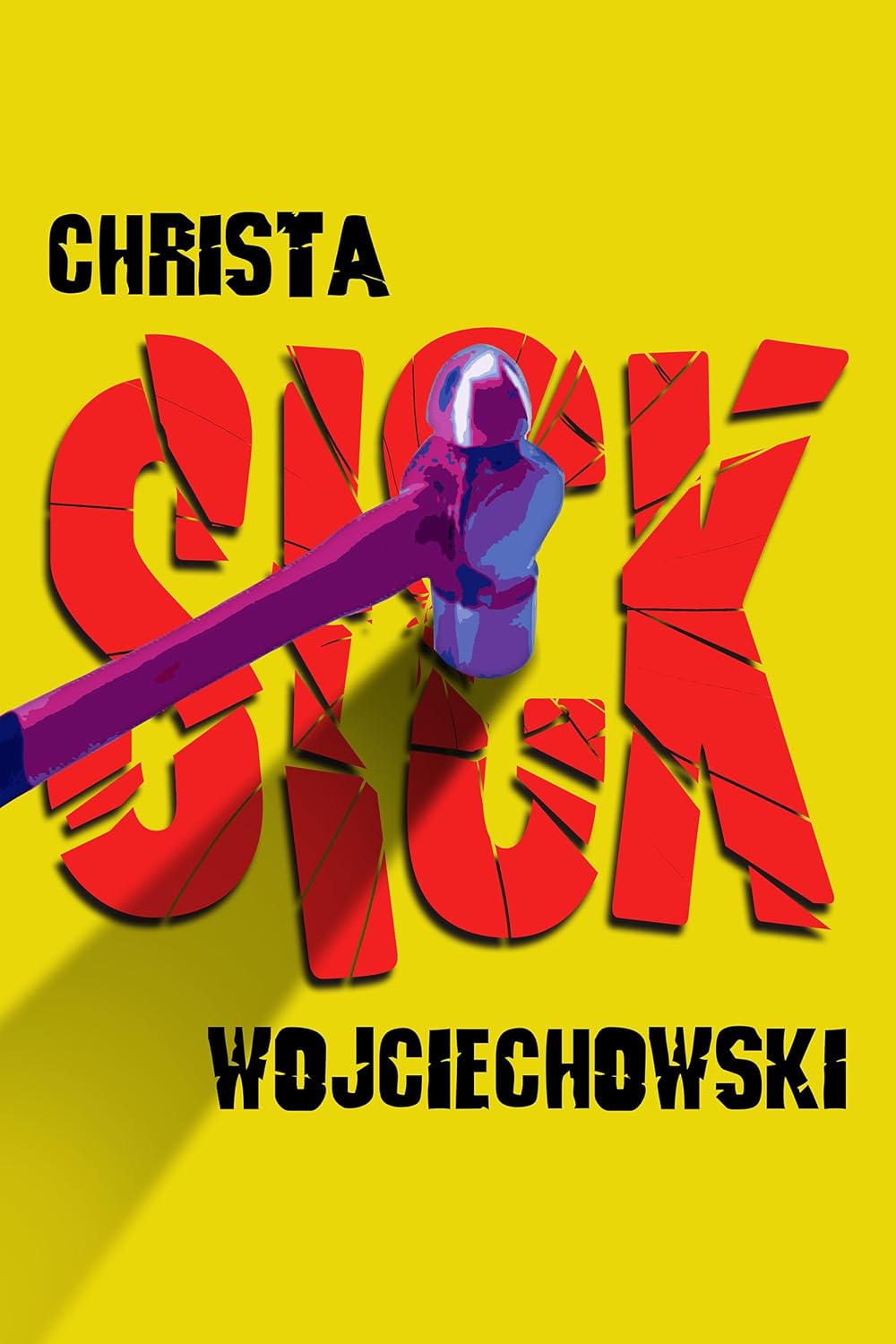
Sick is a deeply unsettling psychological horror novel that follows the toxic, codependent relationship between Susan and her chronically ill husband, John. What begins as a tale of dutiful care gradually descends into something far more sinister. The book explores themes of love, martyrdom, manipulation, and the blurry line between devotion and delusion. At the center is a marriage teetering on the edge of madness, where illness, real or imagined, becomes both the glue and the weapon that binds them.
It wasn’t just the disturbing imagery or the suffocating atmosphere, it was how intimate it all felt. I was drawn in by the clean, evocative prose and the slow, relentless build-up of dread. Author Christa Wojciechowski doesn’t rely on cheap scares. Instead, she weaponizes empathy, using Susan’s exhaustion and desperation like a knife twisting in your gut. Anyone who’s ever been trapped in a one-sided relationship or felt obligated to care for someone while losing themselves will feel that sting.
John is infuriating. He is charming, pathetic, childlike, and monstrous all at once. I found myself swaying between pity and revulsion. And Susan is no angel either. Her love feels noble one minute and complicit the next. Wojciechowski manages to make the reader complicit, too. I kept asking myself why I felt sorry for someone who was clearly manipulating the woman who loved him. But then I’d see his suffering again, and it would all blur. That’s the genius of this book. It messes with your moral compass.
There’s a smell to this book. Not literally, of course, but in the way Wojciechowski describes bodies, fluids, wounds, and rooms filled with neglect. And beneath it all, I could feel this aching, awful love. The writing doesn’t scream. It whispers. And that’s so much worse. It made me uncomfortable, not with violence or gore, but with how honest it was about how far people will go to feel needed.
There were times when I wanted to yell at Susan to run. Other times, I wanted to wrap her in a blanket and tell her it was okay to stop giving so much of herself. I think that’s why the story is so effective, it holds a mirror up to all the ways we lose ourselves in caring for others. The manipulation in this book is terrifying, not because it’s extreme, but because it’s familiar.
If you want a slow-burn, character-driven descent into psychological horror that feels both intimate and raw, Sick is a must-read. It’s perfect for readers who enjoy books like Gone Girl or The Shining, but crave something smaller in scale and more emotionally claustrophobic. It’s not just horror. It’s heartbreak in disguise. I’d recommend it to anyone interested in the darker sides of love, mental illness, and the twisted things we do in the name of care.
Pages: 282 | ASIN: B0FL5RTYQ9
Difference in Perspective

Conversations with My Mother tells the tender and heartbreaking story of a son watching his mother fade into dementia. What was the inspiration for the setup of your story?
I started writing the book after a weeklong stay with my mother, during which she’d been diagnosed with vascular dementia. Afraid that the mother I’d known was fast disappearing, I began visiting and calling her as often as possible. Consequently, from her initial diagnosis through her passing several years later, I periodically witnessed both firsthand and at a remove her growing disorientation and anxiety as well as her increasing bursts of candor and flights of fancy. It was this on-again, off-again exposure to the effects of her condition that led to the episodic construction of the book, whose chapters recount particular days or moments in the course of the heroine’s long and debilitating illness.
Are there any emotions or memories from your own life that you put into your character’s life?
Since Conversations With My Mother is a kind of fictionalized memoir, many of the narrator Rob’s emotions and perceptions reflect my own. From 70 to 80 percent of the book’s events are based on memories, though some were melded or otherwise modified to support its narrative and thematic development.
What were some themes that were important for you to explore in this book?
The book’s central theme is that loss is not always as complete as it might seem. Though a dementia victim’s personality may fade or shatter, fragments of it often remain, and we should do our best to recognize, respect, and cherish them, however few.
Another important theme is the disparity between a geographically distant offspring’s experience of a parent’s dementia and that of an offspring who is a caregiver and, as such, in constant contact with the parent. For example, the book’s narrator, Rob, lives several states away from his mother, so he experiences her decline only in periodic phone calls and visits, whereas his sister, Diane, her primary caregiver, experiences its consequences daily. This leads to a difference in perspective between the two, with Rob being more focused on the emotional and Diane on the practical. Rob, from his insulated remove, occasionally glosses over or sentimentalizes issues, which is easy to do from a distance, while Diane, being in the thick of caregiving, sometimes feels overwhelmed and becomes impatient, which is understandable, given the demanding, continuous nature of caregiving. Neither perspective is more valid than the other. Each is simply the result of the character’s particular circumstances.
What is the next book that you are working on, and when is that book due out?
My next book is a family saga describing the experiences of a French-Canadian immigrant woman from the dawn of the 20th century through the 1980s, contrasting her early life’s poverty and hardships with the different challenges faced by her more affluent children and grandchildren. Like Conversations with My Mother, it’s based on my family’s history, drawing on the experiences of both my maternal and paternal grandmothers. I expect it to be ready for publication sometime in 2027.
Author Links: GoodReads | Amazon
Distinguished Favorite, New Fiction, 2025 Independent Press Award
Honorable Mention, 2021 Lorian Hemingway Short Story Competition
Conversations With My Mother, a Novel of Dementia on the Maine Coast

Conversations with My Mother tells the tender and heartbreaking story of a son watching his mother fade into dementia. Set on the coast of Maine, the book unfolds through small, vivid vignettes that capture the everyday beauty and sorrow of a family coping with loss long before death arrives. Through these fragments, each like a brief conversation or memory, the narrator shows his mother’s slow descent into confusion and fragility, while also revealing flashes of her wit, compassion, and stubborn humor. It’s as much about remembering as it is about forgetting, about holding on when life insists on letting go. The setting, with its shifting skies and sea winds, mirrors the mother’s mind, sometimes calm and lucid, sometimes clouded and unpredictable.
Reading this book felt like sitting in a quiet room, listening to two people who love each other deeply but know time is running out. The writing is simple yet piercing, with a kind of understated poetry that sneaks up on you. I found myself laughing at the mother’s dry remarks one moment and then, without warning, feeling my throat tighten the next. Gilbert doesn’t dramatize dementia; instead, he honors it with honesty. The story never begs for pity. It just shows life as it is, messy, unfair, beautiful. I admired how the author used humor to cut through the sadness. It’s the kind of humor that comes from people who’ve lived long enough to know that grief and laughter are two sides of the same coin.
What struck me most was the way Gilbert made the ordinary feel sacred. A drive to a hair salon, a walk to the beach, a chat about blueberries, these moments hold whole worlds of memory and meaning. The mother’s voice lingers long after you finish, a mix of sharp wit, old-world grace, and quiet resignation. There were times I wanted to reach into the page and hold her hand. The author’s restraint, his refusal to sugarcoat or sensationalize, gives the book its power. It’s a love letter wrapped in loss.
I’d recommend Conversations with My Mother to anyone who has cared for an aging parent or watched a loved one slip away piece by piece. It’s not a light read, but it’s a comforting one, full of truth and tenderness. This book is for readers who value quiet stories that move slowly and hit hard. It left me sad but grateful, reflective but strangely uplifted. Gilbert reminds us that even as memory fades, love stays, steady, stubborn, and shining through the fog.
Pages: 315 | ASIN : B0DHW9B73V


