Blog Archives
The Doc’s Christmas Miracle


S.A. Stolin’s The Doc’s Christmas Miracle is a heartfelt romance set in a snowy mountain town, centering on Dr. Mark Moore, a disgraced Alzheimer’s researcher seeking redemption, and Dr. Susan Pace, a guarded psychiatrist fiercely devoted to her holistic treatment methods. Mark brings with him a controversial memory-repair machine, hoping to prove its worth at the Sam Heard Clinic. What follows is a tender, often tense story of healing, trust, second chances, and the unspoken grief both doctors carry, all under the soft glow of Christmas lights.
What I liked most about the writing was its emotional depth. The author doesn’t rush the romance, which I appreciated. Mark and Susan’s push-pull dynamic felt believable. Their baggage isn’t treated like plot filler; it actually shapes who they are and how they relate to each other. The story touches on serious themes like Alzheimer’s, professional betrayal, and grief, yet never lets the weight of those topics overshadow the spark of hope running through it. The dialogue, while occasionally dramatic, felt natural and kept me emotionally invested. The snowy setting, the warmth of the townsfolk, and the spark between the leads all came together beautifully. I could practically hear the fire crackling in Mark’s cabin and smell the spaghetti sauce in Susan’s kitchen.
I do feel that some of the early exposition took a bit of time to settle into, especially the technical descriptions of Mark’s memory machine. While clearly important to the story, those sections felt slightly more clinical than the emotional tone elsewhere. Susan’s initial aloofness also came across a touch stronger than expected, though it made her gradual softening all the more satisfying. And Dr. King, while serving his role well, occasionally edged close to a familiar “corporate antagonist” mold. These were small moments in an otherwise well-paced, heartfelt narrative that gave its characters room to breathe and grow.
The Doc’s Christmas Miracle is a lovely and warm story with a genuine heart. If you enjoy clean, character-driven romances with medical backdrops and small-town charm, you’ll want to curl up with this one on a snowy night. It’s for readers who believe in second chances, both in love and in life.
Pages: 194
Rampant Spread of Misinformation

Toxic Minds is a high-stakes medical thriller that plunges a hospitalist into a deadly collision of grief, cultish ideology, and the seductive power of misinformation. What was the inspiration for the setup of your story?
My books in the Dr. Mark Lin Medical Thrillers series involve a new approach to the medical thriller genre, by exploring the intersection between the world of healthcare and society at large. I can imagine plenty of ways where villainous actions out in society result in unusual medical mysteries and crises, such that Dr. Mark Lin, who is disgusted with the worst of humanity, is motivated to go beyond the hospital and tackle the problem at its root. My previous novel, Doctor Lucifer, dealt with a computer hacker interfering with medicine. This time, my latest novel Toxic Minds takes on the issue of cults and disinformation disrupting healthcare.
The inspiration for Toxic Minds draws from my concern about the rampant spread of misinformation and disinformation, particularly in the last decade or so. Whether it involves medicine, science, news, or politics, and whether it’s spread through social media, podcasts, or other routes, misinformation and disinformation have been a serious concern. We have seen tragic deaths during the COVID-19 pandemic that could be attributed to false information about how to treat that disease. Outside of medicine, false information has caused massive divisions and bitter arguments related to major topics like climate change and elections. Then there are examples in which strong belief in ideas contrary to real-world evidence has led to threats of or actual attempts at violence.
As for the issue of cults, they’ve always been around and they still are. I especially remember the Heaven’s Gate cult in the late 1990s, where members had committed mass suicide out of the belief that they can be freed from their bodies and taken away by a comet passing by Earth. That was the first time in my life where I heard about a cult doing something extremely dangerous. It stuck with me for a while.
Altogether, my strong concerns about cults and disinformation led me to create a fictional cult that spreads medical disinformation. That, in turn, led to the writing of Toxic Minds.
The bombing scene is written with restraint but hits hard. What was your approach to writing trauma without relying on graphic imagery?
I’ve always appreciated the technique of hinting at a horror without being explicit about it. A classic example of this is the movie Jaws, where you know a big shark is coming even though you don’t actually see it during its approach. For this scene in Toxic Minds, having the protagonist witness the bombing audibly via a phone call is a perfect way to inflict trauma without imagery.
How did you research the blend of medical realism and conspiracy-driven ideology?
I did plenty of reading into cults in general, along with specific examples of cults like Heaven’s Gate, the Branch Davidians, and the Children of God. The big takeaway is that it doesn’t matter how absurd the cult’s beliefs are. As long as the human mind is susceptible to psychological manipulation, it is possible to get anyone to believe pretty much anything. This made it relatively easy to create the Path to Purity, the fictional cult in my novel. I did not have to follow rules about how cults work because there is no limit to how they function and what their beliefs are. I just created whatever I felt like. Once I did that, then it was a matter of figuring out what medical ailments would result from the Path to Purity. My previous background in medicine made that part easy.
What is the next book that you are working on, and when will it be available?
I have begun working on the third novel of the Dr. Mark Lin Medical Thrillers series. I do not wish to disclose the topic at this time, but let’s just say it’s one that plenty of past medical thrillers have tackled. Still, it will be my own unique take on it.
Author Links: GoodReads | Website | Amazon
For hospital physician Dr. Mark Lin, nothing is more gut-wrenching than saving a life only to see it taken by murder.
When one of his patients is killed by a suicide bomber blowing up a clinic, everyone points the finger at a group of anti-abortion extremists. Mark, however, knows the killer’s final words and has a different theory about the culprit: a secretive healing cult called the Path to Purity. It seems the only way to get answers and avenge his patient is to join the Path himself.
Juggling the dual roles of doctor and undercover cult follower, Mark treats patients for ill effects of the Path’s dangerous practices while also proving his worth and advancing along the Path’s ranks. He has only one goal: get close to the mysterious leader known as the Sun Priest and destroy the cult. But the deeper he goes, the deadlier things get. Mark will stop at nothing to uncover the truth, before getting trapped in a heinous plot that could spell devastation on a massive scale.
Toxic Minds is Anthony Lee’s medical thriller where healthcare collides with disinformation and a hateful mind losing touch with reality is the most dangerous of all.
My Medical “Fate”

Memory Weavers follows Rachel, who is haunted by past trauma, and Hadley, who is unraveling from memory loss, as their lives intertwine in a journey of heartbreak, resilience, and self-discovery. What was the inspiration for the setup of your story?
My mother had Alzheimer’s disease, and I was her primary caregiver. I am also a Master’s prepared psych nurse (U of Pa, ’84) and drew from professional experience.
The contrast between Rachel’s deep friendships and Hadley’s more performative relationships is striking. Was this intentional from the start?
No, it was not intentional.
The GenSeq DNA-testing subplot adds a unique element to Hadley’s story—what drew you to include this?
I knew a woman who was asymptomatic and suddenly learned she had a large brain tumor. I decided to get my genome sequenced to learn my medical “fate.” While doing so, I learned what was involved in the sequencing and experienced the angst associated with waiting for and learning the results.
What is the next book that you are working on, and when will it be available?
I am working on a novel about a person with bipolar disorder. I founded the International Bipolar Foundation and have extensive experience in this field. I do not know when the book will be ready.
Author Links: LinkedIn | Facebook | Website
Memory Weavers
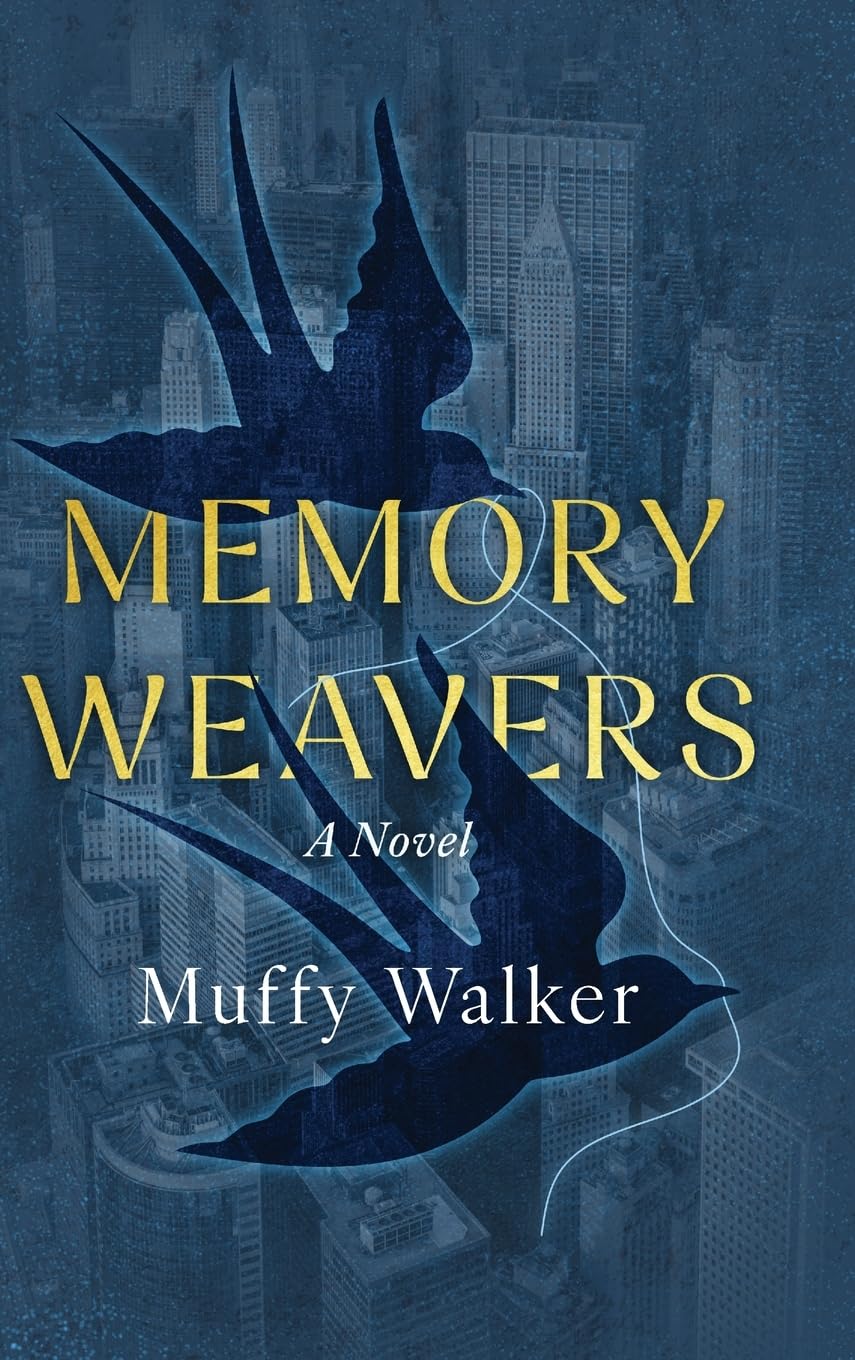

Muffy Walker’s Memory Weavers intertwines the lives of two protagonists, Rachel, a young woman grappling with the shadows of past trauma, and Hadley, a driven professional navigating memory loss amidst an outwardly perfect life. The narrative alternates between their perspectives, weaving a rich tapestry of heartbreak, resilience, and self-discovery. Through Rachel’s struggles with PTSD and Hadley’s unraveling as she confronts the gaps in her memory, the book explores the fragility of identity and the ways we confront pain to reclaim ourselves.
Walker’s prose is sharp and evocative, and the opening scene with Rachel and her dying friend Hadley is beautifully intimate, setting the stage with raw vulnerability. You can almost feel the texture of the lavender oil and the unspoken words between them. Some sections, such as Rachel’s detailed recounting of a failed Tinder date or Hadley’s over-meticulous party planning, seemed slower for me, and I found myself wishing the narrative would stick more to the emotional core rather than veering into minutiae.
The themes Walker addresses, such as trauma, memory, and the fight for autonomy, are deeply moving, but there’s a subtle imbalance in execution. Rachel’s chapters are heartrending, particularly the vivid depiction of her PTSD triggers, like when the scent of aftershave catapults her into a flashback. These moments feel visceral, raw, and uncomfortably real. Hadley’s storyline, on the other hand, didn’t quite grip me as much. While the GenSeq DNA-testing subplot is intriguing, the emotional stakes felt diluted compared to Rachel’s journey. That said, Hadley’s reflection on a photograph she can’t remember, a Sanibel beach trip with her family, is haunting and relatable, a quiet metaphor for her unraveling.
Walker’s strength lies in her portrayal of female friendships and the quiet, sustaining power they hold. Rachel’s relationship with Mandy is a standout, embodying unwavering support and warmth. Even Rachel’s occasional prickliness doesn’t diminish the sincerity of their bond. On the flip side, Hadley’s interactions with her friends feel more performative, offering a subtle critique of the superficiality that can exist in seemingly perfect lives. These contrasts enrich the novel’s exploration of connection and authenticity.
By the end, Memory Weavers left me reflective. It’s a story that doesn’t shy away from pain but also offers a glimmer of hope. I’d recommend this book to readers who appreciate emotionally layered stories about overcoming inner demons. While its pacing and focus sometimes waver, its emotional depth and honesty make it a poignant, memorable read.
Pages: 272 | ASIN: B0DT7V6K3L

Karmic Debt

What the Living Do follows a woman navigating the wreckage of her past, a harrowing cancer diagnosis, and the line between self-destruction and redemption, all while searching for meaning and healing. What was the inspiration for the setup of your story?
I have been curious about what happens to the animals hit on our roads and wondered about those who had to dispose of them. If it was a woman doing that job, what would she be like? What would make her want a job that would bring her so close to death? She would have to be tough or want to be bullet-proof, and she would need a history that caused her to be so tough. Most stories begin with the question, “What if…?” So I asked, “What if she was diagnosed with cancer?” Well, maybe she thought she deserved it, and maybe she believed she didn’t deserve any of the good things in her life… hence, Brett was born.
How did Brett’s character evolve during the writing process?
For the most part, Brett is frustrated and frustrating. She pushes back against the good in her life and seriously considers running away to die. Through her encounters with animals—ones she hits, ones she finds, and her sweet dog, Beckett, she starts to pay attention to what is true. Even though she doesn’t seem to be listening to anyone, she actually hears everything. Most readers want to give her a wake-up slap but ultimately find they can understand and relate to her character.
What were some themes that were important for you to explore in this book?
The misguided idea that illness or disease is somehow deserved was the underlying theme. How we ask ourselves, “What did I do wrong?” when faced with a grave diagnosis, having an accident, suffering a loss, etc. From believing that God is punishing us for our sins to imagining we must repay a Karmic debt to what we ate or drank… many of us experience guilt when misfortune falls. We assume it must be our fault.
I also wanted to highlight the exploitation of sexual pleasure in children, and how those experiences can have damaging and lasting repercussions on one’s sexual attitudes.
Grieving is a long, long process, and everyone’s process is their own.
There’s also a nod to how difficult it is to adopt when one isn’t able to birth one’s own.
What do you hope readers take away from Brett’s story, especially those who may see parts of themselves in her struggles?
That it’s not your fault! Shit happens. And to find comfort in the goodness in one’s life, whatever form that might take.
Author Links: GoodReads | Substack | Write Your Way In | Facebook | Website | Amazon
What The Living Do


Susan Wadds’ debut novel, What the Living Do, is a haunting exploration of Brett Catlin’s life—a woman grappling with the echoes of her traumatic past, a devastating cancer diagnosis, and the delicate balance between self-destruction and survival. Through Brett’s introspective journey, Wadds crafts a story that is both raw and beautifully poetic as Brett navigates her relationships and the fragmented pieces of her past to find healing.
Wadds has a way of weaving words that feel like they’re sinking straight into your bones. Early on, Brett’s job handling roadkill becomes a visceral metaphor for her internal state. I couldn’t shake the image of her burying a young dog in the hard-packed dirt, her thoughts unraveling like the rib bone poking through the carcass. These moments, uncomfortable yet profound, bring Brett’s pain and search for meaning to life.
Wadds isn’t afraid to show us the beauty and brutality of survival. Her conversations with Mel, who teaches her to pray for animals rather than to them, are some of the most grounding moments in the story. These exchanges are a quiet counterpoint to the chaos of her dynamic with Cole, her younger lover. The contrast between Mel’s stoic spirituality and Cole’s boyish longing for stability highlights Brett’s own turmoil. I also appreciated Wadds’ portrayal of Brett’s past trauma and how it reverberates into her present.
The novel doesn’t shy away from difficult topics—childhood abuse, survivor’s guilt, and the weight of familial expectations. Yet, Wadds handles these with sensitivity and grace. The recurring motifs of fire, ash, and the lingering scent of smoke are haunting reminders of Brett’s unresolved grief. They mirror her struggle to reconcile the ghosts of her family and her own self-worth.
Wadds writes with a compassion and honesty that is rare and deeply moving. What the Living Do is perfect for anyone who isn’t afraid to confront the messiness of life, grief, and the hope of healing. Fans of literary fiction with emotional depth will find much to admire in Brett’s journey.
Pages: 253 | ASIN: B0C1P62CS5
The Essence of a Being

The Gemini Project follows a seventeen-year-old boy who discovers his entire life has been a lie and now must find a way to escape the school he lives in in order to survive. What was the inspiration for the setup of your story?
The inspiration is a bit of a spoiler alert. I had a thought what if this certain event happened, and that became a brain-worm. Each day I would expand on the story and new characters would enter my head, and I knew it wouldn’t go away until I wrote something down!
I find the world you created in this novel brimming with possibilities. Where did the inspiration for the setting come from and how did it change as you were writing?
As I wrote the story, it hit me that I was naturally writing about the future in past tense. At one point in the text, when something happens to the protagonist, I suddenly found myself writing in the present tense. Although this change in style just seemed natural to the flow, I hope that it also helps draw the reader into the experiences of the protagonist.
What were some themes that were important for you to explore in this book?
The story covers parental relationships, especially those where a parent is detached from their child, as in the case of a parent who outsources the upbringing of their child. The story also explores neurological development and tries to answer the question of what the soul consists of, or more accurately the essence of a being. Finally, the story takes place in a dystopian world, however, not a fantasy world. The overarching theme is a warning as the world that is developed is in the realm of the possible.
Is this the first book in the series? If so, when is the next book coming out, and what can your fans expect in the next story?
This is a stand-alone story, however my next novel Nothing but the Truth takes a very similar path in its style of story-telling.
Author Links: GoodReads | X (Twitter) | Facebook | Website | Amazon
Dr. William Osler works at the Academy and considers himself an amateur philosopher and would-be comedian. He befriends Jan and sees the boy’s keen desire to learn. Quietly in the background, the doctor teaches his student to read. Dr. Osler knows that the 17-year-old boy will die, the same way his older brother died, in less than two weeks. However, addicted to a designer drug, the doctor is constantly high as he tries to fight his own demons.
Tre Ericson is Jan’s father. He sees his son four times a year but feels no love for him. While desperately trying to please his father, Jan discovers a tunnel that runs under the school. The tunnel contains a dark secret, which initiates a chain of events that might save Jan’s life!
The Gemini Project is must-read coming-of-age novel that deals with a dystopian future and the world of neurology. The story of Jan Ericson will take you to unpredictable places in a battle of life and death.
Stop Feeling Ashamed

But Baby, You’re Worth It! follows a woman who, during childbirth, experiences life-threatening medical errors resulting in severe physical and emotional scars. What was the inspiration for the setup of your story?
I drew the inspiration for this story from my own experiences. In particular, the injuries and trauma I sustained during my son’s birth but also after the difficult time during and after my daughter’s birth some twelve years earlier. Something that struck me both times, was how alone and isolated I felt despite the massive amount of support that I had around me.
Birth trauma is a topic that is seldom discussed. When it is, the long-term impacts and the healing process are rarely addressed. What were some goals you set for yourself as a writer in this book?
My goal in sharing this story was, my own healing journey aside, to help kickstart the conversation about birth trauma and the profound impact it has on women and their families. The healing journey after a traumatic birth can be really scary, especially when there are injuries sustained during that birth. I want us, as a society, to stop feeling ashamed about talking about our experiences. The “village” has never been more important than it is in this scenario.
Did you plan the tone and direction of the novel before writing or did it come out organically as you were writing?
The writing happened very much organically. The first draft took me three weeks to write. I thoroughly enjoyed the process and haven’t stopped writing since.
What is the next book that you are working on, and when will it be available?
I have finished writing the sequel to But Baby, You’re Worth It! The second book is with ASPG now and I expect it to be released mid to late October. I am also working through my editor’s suggestions for my third book and hope to see it released by December. My fourth book is a few chapters in as well but my goal for 2024 is to publish the first three!
Author Links: GoodReads | Instagram | Facebook | Website | Amazon
Those first blissful days were soon forgotten though as they were slowly but surely replaced by pain, trauma and heartache. All because of mistakes made in the delivery room, mistakes that could have cost her, her life. As the full extent of those medical mistakes starts to become apparent Tabitha must make some life altering and devastating decisions. Her journey back from a dark place would take every ounce of fight that she had. Her job was on the line, her mother’s health was flailing and her children needed her, despite her fears to the contrary. Could she fix what was broken inside and be happy once more?


