Blog Archives
Nurse Florence®, Tell Me About the Spleen
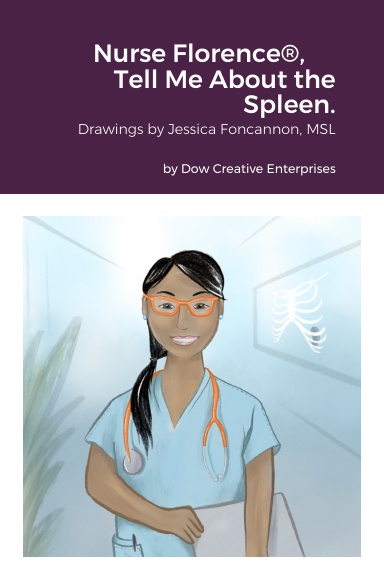

There is no one better than the school nurse to answer questions about the human body and its functions. Jean, Condi, and Sonia know that very well. They enjoy their time sitting with Nurse Florence and discussing health and wellness. When Jean tells Condi and Sonia about her dad’s new water filtration system, the three girls are inspired to ask Nurse Florence about a similar system in the human body. Nurse Florence, always ready to educate her students, is more than happy to explain the role of the spleen in our immune systems.
Michael Dow has returned with another entertaining and informative addition to his series. In the newest installment, Nurse Florence®, Tell Me About the Spleen, Dow gives children an in-depth look at the spleen and its functions. The dialogue between Nurse Florence and the three girls is direct and accompanied by detailed illustrations, most of which are being shown to the girls via the Nurse’s cell phone. Dow and illustrator Jessica Foncannon have teamed up to hand readers a quick read with relatable characters and vivid drawings that will leave them well-informed about the lymphatic system.
While Jean, Condi, Sonia, and Nurse Florence lay the perfect framework for an age-appropriate explanation of complex medical concepts, I feel the dialogue was sometimes challenging to follow. A few of the exchanges between characters feature two speakers within a paragraph. As a teacher, I can see that some younger readers might find it difficult to discern who is speaking.
Nurse Florence®, Tell Me About the Spleen gives young readers and adults a medically accurate and accessible explanation of this important body part. Overall, Dow has again provided parents, teachers, and children a wealth of knowledge in a neatly wrapped package.
Pages: 65 | ISBN : 9781312226562
Nurse Florence®, What is Asthma?


It’s important for children to understand what is happening to them. There are many children with medical conditions who may not truly understand what is going on with their bodies. This may be because parents aren’t sure how to explain it to them in age-appropriate terms. What is too advanced? What is not informal enough? Using improper wording can skew a child’s understanding of their own medical condition. In Nurse Florence, What is Asthma? Written by Michael Dow and illustrated by Iris Serrano, children will be given factual information surrounding the medical condition of asthma.
Taking place in a school during a physical education class, our readers follow along with Jean as she begins to experience her symptoms of asthma while engaging in exercise with her class. She makes her way to the school nurse, Nurse Florence, who takes the time to carefully explain to Jean using age-appropriate language and other information so that Jean can understand what asthma is, how it occurs, and how it can be treated.
It should be noted that in this book, Dow does not use childish names or phrases when describing the condition of asthma. It can often be a detrimental side effect when children do not understand the proper terminology for their conditions, which can lead to misunderstandings if the child requires aid and is unable to explain in a way others outside their family can understand.
Nurse Florence, What is Asthma? By Michael Dow and illustrated by Iris Serrano is a must-read for children who also experience asthma or have a loved one who does.
Pages: 79 | ISBN : 9781458306449

Nurse Florence®, What are Emotions?
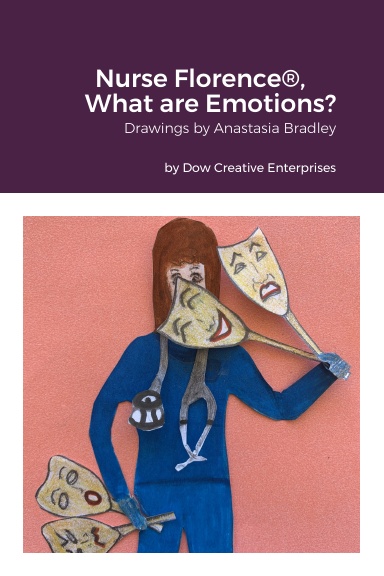
The concept of emotions can be difficult for young children to understand. Sometimes emotions can be really big for children to grapple and there are also times when they may not understand what is even happening to them. This can include positive emotions as well as negative emotions. In Nurse Florence, What Are Emotions? Written by Michael Dow and illustrated by Anastasia Bradley, we follow along with Jean, Condi, and Sonia as they discuss emotions with Nurse Florence. The children have had a positive experience with their teacher and are keen to learn more.
While it might seem as though the language is too advanced for some children, it is actually very important for them to fully understand what is happening to them on a logical level. Dow is a trained nurse and has worked in health care so the wording he uses, while it may seem advanced, is actually rooted in science and fact.
Dow begins the book with some common terms and lists out how to pronounce them. This is useful for children learning to read, especially because some of the terminology may not be familiar to them. Using the kind character of Nurse Florence, young readers will gain a better understanding of how the brain works and how we experience emotions.
Nurse Florence, What are Emotions? By Michael Dow and illustrated by Anastasia Bradley, it is a valuable book that can help young readers better understand their own emotions and why things affect them in the way they do.
Pages: 86 | ISBN : 9781312174962
Nurse Florence®, Why Should We Avoid Illegal Drugs?
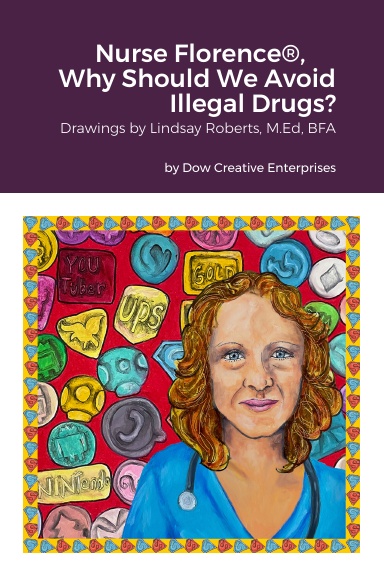
Step into the classroom of Nurse Florence, where she fearlessly tackles the daunting topic of illegal drug use in Michael Dow’s riveting book, Nurse Florence: Why Should We Avoid Illegal Drugs? Addressing this weighty issue with young students can be a formidable task, but Nurse Florence is the beacon of guidance that makes it all possible. With an unwavering hand, she leads her class through an enlightening journey, explaining the dire consequences of these harmful substances.
In a world filled with vivid, informative slides and a treasure trove of knowledge, Nurse Florence transforms a potentially unsettling subject into an empowering life lesson. She encourages her students to seek out safe, healthy alternatives for dealing with anxiety and life’s challenges, rather than resorting to the dark path of illegal drugs. Lindsay Roberts’ breathtaking artwork comes to life, offering a striking visual representation of these substances to be avoided at all costs. The book’s illustrations guide students through recognizing and identifying drugs, further safeguarding them from the long-term devastation they can bring.
While approaching the topic of drugs is never a simple endeavor, the author deserves commendation for daring to educate young minds about the perils of illegal drugs. It’s essential for parents and teachers to gauge their readiness for this information, but with Nurse Florence as their compassionate guide, classrooms and families can embark on a safe journey of enlightenment. The author touches upon safe alternative coping methods like hiking and coloring to help young readers navigate life’s challenges.
Nurse Florence emerges as the hero of the day, armed with informative illustrations, an engaging narrative, and an unwavering commitment to educational storytelling excellence. Nurse Florence: Why Should We Avoid Illegal Drugs? serves as an invaluable resource, ensuring that children and their families are well-informed about the dangers lurking behind illegal substances. Dive into this educational adventure, and let Nurse Florence illuminate the path toward a safer, drug-free future!
Pages: 85 | ISBN : 9781312175068
Skills for Living in a Complex Society: Financial Basics
Skills for Living in a Complex Society: Financial Basics by Michael Dow offers an exploration into the realm of personal finances, emphasizing the significance of mastering them. This book delineates four core principles vital for gaining a firm grip on one’s finances, tailored to resonate universally across varied cultures and societies.
Firstly, Dow underlines the imperative of comprehending daily expenses, emphasizing how quintessential it is to grasp the cost of daily living for individuals or families. By illustrating this, he nudges the readers to reflect on their unique consumption patterns, which might evolve due to lifestyle transitions or family expansions.
Building upon this, Dow ventures into the realm of future financial strategizing, advocating for a vision-oriented approach to foresee and plan for prospective financial exigencies. This is complemented by his third principle, a captivating insight into perceiving both money and time as invaluable assets. He elucidates how money, when judiciously managed, can augment over time, and how every moment bears intrinsic value. Consequently, he champions astute financial decisions to harness the potential of these resources.
Lastly, Dow presents a compelling nexus between skills and earnings, positing that one’s remuneration is often a testament to their competencies. He beckons the readers to introspect their skillset and seize avenues for its enhancement, paving the way for improved career prospects and financial growth.
With a writing style that’s both lucid and engaging, Dow ensures a seamless experience for readers. His diction is crisp, and devoid of convoluted jargon, making this exploration into financial tenets accessible to a broad readership. He structures his argument logically, commencing with the introduction of the principles and delving into each with depth. This stepwise progression ensures readers can gradually grasp and internalize the essence of his discourse. To cement understanding, Dow enriches his narrative with pragmatic examples, offering a tangible context for readers.
While his hands-on technique of evaluating daily expenses might demand a noteworthy initial time commitment, it promises tangible outcomes for those seeking pragmatic financial management solutions. However, the book’s encouragement to juxtapose one’s expenses with others may occasionally lead to skewed perceptions, as individual contexts can vary significantly.
Skills for Living in a Complex Society: Financial Basics emerges as an indispensable guide in today’s era, where the digital landscape is replete with both invaluable insights and misleading data. Dow’s educational book serves as a beacon, illuminating the path to financial mastery and future planning. Highly recommended for anyone aspiring to navigate the intricate avenues of personal finance with confidence and clarity.
Pages: 52 | ISBN 978-1-312-22640-1
I Want to Increase Health Literacy
Nurse Florence, What is Polymicrogyria? follows a middle-school girl who wants to learn about a condition her cousin has and asks the school nurse for help. What was the inspiration for this story?
I asked my illustrator if she had a family member with a rare disease, and she said yes, which was the topic of this book. Every third book that my illustrators do with the company is about a rare disease. We believe the company is providing a public service and needs to help all of the families with their medical education. Families with rare diseases need reliable information too, and we are providing that service.
One thing that Nurse Florence discusses with students in this book is how to find reputable medical information online. How did you approach integrating this important topic into your story?
This disease is very rare, and it was hard to find good information about it. I used my educational training from my degrees to guide my search and then put that process or steps into a book that was understandable. Our kids need to learn how to sort through a lot of information, and we made an attempt to give a disciplined approach to it.
In your mind, what’s the best part about being an author?
The best part about being an author is the creative process of writing. Sometimes it is exhilarating when the words just flow through your fingers to the keyboard. For me, it is also a peaceful adventure writing a new book. This may sound strange, but sometimes when I write, I teach myself as I synthesize information into a new insight. Writing is fun!
What would fans be most surprised to learn about you?
The thing that seems to surprise people the most is when they learn that I have 5 college degrees. I like to say that getting that many was the universe’s punishment for me stressing out my parents for dropping out of college (not once, but twice) during my first degree. I got laser-focused on education, learned how to study, found joy in self-study, and found the educational system fun and rewarding once I learned how to succeed within the system. I think I am finished getting advanced degrees. I love being a children’s book author and being in the niche of researching intellectually stimulating topics and writing at an elementary level while still maintaining scientific accuracy. I hope my love of learning is passed on to many kids through my books, but most importantly to my kids who are “required” to read all of the Nurse Florence books. They do enjoy them, and I created the series for them to help ensure that they have at least a good health literacy level as an adult. Too many adults in the country and the world have a low health literacy level. Dow Creative Enterprises aims to increase everyone’s health literacy since parents are reporting learning new things with each Nurse Florence book as they read them with their children. Let’s leave the world a better place than what we found it.
Author Links: GoodReads | Facebook | Website
Nurse Florence(R), What is Glaucoma?
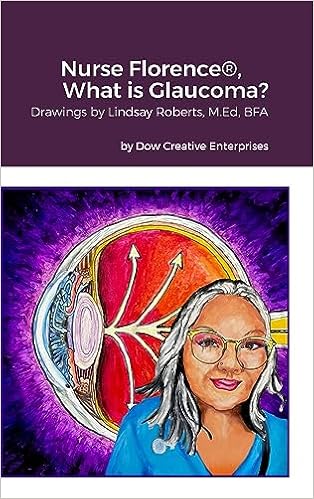
Nurse Florence®: What is Glaucoma? shines as a literary gem for young readers. Through its heartwarming narrative, students—Jean, Condi, and Sonia—engage in an enlightening conversation with the knowledgeable school nurse, Nurse Florence, as she unravels the details of glaucoma. This interaction unveils a wealth of insights, providing the children with a comprehensive grasp of this eye condition, including its various types and symptoms. With Nurse Florence’s skillful guidance, the narrative navigates the complexities of diagnosis, treatment, and even the potential for emergency surgery, providing a remarkably thorough exploration of the condition.
The book’s illustrations are a testament to dedicated craftsmanship. The medical depictions are meticulously detailed, playing a crucial role in enhancing comprehension and elevating the overall reading experience. Nurse Florence®: What is Glaucoma? achieves the dual feat of educating readers and stimulating curiosity, all while providing valuable medical insights that will captivate young readers. Books of this nature, exemplified by Nurse Florence®: What is Glaucoma?, help strengthen and build young minds. The exploration of the human body empowers them to embrace their health and well-being. While this engaging read is ideally suited for accomplished young readers, it can also serve as a beneficial tool for emerging ones, expanding their vocabulary and fostering linguistic growth.
Undoubtedly, Nurse Florence®: What is Glaucoma? stands out within its genre, inspiring young readers and building their knowledge base. Rooted in its purpose of education, enlightenment, and fostering curiosity, it stands poised on the edge of perfection, making it a truly exceptional addition to any reader’s collection.
Pages: 148 | ISBN : 978-1312585898
Simplifying Information For Kids
Nurse Florence, What is Rosacea? is an educational book that follows curious students as they explore the complexities of rosacea with the help of Nurse Florence. Do you have any personal experiences or connections with rosacea that influenced the tone or content of the book?
I had a friend in high school that had it. Nurse Florence plans to publish a book for every disease so that every family can have an educational tool to inform their kids for healthy living.
What research methods did you employ to ensure that the information about rosacea was both accurate and suitable for a young audience?
The Nurse Florence series gets all of its information from either my nursing school pathophysiology textbooks or a highly respected medical organization like the Mayo Clinic. We think we have found the sweet spot of simplifying the information for kids while still maintaining scientific accuracy so that the books are reliable information for reference. We try to keep the information to one big idea per drawing.
Can you elaborate on the process of weaving complex medical information into a narrative that would resonate with children without overwhelming them?
I spend a lot of time researching the material before writing it. I think about what should be included in each page and let my thoughts “simmer.” When I start to get the drawings from the assigned illustrator, the images inspire me, and then I synthesize the information. I write the books as if I am talking to my kids since my kids are the original target audience of the series. I think that by keeping each page to one big idea, then children will not be overwhelmed.
What is the next book that you are working on and when will it be available?
At any moment, we have about 40 books in production. One of the next in the series that I am really looking forward to doing is Nurse Florence, Why Should We Avoid Illegal Drugs? I hope that this book can be used in classrooms around the country to help prevent kids from going down the path of addiction.
Author Links: GoodReads | Facebook | Website



 LITERARY TITAN