Blog Archives
The Eternal Bridge


The Eternal Bridge is a fantasy parable about a world healed on the surface yet still aching inside. The story begins three years after Geshriel becomes a living bridge that joins two once-hostile shores. People trade, marry, feast, and rebuild, and life looks whole again. Then small tremors shake the land, crops wither, and feasts feel thinner, and the community senses a deeper break between earth and heaven that no wooden span can fix. The book follows families like Fidel and Verita, Liberta and Dathan, and many others as they wrestle with grief, restlessness, and hope while they wait for Geshriel to return and complete the work he began. In the final movement, the bridge turns into a vertical path of light, the dead are raised, a radiant city descends, and the people find their true home in the presence of the Lamb and the Maker, in a union that feels final and yet ever deepening.
I felt pulled in first by the tenderness of the relationships. The marriages and families feel warm and lived in, and I cared about them very quickly. The scenes of simple daily life on the bridge, the artisan work, the trade, the shared meals, all carry a quiet glow. When the cracks appear in that paradise, the emotional punch hits hard, because the book has already convinced me that this community matters. The later reunions with lost children, spouses, and elders hit an even deeper nerve. The big theological ideas turn very personal there, because the hope of resurrection shows up not as an abstract promise but as a mother getting her baby back, or a couple finally freed from decades of guilt.
The prose leans lyrical and earnest, and sometimes it worked for me. The symbols are very clear, and the story rarely hides what it wants to say. The bridge, the orchard, the feast, the tremors, every image points to a spiritual theme. That clarity will comfort some readers. The early chapters linger on peaceful life on the bridge, and a few of those sections felt long, while the cosmic finale races by in a rush of visions, reunions, and worship. I enjoyed that ending.
I would recommend The Eternal Bridge to readers who love clear, heartfelt Christian allegory and who enjoy stories in the vein of C. S. Lewis’s The Great Divorce or classic devotional fiction. If you are hungry for a story that talks openly about loss, longing, reunion, and eternal hope, and if you like the idea of seeing big doctrinal themes lived out in ordinary families, this novel will likely move you.
Pages: 223 | ASIN : B0G4NYKT9J

The Living Bridge
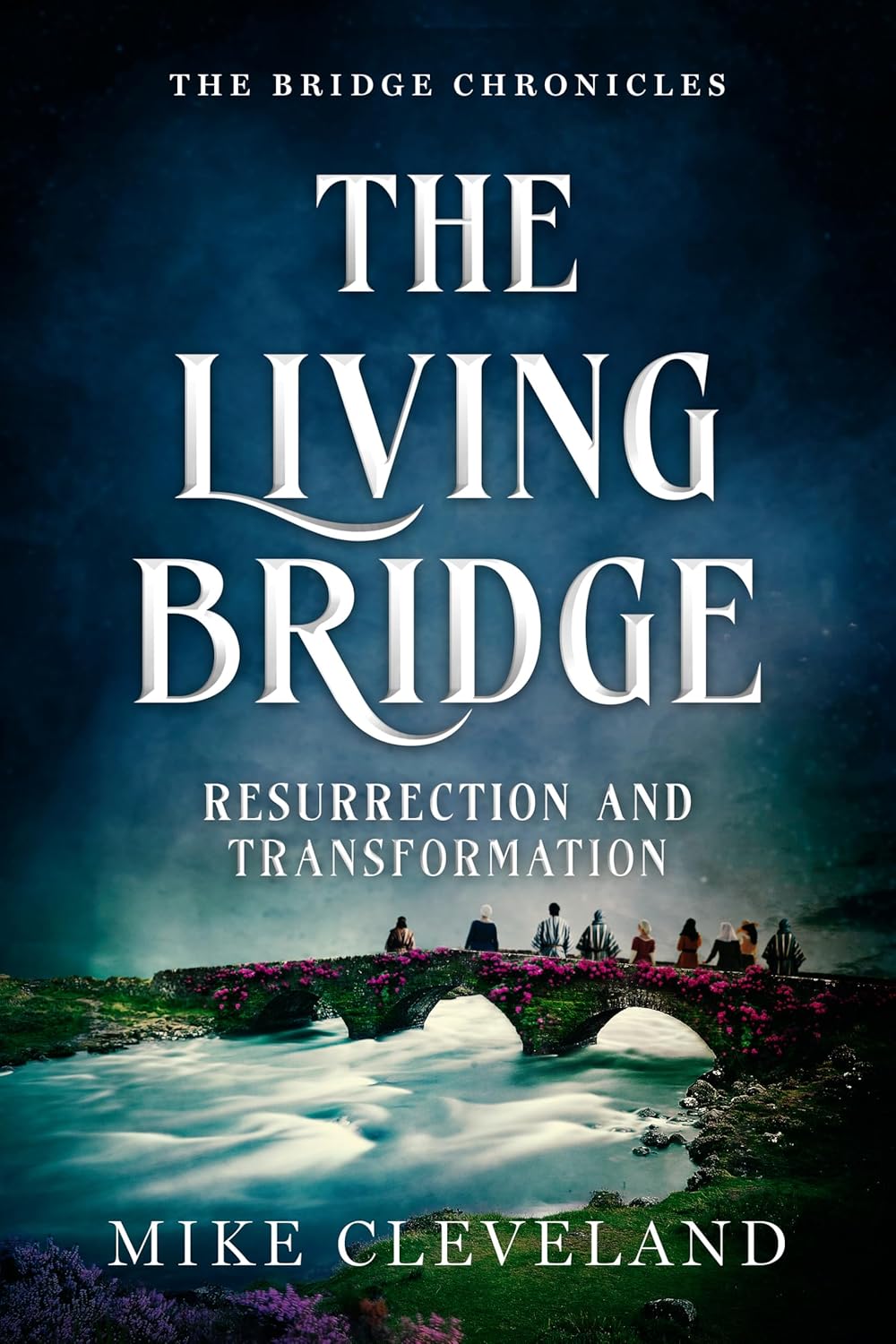
The Living Bridge is a work of Christian allegorical fiction that weaves together the stories of five broken people whose lives intersect in the shadow of a shattered bridge between Eastlight and Westshore. The book follows Mary, Lydia, Matthias, Cleopus, and Tamar as each carries grief, guilt, or despair to the riverbank where everything once fell apart. Their stories unfold in three movements that chart their journey from damage to darkness to eventual restoration, all centering on the arrival of a mysterious teacher named Geshriel, whose presence begins to mend what the earthquake destroyed. The opening chapters set the tone well, especially Mary’s torment under “Legion” and her stunning moment of deliverance, and Lydia’s aching exile from her family across the broken river.
As I read, I found myself reacting less to the plot mechanics and more to how the author frames suffering. Cleveland writes with a kind of steady compassion, letting each character’s pain breathe before offering any hint of resolution. Mary’s chapter in particular struck me. Her inner world felt raw and believable, and the moment her mind finally quiets when Geshriel calls her “beloved” is one of the more affecting scenes in the book. The prose is simple, almost plain at times, but it works because the emotional beats land without being dressed up. It felt like sitting with someone who has been wounded for so long they’ve forgotten anything else is possible. The author doesn’t shy away from darkness, but he also doesn’t exploit it. Instead, he uses it to build a kind of slow, patient hope.
There were moments when I paused, not because the story demanded it but because something in the writing touched on familiar human questions. Lydia’s longing for her daughters across an uncrossable river is written with a tenderness that feels lived-in rather than symbolic. Matthias’s crushing guilt over the collapse he caused, and the way he interprets every failure as further proof of his curse, could have felt melodramatic, but it didn’t. His scenes carried the weight of someone who can’t imagine forgiveness applying to them anymore. Cleveland seems most comfortable when exploring how shame isolates people, how grief reshapes their days, and how mercy begins as a voice they aren’t even sure they heard correctly. Sometimes the metaphors are quiet, sometimes they shine brighter, but they always feel in service of the characters rather than the other way around.
The book’s message is clear without being heavy-handed. The “living bridge” isn’t just a rebuilt structure but a person, a sacrifice, and a way back home. This won’t surprise readers familiar with the genre, but it still lands because the characters’ journeys make the message earned rather than assumed. If you enjoy faith-centered fiction, particularly stories that blend biblical echo with imaginative narrative, this book will likely resonate. Readers who appreciate character-driven arcs of healing and gentle spiritual allegory will find plenty here to sit with. And for anyone who has ever felt stuck on the wrong shore of their own life, the book offers a quiet reminder that bridges can be rebuilt, even when you’ve forgotten how to hope.
Pages: 227 | ASIN : B0FX5WS62Y

The Living Bridge
Mike Cleveland’s The Living Bridge continues the sweeping saga begun in The Broken Bridge, drawing us back to the world split apart by the shattering of the ancient stone span across the Vitae River. This second volume narrows its focus to five broken lives in the months before Geshriel, the carpenter, gave himself as the keystone of a new living bridge. We meet Mary, tormented by demons of grief and despair; Lydia, stranded far from her family and branded an outsider; Matthias, the cursed builder crushed by guilt over his son’s death; Cleopus, a revolutionary consumed by anger; and Tamar, condemned by her own betrayal. Their stories unfold in three movements that build toward the moment when Geshriel’s love begins to transform both individuals and communities. The book blends allegory, spiritual reflection, and raw storytelling in a way that feels both ancient and startlingly present.
I found myself drawn in by the way Cleveland writes pain. He doesn’t dress it up or keep it at a safe distance. Instead, he lays it bare. Mary’s torment felt claustrophobic and heavy, yet it rang with truth about how grief can twist into lies we start to believe. Lydia’s yearning for her family carried me straight into her loneliness, and I felt her ache as if it were my own. The sorrow runs thick, and I caught myself needing to set the book down just to breathe. But that intensity is also its strength. It’s not a story of quick fixes or shallow hope. The book forces you to sit with loss before it shows you healing, and that honesty made the moments of light feel earned rather than cheap.
I appreciated the style of the writing. At times, it leans into bold, sermon-like declarations that give the story a sense of weight and authority. The message often comes through with such clarity that I found myself stopping to take it in, underlining sentences I didn’t expect to linger on. Phrases about love that refuses to let go or hope that survives silence stayed with me. The blend of allegory and character-driven narrative gives the book a unique rhythm, and when the two meet, the effect is powerful, striking straight at the heart.
The Living Bridge presses on wounds most of us carry in some form. But for readers who are willing to wrestle with grief, forgiveness, and the idea that love is stronger than death, it offers something rare. I would recommend this book to anyone who enjoys Christian fantasy with a strong allegorical bent, and to anyone who needs a story that admits the depth of human pain yet still dares to point toward healing.
Pages: 227 | ASIN: B0FX5WS62Y
Longing, Loss, and Waiting

The Broken Bridge tells the story of two communities united by their faith in the Great Bridge and the intense fear and dread that follows its catastrophic collapse. What was the inspiration that drove the development of the world the characters live in?
The story began with a single image in my mind: a great, living bridge holding two communities together—until it falls. I’ve spent years walking with people through conflict, loss, and reconciliation, and I wanted an allegory that shows both the terror of separation and the costly beauty of restoration. The world of The Broken Bridge is built around that question: when what we’ve trusted collapses, which “bridges” do we run to—and which one can actually bear the weight of our hopes?
I felt this story was very well-written. What’s your experience as a writer?
Thank you. I’ve been writing for over two decades—first Bible studies, devotionals, and discipleship courses through our ministry, and then a number of nonfiction books. Fiction became a natural next step for me because a story reaches the heart in ways instruction alone can’t. The Broken Bridge drew on those years of pastoral ministry and teaching, but it let me weave truth into a narrative that invites readers to feel as well as think.
What were some themes that were important for you to explore in this book?
Unity and division: how easily communities fracture—and what it truly takes to reunite them.
Counterfeit vs. true solutions: many “fixers” promise quick repair; only one path restores the heart.
Sacrificial love: the kind of love that stands in the gap and pays a cost for others.
Pride and humility: the danger of self-reliance and the freedom that comes from surrender.
Hope through suffering: how longing, loss, and waiting can become the doorway to deeper healing.
What is the next book you are working on, and when will it be available?
Two follow-ups are on the way. The Living Bridge is due out in October 2025—it continues the allegory by exploring how trust is rebuilt and what kind of bridge can truly hold. The trilogy concludes with The Eternal Bridge, scheduled for January 2026, which lifts our eyes to the ultimate reunion and the promise of forever.
Author Links: GoodReads | Amazon
Seven years ago, an earthquake separated Fidel from Verita the day before they were to be married. Now, as they exchange nightly lantern signals—an old watchman’s code Verita learned from her uncle—the churning waters of the Vitae River still separate them, but their light signals speak across the dark divide.
Six builders arrive, each promising to rebuild the bridge. They each represent some aspect of humanity’s attempt to heal what’s broken—through law obedience, knowledge, religion, servitude, charisma, and self-transformation.
When the seventh builder arrives—an ordinary carpenter with extraordinary compassion—everything begins to change. Geshriel speaks of a different kind of restoration, one marked by humility, love, and a mysterious costly sacrifice.
As darkness closes in, will Fidel dare to trust a path that seems weaker than all the others—but somehow feels truer? After seven long years of lantern signals across the raging river, will Fidel and Verita finally be reunited?
This is a story of ache and heartbreak, of longing, of desperate attempts to be reconnected. It speaks of love and loss, of yearning to be reunited.
A story of separation and reunion, sacrifice and redemption—and the bridge that love builds when all else fails.
The Broken Bridge

Mike Cleveland’s The Broken Bridge is a sweeping allegorical tale about unity lost and the sacrificial love that alone can restore it. The story begins in a vibrant and harmonious world where two communities are joined by the Great Bridge. More than just stone and mortar, it’s a living heart that binds people together. Fidel and Verita’s love is set to be sealed at the bridge’s center, but a sudden and catastrophic collapse shatters both the structure and the people’s trust. As the physical chasm grows, so does the spiritual and moral divide, giving way to fear, selfishness, and grief. Various figures, each embodying different philosophies and approaches, arrive to offer their versions of repair, but only one path leads toward true restoration. Through vivid scenes and a layered cast of characters, Cleveland builds an allegory of the human condition, the Fall, and the atonement.
The imagery is lush but never indulgent; the bridge itself is practically a character, breathing with history and meaning. Cleveland’s gift lies in his ability to make a symbolic world feel tangible. I could smell the bread from the communal kitchens, hear the lapping of the Vitae River, and feel the stone vibrate under the feet of a united people. When disaster struck, the grief was palpable. He writes loss in a way that made my chest ache. And yet, there’s a steady thread of hope woven in, even through the darker passages, that kept me turning pages long after midnight.
The book isn’t just a pleasant walk through metaphor. It has sharp edges. The portrayal of human frailty, how quickly love can curdle into self-preservation, hits uncomfortably close to home. I found myself frustrated with characters who gave up too soon, and pained by those who clung to impossible ideals, hurting others in the process. There were moments I wanted to shout advice into the pages. But that’s a credit to Cleveland’s storytelling; his people aren’t cardboard saints or villains. They’re complex, flawed, and deeply human. At times, the moral symbolism is overt, but it never feels like a sermon being read to you. It feels like a mirror being held up.
The Broken Bridge left me with that rare mix of satisfaction and longing. The sense that the story had resolved, but that its truths would keep echoing long afterward. It’s a tale for readers who enjoy their fiction with meaning baked into every scene, who don’t mind being made uncomfortable on the way to being inspired. I’d recommend it to fans of allegorical works like The Pilgrim’s Progress or Hinds’ Feet on High Places, as well as to anyone wrestling with themes of reconciliation, grace, and the cost of true unity.
Pages: 183 | ASIN : B0FH365HJT



 LITERARY TITAN