Blog Archives
Journey Through History

The Green Wave is a blueprint for a sustainable maritime industry by reducing environmental impact while maximizing economic benefits. Why was this an important book for you to write, and who do you think can benefit from the information in it?
Shipping is the hidden artery of the global economy, quiet, powerful, and essential. I began my journey at sea as a sailor, earned my Master Mariner’s license, and later served as an operations and management director in two shipping companies in Greece. That path, combined with my work as a researcher, writer, and thought leader with over 60 published books, gave me a full-circle perspective: from the bridge of a ship to the boardroom of strategy.
I wrote The Green Wave to move the conversation from what must be done to how it can be done. The book is both compass and call to action, unfolding as a journey through history, technology, economics, and ports, before ending with a clear invitation to act. It speaks to shipowners, port leaders, engineers, policymakers, students, and any curious reader who wants to see the road ahead not in theory, but through real examples and human stories.
How much research did you undertake for this book, and how much time did it take to put it all together?
The book is the product of years at sea and years of study. My three master’s degrees gave me the academic tools, while my maritime career gave me the lived experience. I read widely, observed closely, and most importantly, listened, to crews, shipbuilders, port managers, and industry leaders.
The writing itself was like a voyage: long, challenging, but deeply rewarding. Each chapter was designed to feel like a leg of a journey, so the reader could travel from the origins of shipping to the possibilities of its future. My goal was clarity, making complex choices feel navigable.
What were some ideas that were important for you to share in this book?
That the future of shipping will not be shaped by a single tide, but by many waves moving together.
That we must begin today with small, practical steps while designing ships that can embrace tomorrow’s innovations.
That digitalization is not just about technology, but a hidden source of energy, turning information into real efficiency.
That ports are more than entry points; they are the spark that ignites wider transformation.
That sustainability must stand on solid economics, proving that green choices can also be smart business.
And above all, that people remain at the heart of this journey. Knowledge, training, and leadership are the wind that fills the sails of change.
What is one thing that you hope readers take away from The Green Wave?
Hope and confidence. Decarbonizing shipping is not a dream for tomorrow; it is a course we can set today. Begin with a pilot, measure honestly, scale what works, and keep the vision alive. If The Green Wave leaves readers ready to take that first step, whether they are a policymaker, a student, or a shipowner, then the book has done its work.
Author Links: GoodReads | Amazon
The Green Wave
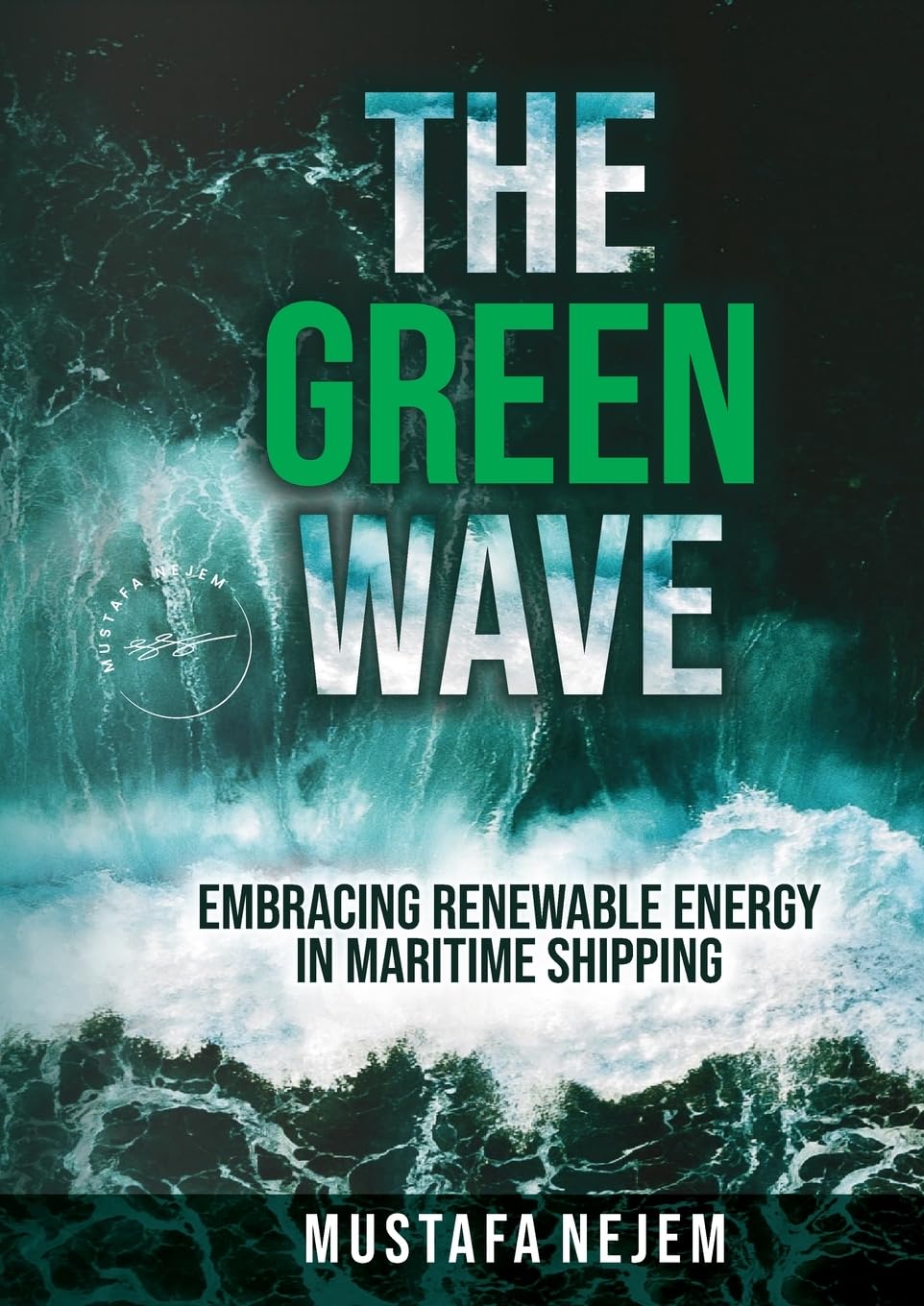

The Green Wave takes on a big subject with even bigger stakes: how the shipping industry, a cornerstone of global trade, can move away from fossil fuels and embrace renewable energy. The book is structured as a wide-ranging tour through history, technology, economics, regulation, and future trends. It covers the evolution of ships from wooden rafts to today’s steel giants, then dives into renewable energy sources like solar, wind, hydrogen, and biofuels. It discusses technological breakthroughs in clean propulsion, ship design, and retrofitting. It also highlights the financial realities of sustainability, the importance of regulation, and case studies of companies already making the leap. In its closing chapters, it looks forward to global collaboration, workforce training, and how public perception will push the industry toward greener horizons.
The research is thorough, and the ideas are hopeful. The writing leans on big metaphors and detailed passages that can feel dense if you’re not steeped in the subject. The author works hard to cover every angle, which gives the book an encyclopedic feel. I found myself drawn in by the case studies like retrofitted cruise ships and tankers switching to LNG or rotor sails, and those concrete examples carried more emotional weight than the broader discussions of efficiency or emissions. The author’s care for the subject is evident, and that urgency shines through in ways that are often inspiring.
I think the strongest parts are where the book shows the human side of the industry. When it talks about shipbuilders experimenting with new materials or port operators installing charging stations, the story feels alive and relatable. I did come away with a better grasp of the real options on the table. It made me hopeful that change is possible if industry leaders, governments, and consumers push in the same direction.
I’d recommend The Green Wave to readers who want a detailed, almost textbook-level overview of green shipping, but also to anyone who enjoys seeing how technology and human ambition collide with global challenges. It’s not a breezy read, but it’s a meaningful one. Policymakers, environmental advocates, and business leaders will probably get the most out of it. For casual readers curious about clean energy, it may feel overwhelming, though still worthwhile if you stick with it.
Pages: 348 | ASIN : B0CPKDBWSB

Abyssal Echoes
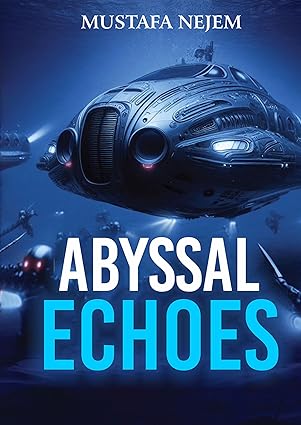
Mustafa A. Nejem’s Abyssal Echoes is a sci-fi horror epic set in the crushing blackness of Earth’s deepest ocean trenches. It follows the crew of the submarine Pacifica on a research expedition that quickly spirals into a confrontation with ancient ruins, alien technology, and horrors not of this world. What begins as a scientific survey becomes a descent into madness, mystery, and metaphysical dread, as the crew uncovers evidence of an extinct, hyper-advanced underwater civilization and awakens dormant forces that seem bent on rewriting evolution, and maybe even reality itself.
The writing is brisk and cinematic, and Nejem has a knack for making even the most impossible sci-fi ideas feel grounded. I was hooked from the first dive into the hadal trenches. There’s a real sense of awe and dread that reminded me of the first time I watched Alien or The Abyss. The science fiction is chewy enough to be thought-provoking but never gets bogged down in tech speak. And the horror is not cheap scares. It creeps up on you. The chapters unravel like found footage or a lost logbook, giving the whole thing an eerie realism I didn’t expect.
But what I really liked was the way the book handles its ideas. There’s something ancient and cosmic at play, something that brushes against theology and philosophy without being preachy. The alien race, the Aen’Bri, aren’t just another version of us, they’re genuinely other, and their technology is so advanced it borders on magic. There’s a grim warning running through the whole book: that curiosity has a cost, and that some doors, once opened, can’t be shut. That theme, of knowledge becoming its own curse, resonated with me. I didn’t always love the pacing; a few segments toward the middle got repetitive with rescue missions and creature encounters. But those were small bumps in a book that otherwise kept me fascinated and creeped out in the best way.
Abyssal Echoes is perfect for readers who enjoy sci-fi that leans into horror. Think Event Horizon, The Thing, or Annihilation. If you like stories about the unknown, especially the unknowable, this book is for you. I’d especially recommend it to fans of deep-sea horror, cosmic dread, or anyone who enjoys fiction that makes them feel both tiny and terrified in the face of the universe.
Pages: 159 | ASIN : B0CQFP6WB5
The Memory Gardener


In The Memory Gardener, we’re plunged into a world where memories bloom like flowers under the careful hand of Joseph, a veteran memory gardener. Clients entrust him with their lost recollections, such as joyful hugs, childhood laughter, or even the shadows of their dark pasts. When Marlon arrives with a request to cultivate a memory tied to a decades-old crime, Joseph finds himself entangled in more than just mental horticulture. What begins as a technical challenge blossoms into an ethical battlefield, with authorities circling and the truth’s fragility exposed at every turn.
I loved how the prose dances between wonder and unease. The writing has this playful rhythm that suddenly jolts into something intense, almost like those fizzling moments when you’re sure you’ve remembered something and then it slips away. Joseph’s voice comes through as warm and thoughtful, but there’s an undercurrent of tension that keeps you on edge. Sometimes the descriptions are a bit long, like a gardener fussing over each petal.
The ideas here stuck with me for a while. What does it mean to hold someone’s past in your hands? How much of our identity hinges on imperfect recollections? I found myself pondering those questions during my morning coffee, my mind wandering through my own mental garden. And when the plot twist lands (no spoilers!) it hits like a thunderclap, forcing you to rethink everything you believed about memory and truth. It felt daring and fresh —a rare combination in speculative fiction.
The Memory Gardener by Mustafa Nejem is ideal for anyone who enjoys thoughtful sci-fi with a human touch. Fans of character-driven stories and ethical puzzles will dig it. If you’re the type who enjoys lingering over a sentence and then sprinting through the next chapter to find out what happens, this one is right up your alley.
Pages: 58 | ASIN : B0CSBTLG3Q



 LITERARY TITAN