Blog Archives
Everlasting Time

Triskele is a dreamlike collection of sensory poems where childhood memories resurface in fragments, inviting readers to linger in the quiet glow of memory and meaning. Did the collection begin with a theme or with individual poems?
The collection began when my rock covers band (as a drummer) folded with a bereaved member (my late wife). I had a stack of my original lyrics and decided to try a hand at poetry using some of my works, going through the stages of grief, and then finding a second chance and remarrying has opened up a new world in my word play, I now understand that if you experience something dramatic, then you can write about it with a true feeling to it.
How did the number nine shape the creative process?
The ‘ennead’ was a group of nine deities in Egyptian mythology; in poetry it refers to a set of nine poems. With no logic to it, it just happened that I grouped each chapter into nine. To be aware the poems are in the same order as were written with no rhyme (pun) or reason as to the order of appearance, they are in the books just how they fell from the grey matter, mostly unabridged, and as they were originally penned.
What fascinates you about memory’s persistence?
I have a poor memory (due to a head injury when young). When something pops into my head, an idea, a poem, a lyric, if I don’t write it out immediately, it is soon lost in space forever.
I’ve captured many an idea in the middle of the night, at work, and when that happens there comes a hankering to add to it until it is finished, the poems mostly spontaneous, don’t ask me why or how these come about, they just appear.
An occasional snipped of my childhood returns when I see a picture, or someone mentions something, that may be the clue to the persistence, to discover more of the missing past.
I took unusual liberty to add explanations to the poems as many people taking them at face value (which is great), may not get author’s intent, or understand in my whacky sense of humour of what they are about.
Why choose the title Triskele? What does the spiral symbol mean to you?
A triskele is a symbol of ‘everlasting time’, the pattern when followed repeats back onto itself, I love the graphic of it and wear a Celtic style bracelet with a triskele on it instead of a watch ( no batteries), so in my sense of humour, if anyone asks the time, I can point to it saying, “Everlasting”.
A hope that it is, however, the reality of life one discovers that we are all mortal, and this indeed has inspired some of the poems.
The collection of Triskele never stopped, to follow have come more books in similar format titled ‘Mousanisms’, ‘Thrice’, ‘A Fifth of Four’, ‘Sarah in Dippidy’, and currently coming together is ‘Rhyme to Pass Thyme’.
It has been a lot of fun, a hope that someone else enjoys them when starting a fire.
Triskele
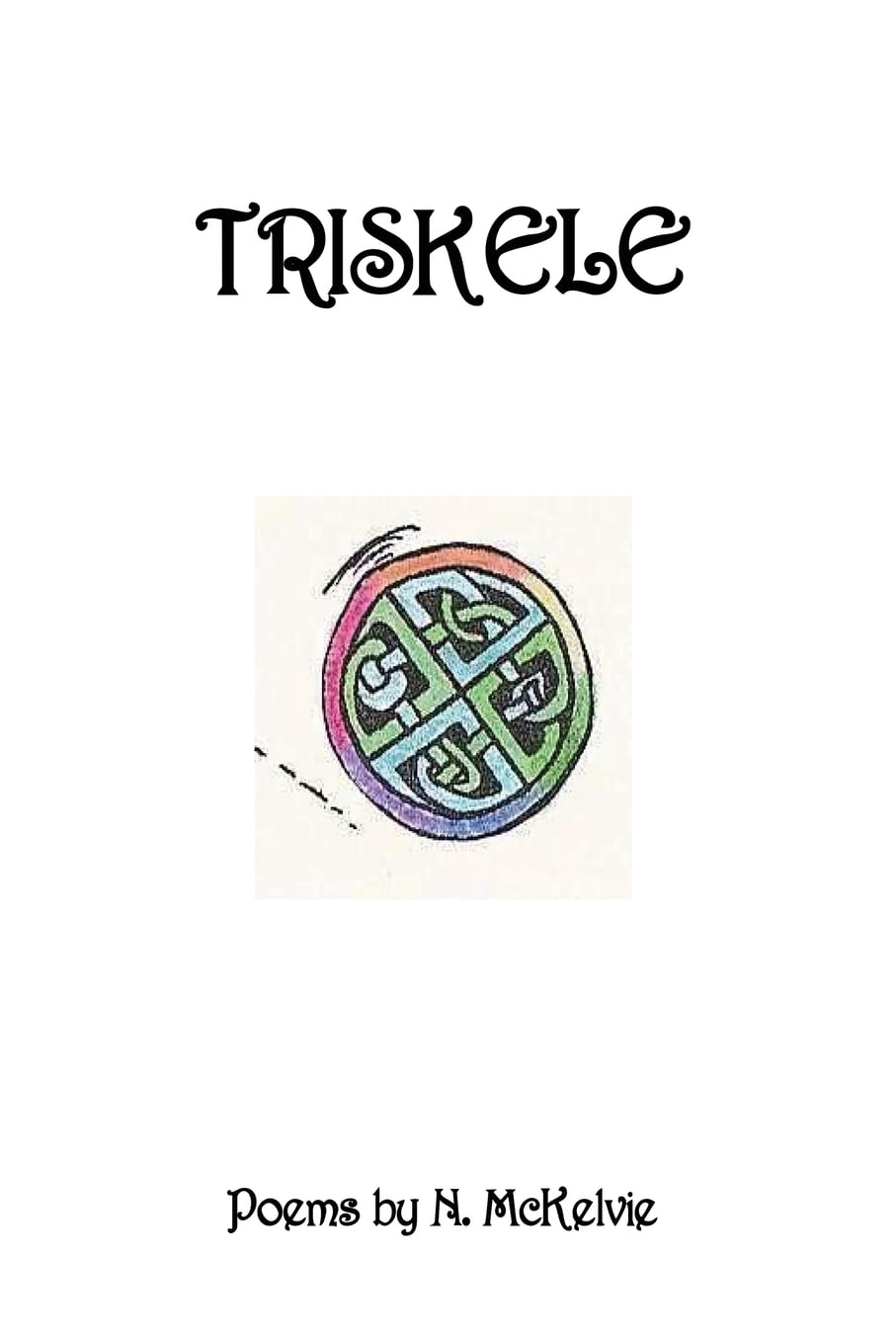

With poetry collections, it’s natural to read with an eye for repetition, for the motifs that surface, vanish, then return in a new light. Here, the clearest throughline is the way childhood keeps its grip on adulthood. Memory doesn’t stay neatly archived. It wanders. It resurfaces without warning. Many of these poems circle the experiences we gather early and never fully release. Like half-remembered dreams, they rise from deep storage as the years pass, arriving as phantom scents, stray tastes, sudden images. What are they to us? Simple recollection? Or signals from an earlier self, coded, persistent, and asking to be understood?
Triskele, by Neil McKelvie, is a poetry collection that feels, at times, reminiscent of A Visit to William Blake’s Inn. The pieces are brief yet vivid. They lean into food, childhood, love, memory, and the quiet pleasure of ordinary moments. Nothing is overworked. Nothing is forced. The language often lands like a small sensory discovery.
Poetry also invites a familiar question: are we meant to read literally, or to hunt for symbol? In this collection, either approach can stand. McKelvie shows a steady command of a dreamlike mode. The themes arrive on soft edges. Meaning glows rather than declares itself. There’s an esoteric, ethereal charge to much of what’s offered, suggestive, elusive, and deliberately unpinned.
That quality makes the reading experience pleasurable, even soothing, yet it also creates a persistent sense of distance. The poems open a door into the speaker’s inner world, then stop short of full access. You can see the room. You can’t quite cross the threshold. Some selections, such as “Red Skies Rainbows” and “The Vanishing,” are heartbreakingly lyrical, rich with beauty and ache. Others, including “IX The Ninth,” turn toward violent historical events, remembering and mourning what cannot be undone.
For readers seeking the most immediate enjoyment, it may be best to accept many of these poems at face value. Let them be what they appear to be. Let the images stand. That choice often brings you closer to the author’s emotional frequency. It also gives you the best chance to meet the collection in its intended mood, which, for poetry, is often the point.
Pages: 116 | ISBN : 1300762756

Whisky Stuff

Whisky Stuff is part tasting journal, part whisky primer, part comedy routine, all wrapped into one very personal little handbook for whisky lovers. It opens with a chatty foreword that explains how rough tasting notes on scraps of paper grew into a proper logbook, then moves into “The Good, The Bad, the Ugly,” where the author shows how to record what you drink, sort bottles into shelves in your mind, and keep a grip on your budget and your liver. The central chunk is made of repeatable tasting pages for your own drams, and the back of the book turns into “WHISKNOWLEDGEY,” a rambling A–Z of whisky terms, jokes, and common-sense advice, followed by more lighthearted sections on whisky “bizness,” references, and author notes.
I really enjoyed the voice in this book. It feels like sitting in a slightly chilly shed with a funny uncle who loves his whisky and also loves wordplay. The spelling wobble now and then, the silly names, the daft quotes, the mock-drunk paragraphs where the typing goes sideways. All that gives the book a scruffy charm. A few pages lean into puns and comic misspellings. When the humour and the practical notes stay in balance, though, the writing feels warm and human and oddly motivating. It made me want to pour a small dram and start scribbling.
I like the way it insists that your palate is your own and that “if it tastes good to you, then it must be good.” I also like the down-to-earth thinking about “the good, the bad, and the ugly,” the top-shelf treasures, the middle-shelf workhorses, and the poor bottles that end up as mixers or in the “Infinity” blend instead of the drain. The glossary pieces on ABV, age statements, casks, chill filtering, and hangovers are simple and clear. They cut through a lot of whisky snob smoke and replace it with real-world advice about air time, water, budgeting, and dry checks. I liked that the book respects curiosity and pleasure more than status or price tags.
I would recommend Whisky Stuff to people who want a friendly sidekick to their whisky hobby rather than a grand encyclopedia or a sleek coffee-table tome. It suits new drinkers who feel lost in whisky jargon and also suits long-time fans who want a playful logbook and a few laughs. If you would like a place to capture your own tasting stories, this little book will fit right in on your shelf and probably on your bar.
Pages: 126 | ISBN: 1300999535


