Blog Archives
Stranger On This Earth

The Dream Collector: Book II: Sabrine and Vincent Van Gogh follows the relationship of Sabrine and van Gogh, who grow increasingly self-destructive, leaving Julie and Freud to find out why. What was the inspiration for the setup of your story?
The setup arose out of my passionate desire to understand why Vincent van Gogh, a genius of a painter, possessed his self-destructive impulses. I came to the conclusion that, in part, he perceived himself as a “stranger on this earth.” From childhood (in Biblical terms), a seed who fell by the wayside. Of course, for a more detailed (and explosive) explanation, one must read my novel. Sabrine, my fictional character, enabled me to mirror Vincent’s sense of abandonment and betrayal with her own backstory.
What experience in your life has had the biggest impact on your writing?
Hmm… another hard question. I remember, at age 14, the awe I felt after finishing Dostoevsky’s ‘The Brothers Karamazov’. It revealed to me the affective power of literature.
Can you tell us where the book goes and where we’ll see the characters in the next book?
This book reaches a definitive and (I will boast) a happy ending. There is no next book, but my ultimate plan has been a film in which to draw out more aspects of the characters in The Dream Collector.
Author Links: Facebook | Website
Sabrine, hospitalized for five years at the infamous Salpêtrière Asylum for Women, gains her release due to intervention of her sister Julie Forette and a young Sigmund Freud. The reunited sisters are introduced to the dazzling art milieu of 1886 Paris, and soon become close friends to the leading Impressionists. Sabrine attracts a cult following as a poetess, the enigmatic “Haiku Princess.” Seemingly cured by Freud of her Grand Hysteria, Sabrine soon enters into a tumultuous relationship with Vincent van Gogh.
Jule and Sigmund Freud, alarmed by the eerie parallels between the emotionally volatile couple and their self-destructive impulses, begin an urgent search to discover the root causes for Sabrine and Vincent’s growing psychoses. Julie, ‘The Dream Collector’ seeks their most unforgettable dream for Freud’s interpretation and revelations occur.
The Dream Collector is an exploration of the psychological consequences of betrayal, abandonment–and the redemptive power of art.
The Dream Collector: Sabrine & Vincent van Gogh – Book Two


In The Dream Collector: Book II: Sabrine and Vincent Van Gogh, RW Meek presents the captivating continuation of Sabrine’s journey, set against the rich backdrop of 1880s Paris. Following a prolonged stay at the Salpetriere Asylum for Women, Sabrine, now freed through the efforts of a young Sigmund Freud and her devoted sister Julie, delves into the vibrant Parisian art scene. Here, she meets the enigmatic Vincent van Gogh, and together, they embark on a passionate, albeit tumultuous, affair fueled by their shared artistic fervor and personal demons.
This sequel explores new dimensions of Sabrine’s character as she transitions from her intricate interactions with Freud to the equally complex Van Gogh. While the series blends historical fiction with elements of magical realism, it also evokes the adventurous spirit of “The Young Indiana Jones Chronicles” through its integration of historical figures and fictional narratives. Fans of art history will find much to admire here, as Meek vividly reimagines the lives of cultural icons such as Van Gogh and Freud. The portrayal of these figures is meticulously crafted, bringing an immersive authenticity to the narrative. Despite the larger-than-life personas surrounding her, Sabrine holds her own as a compelling protagonist. Her multifaceted personality—humorous yet fragile, unpredictable yet endearing—ensures that she resonates deeply with readers, making her more than just a mere adjunct to the historical luminaries she encounters.
Meek’s novel, The Dream Collector: Book II: Sabrine and Vincent Van Gogh, celebrates the turmoil of the creative process and offers a poignant exploration of identity and belonging through the eyes of an unforgettable heroine. This series promises to be a rewarding journey for those intrigued by the intersections of history, art, and human emotion.
Pages: 654 | ISBN : 1962465357

Uncertainty and Revelation

A House of Cranes follows an eleven-year-old orphan who embarks on a journey of self-discovery and personal growth after going to live with a well-off family in Connecticut. What was the inspiration for the setup of your story?
I always wanted to write a coming-of-age story. I think back to my childhood and all the discoveries that come with being a boy, a teenager, and a young man. It’s a time filled with uncertainty and revelation.
The characters of Lucius and the Crane family are intricately woven, with a multitude of layers that make them unique and intriguing. What was the most important factor for you to get right in your characters?
My goal is to always give my characters as much depth as possible. If they’re not interesting to me, I can’t expect them to be interesting to my readers. It’s also important for each character to have some opposing qualities I can use to pit them against one another.
What were some themes that were important for you to explore in this book?
Love and acceptance, and at the very least, to be seen by those we hold in high esteem, are the underlying themes in the novel. Above that is coming to terms with want versus need and understanding the difference between love and obsession.
What is the next book that you’re working on, and when can your fans expect it?
The current novel I’m writing is about a retired CEO, twice divorced, childless, alone, and has been diagnosed with a terminal illness. She hires a male escort who she has seen in the past to spend a month with her at her vacation home on a small island off the coast of Australia. My planned publication date is in the fall of this year.
Author Links: GoodReads | Twitter | Website
A House of Cranes
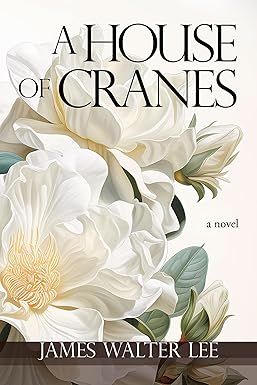

Set in 1963 in Hartford, Connecticut, A House of Cranes by James Walter Lee delves into the life of Lucius Cook, an eleven-year-old orphan who finds solace in the Crane household. This historical fiction portrays Lucius’ complex relationship with the Crane family, particularly the enigmatic Eleanor Crane, sparking a journey filled with self-discovery amidst the family’s hidden struggles.
Lee masterfully crafts a narrative that delves into themes of identity, familial bonds, and the intricate nature of love. As Lucius transitions from a reserved boy to a young man contending with burgeoning desires, the reader is drawn into a richly described world of emotional complexity. The author’s prose, characterized by its immersive quality, offers a deep dive into Lucius’s psychological landscape, marking key moments of realization and growth. The portrayal of the Crane family serves as a poignant reflection on the dichotomy between appearances and reality, especially in the context of Eleanor and Kenneth Crane’s strained marriage. This dynamic adds layers to the narrative as each character navigates their intricate web of relationships amid emotional upheaval. Lee’s handling of sensuality and desire within the novel is noteworthy, blending tenderness with a sense of provocative exploration. Central to the narrative, this aspect delves into complex and provocative themes, offering a rich and thought-provoking experience for those who engage with its depth. It contributes significantly to the novel’s examination of intimacy and personal growth.
A House of Cranes is a compelling blend of historical setting and profound character study. James Walter Lee’s adept storytelling and rich characterizations make this work a significant contribution to the literary fiction genre. Its introspective exploration of human emotions and relationships will likely engage readers who appreciate nuanced, character-driven narratives.
Pages: 386 | ASIN : B0CTD39W3K
Empowerment of Art
The Dream Collector Book I: Sabrine and Sigmund Freud follows a young woman working in a women’s asylum who meets Sigmund Freud, and together they explore mental health and the world of 19th century Paris. What was the inspiration for the setup of your story?
In 1886 Freud had been awarded a grant to study with famed hypnotist Jean-Martin Charcot at the Salpêtrière Asylum for women. Vincent van Gogh came to Paris to study the new art emerging, Impressionism. Here were two iconic figures who found themselves, their path, their calling, during that one special year. Annus Mirabilis. I only needed a protagonist with an interest in mental health and art to entwine their stories. Julie Forette, a self-educated woman, became my storyteller.
With so many famous people from history in your novel, what was your writing process to ensure you captured the essence of these characters?
Research, extensive research on each historical character, including letters, journals, anything which revealed their experiences, thoughts, and tone. And maintaining individual files, with sections like “His words/Her Tone’ so that when dialogue occurred in the story, I had a go-to resource, to capture their individualistic tone.
What were some themes that were important for you to explore in this book?
I’m so glad you used the plural, themes. My overarching theme was the empowerment of art, how a painting, book, poem can enable us to resonate with our own identity. How art can touch our hearts, raise our consciousness, and–––to risk addressing the spiritually inclined–––uplift our souls.
But a subsidiary theme emerged when learning that famed author Émile Zola, in 1886, betrayed his childhood friend Paul Cezanne by writing a roman à clef. In the novel, a failed artist, confronting his mediocrity, commits suicide. All of Paris knew that Zola was describing Cezanne. When Cezanne read the novel, entitled ‘Masterpiece’, he was heart-broken and never spoke to Zola again. I wanted to explore the tragedy of how someone you trust, you love, betrays you. And whether you can overcome the pain and trauma of betrayal. Can you recover? If so, how? So the theme of betrayal and abandonment becomes mirrored in my major characters, especially the protagonist Julie Forette and the Salpêtrière hysteric, Sabrine Weiss.
When will book 2 be available? Can you give us an idea of where that book will take readers?
Publication for Book II “Sabrine & Vincent van Gogh’ is scheduled for April 2024. We will follow Sabrine and Julie’s continued journey toward self-realization as they immerse themselves into the art milieu of late 19th century Paris. Under the watchful eye of Sigmund Freud, Julie and Sabrine become intimately involved with the major luminaries of the period, especially the van brothers, Theo and Vincent.
Julie Forette forms a friendship with the young, visiting intern Sigmund Freud who introduces her to the altering-conscious power of cocaine. Together they pursue the hidden potential of hypnotism and dream interpretation. After Freud receives the baffling case of the star hysteric, Sabrine Weiss, he is encouraged by Julie to experiment with different modes of treatment, including “talking sessions.” Their urgent quest is to find a cure for Sabrine, Princess of the Hysterics, before Dr. Charcot resorts to the radical removal of her ovaries.
In Paris, Julie finds a passion for the new art emerging, Impressionism and Post-Impressionism, and forms friendships with the major artists of the period, including Pissarro, Monet, and Degas. Julie becomes intimately involved with the reclusive Cezanne only to be seduced by the “Peruvian Savage” Paul Gauguin. Julie is the eponymous ‘Dream Collector’ collecting the one unforgettable, soul-defining dream of the major historical figures of the period.
The Looming Threat of Inevitabilities

In Fortune Falls, readers follow a man who discovers a dead body and is forced to face his own regrets and a looming crisis threatening his family. What was the inspiration for the setup of your story?
My initial idea was to focus on a man who needed to face his own mortality. As I approached middle age, I realized how pertinent death was becoming, and yet was still so easy to deny and evade something so unavoidable and so universal and integral to life. The slot machine initially only represented that—it wasn’t telling a fortune, it was merely stating an obvious fact. Jason returning home and then mostly discounting his encounter with it exactly paralleled how we tend to live our lives. The reader will likely be shaking her or his fist and saying, “Why aren’t you dealing with this? Why aren’t you even questioning this?”
As the novel progressed and Jason continued to develop, I realized there are actually so many things in life we do not face or reconcile, and over time, that slot machine truly became the looming threat of inevitabilities that can disrupt or destroy our lives. It tells truths we do not want to face, and it does so in the random spin of fate.
There was a lot of time spent crafting the character traits in this novel. What was the most important factor for you to get right in your characters?
I very much try to write human characters, characters with flaws and regrets, characters who make mistakes. The challenge is to also try to make them relatable and sympathetic. Jason was especially challenging because he falls so far and his reactions become so extreme. It then became that much more important to make is attempt to change and be better as believable and realistic as possible. And, of course, it is up to the reader to decide just how much he actually achieved.
Secondary to that were the challenges of trying to make the supporting characters fully fleshed out and understandable within a 3rd person narrative limited to the main character. Jen is equally complex, but the reader doesn’t get the benefit of being in her head. They are further challenged by seeing her through the eyes of Jason, and Jason’s perspective is not always trustworthy. Nicholas, as well, needed to be written carefully considering the complexities of the situation and of the character. It’s a delicate subject, and one I wanted to portray authentically—but again, twisted within the perspectives and trauma that Jason is facing.
Are there any emotions or memories from your own life that you put into your characters’ lives?
To be honest, this story is the least personal to actual elements of my life. That said, it certainly does reflect upon past and present parts of my life. In many ways, I took my own fears, biases, regrets, and anxieties, put them into Jason, and cranked them up to eleven.
What is the next book you are working on, and when will it be available?
I have just begun work on my 4th novel, tentatively titled Pawnbroken, about a man who owns and operates a pawn shop just outside downtown Milwaukee. He was extremely close to his brother who disappeared long ago. When a very unique chess set he had given to his brother as a gift shows up in his pawn shop, he decides to trace the object back and try to find out what happened to his brother.
I hope to have Pawnbroken available sometime in 2026.
Author Links: GoodReads | Facebook | Website | Amazon
It begins when fate leads him to a mysterious ancient slot machine in an abandoned field that delivers a foreboding message. Soon after, he is traumatized by his discovery of a disturbing death.
What follows is a downward spiral of actions and events that break through the façade of Jason’s perfect life. That one death will uncover the guilt and regret of an unresolved past, introduce crises that threaten to tear his family apart, and attract external dangers that will put both him and his family at risk.
Meanwhile, a larger global threat awaits as the mysterious slot machine with its predictions of death and suffering looms over his neighborhood on an unmarked road in an abandoned field…waiting.
The Dream Collector: Sabrine & Sigmund Freud

Set against the backdrop of Paris in the late 19th century, The Dream Collector Book I: Sabrine and Sigmund Freud, by R.W. Meek, immerses the reader in an era of remarkable transformation. The novel deftly intertwines the worlds of medicine and art, capturing the essence of a period marked by pioneering ideas. The story follows Julie Forette, an ambitious young woman who joins the Salpetriere, a mental asylum home to thousands of women with varying psychological conditions. Here, she encounters a young Sigmund Freud, and together they explore the enigmatic world of mental health, united by their curiosity and a shared interest in cocaine.
The narrative becomes increasingly intriguing with the introduction of Sabrine Weiss, a patient suffering from hysteria, whose condition puzzles both Julie and Freud. As Julie’s journey progresses, she meets several prominent historical figures, including artists like Paul Gauguin, Monet, and Cezanne. This not only enriches the story but also triggers a significant psychological evolution in her character. Meek’s novel shares similarities with the ethereal style of George Saunders, particularly his work Lincoln in the Bardo.
The Dream Collector stands out with its vibrant portrayal of Julie Forette. While initially seeming like a mere narrative device to facilitate encounters with famous personalities, Julie emerges as a character as compelling and dynamic as her historical counterparts. She navigates the shifting landscape of France, deeply affected by the societal and cultural revolutions around her. Her interactions with artistic and medical luminaries are marked by intellectual depth, showcasing her evolving consciousness and understanding of the world.
The Dream Collector: Sabrine & Sigmund Freud offers an engaging journey through a pivotal period in history, filled with intellectual exchanges and vivid portrayals of renowned figures. Each page promises a new discovery, making it a rewarding read for enthusiasts of the genre. Its blend of historical depth with a lively narrative makes it a notable addition to historical fiction.
Pages: 723 | ASIN : B0CP8P5SWL
Victims Tell Their Story

The Buffalo Butcher: Jack the Ripper in the Electric City, follows a group of five prostitutes who band together to stop a murder who is praying on working girls in a city that turns a blind eye to their deaths. What was the inspiration for the setup of your story?
When I began to imagine a scenario in which Jack the Ripper—whose 1888 murders in London were never solved—came to Buffalo in 1901 and picked up again where he’d left off, I began to do my usual background research. And I read a lot of books about the Ripper and about other serial killers, in hopes, I suppose, of figuring out what made them tick. I quickly gave up on that, and decided that I would never understand the mind of a serial killer—nor really did I care to. But the thing that gave me the critical idea for my book—and what makes it different from other ‘slasher’ books—is that I found that in so many of these serial killer biographies, the authors (intentionally or not) seemed to adopt a kind of ‘hero-worshipful’ tone about the killers, going on in lurid detail about their exploits, criminal genius, ability to evade the law, and so on. And all this while the actual victims of their crimes were treated as so much stage-dressing, their entire lives reduced to the single moment of a terrible death at the hands of a madman. And frankly that made me sad. So I resolved to write my book differently—from the victims’ perspective. I wanted to let them tell their stories, and give them an opportunity to reclaim—and proclaim—their full humanity, which had been stolen from them, first by the procurers and pimps who lured them into vice, and then by a killer stalking them as so much prey. I’m proud of the result.
I love that the protagonists are women who are typically ignored, scorned, and blamed for their own troubles. What were some driving ideals behind their characters’ development?
Thank you for saying so! I love them, too, for that very reason. In The Buffalo Butcher, all of ‘decent society’, from the cops to the common citizens, considers these young prostitutes (my protagonists) as disposable, unworthy, morally defective creatures. Yet in truth these “working girls” are some of the most decent, genuine people you would ever like to meet. They’ve known poverty and exploitation, and have endured aconstant drip of scorn from their so-called betters. All their illusions about what life ‘ought to be’ have been stripped away—and yet through it all, they have maintained a full measure of human kindness, decency, and willingness to put it all on the line—even to the cost of their lives—for a friend. I like to tell stories about real people—and these young ladies are about as real as they come. As such, The Buffalo Butcher is no ‘cozy mystery’: it’s a gritty, unflinching look at a part of life that perhaps we’d all like to pretend doesn’t exist—but for the sake of my characters—and my love and respect for them—I could not in good conscience turn away from depicting the sometimes horrifying reality of their circumstances.
I find the world you created in this novel brimming with possibilities. Where did the inspiration for the setting come from, and how did it change as you were writing?
Being from Buffalo, New York, I’m fascinated with the history of the place, and its former centrality—once a kind of early Silicon Valley—in the economic and social history of the United States. And in 1901, the biggest world’s fair of all time, the Pan-American Exposition, took place in Buffalo, bringing eight million people to the city. No author could ask for a better setting! But here’s the more interesting part, the metaphor: the great Exposition ran for only one brief season, May through November 1901, and then all but a single building was torn down, and the glittering pleasure city reduced to rubble. Knowing that fate lends The Buffalo Butcher a slightly elegiac quality, which mirrors the lives, loves, and losses of the main characters. And, if I may add, this arc of rise and fall serves as a larger metaphor: as a young person, I witnessed my beloved hometown go through a similar decline and collapse—from boom to bust. But what is beautiful and triumphant, both in real life and I hope in the book—both for cities and with people—is that hope is never lost. Today Buffalo—a city that people once dismissed as a relic of the past—is once again on the rise, re-emerging refreshed and vibrant, and learning both to embrace its rich history and, at the same time, welcome a new and different future.
What is the next book that you are working on, and when can your fans expect it to be out?
Current of Darkness, the next installment of my Avenging Angel Detective Agency™ Mysteries, is to appear in April of 2024, and in it society sleuth Sarah Payne returns to confront a case of industrial espionage in early Niagara Falls . . . then, in October, my next off-series book, The Phantom of Forest Lawn, will be out. I’m pretty excited about both stories, and I hope readers will share my enthusiasm!
Author Links: Goodreads | Website | Instagram
Summer 1901, and the great Pan-American Exposition welcomes the world to Buffalo, New York—Queen of the Lakes . . . the Electric City. Eight million visitors throng the bustling boomtown—all of them looking for a good time.
While the Pan-American blazes bright, in its shadow lies a zone of darker pleasures: the Tenderloin District, a rabbit’s warren of saloons, brothels, and ask-no-questions hotels. In this sprawling vice quarter, fully as large as the Exposition itself, fairgoers can indulge their less innocent appetites.
As heat and swarming crowds choke the city, the bodies of prostitutes begin turning up, slashed and mutilated by a pitiless hand—their flesh carved with strange symbols. Their gruesome murders are a final indignity worked on once-hopeful young women.
Some say the killings are the work of the Devil himself. Others hint that the Whitechapel Murderer, Jack the Ripper, has crossed the Atlantic to resume his bloody career. Yet the city’s power brokers—afraid of any publicity that would harm the Exposition—turn a blind eye to the victims.
As the bloody summer wears on, only one thing is clear: it’ll be up to the working girls themselves to stop the carnage. And in The Buffalo Butcher, five of them will stand together to confront the killer . . . and to reclaim their humanity.
An important new novel by Robert Brighton, acclaimed author of the Avenging Angel Detective Agency™ Mysteries.


