Blog Archives
A Story of Self-Reflection

Blood Flow is a raw, unfiltered memoir that stitches together decades of family trauma, personal ambition, health battles, and the relentless search for meaning. Why was this an important book for you to write?
I believe that almost all people endure a significant trauma at least once in their lives. Mine was the suicide death of my father, soon after I turned thirteen years old. Parent loss is trauma, especially to the young, who may lack the information or understanding of why such tragedies happen. In my case, I began interviewing family and obtaining three sets of hospitalization records when my dad was admitted for severe depression and suicidal ideation. I traveled to Trieste, Italy, where he was stationed as an army doctor, and to the Eastern European town where he was born and emigrated from with his family when he was three years old, already fatherless himself. This decades-long search provided a deep understanding of my dad’s history and an appreciation that he was in my life as long as he was.
What were some ideas that were important for you to share in this book?
Sometimes, people need to make a concerted effort to overcome trauma and see life as a great gift. It’s good for adult children to learn what they can about their parents because that knowledge will inform their understanding of their childhood. As a writer, I think that a memoir should not just be a story of victimhood and blame, but rather a story of self-reflection and knowledge, realizing that most people do the best they can with what they have.
What was the most challenging part of writing your memoir, and what was the most rewarding?
The most challenging part of writing my memoir was twofold. One was trying to stay objective while remaining compassionate and emotionally attached to events that radically changed my life. Two was repeatedly redrafting and revising the writing until I found a narrative structure, voice, pacing, and succinct narrative style to engage readers.
How has writing your memoir impacted or changed your life?
Completing my memoir and having it published brought closure to a writing project that took me decades to “get right.” Revisiting the traumatic events and aftermath of my father’s suicide eventually helped me understand and practice compassion, love, and a full appreciation of life.
Author Links: GoodReads | Facebook | Website | Amazon
Blood Flow: A son’s 40-year journey to understand his father’s suicide


Larry Bograd’s Blood Flow is a raw, unfiltered memoir that stitches together decades of family trauma, personal ambition, health battles, and the relentless search for meaning. Starting with his heart surgery at age 53, eerily close to when his father died, Bograd flips back and forth through time, weaving stories of boyhood misadventures, a rocky writing career, and adult anxieties. It’s not a straight line; it’s a winding, messy journey through memories, many of them bittersweet, some of them laugh-out-loud funny, and others gut-wrenchingly sad.
One thing I really liked about Blood Flow was how unsparingly honest Bograd is about himself. He doesn’t polish the mirror. When he writes about dragging his broken post-surgery body across airports in “Canceled,” you can feel his pain and his stubbornness. I almost wanted to yell at the pages: “Larry, go home, man!” He talks about dragging his carry-on bag, stinking from a day’s worth of sweat and city grime, just to chase after the consulting career he had risked everything to build. It’s both hilarious and heartbreaking, and it made me really root for him, even when he made some obviously terrible choices. You don’t often see a memoirist so willing to look foolish, and it made him feel incredibly human.
Another thing that stuck with me was the way he tackled family history, especially the chapters where he digs into his father’s mysterious past and death. In “Bubbe Meises,” he interviews long-lost cousins Edna and Archie, piecing together the broken story of a man who was charming, brilliant, and ultimately crushed by depression. These scenes were deeply emotional, full of love but also full of pain. I teared up when Edna said, “Did he want to kill all of us? Because that’s what he did!” That moment hit like a gut punch. It made me think about how family stories are stitched together from grief and guilt just as much as from love.
That said, there were moments when the memoir became weighed down by its own melancholy. Certain sections, such as “Working in a Coal Mine, Going Down, Down, Down,” are particularly mired in introspection and financial anxiety. While the depth of personal struggle is understandable, I occasionally wished Bograd had broadened the perspective, offering a wider view beyond his internal battles. Nevertheless, even in the slower passages, his sharp humor and keen observations continued to offer compelling reasons to stay engaged.
By the end of Blood Flow, I felt like I had walked a long, hard road with Bograd, and weirdly, I didn’t feel sad. I felt grateful. Grateful for the honesty, for the messy way he told the truth, for the weird little triumphs tucked between all the losses. I would absolutely recommend this book to anyone who’s ever struggled with family legacy, creative dreams that don’t pan out the way you hope, or the sheer stubborn business of staying alive. If you like memoirs that are gritty, funny, tender, and sometimes a little heartbreaking, Blood Flow will absolutely be worth your time.
Pages; 264 | ASIN : B0F1TZYZ3R

If I Could Wish
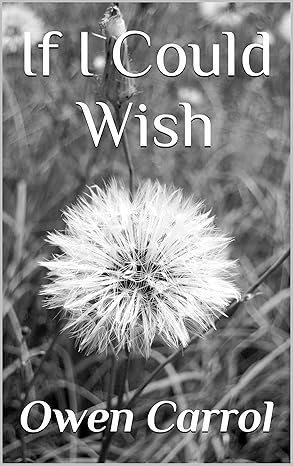

In If I Could Wish, by Owen Carrol, the narrative unfolds through the poignant format of a final suicide letter penned by a teenager. The letter offers an intimate glimpse into the narrator’s journey through immense personal struggles, including the early loss of a father, estrangement from their mother and stepfather, and the pains of teenage homelessness. Central to this narrative is the bond with Laura, the narrator’s sole friend, whose own battle with mental health challenges culminates in her suicide.
Carrol’s writing sensitively captures the complexities of mental health, as seen through the narrator’s perspective and Laura’s experiences, although she remains a secondary yet significant character. The story navigates heavy themes such as questioning faith and feeling of abandonment by a higher power, reflecting the narrator’s disillusionment and loss of hope. It serves, in a way, as both a heart-wrenching recount of despair and a subtle, perhaps final, plea for understanding or intervention. The narrative is undeniably poetic and raw, touching on subjects like religion and existential despair with a candidness that might be intense for some readers. Particularly for those grappling with mental health issues or suicidal thoughts, the content could be profoundly affecting. The story concludes with an implication of the narrator’s suicide, underscoring the gravity of its subject matter.
Owen Carrol demonstrates remarkable skill in this short story format, effectively conveying a deep sense of loss and disconnection in just a few pages. If I Could Wish is a testament to Carrol’s ability to create profound narrative experiences, though its themes necessitate a word of caution for sensitive readers. As a reviewer eager to explore more of Carrol’s work, I keenly anticipate future publications, appreciating the depth and authenticity he brings to challenging topics.
Pages: 9 | ASIN : B0C1HTR3GG



