Blog Archives
Speaking For Those Who Do Not Feel Safe

No Ordinary Love follows several women whose stories reveal the terror and trauma of domestic abuse. Why was this an important book for you to write?
Because it’s my story—and the story of countless other women around the world. Despite how widespread intimate partner violence is, it continues to be treated as though it’s rare or private. It’s an epidemic. As long as that remains true, more stories need to be told. I was inspired by the women who spoke up before I found the strength to do the same. Now, I’m speaking for those who may not yet feel safe enough to share their truths.
I appreciated the candid nature with which you told this moving story. What was the hardest thing for you to write about?
The hardest part wasn’t the writing itself—I had already survived the events. In fact, the process of writing was profoundly therapeutic. What was most difficult was transitioning from that healing space into the often retraumatizing demands of publishing—critiques, edits, legal reviews, marketing, promotion. Writing gave me back my voice, my truth, my agency. But sharing it exposed me to judgment, disbelief, and the need to prove my experiences.
What was especially painful was the fact that I had to fictionalize elements of my own life story—not to protect myself, but to protect the identity of my abuser. After being silenced for over two decades, I finally found the courage to speak out. Yet, I still had to call my memoir “fictionalized” when it’s 98% truth, with only minor changes made to shield the person who harmed me. That’s harder than I can express in 100,000 words.
What is one misconception you believe many people have regarding the aftermath of domestic abuse?
That the abuse ends when you leave. It doesn’t. What I wanted to highlight most in No Ordinary Love is the aftermath—the long shadow trauma casts, the lingering triggers, and the decades it can take to fully disentangle yourself from the psychological grip of abuse. Healing is not linear. It is life-long.
What is one thing you hope your readers take away from No Ordinary Love?
I hope it inspires honest, necessary conversations—about the subtle and insidious nature of coercive control, how it undermines autonomy, the long-term psychological impact of chronic abuse, and the intersection of trauma, mental health, and systemic failure. Most of all, I want to illuminate the barriers survivors face in their search for safety, support, and validation.
Charlie’s Ladder


Charlie’s Ladder is a haunting novel that follows Charlie Houden, a middle-aged man crushed under the weight of trauma, guilt, and unrelenting grief. Structured around therapy sessions, fragmented memories, and painful flashbacks, the book chronicles his inner collapse following the death of his daughter and a lifetime of emotional wounds that trace back to childhood. As Charlie begins therapy with Dr. Dina Epstein, we journey with him through layers of repressed suffering—his tormented Catholic upbringing, abusive family dynamics, and disintegrating marriage—culminating in a search for meaning and redemption amid despair.
Reading this book was like cracking open a chest that had been sealed too long. The writing is raw, vivid, and fearless. It’s not just storytelling—it’s bleeding on the page. Carl Reinelt doesn’t hold back. His prose punches you in the gut, then leaves you stunned with a tender line. The nonlinear structure works beautifully. It mimics the way trauma actually feels. Unpredictable, fragmented, cyclical. I found myself wincing at some scenes and nodding solemnly at others, especially those involving Charlie’s disillusionment with faith and his grief-ridden memories of Lizzie.
That said, the book doesn’t let you get comfortable. And that’s the point. It drags you into the trenches of mental anguish and spiritual crisis without offering any neat resolutions. There’s beauty in that, but also a heaviness that lingers. Some parts felt intentionally disjointed, which could frustrate readers looking for a clear plot arc or redemption arc. But what made me stay was Charlie himself—broken, cynical, yet deeply relatable. His voice, despite its sarcasm and self-loathing, rang true. His banter with Dina Epstein crackled with tension and dark humor. And his painful unraveling felt not only believable, but necessary.
Charlie’s Ladder is not for the faint of heart. It’s for readers who are willing to sit in discomfort, to face the messiness of trauma and mental illness without flinching. I’d recommend this to anyone who’s lost someone, struggled with depression, or felt estranged from religion or family. It’s heavy, yes, but it’s also a deeply personal exhale.
Pages: 319 | ISBN: 978-1-7362149-6-1
No Ordinary Love
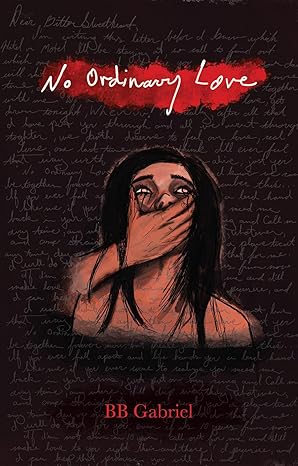
No Ordinary Love, by BB Gabriel, is a searing memoir that threads together the lives of several women grappling with the many faces of intimate partner violence. Through a braided narrative—alternating between Gabbi, Alex, Katee, and others—the book unveils the terror, trauma, and tangled aftermath of abuse while illuminating slivers of healing and resilience. This story stomps, screams, and weeps across the pages, detailing coercion, fear, childhood confusion, and adult reckoning. Told in raw vignettes and memory-soaked prose, it is not just one survivor’s story—it’s a collective mirror for far too many.
Reading No Ordinary Love shook me. There were moments I wanted to put it down and moments I couldn’t look away. The writing, often poetic and stark, pulled me close enough to feel the fear and the fresh heartbreak. Gabriel doesn’t romanticize trauma, and that’s what makes her voice trustworthy. She doesn’t craft her pain into tidy scenes or polished resolutions. Her story spills over in waves—sometimes chaotic, sometimes controlled—and always relatable. The structure, with its shifting timelines and perspectives, felt disorienting at times, but maybe that’s the point. Trauma is disorienting. This book doesn’t offer clarity; it offers truth.
I admired the way Gabriel let silence linger in her writing. Some chapters stopped short, leaving me breathless, the same way trauma interrupts a life. And yet, she also knows when to lean in—when to take us all the way through a panic attack, a memory, a phone call no one wants to make. This book isn’t just about surviving abuse. It’s about what comes after—the guilt, the longing, the ghosts that live in your muscles. And somehow, it’s also about love. Love between sisters. Love that fights back. Love that rebuilds.
I’d recommend No Ordinary Love to anyone willing to confront the brutal honesty of what abuse looks like behind closed doors—and what it takes to speak it aloud. It’s a gut punch for survivors, advocates, and even bystanders who have wondered, “Why doesn’t she just leave?” This book is for those who stayed. For those who left. And for those who still carry the weight of it all.
Pages: 381 | ASIN : B0DRZ5Z51X

Little Boy, I Know Your Name: A Second-Generation Memoir from Inherited Holocaust Trauma
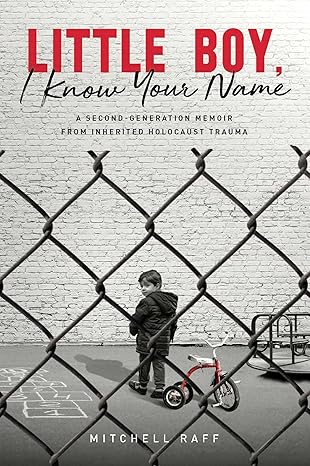
Readers looking for a book that hits you right in the feels and leaves you thinking long afterward, will not want to miss Little Boy, I Know Your Name by Mitchell Raff. This memoir dives into the author’s life, showing how inherited trauma from the Holocaust shaped him and the people around him. It’s raw, emotional, and brutally honest, painting a picture of a childhood full of pain, survival, and moments of unexpected love.
From the first chapter, this book pulls no punches. Raff shares heartbreaking stories of his abusive mother and the chaos that surrounded his young life. One scene that will stick with me forever is when his mom threw him out of the house into the cold night. It’s gut-wrenching, and I couldn’t help but feel for the little boy he was. But there’s balance in the way he writes. He also talks about the kindness and stability he found with his uncle and aunt, who stepped in as surrogate parents. Their love gave the story some much-needed light, and I found myself rooting for them just as much as for Raff.
The focus on his childhood trauma is the primary focus of the book, and I found myself wishing for more information about his father’s struggles or his adult life. But maybe that’s the point, though. It really allows readers to sit with the weight of everything he went through. A moment I remember was when his therapist called him a “well-dressed poser.” It was a wake-up call for Raff and, honestly, a moment that made me reflect on my own life, too. We all wear masks, don’t we?
What really makes this book special to me is how it tackles inherited trauma. Raff’s family, like so many Holocaust survivors, tried to bury the pain. But it seeped through in ways they couldn’t control. It’s these quiet and powerful memories that make the book more than just a story about one man’s struggles.
By the time I finished, I felt a mix of heartbreak and hope. The ending, where Raff reflects on his son Joshua and the possibility of breaking free from the cycle of pain, strikes just the right note. It’s not a happily-ever-after, but it’s real, and it left me believing healing is possible.
I’d recommend Little Boy, I Know Your Name to anyone who loves memoirs that dig deep. If you liked The Glass Castle or Night, Raff’s writing will resonate with you. It’s not a breezy read, but it’s the kind of book that reminds you of the strength it takes to confront the past and move forward.
Pages: 235 | ASIN : B0CLL22MMG

MASTERING THINKING: Reasoning, Psychology, and Scientific Methods

Michael Ireland’s Mastering Thinking delves into the intricacies of critical thinking and scientific reasoning. It’s a comprehensive guide that’s equally enlightening and demanding, aimed at giving readers a robust toolkit for dissecting arguments, examining beliefs, and thinking more effectively. From the get-go, Ireland emphasizes the sheer complexity of the human mind and its vulnerabilities, exploring concepts like cognitive biases and the importance of self-reflection. Each chapter meticulously unpacks ideas, from understanding our mental limitations to employing Socratic questioning and logical reasoning in everyday life.
One of the book’s strengths is its candid and engaging writing style. The author doesn’t pretend that thinking is easy. He’s quick to point out how easily we can deceive ourselves and fall for cognitive traps. His humor and humility shine through, like when he admits to the daily mental lapses we all experience, such as searching for your phone while it’s right in your hand. This honesty makes the dense material approachable. The chapter on the power of questions really resonated with me. Ireland compares learning to ask the right questions to mastering a new art form, reminding us that even Socrates needed practice.
While informative, the discussions on language and logical fallacies occasionally get bogged down in terminology and technical details that might overwhelm casual readers. The detailed breakdowns sometimes feel like a double-edged sword because I found them helpful for depth but difficult to digest all at once. However, Ireland tries to break up the complexity with personal anecdotes and historical examples, like Aristotle’s outdated beliefs or Galileo’s pivotal experiments, which breathe life into abstract ideas.
Another high point is the book’s emphasis on applying critical thinking to our own beliefs. The author makes a compelling case for examining our assumptions rather than critiquing others. I found the section on confirmation bias particularly eye-opening, as it was a sobering reminder that we’re often our own worst critics. These sections challenge readers to think about thinking, which, let’s be honest, is a mental workout.
Mastering Thinking isn’t light reading, but it’s a must for anyone willing to dig deep and improve how they process information. I’d recommend it to students, professionals, and anyone who’s tired of being swept up by the modern world’s information overload. If you have the patience, the insights and mental tools Ireland provides are more than worth the effort.
Pages: 375
Living With No Regrets

Mt. ؟!…shing: A Journey to Reconstructing Life and Its Meaning drawing inspiration from Martin Seligman’s Flourish theory and Eastern transcendental teachings, leading readers on a symbolic ascent up the mountain of life exploring psychological theories blending with spiritual teachings. What were some ideas that were important for you to share in this book?
The ultimate desire for every individual is to live in such a manner that at the end, they will have no regrets. Many times, people try very hard and do a lot, but still don’t get what they want. Dr. Martin Seligman, a former president of the American Psychological Association (APA), explored and defined five pillars of flourishing. Unfortunately, his work is hard to understand, not only for non-English speakers but also for native English speakers. I’ve taken it upon myself to present his theories in a manner that is more accessible. Populist ideas, usually spread by some authoritative personalities, form one of the major threats in the modern world. Similarly, popular psychologists have not always been so effective at getting their research across to an ordinary audience. To do this, I try to make these more complex psychological theories, such as those concerning Dr. Seligman’s work on flourishing, understandable to ordinary people.
How much research did you undertake for this book and how much time did it take to put it all together?
This book took me over three years to complete, involving vigorous research into theories of flourishing and well-being, many of which were shared with me by Dr. Seligman himself or referenced in his works. I collaborated with the R&D team to fully explore and distill these ideas. Initially, the book had seven chapters, but it was overwhelming. To this end, I decided to condense it, yet every chapter still stands alone as a comprehensive piece on the subject. That’s why I often say that by reading this book, you’re essentially reading six books in one. This project, I honestly believe, is one of the most important contributions to psychology today—at least for myself. It represents the culmination of my best work.
What do you hope is one thing readers take away from your book?
I hope readers walk away with a better understanding of the theory of flourishing. It is deceptively simple on the surface, but becomes more complex when explored in depth. I would also like people to recognize that many principles of today’s psychology were already touched upon by Eastern thinkers hundreds of years ago, proving that the lessons in flourishing aren’t just modern ideas but have stood the test of time. We should appreciate the wisdom of those ancient scholars who grasped ideas still being explored today. Ultimately, I want readers to understand how important flourishing theory is—its relevance has endured for over a century, and it remains a powerful tool for well-being.
Author Links: Website | Twitter | Instagram | Book Review

Mt. ؟!…shing: A Journey to Reconstructing Life and Its Meaning

Mt. ؟!…shing: A Journey to Reconstructing Life and Its Meaning delves deeply into the realms of personal growth, self-discovery, and the philosophy of flourishing. Ali Mirsadeghi, drawing inspiration from Martin Seligman’s Flourish theory and Eastern transcendental teachings, leads readers on a symbolic ascent up the mountain of life. This narrative seamlessly blends storytelling with philosophical inquiry, posing profound questions about existence and delivering transformative insights along the way.
Mirsadeghi’s writing captivates and stimulates thought, though its complexity may challenge some readers. His distinctive style is characterized by fluctuating tones and intricate language, inviting readers to engage thoroughly with the text. The book opens with an enigmatic introduction featuring characters like Mrs. Meaning and Mr. Hope embarking on their journey up Mt. Shing. The initial storyline, referred to as “story zero,” effectively immerses readers in a world where the ideas of flourishing and decline are not merely abstract concepts but actionable paths one can navigate in life. A standout aspect of “Mt. Shing” is its innovative integration of Eastern philosophies with modern positive psychology. Mirsadeghi excels in weaving these diverse teachings into a cohesive narrative, demonstrating his ability to harmonize seemingly disparate ideas. The intricate nature of the concepts presented might be overwhelming, especially for those unfamiliar with Seligman’s work or Eastern thought. The use of allegorical characters to convey psychological principles, while creative, may require multiple readings to fully appreciate their depth.
Mt. ؟!…shing: A Journey to Reconstructing Life and Its Meaning is an essential read for those interested in personal development, philosophical exploration, and the fusion of psychological theories with spiritual teachings. This book is particularly suited for individuals familiar with or curious about positive psychology and Eastern philosophies and those ready to embark on a journey of self-discovery.
Pages: 340
Phil Was the Real Deal

That Man in the Gold Lamé Suit delves into the complex life and career of Phil Ochs, exploring his steadfast dedication to music and his unwillingness to conform to popular trends. Why was it important for you to tell his story?
There were several reasons why I felt Phil’s story had to be revisited.
First, one of the courses I used to teach was “Music & Politics.” Phil’s name & music kept popping up as I looked for materials for this class. As I looked at this material and became familiar with his music, politics, and who Phil was as a person, I had the epiphany that Phil Ochs was the person that everybody believed Bob Dylan was in the 1960s. Phil was the real deal–a committed topical songwriter and political activist, neither of which Dylan ever was.
Second, Phil’s story often gets told with too much emphasis placed on his alleged bipolarism, his alcoholism, and his suicide. They became the centrality of how his story was told rather than be presented and understood as simply parts of a very complex artist who struggled with a sense of who he was. These three circumstances in Phil’s life allowed people to glaze over that his very search for self was essential to understanding who he was, how Phil saw himself, and how that search was central to both his artistic creativity & his politics.
Third, I met his older sister, Sonny Ochs who is a force of nature in her own right and a champion in keeping her brother’s music alive and being played at the grassroots level. After my first meeting with Sonny, I knew I had to write about Phil.
Phil Ochs was an influential musician in his time. What were some goals you set for yourself as a writer in this book?
One of the goals I’ve already mentioned in response to the last question, and that was to address the imbalance in how Phil’s life story is usually told.
Beyond and above that is that I set for myself the goal of telling Phil’s story through his eyes and to present it as much as possible as he would if he was still here. That is why I employed the theory and method of Self Psychology in writing this book. By relying as much as possible Phil’s own words, he was then able to reveal to me what his search for self entailed; the triggers for this search; for what voids he was trying to compensate in this search; how his search manifested in his music, politics, and relationships to others; and how it ultimately led to his suicide.
Did you find anything in your research of this book that surprised you or a story that stood out and left an impression?
It’s not too far from the truth to say just about everything stood out and left an impression. Phil was not an easy person for me to get to know. There were times when I would pour over his words for hours only to have it take days for him to reveal what it was that he wanted me to know and write. However, one of the biggest things that stood out was how much his desire to be a hero and to see heroism in others defined his search for self, his music, and his politics. Phil desperately wanted to be like his heroes of the Silver Screen such as John Wayne. He embraced people based upon their perceived heroism. That’s why he could idolize both John Kennedy and Che Guevera. His own politics was defined by heroism. For instance he saw America in heroic terms. His opposition to the Vietnam War wasn’t an opposition to war per se, but to an unheroic war that wasn’t worthy of his heroic America. I could go on and on but I won’t.
Also what also stood out to me was just how much Phil needed and craved affirmation from others. He simply wasn’t secure enough in his self to see how talented he was and how worthwhile his own life was. This need and craving were scars left from early childhood trauma of parents unable to respond with the affection & affirmation their young son needed. That need & craving for affirmation drove Phil as much as did his desire to be a hero. Frankly, they are interconnected. That comes through throughout the various chapters in the book.
What is the next book that you are working on and when will that be published?
Hmmm—this book on Phil took 6 1/2 years of my life so I’m not certain if I have another one in me at the time being. Phil was a calling, a type of destiny, and I haven’t felt a similar calling yet. But never say never. I’ve got a couple of possible subjects if that call ever comes in. One would be a book on Kris Kristofferson. Another would be a book on Michael Nesmith.
In the short term, I’m focusing on music. I’ve got a new band called Calico Bunny, and I am trying to get back into songwriting again. For the curious, I have 3 CDs of original music on Spotify, Apple Music, and the other streaming services. Their titles are “Tequila Lips,” “No Apology,” and “Seeking Calm Waters.”
Author Links: GoodReads | Website
That Man in the Gold Lamé Suit explores who Phil Ochs was as he saw and understood himself to be; how he wanted to see himself; and how he wanted to be seen by others. In presenting this exploration of Phil Ochs, author Jim Bowers delves deep into Ochs’s personality to craft a narrative that allows the singer/songwriter to tell his own story rather than the story others would impose upon him. In letting Ochs tell his own story, Bowers in That Man in the Gold Lamé Suit provides the reader with insights into how Phil Ochs’s search for self came to define who Ochs really was and how it, in turn, shaped his music, his politics, and his relationships with such contemporaries as Bob Dylan.


