Blog Archives
My Early Retirement Purpose

Escape The Clock offers readers a comprehensive guide to achieving financial independence and planning for early retirement. Why was this an important book for you to write?
Escape The Clock was an important book for me to write because I’ve lived the financial challenges and breakthroughs it addresses. I started out over $100,000 in debt after putting myself through school, and as someone naturally organized, I developed strategies and action plans to turn my situation around. My career as a professional program manager at some of the largest companies in the world refined those skills even further, teaching me how to design and execute complex programs.
When I retired early, it shocked a lot of people—many who had been on autopilot with their careers and finances. They started asking me how I did it, and I realized I had something valuable to share. Writing this book became my early retirement purpose: to provide others with the guide I wish I had at 17—the “secret cheatsheet” to taking control of your time, money, and life.
I wrote Escape The Clock to help people at every stage of their journey: those just starting out, those aiming to finish work early, and even those already retired who want to thrive and make the most of their independence.
How much and what type of research did you undertake in order to put this book together?
About 80% of this book came naturally because I’ve been doing the research for the past 20 years while running my own program. Over that time, I worked with more than a dozen financial and tax advisors, learning everything I could, and translating those lessons into actionable strategies was both fun and rewarding.
The final 20% required deeper research. For example, while I had extensive experience with stocks, including options trading, I hadn’t explored futures or margin trading. Similarly, while I owned my own home, I had no personal experience with real estate investing. To fill these gaps, I sought out experts—interviewing people who specialize in these areas and digging into additional research.
Between personal experience, expert interviews, and feedback from pilot reviewers, I ended up learning a lot myself as I worked to make this book as comprehensive as possible.
What is one misconception you think many people have regarding retirement planning?
A common misconception is that retirement planning requires paying a financial advisor to figure out how to save an unrealistic amount of money for a far-off, late-in-life retirement. More people are beginning to realize that they don’t have to wait until a government-prescribed age to truly start living their lives.
The truth is, it’s much harder to follow your own agenda when you’re older, so creating a path to leave work earlier is a smart and achievable goal. Unfortunately, societal norms often scare people away from this idea. Some financial advisors may even prey on those fears, pushing overly large savings goals.
In reality, if you understand what you want to do with your retirement and can get your average annual costs under control, you can use proven, real-world strategies to save enough—and even replace the lost cash flow that comes from quitting work early.
What is one thing you hope readers take away from Escape The Clock?
The one thing I hope readers take away from Escape The Clock is that they can have a healthier relationship with work, money, and time. The “norm” tells us to start working as soon as possible and give our all for 50-plus years, but this can be soul-draining and leave people feeling trapped.
When you reframe work as a means to an end—achieving financial freedom—you suddenly feel more empowered. You might push for that raise you deserve, take an extended break to avoid burnout, or talk about money more openly. Honest conversations about fair wages and financial goals ensure that your most valuable resource—your time—is properly compensated.
Ultimately, the biggest takeaway is this: your time is your most valuable commodity. If you can create a path to escape the cycle of work and reclaim it, you might surprise yourself with how you spend it and the freedom you feel.
Author Links: GoodReads | Amazon
Escape The Clock is your ultimate guide to achieving financial freedom on your terms. Written by a retired professional program manager who led successful initiatives at some of the largest companies in the world—and achieved early retirement in his early 40s using his own proven financial plan—this book provides practical, step-by-step strategies for building wealth to retire early, while still ensuring a secure full retirement later.
Leveraging decades of expertise in strategic planning and execution, Escape The Clock equips you with the tools to create a personalized financial plan that works for your goals. From understanding costs and forecasting income to setting SMART milestones and mastering long-term planning, this book turns complex financial concepts into actionable, achievable steps.
Whether you’re just starting out or refining your financial strategy, Escape The Clock delivers the knowledge and confidence you need to stop living paycheck to paycheck and start creating the life you’ve always dreamed of. Your journey to financial freedom begins here.
Escape The Clock – Your Program Guide for Financial Freedom and Early Retirement
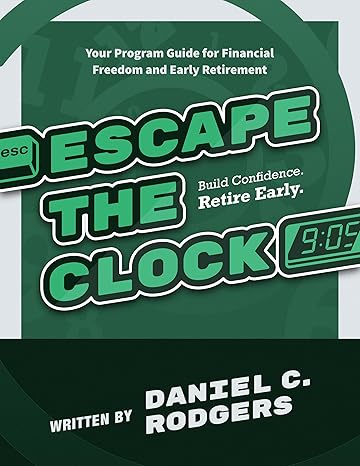

Daniel C. Rodgers’ Escape the Clock is a comprehensive manual that redefines how we think about work, wealth, and retirement. The book meticulously guides readers through the journey of achieving financial independence and embracing early retirement. It draws from the author’s personal experiences and professional expertise in program management. By blending narrative elements with practical advice, Rodgers provides a roadmap to reclaiming time and crafting a purpose-driven post-work life.
What stands out most about Rodgers’ writing is its clarity and relatability. He opens the book by describing the suffocating grind of the modern work-life cycle—a sentiment many can resonate with. The chapter “Trapped by the Clock” is particularly compelling as it details the emotional and physical toll of overwork. Rodgers’ candor about his own struggles adds authenticity, and his emphasis on financial independence as a means of reclaiming life makes the narrative deeply motivational. At times, some of his anecdotes cover similar ground, which can slightly soften the impact of his otherwise sharp insights.
The book’s strength lies in its structured approach to financial planning. Rodgers simplifies intimidating financial concepts, breaking them into digestible steps. Chapters like “Build Your Program for Financial Independence and Early Retirement” are treasure troves of tips—whether it’s calculating a financial baseline or setting measurable goals. I appreciated how the book demystifies investment jargon, though some of the more detailed strategies, like leveraging dividend stocks or rebalancing portfolios, might feel a bit complex for beginners. I think a slightly greater focus on balancing technical advice with simpler explanations could have made these sections more approachable.
Rodgers also shines in promoting a holistic vision of retirement. Instead of framing it as an end, he encourages readers to view it as a beginning—a chance to pursue passions and give back. The chapter “Retire Purposefully” is a standout, brimming with ideas for leading a fulfilling post-retirement life. There is a noticeable focus on ambitious goals, which might feel a bit lofty for readers seeking a more straightforward or minimalist approach to retirement.
Escape the Clock is an inspiring and meticulously detailed guide that will resonate with anyone determined to break free from the rat race. I feel it’s ideal for professionals in their 30s to 50s who are financially savvy and open to detailed planning. If you are looking for a practical framework paired with emotional encouragement to achieve early retirement then I think this book is a must-read.
Pages: 356 | ASIN : B0DPLP1D1V

Retiring Right: Smart Steps for Exiting Corporate America


In Retiring Right: Smart Steps for Exiting Corporate America, Jake Falcon presents a comprehensive guide for corporate professionals navigating the often challenging transition into retirement. Falcon provides a holistic approach that goes beyond the financial aspects to address the full spectrum of retirement life, offering insights particularly valuable for those accustomed to the structured and high-pressure environment of corporate careers.
Falcon’s methodology is inclusive, exploring various dimensions of retirement that are often overlooked. While he covers essential financial planning, he delves deeply into emotional preparation and the myths surrounding retirement, such as the misconception that retirement is a cure-all for unhappiness. By highlighting potential issues like loneliness and the importance of planning engaging activities, Falcon equips readers with realistic strategies to mentally prepare for retirement. He emphasizes the value of maintaining communication about retirement realities and considering encore careers, ensuring that readers take away practical insights from his guidance. The strength of Falcon’s book lies in his clear and straightforward writing style. Retirement is a sensitive topic that requires insightful planning, and Falcon communicates his purpose and ideas effectively. The book is well-structured, incorporating real-life examples that bring his points to life. Unlike theoretical discussions, the practical advice presented can be easily added to a checklist, making it accessible and actionable for readers. Falcon’s realism shines through as he candidly addresses potential difficulties, preparing readers without sugar-coating the realities of retirement.
While Retiring Right primarily targets individuals with a corporate background, assuming accumulated wealth over time, its applicability extends beyond the corporate sphere. The principles and advice are valuable for anyone looking to plan for retirement early in their career, serving as a reminder that retirement planning is a universal necessity. Regardless of background or age, readers who approach this book with an open mind and a willingness to create a fulfilling post-career life will find it an invaluable resource.
Pages: 152 | ASIN : B0D3RYSKDW
Wealthy is Not a Destination

Many people hear about accumulating wealth but have no idea where to start. What was the idea, or spark, that first set off the need to write Wealth Your Way?
The idea for this book came about as a happy accident rather than by design. It simply grew out of my efforts to teach financial matters to my two children. Neither of them had much interest in spending time delving into financial topics or “boring business stuff” as they would often say. I didn’t blame them–few people get as jazzed up about personal financial planning as I do.
As the years went by, the conversations kept broadening out, first to several nieces and nephews, and then to business associates, friends, and neighbors. I started summarizing my thoughts in a monthly email, each covering a different aspect of personal finance. The distribution and forwarding of those emails, which started with just a few family members, struck a chord and quickly expanded. Shortly thereafter, several readers suggested I put my thoughts all in one place and the idea for this book was born.
How much research did you undertake for this book, and how much time did it take to put it all together?
I often say the book is 34 years of research – my entire working and investing career followed by eighteen months of focused writing and editing. It is my lifetime of knowledge and learned experiences (good and bad) that shaped my views on wealth management, allowed me to achieve financial independence, and created a modicum of wisdom for me to pass along. Writing forces clarity of thought and I hope readers can learn from mine as they plan their own path to reach financial security. The book is my humble attempt to pay it forward.
What is one thing that you hope readers take away from Wealth Your Way?
Everyone has their own interests and passions to follow. My simple wish for readers (including my children) is that they learn how planning for money matters can enhance their personal life’s journey and maybe the lessons in the book can also help them avoid a few missteps along the way. Everyone’s journey is personal and unique. To hell with ‘keeping up with the Joneses’ or ‘beating the market.’ Take a deep breath and realize the only person you need to beat tomorrow is the person you are today.
Wealthy is not a destination; it’s a habit. Learning good money habits, including the importance of planning with purpose, will get you on the path to financial freedom. And know this, taking steps in the right direction rarely ends up in the wrong place.
What is the next book you are working on, and when is that book due out?
I don’t currently have plans for another book, but since the first one was an unplanned team effort, I will never say never. The feedback on Wealth Your Way has been tremendously positive and led me to start a free money newsletter, Wealth Your Way Insights. Lots of good ideas and questions are coming from the book’s readership so maybe a follow-up book would be a good idea.
Author Links: GoodReads | Twitter | Website | Amazon
Financial independence buys you the most valuable asset on the planet—freedom. The freedom to spend your money, and more importantly, your time, however you see fit.
Still, reaching financial independence requires more than mere investing. Unlike other books that try to tell you what to think, Wealth Your Way teaches you how to think about growing your wealth, with real-life examples of the pitfalls you might encounter and strategies to avoid them.
As with most things in life, the more carefully you plan for financial independence, making course corrections along the way, the less you’ll need to worry about the outcome. Live your best life today with the satisfaction and comfort of knowing your financial future is in good hands—your own.
The All-Weather Retirement Portfolio
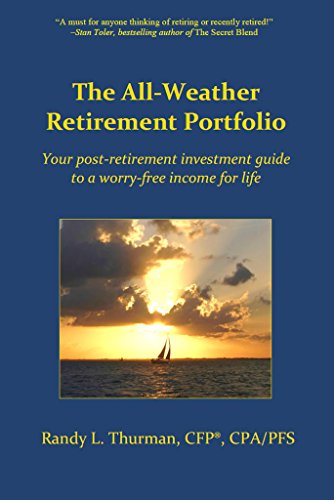
Money is a sensitive subject for many. However, it is also a necessity in the modern world as one can achieve a lot when their financial situation is secure. In his book The All-Weather Retirement Portfolio: Your Post-Retirement Investment Guide to a Worry-Free Income for Life, author Randy L. Thurman talks about making money and knowing how to save and invest you can have the retirement life you desire. The author gives practical examples and uses a language that the average reader can understand. This financial guide is for individuals that are just starting out planning their retirement, mid-career, and those planning to retire soon. Randy L. Thurman talks to different groups of working-class and entrepreneurs making profits off their investments and gives readers first-hand advice from those who are successful.
The book’s arrangement is systematic and shows a logical progression of the thought process and steps one should follow. The author starts from the root, expounding on the importance of having a healthy bank account and how to save even if it is only a little at the start. To help the reader comprehend his content better, Randy L. Thurman broke down various topics into 15 chapters. Each chapter focuses on one step, making it easier to put the plan into action in their own life.
For a subject as daunting as financial planning is, the author has made reading about the topic interesting and nonintimidating. One of the most valuable topics discussed is the importance of finding a financial advisor that you can trust. Readers will appreciate the author’s attention to detail, listing the qualities one should look for in an advisor. He also emphasizes that readers need to be cautious as not everyone claiming to be a financial advisor is well equipped to handle money. Providing questions to ask so you can find the right advisor for your situation will benefit readers.
The All-Weather Retirement Portfolio: Your Post-Retirement Investment Guide to a Worry-Free Income for Life discusses investing 101 and gives a detailed explanation of how best to invest. This information is beneficial to people in all stages of retirement planning.
Pages: 221 | ASIN : B00WF8XW78


