Blog Archives
The New World Order
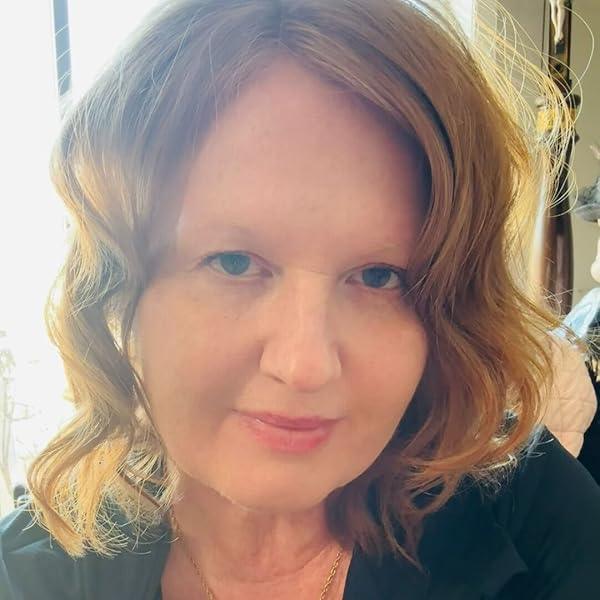
In your memoir, Octagon Pillars and Domes, you take readers on a wild, emotional, and surprisingly personal ride through history, religion, politics, and memory. Why was this an important book for you to write?
In order to understand how we have arrived at this present state of affairs both nationally and globally, especially since the presidency of Barack Obama in 2009, who advanced a globalist agenda beginning with the American Recovery and Reinvestment Act (HR1) and at which time my research began, it was important to take a close look at events that have occurred since WWI, specifically, the rise of class-based Marxism and the establishment of the Federal Reserve Bank by President Woodrow Wilson in 1913 under the advisement of his chief economic advisor and the leader of the Progressive and Zionist movements, Louis Brandeis.
What were some ideas that were important for you to share in this book?
Since the beginning of recorded history in Ancient Mesopotamia and Egypt in 3,500-4,000 B.C., the acceptance of creationism and related causal morality has served as the basis for law. However, due to perceived injustices experienced by Jews under creationist regimes including the Habsburgs and Romanovs during the 18th and 19th centuries, Karl Marx’s classist philosophy challenged these ideas, which gained acceptance by European intellectuals and academic circles at the Frankfurt School during the rise of German Industrialism. Of course, they already were immersed in Hegelian (deconstructionist) philosophy toward achieving absolute knowledge via rationalism. It is my belief in contrast to our founding principles rooted in Natural Law which formerly served as the rule of law, Marxism infected the United States at least by 1913, with the creation of the Federal Reserve, and certainly by the 1919 Paris Peace Conference (Treaty of Versailles), which established The League of Nations, a global peace-keeping force and precursor to the 1948 United Nations’ declaration of Human Rights as the revised rule of law. Since then, Progressive policies have established class protections for individuals and (immoral) behaviors that would have fallen well outside Federal law, according to our founding principles. I also wanted to clear up a common misunderstanding regarding the “separation of church and state,” which according to Thomas Jefferson’s 1802 letter to the Danbury Baptists, was intended to protect the right to worship (God), rather than exclude Biblical morality from legislation, which is an argument that has been misappropriated by The Left.
What was the most challenging part of writing your memoir, and what was the most rewarding?
They are one and the same: researching historical events, with all their details and nuances, which have led us to this moment, in order to gain a clear picture of opposing forces and political occurrences over the last 100 years that have perpetuated Progressive ideology. I will say my research into Egyptology was especially rewarding, inherent to which are the ideas of divine birthright (Horus), salvation, and spiritual rebirth, and which likely served as the template for Christianity.
What do you hope is one thing readers take away from your story?
Marxist class-based protections were established in opposition to political systems perpetuated by Christianity’s old-world order, including the notion of the Divine Right of Kings, Natural Rights, and Democracy, which has far-reaching implications and conclusions. Finally, though it has been implemented under the auspices of humanitarianism, it is apparent globalism, assisted by technology, is an effort by international bankers and global oligarchs to harness formerly distant workers for the purposes of control and taxation. Indeed, the New World Order is upon us.
Author Links: GoodReads | Facebook | Amazon
Octagon Pillars and Domes


Octagon Pillars and Domes is a wild, emotional, and surprisingly personal ride through history, religion, politics, and memory. The book starts with her work on a government healthcare project and slowly opens up into something much bigger. It touches on her Jewish and aristocratic German roots, the trauma passed down from war, and her search for meaning through ancient philosophy, faith, and modern politics. It’s part memoir, part deep dive into big ideas, and part spiritual reflection.
I really enjoyed this book. It’s not your average memoir. Lauderdale writes from the heart and pulls no punches. She mixes stories from her childhood with reflections on religion and political shifts in a way that made me think hard about things I hadn’t connected before. There were moments when the details got heavy or the history felt like a lot to take in, but even then, her voice kept me going. She’s not trying to sound polished or academic. She just tells her truth, and there’s something refreshing about that.
The best parts for me were when she opened up about her family, her faith, and her struggles. You can feel how much this story means to her. It’s clear she spent years thinking about all of it, and the effort shows. She goes deep into some complicated stuff, but it always feels like she’s just trying to understand the world and her place in it, and I found that really moving.
If you’re someone who likes books that jump between personal stories and big questions about life, history, and faith, I think you’ll get a lot out of this. It’s not a quick read, and it asks you to slow down and sit with some tough topics, but it’s worth it. I’d recommend it to anyone who enjoys thoughtful writing. It’s honest, it’s bold, and it’s unlike anything I’ve read in a while.
Pages: 550 | ASIN : B0F6NZCBR7

Integrity, Optimism, and Empathy

Odyssey Moscow is a riveting and brutally honest memoir that chronicles your harrowing arrest and imprisonment in Russia following a business dispute gone dangerously political. Why was this an important book for you to write?
Writing Odyssey Moscow was cathartic. After living through such an intense and surreal ordeal—being unjustly arrested, imprisoned, and isolated—I needed to make sense of what happened, both for myself and for those closest to me. It became especially important to me that my children, when they’re older, could read this and understand the values I tried to live by: integrity, optimism, and empathy, even under impossible circumstances. It was also my way of honoring the people who helped me survive—my family, my friends, and the men of Cell 604. Their decency and courage in the darkest of times deserve to be remembered.
How did you balance the need to be honest and authentic with the need to protect your privacy and that of others in your memoir?
I wanted to be candid and transparent, because I felt a responsibility to tell the truth—not just about what happened to me, but about the broader system that enabled it. At the same time, I was deeply aware of the risks others faced. In some cases, I deliberately anonymized details, not to obscure the truth, but to protect individuals who didn’t choose to be part of this story. Honesty and concern for the safety of others had to go hand in hand.
What was the most challenging part of writing your memoir, and what was the most rewarding?
The hardest part was reliving it. Each chapter forced me back into the fear, confusion, and emotional strain of those months. There were times I considered putting the project aside entirely. But what kept me going was the encouragement I received from those I trust—especially my wife, Julia, who not only supported me throughout my imprisonment, but later helped shape the book with wisdom and clarity. The most rewarding part? Without a doubt, it’s knowing that this story might offer others courage. If someone going through a crisis reads Odyssey Moscow and finds even a sliver of hope, or a reason to stay true to their values, then it’s all been worth it.
What do you hope is one thing readers take away from your story?
If there’s one thing I hope people take away, it’s that even while Russia’s regime and justice system should be condemned, we should have sympathy and admiration for average Russian people. They are the main victims of that system. The courage and resilience of my cellmates was inspiring, but the courage of other Russians who stood up for me and helped me to obtain freedom is also something for which I’m deeply grateful.
Author Website
Odyssey Moscow: One American’s Journey from Russia Optimist to Prisoner of the State
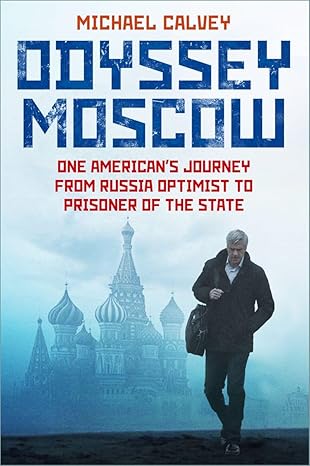

Michael Calvey’s Odyssey Moscow is a riveting and brutally honest memoir that chronicles his harrowing arrest and imprisonment in Russia following a business dispute gone dangerously political. Framed around his 2019 detention on charges of fraud, Calvey recounts the Kafkaesque nightmare of navigating the Russian criminal justice system with gripping detail and a surprising amount of grace. Part prison diary, part corporate thriller, and part philosophical reflection, the book explores power, corruption, and survival with uncommon vulnerability.
Calvey doesn’t hide behind business-speak or self-pity. From the first pages, where he’s ripped from his Moscow apartment by FSB agents, his voice is calm but charged with disbelief and raw emotion. I found myself holding my breath as he described his first night in a cramped cell, trying to keep it together while one cellmate shows off his biceps and the other does endless push-ups. The contrast between Calvey’s former life—Loro Piana shirt, Harvard degree—and the grimness of Matrosskaya Tishina is jarring, and he never once lets us forget how surreal and dehumanizing that shift is.
The book’s real power, though, comes from the way Calvey makes space for others. He doesn’t just tell his story; he lets in the lives of Sasha, Ildar, Dmitry, and others—cellmates, guards, lawyers—each rendered with empathy, even humor. I found myself unexpectedly moved by his relationship with Sasha, a streetwise repeat offender who gifts him molasses cookies and prison wisdom. Even when he’s describing psychological warfare—like the endless sirens and the lights that never shut off—Calvey never descends into bitterness. There’s real introspection here. He wonders what it means to have championed Russia for decades, only to be betrayed by the very system he believed in.
Still, there are moments that made me fume. The scene in the courtroom where the Vostochny Bank security chief films Calvey, giggling as if it were a show, is infuriating. Even more galling is how the Russian court system appears as a hollow formality—the “glass cage,” the parade of character witnesses, the judge who seems moved but ultimately rubber-stamps the FSB’s orders. Yet Calvey keeps his cool. He channels his rage into logic, into planning, into fighting back—not with violence, but with integrity and relentless clarity. That was inspiring.
In the end, Odyssey Moscow isn’t just about one man’s legal battle—it’s about holding onto your values when everything around you crumbles. Calvey never pretends to be perfect. He admits to fear, to pain, to moments of despair. But he also shows us resilience in the most literal sense. I finished the book feeling humbled, a little shaken, but also strangely hopeful. This book is for anyone who enjoys true stories about endurance, justice, and moral courage.
Pages: 291 | ASIN : B0DY5PR2ZM



 LITERARY TITAN