Blog Archives
Understanding The Humanity Of Humans
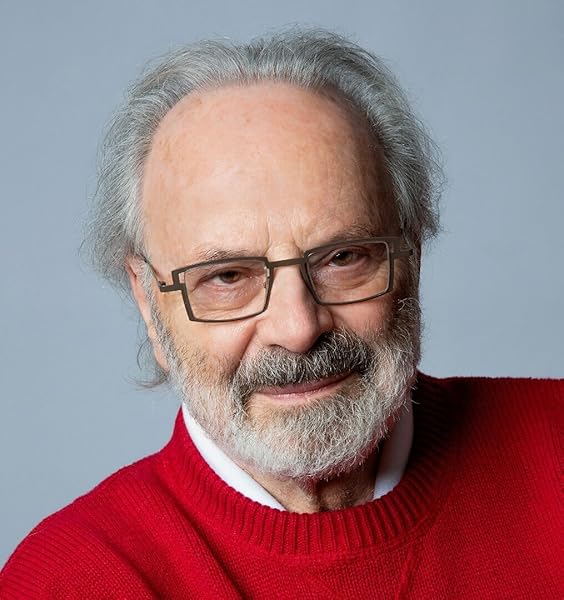
This book helps readers understand the workings of the human body as a series of interdependent physiological relationships. What was the idea, or spark, that first set off the need to write The Embodied Mind?
In 1981, in my book The Secret Life of the Unborn Child, I hypothesized that there were two memory systems. The first was the cortical system in the brain that we are all familiar with. The other functioned on a cellular level and began to operate at conception. At the time of writing The Secret Life of the Unborn Child, the research did not exist to support what was then a binary theory of memory.
In The Embodied Mind I provide an overview of current evidence-based research in many areas of science that, collectively, validates a unified theory of memory.
What sparked my determination to write this book was that I read about a 44-year-old French man who in July 2007 visited a hospital complaining of a mild weakness in his left leg. The resulting scans of his head led scientists to question our long held biological perspective on the nature of consciousness – because, despite living a relatively normal life, this patient was missing 90% of his brain.So, I asked myself – how is this possible?
What were some ideas that were important for you to share in this book?
Scientific emphasis on the brain has been baked into our culture for millennia. The Western world even before the Greek civilization, has been patriarchal, giving rise to a hierarchical social structure. The same vertical system has been unconsciously adopted in medicine. Doctors and scientists think of this system as strictly one way, mostly top-down, rarely bottom up. The latter is usually perceived as negative, as when you have a duodenal ulcer or a heart attack. Add to this the Church’s jaundiced view of the genitalia and you hesitate to spend too much time contemplating your lower chakras.
My book is a journey into the fully embodied nature of mental life, reviewing the cutting-edge science showing how the body responds to and encodes experience into its structure and function; how our feelings, thoughts, and memories are shaped by physiological functions beyond those of our head-encased brain.
It is the existence in our bodies of an interconnected, unified, multilevel, homeostatic, cellular memory system that allows us to be fully functional human beings with an Embodied Mind and not just an enskulled mind.
Materialism and reductionism are science’s Tweedledum and Tweedledee. The Embodied Mind challenges the prevailing concept of reductionism and emphasizes the need for a more holistic and spiritual approach to understanding the humanity of humans.
How much research did you undertake for this book and how much time did it take to put it all together?
I spent 7 years reading and making notes of 5,000 plus bookstand scientific papers.
What were some goals you set for yourself as a writer in this book?
Replacing the enskulled mind with the Embodied Mind and Everything is Connected
We understand the workings of the human body as a series of interdependent physiological relationships: muscle interacts with bone as the heart responds to hormones secreted by the brain, all the way down to the inner workings of every cell. To make an organism function, no one component can work alone. In light of this, why is it that the accepted understanding that the physical phenomenon of the mind is attributed only to the brain?
In The Embodied Mind, internationally renowned psychiatrist Dr. Thomas R. Verny sets out to redefine our concept of the mind and consciousness. He brilliantly compiles new research that points to the mind’s ties to every part of the body.
The Embodied Mind collects disparate findings in physiology, genetics, and quantum physics in order to illustrate the mounting evidence that somatic cells, not just neural cells, store memory, inform genetic coding, and adapt to environmental changes—all behaviors that contribute to the mind and consciousness. Cellular memory, Verny shows, is not just an abstraction, but a well-documented scientific fact that will shift our understanding of memory.
Verny describes single-celled organisms with no brains demonstrating memory, and points to the remarkable case of a French man who, despite having a brain just a fraction of the typical size, leads a normal life with a family and a job. The Embodied Mind shows how intelligence and consciousness—traits traditionally attributed to the brain alone—also permate our entire being. Bodily cells and tissues use the same molecular mechanisms for memory as our brain, making our mind more fluid and adaptable than we could have ever imaged.
The Embodied Mind
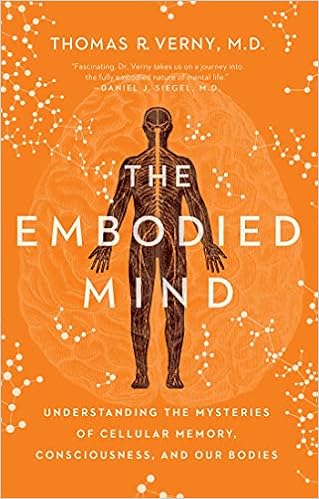

In The Embodied Mind: Understanding the Mysteries of Cellular Memory, Consciousness, and Our Bodies, Dr. Thomas Verny presents a comprehensive exploration of the intricate relationship between the brain, our bodily functions, and the ways our bodies respond to cerebral directives.
Dr. Verny delves into the realms of dreams and consciousness, explaining how our existence is influenced by internal bodily factors and external elements alike. The book is a masterclass in communicating complex ideas, demonstrating how cells utilize consciousness to perform their primary functions.
Aimed not just at medical professionals but at any intellectually curious reader, The Embodied Mind acts as a gateway to understanding the mysteries of the mind, brain, and the human nervous system. The book demystifies how cells maintain behaviors vital to life, leaving the reader with a profound appreciation of the human body’s marvel and the complexities of the brain, often overlooked by the layman.
One of the book’s strengths is its seamless blend of complex discussions and real-life narratives. This is evident from the warm introduction, where Dr. Verny shares his inspiration for writing the book and his fascination with the brain. His account of a young patient highlights individual variations in memory and consciousness and is particularly compelling.
The first chapter— a thought-provoking discussion on the significance of genes and an insightful dive into epigenetics— stands out as a highlight. This informative book covers various complex topics, including the mechanisms behind memory, the workings of the immune system, and the enigmatic nature of human cells.
Dr. Verny’s exploration of how the body retains memory while the brain forgets is a standout section. It resonates due to its relevance to everyday experiences and is presented in a manner accessible to all readers, regardless of their scientific background.
The book is a testament to Dr. Verny’s extensive research, incorporating a wealth of scientific material and revealing fresh insights throughout its ten informative and enlightening chapters. Beyond its educational discussions and engaging narratives, it challenges established scientific concepts and provides clear explanations, making it a valuable resource for anyone seeking comprehensive information on memory, genetics, the human brain, and the body.
Dr. Verny’s insightful understanding of human memory’s nature is impressive, and his ability to explain complex ideas lucidly is commendable. “The Embodied Mind” is a compelling, powerfully engaging read. However, this book isn’t just a testament to Dr. Verny’s expertise—it is a riveting journey into the mysteries of our bodies and minds.
Pages: 238 | ASIN : B08WM42Y2P




 LITERARY TITAN