Blog Archives
THE BROKEN MIRROR (A transition from military and civilian lifestyle and beyond
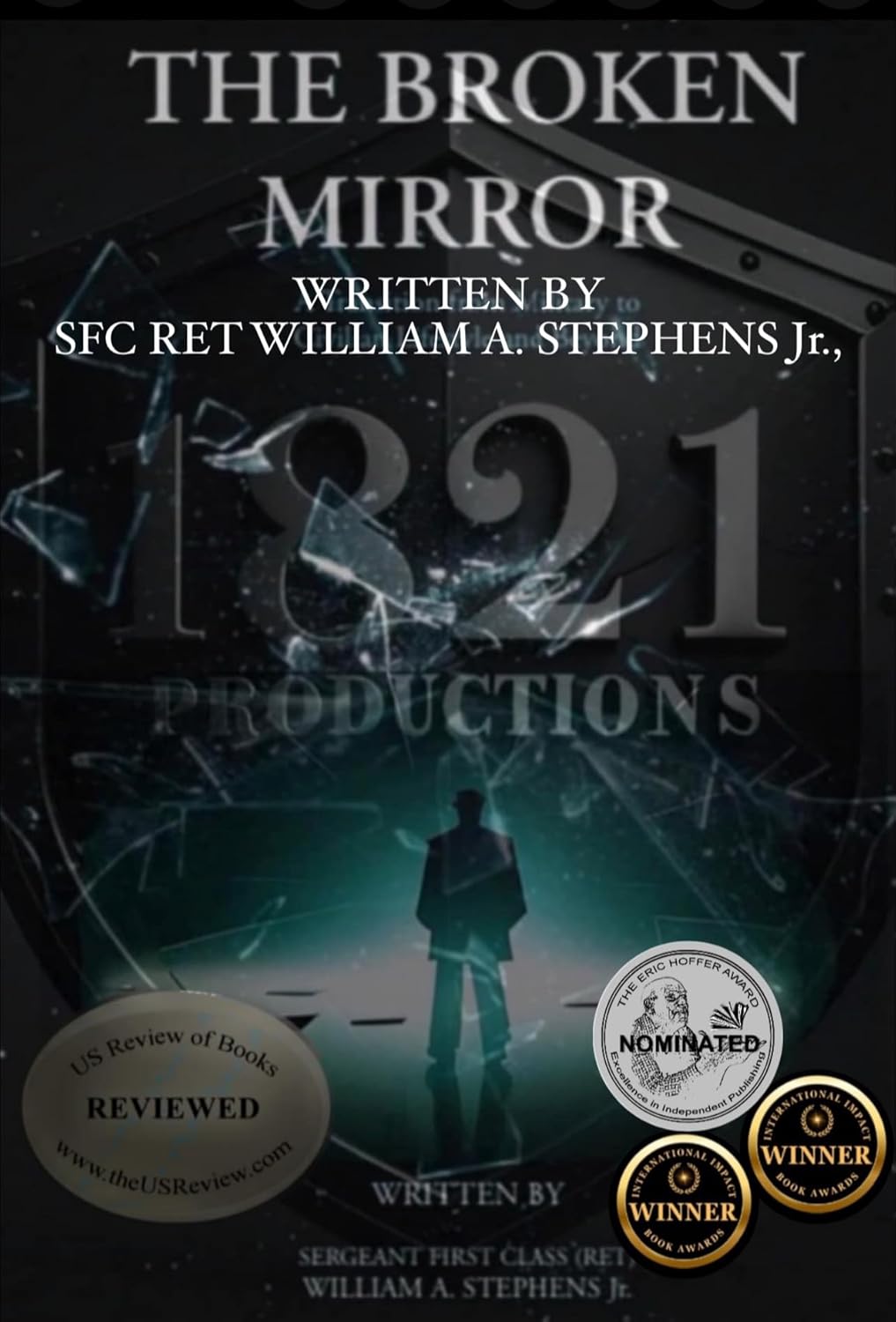

The Broken Mirror is a raw and unflinching account of a soldier’s life after war. It begins with his transition from military service into civilian life, tracing the jagged path of PTSD, broken family ties, and personal battles that stretch across decades. He writes about his service, his divorce, the loss of his parents, the distance with his daughter, and the constant shadow of invisible demons. This isn’t a straight line memoir. It’s more like a series of entries pulled directly from his mind and heart, sometimes sharp, sometimes wandering, always honest. This is a story about survival, regret, and the hope that love, especially the love between a father and daughter, can outlast the damage of war.
Some passages were tough to get through because of how blunt he is. I could feel the pain dripping from them. I admired his bravery for putting it all out there. He’s not pretending to be a hero. He’s showing the ugliness and the shame alongside the small moments of healing. His style jumps around, which mirrors the chaos of PTSD. It was hard to follow at first, but then I realized it pulled me closer to his state of mind. It felt less like I was reading a neatly packaged book and more like I was sitting across from him while he unloaded years of grief and rage.
There’s also a tenderness in these pages that surprised me. His love for his daughter is obvious and heartbreaking. I could feel his desperation to make sure she knows he tried, that he never stopped caring, even when he fell apart. Those parts made me pause and think about the weight kids carry when parents stumble. His reflections on family, loyalty, and betrayal were heavy, but they were also deeply relatable. He doesn’t ask for pity. He just wants someone to hear him out, to acknowledge that the fight doesn’t end when the uniform comes off.
I walked away from this book feeling grateful. I’d recommend this stirring memoir to anyone who wants to understand what living with PTSD feels like from the inside. It’s especially important for family members of veterans because it shows the ripple effects of war long after the battlefield is gone. And for veterans themselves, it might feel like sitting with a brother-in-arms who isn’t afraid to tell the truth. The Broken Mirror is powerful, and it left me with a deep respect for the fight he continues every day.
Pages: 142 | ASIN : B0DLLD2CXC

Look Closer

Just a Little Witch, Mostly a Mom is not only a memoir sharing your story of grief, motherhood, and the quiet magic hiding in plain sight, but a reminder to notice the small spells that you cast each day. Why was this an important book for you to write?
I wrote Just a Little Witch, Mostly a Mom because I didn’t want my mother’s story — or the strange, magical details of our life together — to disappear quietly. Grief can feel isolating, but when I wrote it down, it became connective instead. The book let me braid memory, motherhood, and a little magic into something that could outlast me. And honestly, I didn’t want to wait around for someone else to write the book I needed — so I did it myself.
What were some ideas that were important for you to share in this book?
That motherhood and grief can coexist with humor, wonder, and even irreverence. That it’s possible to feel devastated and enchanted in the same breath. I wanted to show how ordinary objects, pop culture, and family rituals — everything from a backyard Jaws screening to rosemary growing by the gate — carry their own magic. I wasn’t trying to hand out lessons; I wanted to say, look closer, this is what ordinary life really looks like when you let yourself see it.
What was the most challenging part of writing your memoir, and what was the most rewarding?
The hardest part was writing about my mother’s decline with honesty while still protecting the tenderness of who she was. Grief doesn’t have a clean arc, and there were days I wanted to slam the laptop shut and pretend I’d rather be doing literally anything else. The most rewarding part was realizing, as the pages stacked up, that I wasn’t just writing loss — I was writing a legacy. And when early readers told me they felt both seen and entertained? That was the moment I thought, okay, maybe this actually works.
What do you hope is one thing readers take away from your story?
Permission. Permission to find the sacred in the silly, to laugh even when it hurts, and to notice the everyday magic hiding in plain sight. If nothing else, I want readers to remember that love and loss aren’t opposites — they’re the same spell, just cast differently. And if they finish the book and immediately text their sibling some inside joke from childhood, then I’ve done my job.
Author Instagram


Remains of Silence : A Memoir of Breaking, Building, and Becoming


The memoir Remains of Silence is a raw and unflinching journey through a fractured childhood in South Africa and the long road toward healing and self-discovery. Stef-Albert Bothma recounts the turbulence of growing up with instability, neglect, and silence as constant companions, weaving together vignettes of fear, longing, and survival. The story traces his movement across landscapes both external and internal. From moments of danger on the road with an intoxicated mother, to nights of hunger and loneliness, to the later blossoming of a voice strong enough to speak truth, this book is both a testament to endurance and an offering of hope.
Reading this, I was struck by the stark honesty of the writing. It doesn’t hide behind fancy phrasing or soften the blow of hard truths. Instead, the words come at you plainly, almost like sitting across from someone who’s finally ready to say what they’ve never dared to. I felt anger rising at the injustices he endured as a child, and then a quiet admiration at his strength. The mix of sorrow and resilience pulled me in. There were moments when I had to set the book down just to breathe, but each time I picked it back up I was drawn deeper, eager to see how he pieced himself back together.
At times, the prose almost felt sharp, but that suited the story. Life in these pages isn’t polished, and the writing reflects that. What I appreciated most was the way Bothma balanced the heaviness with glimpses of beauty and grace. Small moments, like finding comfort in the kindness of strangers or the simple act of filling a tank of gas all the way full, took on the weight of triumph. The ideas in the book stirred something in me. I found myself reflecting on my own assumptions about strength, silence, and what it really means to survive when survival has become second nature.
I’d recommend this memoir to readers who value truth told without varnish, especially those who have lived through difficult beginnings or who seek stories of perseverance. It would also resonate with people drawn to reflections on family, memory, and the messy art of becoming whole. This book isn’t always easy to sit with, but that’s part of its power. It leaves you unsettled, moved, and somehow lighter for having walked alongside the author through the remains of his silence.
Pages: 357 | ASIN : B0FR2FLX4S
The Choice Between Dreams

Just Play Like You Do in the Basement: Coming of Age as the Drummer for the Greatest Entertainer in the World is your memoir, sharing your journey from a basement in Cleveland Heights to the stages around the world on tour alongside Sammy Davis Jr. Why was this an important book for you to write?
It was an extraordinary experience to perform with a legendary entertainer. But because I was fairly young—just out of high school—the sense of wonder and the impact of those experiences hit me even harder than they might have if I’d been a seasoned musician in my thirties or forties. That’s why I framed the book as a coming-of-age story.
When I returned home, at least two people who heard my stories urged me to write a book. Within a few years I began taking notes, outlining, and drafting chapters. I eventually put the project aside when I became absorbed in researching my grandfather’s murder, which led to my first published book. Still, the vivid memories of traveling with Sammy Davis, Jr. and the people I worked with and friends I met, stayed with me for decades.
In 2023 I finally returned to the project in earnest. By then I understood the potential of my experiences to become not just a music story, but a powerful reflection on family, identity, and the choice between two very different dreams.
What were some ideas that were important for you to share in this book?
I can think of three or four. First, the influence of family. In my case, it was positive. I had a natural interest in jazz and the drums, but it was my father, my brother, and later my drum teacher who educated, coached, encouraged, and helped me build both talent and confidence. My father’s friendship with the great drummer Louie Bellson also provided a unique connection that shaped my style.
Second, the importance of commitment. My skill didn’t develop in a year or two—it took seven or eight years. Countless hours of practice went into learning the instrument, developing a jazz feel, mastering big band arrangements, then gaining performance experience. Often, when friends were out playing or partying, I was home working through a drum lesson or playing along with jazz albums.
Finally, I wanted to share how my journey forced me to face two competing dreams: the one my father and I shared, and the one that only I envisioned. Choosing between them ultimately set me on a path that was, in many ways, foreign to my family, a disappointment to my father, and changed the course of my life.
I appreciated the candid nature with which you told your story. What was the hardest thing for you to write about?
My memoir was a significant departure from writing books about organized crime, like To Kill the Irishman, which had become my comfort zone. The most difficult part was being honest about my vulnerabilities as young Ricky Porrello—my vulnerabilities and flaws. But I knew authenticity was essential if the story was going to resonate with readers, and that meant allowing emotional depth to come through. My editor, Cherie Rohn, helped by often asking the uncomfortable but necessary question: “How did you feel?”
I also wrestled with writing about lovemaking. The tone I envisioned for the book didn’t include explicit physical detail, yet intimacy was part of the story. I needed to convey the pull of attraction, the thrill of discovery, and the feelings of love that shaped my coming-of-age as a young man traveling the globe.
What advice do you have for aspiring memoir writers?
Remember that an autobiography and a memoir are not the same. An autobiography has a wide view—this is the story of my life. A memoir is a slice of life, however small or large, that reveals a deeper truth—what you learned or experienced about some universal theme.
In Just Play Like You Do in the Basement, my primary theme is coming-of-age. Other central ideas include family, identity, and choosing a path. At its heart, though, the story is about a boy becoming a man—set against the backdrop of a successful musical family and the extraordinary experience of touring with a legendary entertainer.
Over the decades, many aspiring authors have consulted with me. A common mistake I’ve seen is summarizing a life as a simple chronicle: this happened, then that happened, then something else happened. The episodes may be interesting, but anecdote after anecdote—without emotional depth, story threads, and a clear beginning, middle, and end—does not make a memoir. You must identify the theme or themes and be willing to tell the truth with honesty and vulnerability. With focus and commitment, you can do it!
Author Website

Just a Little Witch, Mostly a Mom
The book tells the story of grief, memory, and the odd ways magic seeps into everyday life. Author Diana Jonas writes about her mother’s death, her own role as a mother, and the weight of family history. She stitches together stories of her Cuban refugee mother, her painter father, her mischievous brother, and the life she built on Centre Island. The narrative shifts between the sharp pain of loss and the shimmering texture of ordinary moments, with hints of magical realism that make the past feel alive. It is a memoir that reads like a spell, part mourning and part celebration of the ties that shape us.
Reading it, I felt pulled in two directions. On one hand, the writing is raw. She does not hide the ugliest moments, like hospital chaos, family fights, and financial collapse, and that honesty can sting. On the other hand, the prose often sings. Her images of the bay, her parents’ love and rage, the dogs, the music, the childhood friends, they glow with life. I found myself laughing in one moment and aching in the next. It reminded me of sitting with an old friend who refuses to sugarcoat but still makes you feel safe.
The ideas in the book struck me hardest when she leaned into the quiet magic of family. I loved the way she wrote about ordinary dinners and car rides like they were part of some greater ritual. She does not romanticize, not really, but she shows how beauty hides in the mess. The small spells are the ones you don’t notice until later. That theme ran through the whole book, and I kept nodding along. Sometimes I wished she had held back on a detail here or there, since the sheer weight of memory can be overwhelming, but maybe that is the point. Grief is overwhelming, and she lets us feel it without guardrails.
Just a Little Witch, Mostly a Mom is tender and fierce, funny and tragic, messy and beautiful. I would recommend it to readers who like memoirs that feel alive with both pain and humor, especially those who have lost someone close or who believe in the strange magic of ordinary life.
Pages: 295
The Lie That Changed Everything: The Memoir of a Little Rascal
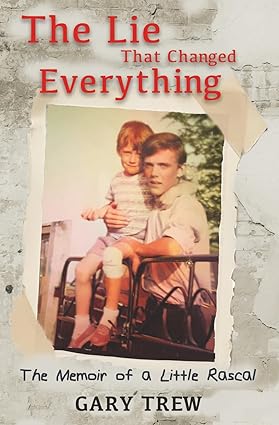
From the first page, Gary Trew makes it clear this is no sugarcoated stroll down memory lane. The Lie That Changed Everything is a memoir that blends sharp humor, biting honesty, and painful recollections into a story that feels both chaotic and deeply human. Trew recounts his early years with a mix of wit and grit, pulling readers through family dysfunction, childhood scrapes, and the bruising aftermath of being raised in a world where love often arrived tangled in trauma. It’s a tale of survival told with an irreverent laugh, even as it shines a light on moments of loneliness, rejection, and heartbreak.
I was taken in almost immediately by Trew’s voice. His writing has a rhythm that swings between wild comedy and gut-punch sadness, and that constant shift kept me hooked. Some chapters had me laughing at his absurd family stories, while others had me pausing to let the weight of what he endured sink in. The mix is unusual, but it works. He doesn’t let the pain take over, and he doesn’t let the jokes cheapen the truth either. At times, I found myself frustrated with the sheer cruelty he describes, but then he’d toss in a line of dark humor, and it felt like sitting in a pub listening to a mate tell a story he can only tell because he survived it.
There were moments where the writing felt a little jagged, but that roughness actually added to the authenticity. It made me feel like I was being trusted with unpolished truths rather than a neatly packaged memoir. I also found myself admiring his willingness to talk about shame, resentment, and fear without dressing them up. His honesty struck me as both brave and disarming. The book reminded me that family histories are rarely tidy, and sometimes the best way to survive them is to laugh at the madness and keep moving forward.
By the time I reached the final chapters, I felt both drained and strangely uplifted. This isn’t a book for someone who wants a gentle or inspirational memoir. It’s for people who appreciate raw honesty, gallows humor, and the messy beauty of a life that didn’t follow the script. If you’ve ever grown up feeling like the odd one out, or if you’re drawn to stories that reveal both the scars and the resilience of childhood, this book will resonate.
Pages: 278 | ASIN : B0FGKN1M47

No Filter: From Skateboard Kid to Entrepreneur

No Filter tells the story of a man who grew up in a home marked by abuse, found escape in skateboarding, entered the Army at 19, and lived through combat, trauma, and broken relationships before turning his pain into purpose. Author William Stephens lays out his journey with raw honesty. He doesn’t hold back on the violence he witnessed as a child, the battles he fought overseas, or the mistakes he made as a father and husband. Woven through it all is the growth of his platform, 1821 Productions, a community built on giving voice to those who feel unheard.
The writing itself isn’t polished or pretty, and that’s what makes it powerful. The short bursts of thought, the blunt admissions, the cursing when softer words won’t do. It all feels alive and immediate. I could hear his voice in every sentence, like he was sitting across from me, telling it straight. Sometimes the stories are hard to read because of the pain inside them, but that rawness makes them believable. It’s the opposite of a filtered memoir. At times, I felt frustrated with the choices he made, especially in how he treated his family, yet I also felt the weight of the demons he carried. That mix of honesty and imperfection made me respect the story even more.
What also stood out was the message underneath the chaos. Stephens isn’t asking for pity; he’s asking people to listen, to learn, and to keep going. His thoughts on credibility, leadership, and authorship resonated with a kind of tough love I didn’t expect. He’s not telling readers how to be successful. He’s warning them about the traps, the scammers, and the fake promises that he himself fell for. I could feel his hope that others might avoid the same scars. That blend of hard lessons and encouragement gave the book a surprising warmth, even when the stories got dark.
I’d recommend No Filter to anyone who values real, unvarnished storytelling. It’s not for readers looking for smooth prose or neatly tied-up endings. This is for people who want the truth, spoken in a voice that shakes but doesn’t quit. Veterans, struggling parents, survivors of abuse, and even aspiring writers will find something here to hold onto. It’s a tough book, but it’s also a hopeful one, and I’m glad I read it.
Pages: 80 | ASIN : B0FNZ89LND



 LITERARY TITAN