Category Archives: Interviews
Cheated By The System
Just Another Statistic is a gripping memoir tracing your disorienting descent into autoimmune illness and misdiagnosis as you fight to make sense of a body and a healthcare system that keeps failing. Why was this an important book for you to write?
I felt cheated by the system. The doctors colluded despite overwhelming evidence. Experts defended their colleagues by glossing over facts. One doctor was brave enough to stand up against his colleagues, which gave me hope. But when the barrister pulled out the day before trial, it was devastating – I couldn’t afford to continue, and accountability became impossible.
Writing this book became essential because the story needed to be told, but not just mine. Thousands of patients – particularly those with autoimmune conditions – go through this same pattern of dismissal and misdiagnosis. They’re told their symptoms aren’t real, that they’re anxious, that test results matter more than their lived experience. I wanted to create an unflinching record that validates that experience and shows what happens when the medical system fails someone systematically – not through one dramatic error, but through countless small dismissals that compound into something life-threatening. If the legal system wouldn’t hold anyone accountable, at least the written record would exist.
How did you decide what parts of your medical journey to include, especially when so much of it was confusing or frightening in the moment?
I documented everything during my illness in real-time – the confusion, the symptoms being dismissed, the mounting evidence that was ignored. I stopped writing when I ended up back in hospital, and in some ways that natural endpoint made sense. Those initial years were the most significant – this is what fundamentally changed my life. An earlier diagnosis could have prevented so much of the damage that followed.
I also included everything that showed the pattern of medical failure. It wasn’t just about my journey – I wanted readers who might be experiencing something similar to recognise the warning signs. The moments where symptoms get overlooked, where you’re sent home when you should be admitted, where doctors prioritise their assumptions over clinical evidence. The confusion and fear weren’t just backdrop; they were part of the story. Cognitive fog isn’t a neat narrative device – it’s disorienting and repetitive, and I kept that messiness intentional because that’s how chronic illness actually feels: non-linear, scattered, exhausting.
Were there specific memories or scenes that you found emotionally hardest to write, particularly those involving cognitive fog or hospital stays?
Writing about it now has been harder than I expected. Reliving the experience and the frustration – knowing the doctors involved faced no accountability – still makes me furious. I was too ill to fight the case on my own. If I had to do it today, I’d go to court and represent myself. But they took advantage of my illness and lack of funds, and I agreed not to pursue the matter further.
However, I never agreed not to write about it. They probably didn’t worry about that anyway – my life expectancy was supposed to be short. The hospital stays were brutal to revisit – particularly the moments of desperate, uncontrolled pain. I remember begging to be hit over the head with a hammer because the pain was so overwhelming. Writing about that level of suffering, and knowing it was preventable with proper diagnosis, was excruciating. The cognitive fog sections were also difficult because I had to authentically capture what it feels like when your mind stops working properly. You can’t think your way out of not being able to think. And documenting that failed legal battle – the negligence I couldn’t afford to hold anyone accountable for – that was enraging to put on the page.
What do you hope medical professionals take away from your account of being repeatedly dismissed or misread by the healthcare system?
I hope they learn to have a sense of responsibility. Not all doctors are ‘good’, and when they’re asked to review a patient, they need to see them as a blank slate and make up their own minds. Don’t follow like a herd of sheep – it makes second opinions pointless. I was reviewed by twelve different doctors, and the pattern of collusion was unmistakable. Ultimately, I hope they’ll learn the signs of lupus, check results properly, and actually pursue concerning findings instead of dismissing them.
But I’m always left questioning the financial incentives at play. I was in a private hospital where doctors had a blank cheque. Some would pop into my room, nod for two minutes, and charge £100 for the privilege. The longer I stayed misdiagnosed, the more money was made. Perhaps people think I’m paranoid, but the medical notes – and the ones that went missing – tell their own story. When accountability is impossible and financial incentives align with prolonged treatment rather than accurate diagnosis, patients are left vulnerable. That’s the uncomfortable truth no one wants to acknowledge.
Author Links: GoodReads | Facebook | Website
At twenty-nine, a successful currency trader’s life was derailed by mysterious symptoms that baffled doctors for eighteen critical months. Misdiagnosed with tuberculosis, he endured toxic treatments for a disease he didn’t have while lupus systematically attacked his brain, kidneys, and joints. He nearly died multiple times—not from his illness, but from the medications meant to cure him.
Just Another Statistic: Battling Invisible Autoimmune Illness and Visible Medical Failure is a raw, unfiltered memoir written during active illness. Unlike most medical memoirs crafted from the safety of recovery, this account preserves the authentic voice of a mind under attack—the obsessive thoughts, fragmented reasoning, and cognitive chaos that lupus inflicted on the author’s brain.
The repetitive sections and circular thinking aren’t poor editing; they’re genuine symptoms documented as they happened. This book offers something most medical literature cannot: real-time insight into how autoimmune disease fundamentally alters consciousness and thought processes.
From the butterfly rash that doctors dismissed to the blood tests that were ignored, from seizures in hospital corridors to the desperate fight for proper diagnosis, this memoir exposes the human cost of medical arrogance and the life-saving importance of patient advocacy.
Essential reading for anyone with chronic illness, their loved ones, medical professionals seeking to understand patient experience, or anyone who simply wants to survive their next medical encounter. A stark warning about what happens when the system fails—and a testament to human resilience in the face of institutional indifference.
Immense Beauty and Terrifying Wilderness

Blood of Yarumaya follows a botany student from Stanford, headed for an internship in the Amazon rainforest, who learns about a rare tree and its resin, which holds the secret to human longevity. What was the inspiration for the setup of your story?
The inspiration for the setup of BLOOD OF YARUMAYA is my college-student daughters, and imagining them experiencing this story and wondering how they would respond and adapt to being forced into such a dramatic situation. The protagonist, Isabella Bryn Delgado, is a Gen Z girl from Malibu with a privileged life and a certain naivety about the world, similar to my own daughters. I wanted to explore how Isabella would respond and grow as a result of her experiences.
Was there a reason why you chose this location as the backdrop for your story?
The reason I chose the Amazon rainforest as the setting is simple: Its immense beauty and terrifying wilderness that transform it into its own unique character, and its isolation from civilization. There are so many mysteries associated with the rainforests that it became the logical choice to immerse the reader in. Plus, I am fascinated with the Amazon rainforests and their wildlife and people.
What were some themes that were important for you to explore in this book?
A theme of survival was critical to the growth of the young protagonist. In the most primal situations, we are all subject to our instinct to survive, and out of this instinct grows knowledge, confidence, and a deeper understanding of who we are. Intertwined with survival is a theme of environmental issues that Izzy has to face and make choices where she stands. Other themes involved finding genuine love and how rare and precious it is once discovered, and how it drives us to do things we didn’t think possible before–pushing us to do the impossible. A theme of power and corruption was intertwined in the story: The exploitation of indigenous tribes, government conspiracies to steal and monetize the greatest scientific discovery in history, and the attacks on the natural resources of our rainforests, and from that a theme of ethics emerges. If you possessed a secret that could save the world and extend life expectancy dramatically, would you share it or keep it hidden away?
What is the next book that you are working on, and when can your fans expect it to be out?
My current project is Book #5 of my Timepiece Series, titled The Timepiece Origin. It is the fifth and final book of the series and a prequel to the story. The book should be available in late Spring 2026. Books One through Four are currently available on Amazon in eBook and paperback.
Author Links: GoodReads | X | Facebook | Website
Isabella Bryn Delgado thought a research trip to the Amazon would breathe life into her failing Master’s degree in botany—and give her one last shot at salvaging her gymnastics scholarship before her injured knee gave out for good. Far from Stanford’s campus and the chaos of Palo Alto, she just wanted a quiet jungle escape. No pressure. No balance beam. And no more awkward run-ins with her soon-to-be ex.
But the man who was supposed to supervise her internship—reclusive microbiologist Dr. Dominic Quinn—is nowhere to be found when she arrives at his remote field lab. Alone in one of the most dangerous ecosystems on Earth with no contact to the outside world, Isabella soon realizes she’s been dropped into more than just a science experiment.
When a mysterious man claiming to be Dr. Quinn finally appears, he brings with him secrets buried deep in the rainforest: an uncharted tribe, a sacred tree called Yarumaya, and a miraculous resin that may hold the secret to human longevity. But the trees are dying—and the tribe’s survival is in danger.
As Isabella and Quinn race to uncover the cause, they find themselves tangled in a web of ancient rituals, vanishing ecosystems, and a connection neither of them expected. But some secrets aren’t meant to be shared. And some discoveries are worth killing for.
Blood of Yarumaya is a pulse-pounding eco-thriller about love, legacy, and the dangerous line between scientific discovery and cultural exploitation.
EDITORIAL REVIEWS
Reviewed by Ronél Steyn for Readers’ Favorite
Kevin D. Miller delivers a captivating environmental thriller in Blood of Yarumaya. Isabella Delgado is two weeks late in arriving for her assignment with Dr. Dominic Quinn in the Amazon. This was her opportunity to write her thesis on botany with firsthand rainforest experience, but now the doctor is missing. She just broke up with her boyfriend and is still dealing with a knee injury that shattered her gymnastic goals. To make things worse, the radio is broken, it’s humid, and the mosquitoes are hungry. When Dr. Quinn finally arrives at the field lab, he doesn’t resemble the forty-something man Isabella expected. Instead, he looks closer to her twenty-six years. What follows is a race to uncover the secrets of the Kawirén people’s longevity and help them survive the impending destruction of the Amazon.
Author Kevin D. Miller proves to be a master storyteller. Vivid descriptions immerse readers deep in the rainforest and awaken all their senses. With strong protagonists leading the story, there’s no doubt about wanting to turn those pages and keep reading. The pace is swift, creating an urgency that drives the plot forward. It ticks all the right boxes for action, adventure, love, and discovery, ensuring any reader will fall in love with the Amazon and making Blood of Yarumaya perfect for fans of nature and science. The dialogue is sharp, and the detailed stages of experimentation won’t leave you confused. Due to some strong language and closed-door sexual scenes, this book is best suited to a mature audience.
The Darker Undercurrents

Dark, Cold Eyes follows two private investigators who are investigating a series of murders linked to a long-forgotten cult in a small upper-crust neighborhood. What was the inspiration for the setup of your story?
My passion for infusing my narratives with real historical facts is unparalleled. These facts breathe life into the story in a way that nothing else can. When readers uncover that the unsettling details are rooted in truth, the story resonates more deeply. Michigan, for instance, has a rich and often overlooked history with both cults and mafia organizations, spanning decades from the past into the present. It’s not the only state with such shadows, but it’s rarely the one people think of first. Even with the Jimmy Hoffa mystery resurfacing in national headlines from time to time, the darker undercurrents of Michigan’s criminal past remain largely unnoticed. Bringing these truths forward doesn’t just enrich the setting; it gives my characters real-world forces to navigate the kind of conflicts any of us might unexpectedly encounter.
There was a lot of time spent crafting the character traits in this novel. What was the most important factor for you to get right in your characters?
Creating characters with deep human traits is at the heart of my storytelling. I ensure they have fundamental flaws because none of us is perfect, and neither should they be. Life unfolds in awkward, messy, and sometimes unexpected moments, and I want my characters to reflect that. Maybe it is a playful wife choosing the worst possible moment to grab her husband’s tush, or a spouse becoming angry even after the other just saved the day because the situation could have gone terribly wrong. These imperfect reactions feel genuine. Even something as simple as a character tripping while walking across a room can make them feel alive and relatable. Human moments like these anchor a story in truth and draw readers closer.
What was the hardest part about writing a mystery story, where you constantly have to give just enough to keep the mystery alive until the big reveal?
I am not a fan of obvious foreshadowing, but I love weaving subtle hints throughout the story. My readers have probably learned to pay close attention to that first chapter. I often hide key information early on, then bury additional clues deep within the narrative. A few chapters later, they discover that the small detail my characters casually dismissed actually plays a significant role in the mystery. The problem is that you don’t know exactly which detail to pay attention to. That mirrors real life, where we often overlook something vital until it suddenly matters.
Where does the next book in the series take the characters?
I am not sure yet. No new storylines for Keri and Jade Shaw have come to me. I have always struggled to write books in a strict sequence, which is why I usually work on two series at once. Moving between them helps keep my creativity flowing. What I never want to do is force a story onto my characters. Stepping back for a while, much like taking a real vacation, often gives me the space to let the proper storyline rise to the surface.
Author Links: GoodReads | BlueSky | Facebook | Pinterest | Website
Book 4 in the Shaws Investigation Series
by Kay A. Oliver
Six murders. One small town. And a case that refuses to play by the rules.
When Lieutenant Valencia begs the Shaws to break their cold-case-only rule and dive into an active investigation, Keri and Jade Shaw reluctantly agree. But nothing about this case is ordinary.
Jade unknowingly sets off a chain reaction when he takes an ancient book linked to a long-forgotten cult—unleashing danger that hits far too close to home. Now, their strongest ally, Valencia, has been taken hostage. They have to find her before she’s killed.
The Shaws must race against time to unravel the mystery. Because whoever’s behind the killings isn’t just hiding in the shadows…They’re watching. And they’re ready to strike again.
Some secrets kill to stay hidden.
Intrigued By International Espionage

The Flight Enigma follows a couple seeking peace in Magnolia Bluff, only to be drawn into a national crisis when one of their friends becomes entangled in the disappearance of secret stealth technology. What was the inspiration for the setup of your story?
Response: We are always intrigued by international espionage and the intersection it has with the technology world. We love taking technical facts and real world scenarios then place believable characters (okay, fictional) in harm’s way to see what happens. More times than not, the characters advise us of where the story should go and we get surprises we didn’t expect. We’re storytellers.
What inspired your characters’ interactions and backstories with Mike and Ashley? Are they based on anyone you know in real life?
Response: Just about every character we put into our stories has been a real live person we’ve known. Understand that is where we start but then we stretch, pull, and push the character definition so we can stress them and the situation for the drama and realism we want the readers to enjoy. Also, we change the basics of the character for plausible deniability. 😁
What is the creative process like when working together to create your novels and maintain a cohesive tone and voice? How do you handle conflicting ideas about how the plot should develop?
Response: We use our patent pending technology of “Literary ping-pong” to bat the evolving story and characters back and forth between us until we get the polish of the story just the way we want. This literary ‘scrubbing’ also allows us to make the story sound and read like there is only one voice to the reader. Even our first line editor can’t tell who wrote what if we’ve polished the story correctly. As far as creative story conflict, we have always used ‘Rock-Paper-Scissors’ to arbitrate disagreements when they arise. Know that Breakfield has NEVER won a ‘Rock-Paper-Scissors’ conflict resolution. 🤣
What is next for the residents of Magnolia Bluff?
Response: You should understand that the town of Magnolia Bluff is actually a global magnet for crime and mayhem. The residents will just have to expand the cemetery and cheerfully accept new business for it.
Author Links: GoodReads | X Series | X Author | Facebook Series | Facebook Author | Website | Blog Series | Blog Author | YouTube | Pinterest | Instagram | Email
JJ receives an urgent request from his longtime friend, Mike Hayes, a high-ranking official in the U.S. military, to tackle a critical segment of a clandestine project. The development of next-generation stealth technology progresses, veiled in tight confidentiality and restricted to those holding top-secret clearance. As pressure mounts, Mike finds himself increasingly distracted by tumultuous relationship issues with his wife, Ashley, and a series of unnerving health concerns. What was once a meticulously planned operation is now teetering on the edge of collapse, with looming deadlines and compromised communications.
Calamity strikes when a key team member gets unexpectedly hospitalized. Their condition defies medical explanation. Amidst the chaos, the project’s crown jewel—the clandestine stealth technology—vanishes into thin air. Federal authorities storm onto the scene, demanding answers, while the local police, led by the relentless Chief Tommy Jager, scramble to uncover the truth, blissfully unaware of the project’s gravity. JJ finds himself thrust into the eye of a looming national crisis, driven by a desperate need to vindicate his friend and unravel the mystery before it spirals further out of control.
Meanwhile, Jo embarks on her investigative journey, determined to uncover the secrets Ashley harbors and the dark shadows that threaten their friendship. Emotions whiplash through anger, heartbreak, and poignant revelations as the tangled threads of their stories begin to unravel. The specter of fear, veiled threats, and deep-seated shame loom over Ashley, endangering every relationship she holds dear.
JJ and Jo navigate this perilous landscape of deception and intrigue. They uncover a labyrinth of lies that could forever alter their lives. With each revelation, the stakes escalate, and the air thickens with danger. Can JJ and Jo piece together the fragmented clues in time to rescue their friends and avert a national disaster?
‘The Flight Enigma’ is a gripping tale of suspense and mystery, where the slender line between loyalty and betrayal hangs in the balance, and every heartbeat pulses with the urgency of truth, begging to see the light of day.
Most Talented and Most Misunderstood

Thriving in the Modern Workplace is an empowering guide that helps young professionals, particularly Gen Z, navigate real-world challenges with practical tools, relatable stories, and updated career strategies designed for today’s changing world. Why was this an important book for you to write?
Gen Z is one of the most talented and most misunderstood generations we’ve ever seen. Every generation comes with its own style and challenges, but theirs have been amplified by everything they’ve had to face: a pandemic that disrupted their lives and education, a mental health crisis that few were prepared for, and the pressure to adapt to AI and constant change before even finding their footing.
As both a parent and a professional, I saw this disconnect up close. Many parents, educators, and employers want to support Gen Z but simply don’t know how to meet them where they are. The communication gap between generations is real, and it’s costing us trust, connection, and opportunity.
That’s why I wrote Thriving in the Modern Workplace. It’s a guide to help Gen Z navigate the realities of today’s world with confidence and clarity, and just as importantly, it gives the adults who teach, hire, and lead them the insight they need to truly understand and empower this generation.
As the parent of two Gen Z young adults, I found this a refreshing take on how to help them navigate this changing world. What are some key ideas you felt were important to cover to grab this generation’s attention and make your book stand out from other career guides on the market?
I am also a parent of two Gen Z young adults, and this book came straight from the heart. I wasn’t writing from a distance. I was writing as someone who’s watched this generation struggle, grow, push boundaries, and ask for things many of us were never taught to ask for. I wanted this book to feel like real guidance, not another lecture.
At the core of Thriving in the Modern Workplace are three foundational ideas: mindset, confidence, and purpose.
Those three themes shape almost every challenge Gen Z faces.
- Mindset, because the world they’re entering moves fast, and how they think determines how they adapt.
- Confidence, because they’re talented but often second-guess themselves in environments that don’t always see or understand them.
- Purpose, because this generation won’t stay anywhere they can’t find meaning and I believe that’s a strength, not a flaw.
By grounding the book in these essentials, I wanted to give Gen Z something relatable, practical, and empowering… and give the adults around them a clearer window into who they are and what they need to thrive.
What is one piece of advice you wish someone had given you when you were younger?
I wish someone had told me to believe in myself first before waiting for anyone else to validate me. Confidence isn’t something you earn from the world; it’s something you choose to build from within. When you don’t trust your own voice, you dim your potential before it even has a chance to grow.
Self-belief shapes how you lead, how you show up, and how boldly you go after the things you want. When you genuinely believe in who you are and what you bring to the table, you don’t just participate in your life, you own it.
What is one thing that you hope readers take away from Thriving In The Modern Workplace: A Gen Z Guide to Success?
I want every reader whether they’re Gen Z or from another generation to understand that success is personal. It’s not defined by a job title, a milestone, or someone else’s expectations. It’s something you get to shape on your own terms.
And for Gen Z specifically, I hope they walk away knowing this: you don’t need a title to lead. You already have the talent, the perspective, and the potential. What truly matters is your intention: choosing to grow, choosing to show up fully, and choosing to become the best version of yourself every single day.
If you can do that, you’re already winning.
Author Links: GoodReads | X | Facebook | Instagram | Website
A Very Fun And Weird Detour
Ringo the Ginkgo follows a remarkable leaf, who is also a living fossil from the Jurassic era, as he takes readers on an adventure back to the time of ancient dinosaurs. What was the inspiration for your story?
Being a visual artist, my initial interest in Ginkgo was an aesthetic one. A bright yellow carpet of Ginkgo leaves almost pulsing against the drab, dirty grey pavement caught my eye and made me realize something so obvious it was easy to overlook: These leaves did not look like what most people think of when they think of a leaf. It was almost as if somewhere on the evolutionary road, the Ginkgo took a very fun and weird detour—resulting in its pleasantly oddball appearance. Aesthetic appreciation led to curiosity, and the first very cool fact research revealed was that they were “living fossils.” This fact sparked my imagination, and the story slowly took shape. I thought the idea of this leaf acting as a ‘tour guide’ through the past, teaching and stirring up curiosity, might be a good concept for a picture book.
What were some educational aspects that were important for you to include in this children’s book?
- The origin of the species dating back to the Jurassic period.
- The reliance of most life on Earth on the oxygen produced by plants.
- The symbiotic relationship between plants and animals.
- Environmental preservation and awareness.
What was your favorite scene in this story?
Again, being a visual artist before anything else, my favorite scene may be a split between the Baboon holding a ‘Moon’ balloon or the scene with the Sun and boat explaining the photosynthetic process and leading the viewer to the closing pages.
Will this novel be the start of a series, or are you working on a different story?
No, I think this was a one-off. It was a labor of love, but at one point, the labor part became quite overwhelming. Factoring in working full-time, life, etc., the book took almost three years to finish.
Author Links: Instagram | Amazon
A wiggling anomaly of a leaf? Check.
A photosynthesis factory? Check. A living breathing key to curiosity? Definite check.
That’s Ringo the Ginkgo.
Throughout the picture book, Ringo the Ginkgo leads the reader on an adventure through the Jurassic period where the reader meets some of Ringo’s amazing dinosaur pals and learns Ginkgo trees are living fossils that have been unchanged for millions of years.The journey continues with a quick brush-up biology course covering the glorious life sustaining process of photosynthesis.
This homage to science, nature, and art is also a gentle, yet necessary, reminder of how much we rely on plants for our oxygen and how important it is to live symbiotically. The closing pages engage the reader with a set of questions and a request to flip Ringo upside down.This results in a visual transformation revealing a ‘curiosity key,’ which opens perception and imaginationwhile encouraging creativity and wonder.
People Can Become Unrecognizable
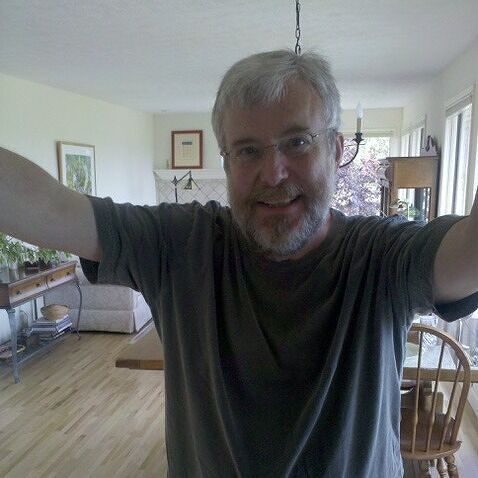
The Small Hours follows a psychologist who, after finding out his closest friend has died, and his marriage is over, returns to the unsolved mystery of his uncle’s disappearance during the Spanish Civil War. What was the inspiration for the setup of your story?
When I was living in Spain in 1981, a man in a nearby village came out of hiding 42 years after the end of the civil war and a full five years after the death of the dictator, Francisco Franco. I was impressed by the kind of fear Franco generated in people and began to investigate the topos or the moles as they were known by.
The stories of Michael and Delia are complex, and their personal battles are fascinating. What are some things that you find interesting about the human condition that you think make for great fiction?
Having worked as a psychologist, I was always fascinated by the human condition because I’ve known what humans are capable of. Under stress, people can become unrecognizable with the way they individually handle it. Plus, as we all now know, we become as adults the culmination of years of childhood learning, good or bad, and this can create astonishing consequences worthy of fiction.
What were some themes that were important for you to explore in this book?
Loyalty and goodness are themes that I am smitten with. In this book, it was not easy to approach these themes in the midst of a civil war. I am always pleased when people do the right thing in spite of what the consequences might be.
What is the next book that you are working on, and when can your fans expect it to be out?
My next book is called When They Were Gone and considers what can happen to a family when tragedy strikes. It takes place in the 1960’s. I expect that it will be published in spring of 2026.
Author Links: Amazon | GoodReads | Website
Will Michael solve the mystery of his Uncle Robert’s disappearance? Will Delia continue running and, should she? Will Maria del Carmen and the villagers of La Jolla de Malaga prevail in the covert continuation of the erstwhile civil war, or will the evil that lingers decades after any civil war ostensibly ends, proceed unchecked?
Suspension of Disbelief
Auberon Manor follows a rich paranormal skeptic who is drawn into the mystery of Auberon Manor, an estate with a long, dark reputation, where he discovers something more frightening than a ghost. What was the inspiration for the setup of your story?
Many people will tell you they do not subscribe to the notion that ghosts or other supernatural entities are real. If you were to drop one of these non-believers into an old, isolated, creepy house, I’m willing to wager they’d feel some level of anxiety. Introduce a few odd, not easily explained noises, and even the fiercest skeptic might be tested. What interested me the most in writing this book was the characters’ reaction to discovering a supernatural entity. That’s hardly an everyday occurrence, and I’m sure it would test most people to their limit. I created a group of characters and threw them into that frightening scenario to see what they would do. I admit, I would have fled on day one. Thankfully, my characters are far braver than I would have been. Suspension of disbelief.
Your novel features some very interesting characters with flaws, but who are still likable. How do you go about creating characters for your story?
My preference is for strong, capable characters. The kind of people you can count on when the going gets tough, who run towards a problem instead of away from it. Having said that, not every person is skilled, capable of courage when called upon, nor are they dependable when you’re forced to rely on them. I’m fascinated by human behaviour in all of its forms. Too often, a protagonist has to go out of his or her way to navigate around another person’s shortcomings to reach a goal. That’s life. That’s real. No story proceeds in a flawless straight line. Humans are sometimes bumps in the road that need to be navigated. I want the reader to share that frustration.
What intrigues you about the horror and paranormal genres that led you to write this book?
This genre has no limits. If you can imagine it, you can put it on the page and not be criticized for breaking the rules of physics or angering a reader for forcing them to suspend their disbelief. They want to suspend their belief for a story like this. The author and the readers are all on the same page.
What is the next book that you are working on, and when can your fans expect it to be out?
In addition to writing in this genre, I also write action-adventure, legal thrillers, and tech thrillers. My next book is titled ‘Legacy of a Silent Man.’ This is an action book. Work is underway, and the publication is expected in the first quarter of 2026.
Author Website
For the curious and adventurous, the stories read on the website inspire them to make the journey to Pennsylvania and see the manor for themselves. Over time, the stories about the house grow darker with reports of visitors suffering injuries. When an amateur group of investigators conducts a scientific examination of the house, disaster strikes. Members of the investigative team suffer broken arms, a broken rib, and a near-fatal concussion. This compels the owner to prohibit any further visits.
When the story of the Auberon haunting reaches a bored and wealthy young man named Dane Ledger, he’s encouraged by a friend to take a ghost-hunting road trip. To Dane, who doesn’t believe in ghosts, it presents an opportunity to debunk the ridiculous notion that this house, or any house, is haunted. He and his friend arrive at the manor to discover recently erected fencing and a guard who refuses them entry. All of this security makes Dane and his friend even more curious about the house. They approach the homeowner for permission to inspect the property, but are firmly denied. After money is exchanged and Dane agrees to assemble a team of professional paranormal investigators to inspect, identify, and exterminate the entity from the manor, permission is finally granted.
With the team assembled, they enter Auberon Manor and discover its frightening occupant. Terrified by what they’ve discovered, and too frightened to go back into the house, they struggle to find a way forward. Letting the entity remain in the home is not an acceptable option, as it would imperil every future visitor. They don’t know what they’re battling, but it’s not a ghost. It’s something much worse.



 LITERARY TITAN