Blog Archives
THE MINDSET OF AN OUTLIER
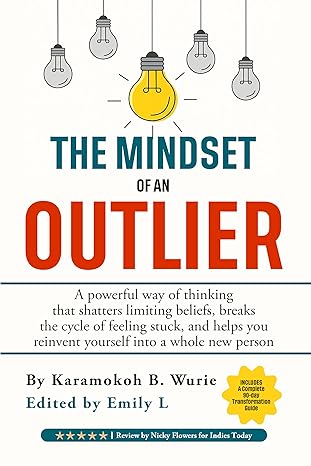

The Mindset of an Outlier is an intense and personal guide to inner transformation. In it, Karamokoh B. Wurie blends spiritual reflection, personal struggle, and motivational fire to offer a roadmap for reinventing your life. The book moves from philosophical musings about reality and consciousness to brutally honest advice on how to confront addiction, self-doubt, and trauma. Wurie argues that life is an illusion shaped by your thoughts, and that by shifting your mindset, you can shift your entire existence. Part spiritual manual, part no-nonsense coaching, it’s written in a voice that feels both raw and uplifting.
I was drawn to the book’s bold, no-filter tone. Wurie talks about suicidal thoughts, toxic leadership, childhood pain, and the feeling of being spiritually lost, but does so with purpose. His voice is fierce but warm. He challenges you without patronizing. Some parts felt like a sermon, others like a late-night heart-to-heart. What I appreciated most is how he fused spiritual language with everyday pain, making big ideas like “consciousness” or “parallel realities” feel accessible. His core message is about reclaiming your life from the inside out, and that’s something that resonates, regardless of belief system.
At times, some ideas were revisited, and a few concepts could have been clearer with more structure or explanation. I also found myself occasionally wanting a few more real-life examples or outside perspectives to help ground the insights being shared. But then again, this book isn’t about data or citations, it’s a battle cry from someone who’s clearly lived through a lot and wants to help others do the same. Wurie’s emotional honesty makes up for any lack of polish. His rawness is his strength.
The Mindset of an Outlier is for anyone who’s tired of being stuck, who’s questioning the story they’ve been telling themselves, or who simply needs someone to say, “You’re not broken. You’re just not done yet.” This isn’t a book for skeptics or cynics looking for clean formulas, it’s for the searchers, the strugglers, and the spiritually hungry.
Pages: 134 | ASIN : B0FJL6WYCJ

My Authentic Self
Invitation to Co-Creation: A Spiritual Path from Child Abuse and Religious Trauma to Love, Healing, and Oneness is a personal and courageous exploration from the scars of childhood abuse and religious trauma. Why was this an important book for you to write?
There were a number of reasons why it was important for me to write my memoir. The process of healing childhood and religious trauma was empowering and transformational. By sharing my journey I hope readers are inspired to discover their own unique paths to healing and know that it’s always possible to overcome adversity.
I also wanted to tell my story because many of my traditional family and friends were unfamiliar with my traumatic background and current progressive Christian beliefs. They had no frame of reference to understand my spiritual experiences or belief in a loving, inclusive God. Through my writing, I tried to create a bridge to help my loved ones know me better. I had hidden my authentic self most of my life. My intense fear of rejection kept me silent. It took a leap of faith to share so vulnerably and publicly. It was freeing when I finally found the courage to speak my truth.
Though it was my personal goal to create a bridge of understanding from the traditional to the nontraditional for my family and friends, it became clear that, in this era of polarization, we need a way to span the gaps between our differences now more than ever, so that we can engage more respectfully with one another. Thus, my personal goal of bridging divides expanded into a broader purpose for this book.
The actual inspiration for my book occurred in 2015 when I reached out to Blessed Mother Mary for healing and direction for my life, and I received a message to write Invitation to Co-Creation. As I reflected on the traumas I had experienced and where I was stuck in my life, I was encouraged to make changes and then write about them. It was also important for me to showcase another message I received from Mother Mary – a vision of oneness and global harmony that all are invited to co-create. It wasn’t until I was further along on my journey that I realized my personal healing goals intertwined with this collective vision.
What were some ideas that were important for you to share in this book?
It was important to share my understanding of co-creation as a dynamic, interactive process between a benevolent God and humanity. I initially experienced co-creation thirty-seven years ago when I developed a debilitating medical condition that stymied traditional medicine. After a prayer for healing, I was divinely guided step-by-step (through signs, intuitions, and synchronicities) to complementary healing practitioners and treatments until I was healed. This was the first time I experienced co-creating my life with the Divine, even though I didn’t have a word for it back then. Through the process of co-creation, I was also led on a divinely guided journey to heal from childhood and religious trauma, which freed me to know self-worth, find forgiveness for my parents, experience peace in my progressive Christian beliefs, and live with love, joy, and authenticity.
However, co-creation isn’t just for me. It’s part of everyone’s spiritual heritage as a child of God and the Universe to ask questions and receive answers. In my book, I describe the process of co-creation and how to tune into divine guidance in greater detail, and I offer additional personal examples.
Oneness is another concept I wanted to bring to life. Mother Mary shared her vision of oneness– that we’re one interconnected human family– and her hope that this awareness would lead to a peaceful world. When we remember we’re all in this together, we’re more likely to focus on our commonalities and engage in collaboration and cooperation to find personal and global solutions that work for all.
(Incidentally, oneness doesn’t mean uniformity; rather it’s a unity that also honors diversity, where everyone is included, valued, and respected.)
I deeply resonated with Mother Mary’s vision of oneness. It was easy to imagine standing in a circle holding hands with diverse, unknown people from all corners of the world, coming together as one. However, on a personal level, I also struggled with this vision, because I felt separate from those that hurt me. My traumatic experiences from childhood and religious trauma threatened our bonds. It took an inner journey where I learned to live from my heart, instead of my hurt, to rekindle my connection with them. By healing the rifts within myself and the disconnection in my relationships, oneness became a real-life experience.
I suspect I’m not alone in finding it easier to align with an ideal vision of oneness. It’s far more challenging to come back to the real world and heal the hurts that keep us alienated from one another and engage respectfully across our divides. But this nitty-gritty work is exactly what we need to do.
We’re at a crossroads. Major polarizations and divisions are pulling us apart.
We have an opportunity to reverse this course. We’ve been invited to build bridges to one another, reconcile our relationships, and see the world as an “us”, rather than as an “us versus them.” Invitation to Co-Creation offers inspiration and practical tools to make the dream of oneness in our relationships, communities, and world a possible reality.
What was the most challenging part of writing your memoir, and what was the most rewarding?
Hands down, the most challenging circumstances to share were the traumatic events from my childhood that reverberated into adulthood, impacting every area of my life. However, writing was also very therapeutic. It was gratifying to see and experience the healing that brought me to the place where I am today.
Without diminishing the negative influence that childhood and religious trauma have had on my life, these core wounds also acted as catalysts for my spiritual growth. These life challenges were the hidden gifts that moved me out of victimhood and into empowerment. As I became the author of my life I found meaning, passion, and a purpose that went beyond my personal healing to collective healing. It has been very rewarding to share my journey and the broader purpose of my book– Mother Mary’s vision of global oneness.
What do you hope is one thing readers take away from your story?
When you co-create your life with the Divine you’ll be embarking on your most rewarding spiritual journey ever. You’ll realize that the Divine is always available to empower, support, and guide you to become the best version of yourself and to live the beautiful life you’re meant to live. The significance of undertaking your journey can’t be overstated because all personal healing leads to collective healing. When you transform yourself for the better, there’s a ripple effect, and you transform the world for the better.
Author Links: GoodReads | Amazon
This spiritual memoir tells a story of hope and transformation that invites readers to embark on their own journey for personal and collective healing.
Lorrie’s harsh childhood and toxic religious upbringing echoed with punishment and abandonment. Trauma ruled her world. For years fear kept her from sharing her true self, beliefs, and family secrets. But after a prayer for healing, she was invited on a mystical, co-creative journey that changed her life. Divinely guided inner work freed her to know self-worth, find forgiveness, and experience peace, and joy. She found the courage to live her truth. She left the wrathful, excluding God of her childhood behind and was welcomed by a benign, compassionate, inclusive God.
While praying to Mother Mary, Lorrie received a message to write this book, as well as an inspired vision of unity in diversity–a circle of global harmony that all are invited to co-create. This vision mirrored her progressive Christian belief in a loving God, inclusive of all faiths and spiritual paths.
But how do you live in oneness when beliefs and views clash and emotions are triggered?
This timely memoir details one woman’s journey to heal past traumas, honor differences, and expand the circle of inclusion–and reveals how you can too.
Invitation to Co-Creation offers tools for individual and communal healing and is for you if you’d like to:
Find inspiration to overcome life challenges, heal trauma, and make a difference.
Discern divine guidance and experience your own co-creative journey for an amazing soul-purposed life.
Discover how an inclusive spirituality promotes a sense of being one interconnected human family.
Create bridges and foster healing in relationships and communities to bring the dream of global oneness one step closer.
Invitation to Co-Creation: A Spiritual Path from Child Abuse and Religious Trauma to Love, Healing, and Oneness
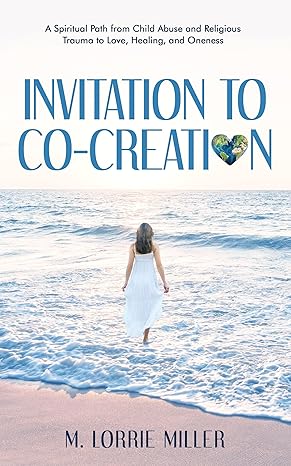
M. Lorrie Miller’s memoir, Invitation to Co-Creation, is a deeply personal and courageous exploration of healing from the scars of childhood abuse and religious trauma. Lorrie’s early years were fraught with abandonment, harsh discipline, and the weight of a toxic religious environment. These experiences led her to retreat into herself, concealing her beliefs, emotions, and painful family secrets. Everything changed when she embarked on a transformative journey. Through inner work and spiritual growth, Lorrie uncovered forgiveness, self-respect, kindness, and a profound sense of self-love. Most significantly, she found peace and love within herself. This journey allowed her to shed the trauma of her past, step into a healed version of herself, and share her powerful story of redemption and growth.
In her memoir, Lorrie answers universal questions such as how do we survive life’s most devastating challenges? How do we move forward to find hope and meaning? Her narrative is raw and vulnerable, written to inspire readers of all backgrounds—spiritual, religious, or otherwise. She bares even the darkest moments of her life to show that healing and transformation are attainable.
This book is both deep and thought-provoking. I was moved by the depth of her story and its ability to offer hope and inspiration to anyone seeking healing, regardless of their spiritual or religious beliefs. Lorrie’s unflinching honesty makes her journey relatable and impactful. While I enjoyed the book, I felt the book’s writing style occasionally affects its clarity. At times, Lorrie’s intentions were less clear, which could make it challenging for readers who are less familiar with spiritual or religious concepts to fully engage with certain passages. However, once the rhythm of her voice becomes familiar, the narrative flows more smoothly. This memoir deserves recognition for its authenticity and courage.
Lorrie’s journey is one of resilience, transformation, and the pursuit of inner peace. Invitation to Co-Creation stands as a testament to the strength of the human spirit, and I honor her willingness to share her story with such openness. Its message of healing and hope makes it a meaningful read.
Pages: 297 | ASIN : B0DPB773X8
The Sound of an Ordinary Life


In The Sound of an Ordinary Life, Alis Cerrahyan embarks on a profound journey, revisiting her seven-year-old self after six decades to confront and heal from the personal challenges of a painful childhood and dysfunctional family dynamics. Through this introspective narrative, she reassures her younger self that, despite the dark clouds of the past, life evolves into a rewarding journey. Cerrahyan delves into themes of forgiveness, particularly towards her mother, and the healing process from neglect and ridicule. Her candid exploration offers readers valuable lessons on forgiveness, healing, emotional intelligence, confidence, and embracing positive energy.
The memoir intertwines the innocent perspective of a child with the wisdom of age, creating a realistic portrayal of her younger self, complete with the questions and thoughts typical of a child. Cerrahyan poses deep, philosophical inquiries such as, “Why is life so full of sadness?” and “What must a person do to find lasting happiness?” These reflections underscore the importance of self-awareness and addressing unresolved issues. By recalling past experiences, like being reprimanded for laughing in class and feeling disappointed by a favorite teacher, she illustrates the early disappointments that shaped her life. The book explores a diverse array of themes, including motherhood, religion, migration, and entrepreneurship in the salon business. These facets, representing different stages of Cerrahyan’s life, are thoughtfully interwoven and presented engagingly throughout the narrative.
The Sound of an Ordinary Life is a poignant portrayal of a woman committed to the inner work necessary to heal from past pain and embrace life’s potential. Readers who have endured the hardships of an unwelcoming family during childhood will find inspiration to connect with their inner child and seek closure, much like the author achieves in this memoir. Its reflective, metaphorical, and thought-provoking essays are a true treasure.
Pages: 206 | ASIN : B0DKCJF95V
A Mad Box of Rain

A Mad Box of Rain by Brian J. Quattlebaum is a deeply moving and unflinchingly honest account of the author’s turbulent early years. Set against the backdrop of Memphis, Tennessee, Quattlebaum recounts a childhood shadowed by trauma yet marked by resilience. He narrates the lasting impact of the sexual abuse he suffered at the hands of a teenage family friend, a secret he carried into adulthood. Interwoven with this painful reality is the chaos of his family life, shaped by an older brother’s destructive spiral into alcohol and addiction before even reaching his teens. Their parents, well-meaning and devout Christians, fought to anchor their sons amidst this turmoil, balancing AA meetings with church in a desperate bid to keep their family afloat.
Quattlebaum’s story isn’t simply one of hardship. It’s about survival, strength, and the extraordinary will of a young boy who emerged from a brutal world determined to be something greater. It’s a testament to the human spirit’s capacity to heal, even when wounds run deep. Reading this memoir is not just witnessing a life but experiencing it: the humor, the heartbreak, and the unsettling truths that come with growing up in such circumstances. The book challenges the reader with its raw, unvarnished depiction of abuse. Quattlebaum doesn’t shy away from the discomfort or confusion that victims often feel, candidly sharing how he grappled with the complexity of his body’s reactions and the emotional weight of keeping such a dark secret. A particularly poignant moment describes his first attempt to run away at just nine years old, overwhelmed by his silence and guilt. His admission that his parents didn’t deserve the pain his escape caused is a line that strikes with full emotional force. Despite the darkness, Quattlebaum infuses his narrative with Southern humor and irony, making moments of levity shine through the grim reality. This juxtaposition brings a layered complexity to his writing, balancing the heaviness with a uniquely human touch. The author’s reflections reveal how he survived and has healed, speaking with bravery and self-awareness that inspires.
A Mad Box of Rain is both a challenging and rewarding read, punctuated by moments that will make you laugh unexpectedly and others that will leave you reflecting deeply. Brian J. Quattlebaum’s courage to share his story is commendable, and his hope of reaching those who might feel alone in their struggles is palpable. This book serves as a powerful reminder to remain vigilant and compassionate; after all, unseen battles often rage behind the faces we encounter every day. For that reason, I urge everyone to read this remarkable memoir; it leaves you with a greater sense of awareness and a renewed commitment to treating others with kindness.
Pages: 256 | ASIN : B0CZT4SN28
The Unvarnished Truth: Purpose in the Pain

In The Unvarnished Truth, Dr. Karla Hylton presents a poignant narrative, delving into her journey through depression and trauma within the confines of a turbulent marriage. The book opens with Karla reflecting on the early days of her relationship, marked by overlooked warning signs, and progresses into the complexities and dangers that later unfolded. Hylton’s candid portrayal of her experiences – from manipulation and hurtful remarks from her ex-husband to her own introspections and regrets as a mother and spouse – paints a vivid picture of her challenging marital life. The narrative intensifies as it explores her struggles with regret, suicidal ideation, the intricacies of divorce, and the pain of estrangement from her children.
Hylton revisits her traumatic past with remarkable courage, aiming to foster open discussions on mental health and provide solace to others facing similar challenges. Her memoir stands out for its frankness and introspection, touching on the anguish of domestic isolation and hostility and the complexities of personal accountability during vulnerable times. This book is an immersive memoir that offers an in-depth look into Hylton’s life. The narrative is enriched with detailed accounts of various challenges, including a harrowing childhood incident and her struggles for financial independence during critical health crises. The memoir encompasses a wide array of themes, such as divorce, trauma, education, writing, therapy, parenting, familial conflicts, loss, childhood experiences, manipulation, psychological treatments, friendships, and extramarital affairs, presenting a multifaceted exploration of Hylton’s life.
This memoir is particularly resonant for those who have endured abuse from narcissistic partners or acquaintances. Dr. Hylton’s forthrightness in sharing her experiences with depression and suicidal thoughts is not only brave but also immensely inspiring for others in similar circumstances. The Unvarnished Truth is a testament to Dr. Hylton’s generosity and commitment to shedding light on challenging yet crucial topics.
Pages: 274 | ASIN : B0CHDP6CXH
The Beauty of the Freedom Afterwards

Descending Angels, How to Escape Abuse: The Many Types of Abuse, The Angels of My Story, Tricks Learned for Escape is beautifully written and a unique approach that addresses a subject that is often overlooked or talked about by people who have not lived it. What inspired you to share your story?
It was a simple passing request believe it or not. Matilda (now grown) for whom I was a tutor, asked me to write one scene about what we were all going through. I did so, but then just couldn’t stop writing.
It was as if “the code of silence” that keeps many in the hands of abusers, broke. I became flooded not simply with emotion, but the more I thought about it, the more I saw how I might help others with what I’d learned, having escaped my abuser.
Everything poured out, and when organized became a guide, not just to escape, but to the beauty of the freedom afterwards.
What were some ideas that were important for you to share in this book?
Probably the most important would be that the victim knew how to survive long before they met the abuser. That being so, the victim will also survive after the abuser is gone. Survival need not be taught. Survival is a basic drive we are born with.
The second being; most victims are brainwashed into thinking they are less, undeserving, useless. That is just a power play that abusers use to minimize partners. If we were truly unworthy, would it have to be told to us repeatedly? No.
The problem I see most of the time is that people mistake confidence and or self-love for pride. These are not synonyms. Yet somehow, we grow-up believing that feeling good about ourselves is conceit.
What is a common misconception you feel people have about people in abusive relationships?
The biggest problem I’m aware of is that mainstream belief is that the abused are weak. Absolutely laughable if you take into account every horrible thing they put up with and still manage to get out of bed in the morning.
The worst bit is that the abused believe that lie too. This keeps them in the nightmare. I truly wish that society would stop reinforcing this mindset.
What is one thing you hope readers take away from your story?
We really are capable of anything we put our minds to. ALL of us. Don’t sell yourself short and bar yourself from overcoming obstacles. You are the main character of your story, if you don’t like what your story says, you have the power to rewrite it.
If this book helps even one woman get free, I’ve succeeded.
Author Links: Goodreads | Amazon
What I didn’t know about abuse could fill up a book.
I didn’t know the many types of abuse and how they could affect me. I didn’t know how to escape or get away from it. I didn’t know how smart I actually was and everything I could accomplish if I only put my mind to it. And I didn’t know how strong I was… that is, until Angels Descended upon me and enlightened my thoughts with what was actually possible for my life.
God did not put us on this planet to be bullied and abused. When He sends Angels to help you – LISTEN to them! Take action. And get away as soon as you possibly can!
Family History and Trauma

Breaking the Cycle: The 6 Stages of Healing from Childhood Family Trauma looks at how childhood environments shape the views we develop for ourselves and how we relate to the world and others. How much research did you undertake for this book, and how much time did it take to put it all together?
It came from over a decade of clinical and personal experience, and it took about a year or so to write.
What were some ideas that were important for you to share in this book?
I wanted to do my best to capture many different experiences of family history and trauma.
What is one thing that you hope readers take away from Breaking the Cycle?
That it is okay to acknowledge your history and work towards greater awareness and healing. Many want to do this without blaming their caregivers, and I want them to feel safe to do so if that is their journey, while also validating those who find that their healing requires them to acknowledge wrongs that were done to them. All stories and experiences of healing are personal and unique.
Author Links: GoodReads | Twitter | Instagram | Facebook | Website | Amazon
Understanding our trauma is not about blame, but about understanding, learning, and growing. In most cases, our caregivers did the best they could with the tools they had, often while dealing with external or internal stressors as well. With the world’s increasing understanding of trauma, this paves the way for understanding and growth.
Survivors of childhood family trauma typically go through 6 stages in their path to healing: pre-awareness, uncovering, digging in, healing, understanding, and nurturing.
Using elements from her clinical work, as well as personal experience, Gillis provides support and tips for survivors navigating these 6 stages.
No matter where you are in your journey — only just uncovering, becoming more aware, or supporting a loved one in their process —this book will help.


