Blog Archives
Spiritual Histories

It’s Okay, I’ll Remember follows a woman through a life shaped by abandonment, sexual abuse, military culture, motherhood, grief, therapy, and relationships that challenge her understanding of love. When did the idea of “remembering” become the central framework for Lia’s journey?
The concept of remembering became the core framework the moment I realized Lia’s story wasn’t just about surviving adversity; it was about truth-telling. When you grow up through trauma, abandonment, sexual abuse, and high-pressure environments like military culture, your survival instinct tells you to adapt, hide, or forget in order to protect yourself. But true healing requires the opposite. For Lia, “remembering” is the key that unlocks her liberation. It’s not just about recalling events; it’s about shedding the masks, stepping out of past abuse, and remembering who she was before the world told her who she had to be to survive.
How did you develop the spiritual framework surrounding the Lattice?
The concept of the lattice grew out of a desire to visualize how our experiences, connections, and spiritual histories are actually structured. When we go through deep trauma or loss, life feels fragmented, like broken glass. But when you step back and look at it through a spiritual lens, you begin to see that nothing was random.
The lattice is essentially the blueprint of our soul’s interconnections. It’s the invisible web that connects us to our past lives, to the people we make soul contracts with, and to the continuous thread of source energy moving through us. I developed that framework to give Lia and the readers a way to see that even in her darkest moments, she was never truly lost or isolated. She was simply navigating a complex grid of learning, seeking, and ultimately reclaiming per her place in that divine structure.
The book explores reincarnation, soul connections, divine guidance, and spiritual identity through Lia’s perspective. How did you decide how to translate those beliefs and experiences into fiction?
Translating deep spiritual concepts like reincarnation and soul connections into fiction came down to one principle: keeping it grounded in emotional truth. High-concept ideas can easily feel abstract or detached if they aren’t tied directly to human experience. Fiction became the ultimate bridge. It allowed me to take multi-dimensional truths, like past-life recognition, divine guidance, and spiritual identity, and anchor them in raw, relatable moments: the sudden weight of an unexplainable bond, the visceral ache of grief, or the quiet moment a pattern finally breaks. By telling it through Lia’s perspective, the reader isn’t just learning about these concepts; they are feeling them unfold in real-time, watching how spiritual awakening directly heals earthly wounds.
How has writing Lia’s journey affected your own understanding of the experiences that inspired it?
Writing Lia’s journey was a profoundly integrative and healing process. When you live through intense experiences, they can feel loud, fragmented, and often so isolating that you feel as if you are in a hole so deep the entrance is as far away as the light from a star. But when you sit down to transcribe those experiences into a story, you’re forced to step back and look at the whole map. The inner work you do bringing yourself back to wholeness and, in doing so, climb your way out of that hole.
Putting it on the page gave me a lens of deep compassion, not just for Lia, but for the real-life resilience that inspired her. It shifted my understanding from “how did I survive that?” to “look at how much wisdom was gained from that.” Writing her story didn’t change what happened, but it permanently transformed my relationship to it. It validated that the pain was never a punishment-it was preparation for my life’s purpose: guiding and helping others to heal. And that ultimately, my soul knew everything would be okay… because I remembered.
Author Links: GoodReads | Facebook | Website | Amazon
It’s Okay, I’ll Remember – A Journey of Spiritual Awakening, Soul Recognition, and Finding Hope


Heather L. McGlauflin’s It’s Okay, I’ll Remember is a spiritual autobiographical novel that follows Lia from a childhood marked by abandonment and sexual abuse through military service, motherhood, painful relationships, therapy, and an expansive awakening. The book treats these experiences as parts of a soul’s long education. Lia gradually recognizes herself as Hope, a being connected across lifetimes to Lily, Ezekiel, Jesus, Mary Magdalene, and a larger divine “Lattice.” It’s an intensely personal story, but its real subject is the recovery of identity after fear and shame have spent years defining the self.
McGlauflin is at her strongest when she plants the spiritual ideas inside vivid, ordinary moments. Lia standing on the yellow footprints at Parris Island, stealing cupcakes to celebrate another recruit’s “BIRTH day,” caring for her dying grandmother, escaping with her sons to the Fairy House, and finally speaking honestly with her father all have emotional weight because they’re concrete and specific. Humor also keeps the story human. The Reese’s Creed, the running affection for Little House on the Prairie, and Lia’s blunt internal commentary give the reader room to breathe between heavier scenes. Her voice can be raw, funny, reverent, and furious within a few pages, which suits a narrator trying to hold together many versions of herself.
The book builds its own symbolic vocabulary around Gold and Lead, the Lily and the Lion, the Abandonment Virus, the Simulation, and the Lattice. Those recurring terms give the story the rhythm of a private scripture, translating trauma and healing into a cosmology Lia can live inside. At times, the repetition slows the narrative and explains feelings that the scenes have already communicated clearly. Still, that repetition also shows how deliberately Lia is replacing old mental scripts with new ones. The spiritual claims about reincarnation, divine lineage, telepathy, angels, and soul contracts are presented with complete conviction, so the book works best when read as an invitation into McGlauflin’s way of understanding survival, forgiveness, and personal sovereignty.
Readers of James Redfield’s The Celestine Prophecy will recognize the emphasis on synchronicity, energetic connections, spiritual signs, and a universe that keeps nudging people toward awakening. McGlauflin’s book feels more intimate and bodily, though, because its revelations grow out of abuse, military culture, miscarriage, domestic control, parenting, and family reconciliation. The most affecting transformation is Lia’s movement from believing that love requires endless sacrifice to understanding that love also requires boundaries. By the final return to the riverbank, remembering has become more than recalling past lives. It means seeing her own worth clearly enough to release the people she loves without surrendering herself.
Pages: 264 | ASIN : B0GYYGBND7

The Diaries of a Teenage Pilgrim: The Early Journey
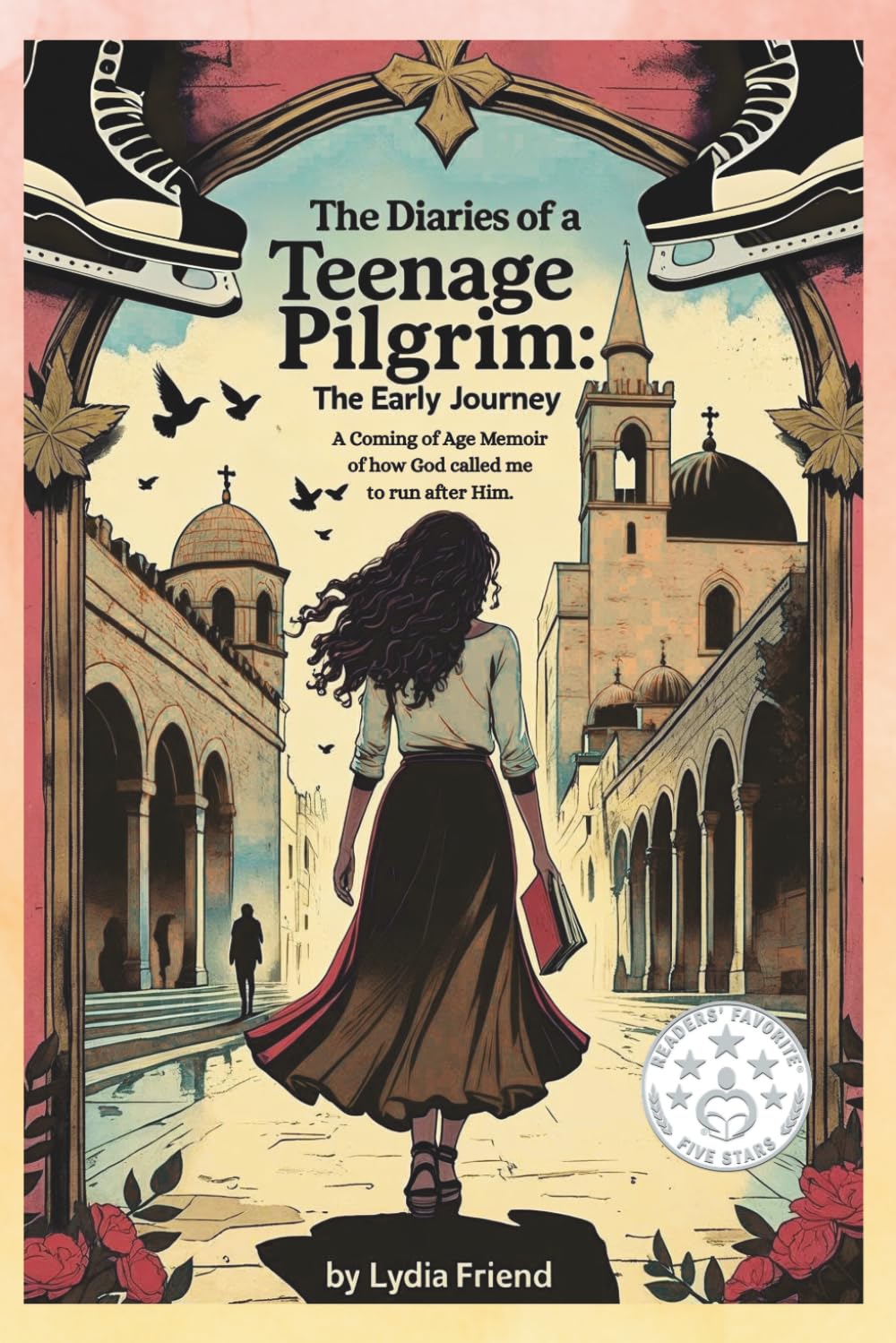

I found The Diaries of a Teenage Pilgrim: The Early Journey to be, at heart, a coming-of-age memoir about spiritual identity under pressure. Lydia Friend begins in the warm, enclosed world of Spooner, Wisconsin, then is swept into a family move to Israel that feels at once providential and deeply destabilizing. What follows is not a tidy overseas faith ministry narrative but a long, uneven apprenticeship in exile: Jerusalem and Metulla, homesickness and fervor, poetry and loneliness, the ache of being pulled between the Ozarks and the Galilee, and finally a devastating car accident that becomes a hinge point rather than a climax. The book keeps returning to one question in different forms: what does it mean to belong when every earthly home feels provisional, and when faith asks not for certainty but for surrender?
I liked the book’s emotional candor. Friend has a gift for rendering memory through texture and atmosphere, so that a white cat in an airport carrier, a farewell quilt from a small church, or a frantic run through Atlanta with a harp on her back can carry real emotional voltage instead of merely serving as anecdote. I admired the way she lets adolescent intensity remain intense. She doesn’t flatten her younger self into someone wiser or more ironic than she was. That gives the memoir a rawness I found moving, especially in the sections where she feels caught between two worlds and can’t tell whether she’s being formed or simply undone. The prose has a luminous, devotional quality. It lingers over rain, cedar, songs, hospital fear, and the strange tenderness of being cared for after catastrophe. There were moments when the language tipped toward repetition or overstatement for me, but even then I felt the pressure of a real inner life behind it.
I also found the book’s ideas both compelling and specific. Friend’s central vision of pilgrimage, displacement, and what she calls being “Stranger Lovely” gives the memoir its theological spine. She reads exclusion, longing, and even creative repression as part of a larger divine romance, and whether or not a reader shares every article of that belief, it’s hard not to feel the force of how fully she has lived inside it. I was especially struck by the way the accident and recovery chapters reframe suffering not as abstract lesson material, but as something bodily, terrifying, and humiliating before it becomes meaningful. That sequence gave the book real gravity.
The Diaries of a Teenage Pilgrim is a sincere memoir, and sincerity here is not a small thing. What I valued most was its refusal to separate spiritual formation from embarrassment, adolescence, longing, family history, art, or pain. Friend writes like someone trying to recover her own song while she’s still hearing its echoes, and that gives the book an intimacy I found affecting. I’d recommend it especially to readers who are drawn to faith memoirs, overseas faith ministry childhood narratives, and stories of displacement that are as inward as they are geographical. It will likely speak most powerfully to readers who have felt out of place in the world and have tried to make meaning of that estrangement without denying its cost.
Pages: 322 | ISBN : B0FP31B2LW
The Radiant Word: Reflections in the Orthodox Tradition


V.K. McCarty’s The Radiant Word is less a conventional theological study than a gathering of lived sermons, meditations, and keynote reflections that move through the Orthodox liturgical year while lingering over Scripture, icons, saints, hymnody, and patristic sources. The book begins in light, with the Transfiguration and the idea that Christ’s radiance reaches into “the complicated corners of our lives,” then widens into reflections on the Theotokos, desert mothers, Mary Magdalene, the Prodigal Son, the Jesus Prayer, Kassia’s hymn, Pentecost, Basil, and finally love and beauty in pandemic life. What binds it all together is McCarty’s desire to make ancient sources feel not archival but immediate, devotional, and warm.
What I admired most was the book’s intensity of attention. McCarty doesn’t write about doctrine as an abstract system. She writes as someone who has spent time with icons, stood in candlelight, listened hard, and let texts work on her over time. The most arresting pages for me were the ones on the Mandylion icon, where her encounter with the face of Christ becomes almost physically unsettling: tired, dirty, painfully alive, even a little repellent before it turns mesmerizing. That passage has real voltage. It’s intimate, vulnerable, and odd in the best way. I also liked the way she reopens familiar material through unexpected angles, as when the Prodigal Son becomes a question about “Prodigal Daughters,” or when the Dormition meditation frames Mary not as a static emblem but as a figure of action, stillness, assent, and eschatological hope all at once. At her best, McCarty has a tactile, sensuous prose style that can make theology feel inhabited rather than explained.
McCarty’s voice is ardent, recursive, and devotional, and that makes the book can feel luminous for long stretches, but also rhetorically saturated. The imagery is often beautiful. I respected the seriousness of the vision. She is trying to restore a scriptural and patristic imagination she thinks modern Christians have thinned out, and the argument lands most powerfully when she centers women whose authority has often been reduced or sidelined. Her pages on the Desert Mothers, on Mary Magdalene, on Kassia, and on early Christian women at prayer give the book a distinctly generous moral texture. Even the closing reflection on pandemic life, with its idea of the Church as an “Arc of Safety” and its insistence that strange online intimacies could become occasions of grace, carries a tenderness.
The Radiant Word is a personal book disguised as a collection of sermons, and that personal quality is what gives it its pull. I never doubted the depth of McCarty’s reading or the sincerity of her spiritual imagination. This is a book for readers who want theology with incense still clinging to it, who don’t mind being asked to feel as much as think, and who are open to finding beauty in the old, the liturgical, the icon-filled, and the unabashedly reverent. For readers drawn to Orthodox spirituality, sacred art, women saints, and reflective devotional prose, I’d warmly recommend it.
Pages: 176
Wisdom From My Grandmothers

Jo Ann Fawcett’s third memoir is an unusual act of intergenerational excavation. Through a series of channeling sessions with the Hedda Foundation, Fawcett interviews the spirits of five maternal and paternal ancestors, beginning with Rosanna Blue, a full-blood Cherokee woman born in 1764, and moving forward through generations of German immigrant farmwives, a Depression-era single mother, and finally Fawcett’s own mother, Betty. Each woman’s chapter blends recovered family history with spiritual dialogue and closes with a curated list of wisdom teachings. The book’s animating thesis is that generational trauma, specifically the suppression of women’s voices and autonomy across centuries of patriarchal society, flows invisibly through family lines, and that naming it is the first step toward breaking it.
What surprised me most was how genuinely moving some of these portraits are. Dorha, Fawcett’s great-grandmother, is particularly vivid: a farm wife who quietly asserted herself in her marriage bed, who gave up her dream of becoming a pianist, who baked mile-high apple pies during the Depression and infused them with a love her circumstances rarely permitted her to express openly. There’s real tenderness in how Fawcett renders these women, and it comes through even in the plainest prose. The writing itself oscillates between genuinely lyrical observations and passages that read like transcribed notes, but when Fawcett slows down, something quietly profound emerges. The thread connecting Rosanna’s forced silence in the white man’s world to Grandma Lella’s workplace navigation of predatory male colleagues to Fawcett’s own seven marriages is drawn with honesty rather than melodrama, and that restraint earns the reader’s trust.
Readers who approach the channeling premise with open curiosity will get more from it than those who don’t, particularly in the wisdom summaries that close each chapter. I found myself caring less about the literal veracity of these communications than about what the project represents: a woman in her seventies doing the painstaking work of understanding why she kept choosing partners who diminished her, and finding, through imagination or spirit or sheer willpower, the language her ancestors never got to use. The book is most affecting when Fawcett is honest about her own damage. Her admission that she didn’t fully reckon with her own molestation until she was seventy, or her mother stating that loving her father was like pouring water into a cup full of holes, are the moments where the memoir earns its emotional weight. The underlying impulse, to locate yourself within a lineage and decide consciously which parts of it you’ll carry forward, is genuinely valuable.
Wisdom from My Grandmothers is not a conventional memoir. It’s a personal reckoning. I’d recommend it to anyone navigating the aftermath of difficult relationships, anyone curious about ancestral healing frameworks, or anyone who has looked at their own patterns and suspected they didn’t start with them.
The Creative Method of Wealth Generation

The Creative Method of Wealth Generation breaks down how thoughts shape reality, why the universe behaves much more strangely than we think, and how someone can use that strangeness to create real financial abundance. Helm mixes science, spirituality, and personal stories to explain his method for turning ideas into wealth, and he moves from quantum physics to mindset to practical habits. The book basically argues that awareness and intention play an active role in shaping what shows up in our lives, and it uses this idea to teach a structured way of creating money and opportunity.
This is a thought-provoking book that piqued my curiosity right from the beginning. Helm writes in a way that feels earnest and almost disarmingly open. I could sense how much of his own life he had poured into the ideas. Sometimes I thought the concepts were too wild, but then I was back in because he explained them with simple stories and no pretense. He didn’t pretend to be a scientist. He just followed his own trail for forty years and showed what happened. Sometimes the blend of physics and personal reflection made me smile because it felt so relatable and so hopeful.
The way Helm talks about desire is emotionally stirring. He treats wanting more as something natural and even noble, which felt refreshing. I appreciated his honesty about doubt and his struggle to trust the process. It made the bigger ideas feel grounded. While a few sections wandered a little far into abstract theory for me, the heart of the book stayed clear to me. He really believes people can change their lives by changing how they think and act, and he genuinely wants readers to try.
The Creative Method of Wealth Generation would be great for readers who enjoy mindset work, personal growth, and big “what if” questions about how life works. It’s a good fit for anyone who likes the mix of science-meets-spirit and wants a daily practice for building wealth. If you enjoy books like Think and Grow Rich or The Science of Getting Rich, this one feels like a modern companion that goes deeper and tries to answer the questions those books leave behind.
Pages: 165 | ASIN : B0GBNR3WM3

The Seeker

The Seeker follows a restless wanderer who tries to make sense of a life caught between spiritual hunger and everyday chaos. The book moves through a mix of travel notes, philosophical riffs, memories, and sharp self-mockery, all glued together by the author’s ongoing attempt to wake up from the illusions that shape his world. I found the voice quick, funny, and sometimes raw, and the whole thing works like a long letter from someone who keeps tripping over his own enlightenment. The book shifts between stories of drunken nights, failed spiritual practices, and run-ins with Buddhist and Advaita teachings. It also digs into ego, pain, detachment, and the strange ways we cling to our identities, even when we swear we want to let them go.
The narrator puts his flaws on full display, and he does it with this mix of humor and despair that made me laugh one minute and sigh the next. I liked how he pokes at spiritual culture, too. He rolls his eyes at yogis racing to class, at overzealous seekers chanting their way to nirvana, and at the whole self-help industry. The sarcasm comes fast, but it never feels cruel. It feels like he is trying to keep himself grounded. The drinking, the travel, the loneliness, the pleasures, the screwups. They all paint a picture of someone who wants freedom but also kind of enjoys his distractions. That tension made the book feel real.
The book circles around the same big questions. What is the self? What is enlightenment? Is anyone actually steering their own life? He keeps returning to ideas from Ramana Maharshi, Nisargadatta, Anthony de Mello, and the Buddha, and he spins them in a way that is part confession and part debate with himself. Sometimes the reflections hit hard. Especially when he talks about pain versus suffering or when he admits how much he hides behind ego, charm, or booze.
I feel like the book is meant for people who enjoy spiritual writing but get turned off by anything too polished or too serene. If you like flawed narrators who think too much and drink too much and still keep reaching for something truer, you’ll like this book. It is also a good pick for readers who appreciate humor mixed with pain and who like a story that refuses to pretend the journey is clean or noble. I would recommend it to seekers, cynics, and anyone who finds themselves caught between wanting to let go and wanting one more round.
Pages: 199 | ASIN : B0FWRQT951
Be True To Yourself Always

Zombies & Butterflies is a self-help book that explores the idea that many of us move through life emotionally numb, the “zombies,” while real growth comes from becoming aware, compassionate, and fully engaged, the “butterflies.” Where did the idea for this book come from, and how did it develop over time?
The Idea for the book and how it developed over time was, in my opinion, quite unique. The book took about twelve years to write. I still had to work to provide for the family. Vehicles, lawn mowers, appliances break down and needed fixing as well as replacing shingles on the roof and other house related repairs. The kids had sporting events, plays at school and time to play with the kids. I also had obligations within the community. The ideas for the book were in my head and as far as a way to lay it all out and organize it, I had no idea. But not knowing how to do something or never having done something, like writing, never stopped me from doing it. So, I kept on writing and figured something would come to me. And sure enough, after three, four, five years of trying to figure out just the title of the book, the title, the rough cover design and the organization of the book came to me in a flash while I was doing something not at all related to writing.
What were some ideas that were important for you to share in this book?
A few ideas in the book, among all the rest of the ideas, that I believe are crucially important is the idea of individual authenticity. Being true to yourself first and foremost and what you are and who you are, really. Not the show for the rest of the world. It was surprising to me to read that one of the greatest fears people have is what others think about them. How truly sad that is. I sincerely believe that all truth begins with self-truth. That’s foundational. Without that foundation, all truths will be elusive. Also, the idea of a most genuine connection with the Divine is paramount. That connection will serve as a conduit straight to the source of all truth which you’ll be able to feel within you. They will resonate and you will be able to discern them. In doing so, feeding into another significant idea, you’ll need to follow no one but the Creator. You’ll be able to put away those days of being spoon fed by another or others, days of confusion and lies and will be able live life following and being guided by the Creators direction just a true as the north star guides you at night.
What was one of the hardest parts in this book for you to write?
In the book are analogies and metaphors. One of the hardest things to write was always wondering what is too little information which would not enable folks to understand my point and what was too much information which might confound my point. Even now, I don’t know if my choices were correct.
What is one thing that you hope readers take away from Zombies & Butterflies?
My hopes in writing this book was to be nothing more than a catalyst. I want to spur on a childlike curiosity in people to search and explore themselves first, then the rest of this awesome creation. I want them not to have fear in their venture but the courage of an explorer. The courage to break away from the old worn-out entanglements which time has proven over and over and over throughout the centuries to be absolutely inept and lacking all luster and vitality. I want people to escape the tyranny over their minds and truly live free. Free from the fear and avarice and hatred in this world and at length, with enough people living in such a way, the whole world WILL change.



