Blog Archives
The Power of Choice

Finding Yoyu is more than a self-help guide; it explores the seven aspects of Yoyu. Through engaging stories and practical exercises, you guide readers on a journey to reclaim balance and abundance. Why was this an important book for you to write?
Writing Finding Yoyu was both a personal necessity and a calling. When I first started, I thought I was simply telling the story of how I became my father-in-law’s caregiver while also supporting my husband through cancer treatment. But as I wrote, I realized the real story was about how I navigated those challenges without losing myself. I wanted to share the concept of yoyu because it became my compass, helping me create space—emotionally, mentally, and physically—when life felt overwhelming. I knew that if yoyu could help me, it could help others, too. So many of us, especially caregivers and busy professionals, feel stretched too thin. I wanted this book to be a conversation, a companion, and a guide to help readers recognize their own reserves and find more yoyu in their lives.
What were some ideas that were important for you to share in this book?
One of the key ideas I wanted to share is that yoyu isn’t about having unlimited resources—it’s about recognizing, cultivating, and replenishing the reserves you do have. It’s easy to think that balance and abundance are things we either have or don’t, but I’ve learned that they ebb and flow.
I also wanted to emphasize that small shifts make a big difference. We often think we need a huge lifestyle change to feel more at ease, but even micro-moments—like taking five seconds to breathe or stepping outside for fresh air—can restore a sense of yoyu.
Finally, I wanted to highlight the power of choice. In Finding Yoyu, I share how choosing to shift my perspective on financial abundance, for example, helped me move from feeling constrained to recognizing the wealth of non-monetary resources available to me. I hope readers walk away feeling empowered to make similar shifts in their own lives.
However, most importantly, I wanted readers to understand that yoyu isn’t some secret tool or an ancient hidden concept. It’s a normal, everyday word used by Japanese people in daily life, whether they’re conscious of it or not. By bringing awareness to this concept, we can start recognizing and cultivating yoyu in our own lives with more intention.
What is one thing that people point out after reading your book that surprises you?
Many readers have told me that they hadn’t realized how much yoyu—or the lack of it—was influencing their daily lives until they read the book. They’ll say, “I didn’t know there was a word for this!” or “Now I see how much I talk about yoyu without realizing it.” It surprises me how quickly people start incorporating yoyu into their vocabulary and self-awareness.
Another unexpected response has been how much the stories about my father-in-law and husband resonate with people who aren’t caregivers. I initially thought the book would primarily speak to those in caregiving roles, but readers from all walks of life have connected with the lessons in different ways—whether it’s about setting boundaries, creating space for themselves, or simply recognizing when they need a break.
What has also surprised me is how many Japanese readers have said they were unaware of how important yoyu is until they found the book. Even though they use the word frequently in daily life, it hadn’t occurred to them just how significant the concept is. Now, they tell me that the word jumps out at them whenever they hear it used casually in conversation, making them more mindful of their own reserves and balance.
What is one thing that you hope readers take away from Finding Yoyu?
I hope readers walk away with a deeper awareness of their own yoyu and the permission to prioritize it. Too often, we push ourselves to the brink before recognizing we need rest, support, or a shift in perspective. I want Finding Yoyu to serve as a gentle reminder that taking care of ourselves isn’t selfish—it’s essential.
Ultimately, I want people to feel encouraged that even in overwhelming times, they have more power than they realize to create space, cultivate abundance, and navigate life with greater ease. Yoyu isn’t about achieving a perfect balance; it’s about learning to flow with the natural rhythms of life and knowing that there are always ways to restore and replenish ourselves.
Author Links: GoodReads | Facebook | Website | Instagram | Substack | Amazon
Struggling to find enough time, energy, or resources to pursue your dreams?
YOU NEED YOYU!
Get ready for a fresh perspective on managing life’s challenges through the lens of yoyu—a Japanese concept expressing bandwidth, capacity, or oomph. Yoyu is the essence of having enough (or more than enough) time, money, energy, or other resources.
Drawing from her experiences living in Japan for 30+ years and caring for her Japanese father-in-law, Marci explores seven essential aspects of yoyu, including time, energy, money, and spirituality. Through engaging stories and practical exercises, she guides readers on a journey to reclaim balance and abundance.
Finding Yoyu is for you if:
Balancing family and work feels like an uphill battle and you want to learn how to leverage small pockets of time and focus on what truly matters.
Despite efforts to plan ahead, you face a persistent lack of energy and need energy-boosting strategies for everyday life and those emergencies when you accidentally hit exhaustion.
Helping family is a priority, but you’re feeling financially constrained, struggling to see the positives, and need a way to recognize and leverage other forms of abundance.
Family members don’t understand or respect your personal space needs, and the absence of dedicated space calls for ingenious solutions for communicating those needs and how you use shared spaces.
Avoiding issues is no longer an option, and you need to feel empowered and centered so that you can initiate difficult conversations with your loved ones.
Fatigue and stress from daily life lead to overreactions and inappropriate emotional outbursts that inadvertently hurt your loved ones and you need a way to intercept these outbursts before they occur.
Taking care of everyone and everything leaves you feeling tired, lonely, and disengaged and you need a way to tap into the interconnectedness of all things and find joy again.
Targeted at women navigating the complexities of midlife, Finding Yoyu offers a unique blend of cultural insight, personal narrative, and actionable advice. Whether you’re dreaming of starting a new career or nurturing your creative passions and instead feel the weight of caring for loved ones with nothing left over for yourself, this book will empower you to embrace abundance and live with purpose.
Marci Kobayashi is a seasoned writer, teacher, and entrepreneur based in Hiroshima. With over three decades of experience living and working in Japan, she brings a wealth of cultural wisdom to her writing. Finding Yoyu is her latest endeavor, born from her journey of caregiving, spiritual exploration, and personal growth.
Hope is Our Story

In Seeking Clarity in the Labyrinth: A Daughter’s Journey Through Alzheimer’s, you share your family’s experiences following your mother’s Alzheimer’s diagnosis, how you navigated her care, and the grief of losing her to this disease. Why was this an important book for you to share?
When it was clear we were well into our journey with Alzheimer’s, and my Uncle and Aunt passed (complications with Parkinson’s & Alzheimer’s) I started writing to heal myself. As I shared it with my Dad, it became clear our story may be able to help others. The journey of losing a loved one includes so many emotions–fear, anger, pain, sadness, love, grief. My hope is our story can help others in their journey.
I appreciated the candid nature with which you told your family’s story. What was the hardest thing for you to write about?
Much of the story was written in relatively ‘real-time.’ As I read it now, I am not sure if I would have been able to capture some of the raw, intense quality of my writing. Her passing ended up being this beautiful gift for both myself and my dad. If I went back and wrote it now, I do not know if it would have translated. This, however, was not the hardest part–those sections in the middle, when I was angry with her and the situation…those parts were hard to write about.
What is a common misconception you feel people have about caring for a family member suffering from Alzheimer’s?
Too often we believe we have ‘lost’ our loved ones. Yes, in many ways they are lost or ‘gone’ but, truly, we have just lost a version of them. Their essence is still there. They may not talk or walk, and often our loved ones may be angry or even nasty, but they are still human. They are still our people. If we are able to remember that, remember them in their entirety, we can help care for them more easily. If we can meet our loved ones where they are, we are truly seeing them.
What is one thing you hope your readers take away from your experience?
I hope my readers laugh, cry and embrace the sweet and fragile joy of life, in its raw, sometimes nasty and tragic ways. Life is beautiful, in all the ways we are able to see it.
Author Links: GoodReads | Facebook | Website | Instagram | LinkedIn | LinkTree | Amazon
Do you need help navigating despair and frustration and seeking a different path of acceptance?
This book is not for everyone. It is brutally honest. Glossing over the despair of Alzheimer’s Disease serves no one. This book is for those willing to explore the stages of Alzheimer’s and accept the uphill journey of navigating the loss of a loved one with dementia.
Not only that, but this book also teaches you how to:
Navigate your own grief and loss
See and accept your loved ones on their journey
Find and celebrate the simple gifts life has to offer
Understand the Labyrinth as a healing tool
Learn about Palliative Care, Hospice Care, and Memory Care Facilities
Witness one family’s tragic and hopeful acceptance of loss and love
One daughter’s journey sets the scene for a raw 13-year transformation to acceptance. The Labyrinth serves as a tool of healing. This book helps explore ways to see and honor your loved one even when you feel lost on the path.
Seeking Clarity in the Labyrinth, A Daughter’s Journey Through Alzheimer’s is thoughtful, honest, uplifting, and tender. You will be transformed.
For a limited time, download this remarkable book at a temporary introductory price!
It’s What Makes Me . . . Me – A Retired Attorney’s Relationship With Life and Times
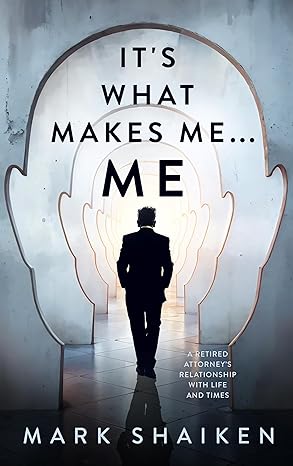

It’s What Makes Me . . . Me is a captivating collection of essays that offer a unique perspective on life. Written by a retired attorney, Mark Shaiken’s essays cover a wide range of topics, from personal anecdotes to professional experiences. He invites readers into his world, sharing the journey that shaped him. His candid and often humorous musings paint a vivid picture of a man navigating the transitions from law to a more introspective, creative life.
Shaiken’s writing is not just insightful but also remarkably relatable. In chapters like “I Look Bad in a Hat,” his self-deprecating humor shines through, offering a light-hearted look at his attempts to fit into certain societal norms, a struggle many can relate to. Similarly, “Ramblin’ Not Amblin’” provides a poignant reflection on his life’s journey, marked by a series of significant moves and career changes. The essay captures the essence of someone who has never taken the easy path but instead embraced the twists and turns of a life well-lived.
In “Baseball & Me,” Shaiken’s love for the sport transcends mere fandom, becoming a lens through which he views and understands life’s complexities. His detailed memories of watching games with family and the evolving nature of his support for various teams reveal the deep connections and traditions that sports can foster. This essay is a delightful mix of nostalgia and personal growth, capturing the timeless nature of America’s favorite pastime.
The chapter “Work, Sleep, and Repeat” resonated deeply with me due to its poignant exploration of the monotonous cycle often experienced in demanding careers. Shaiken captures the essence of this repetitive routine by illustrating his personal experiences as a lawyer. He details the relentless pressure and the lack of personal time, which many professionals can relate to. The chapter’s strength lies in its raw honesty, Shaiken doesn’t shy away from describing the toll this lifestyle took on his mental and physical health. For instance, his recounting of late-night calls and the perpetual sense of urgency vividly paints a picture of a life where work dominates every waking moment.
It’s What Makes Me . . . Me is a compelling read for anyone interested in personal essays that blend humor, introspection, and life lessons. Shaiken’s ability to reflect on his experiences with authenticity and wit makes this book a worthwhile addition to any reader’s shelf. Whether you’re a fan of legal stories, personal memoirs, or simply enjoy a well-told story, this collection offers something for everyone.
Pages: 305 | ASIN : B0DB4CM98G




 LITERARY TITAN