Blog Archives
Visiting


Visiting is a tender, funny, unsentimental diary of a daughter spending time with her dying mother through hospice, dementia, ordinary errands, cigarettes, fast food, caregivers, family history, and the strange practical weather of grief. The book follows Polly Walker Blakemore’s visits from 2018 to her mother’s death and burial in 2020, and what accumulates isn’t a dramatic plot so much as a lived-in record of decline: the “bad lady” who is really the bath lady, cereal improved with ice cream and sugar, Panera and Pieology and Five Guys becoming almost sacramental, Rhonda Ba Bamba appearing like a grace note, Missy’s death opening a fresh pocket of sorrow, and finally the obituary, the grave flags, the lichen on the cross, the household objects waiting to be claimed.
What I loved most was the book’s refusal to tidy anything up. Blakemore doesn’t pretend caretaking is noble in some glowing, greeting-card way. It’s exhausting, smoky, repetitive, bodily, sometimes gross, often funny, and frequently boring until suddenly it isn’t. I found myself moved by the way love here arrives through small maintenance tasks: fixing a loose door handle, bringing candy, rubbing a back, watching Food Network, sitting beside a bed while language thins into echo. The book understands that grief can coexist with irritation, curiosity, appetite, logistical competence, even relief. That honesty gave the whole thing a deep steadiness.
The writing has a wonderfully vibrant texture, dry and observant. Blakemore has a sharp eye for the comic absurdity of decline, like trying to make a “safe-smoking protocol” for someone on oxygen, or treating a car trip for burgers as both outing and ordeal. But she also knows when to let a sentence soften. Her descriptions of her mother’s hands, her grandmother’s calendars, the orchids and peace plants, the final season shifting toward fall, all carry a quiet ache. The ideas in the book felt strongest when they circled memory and identity: how a person can become unrecognizable and still remain intensely themselves, how children only ever know part of their parents, how a life gets reduced and preserved through objects, habits, foods, phrases, and other people’s recollections.
By the end, I felt both saddened and oddly calmed, as though the book had made room for death without making it pretty. Visiting is best for readers who appreciate reflective memoirs about aging, caregiving, mothers and daughters, dementia, and the messy, intimate comedy of family life. I’d especially recommend it to anyone who has sat beside a loved one and wondered whether “just being there” is enough, because this book answers, gently and without fuss, that sometimes it’s everything.
Pages: 131 | ASIN : B0GTWQLH6K

The Caregiver’s Game: Unraveling Financial Deceit in the Shadows of Dementia
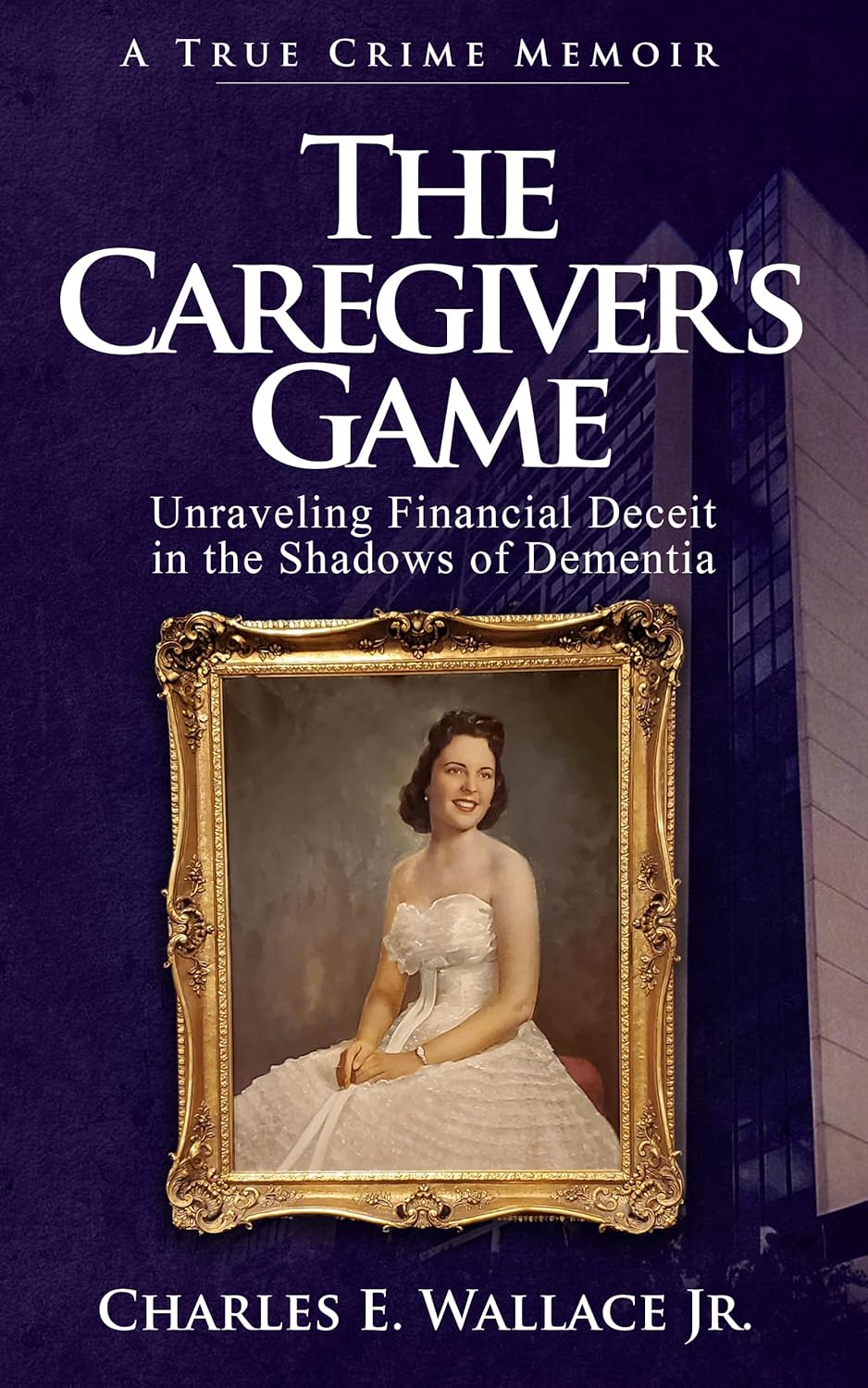
The Caregiver’s Game is a grief-soaked memoir and a warning label at the same time. Author Charles E. Wallace Jr. walks through the slow unraveling of his mother’s mind, her complicated history as a vain, often cold parent, and the way a charming caregiver and a shady doctor slid into the gaps and took over her life, her money, and eventually even her story. The book moves from family memories to the nuts and bolts of financial abuse, then lands in a more practical section that lays out concrete steps for protecting vulnerable parents from predatory caregivers and weak systems around them.
Reading it, I felt a knot in my stomach most of the time. The writing has a plain, conversational feel, and that actually made the horror land harder for me. He describes lost photo albums, empty storage units, fake diagnoses, weird “vitamin” schemes, and bank accounts bleeding out, and he just tells it straight. The emotion sits in the details. I really liked that he refuses to polish his mother into a saint. She’s vain, sharp, often unkind, and the book leans into that. That honesty made the whole thing feel more trustworthy. The narrative jumps across dates, money trails, and visits. I could feel his obsession with piecing everything together, and that energy gives the book urgency.
The core ideas hit hard, though. Dementia here is not only a disease, it is a door that opens for other people’s greed. The book shows how one caregiver, one lazy CPA, one self-serving doctor, and a slow-moving legal system can wreck a whole family’s history, not just an inheritance. I found the later chapters especially strong, when Wallace stops replaying every twist of the “game” and starts talking directly to the reader about patterns of abuse, how financial exploitation creeps in, and what he wishes he had done earlier. His practical tips on things like monitoring accounts, demanding receipts, using alerts, and always being the one who hires and fires caregivers feel grounded in pain, not theory. That mix of raw story and specific advice gave the book a sense of purpose.
By the end, I felt angry for his mother and angry at her at the same time, and also grateful that he let the messiness stay on the page. The writing is not flashy, but it feels sincere. Some passages feel slow when he works through every transaction or theory about what Esmarelda and readers who want a neat true-crime resolution, may feel frustrated, because real life does not give him much closure. For me, that unresolved feeling matched the subject. Elder abuse often never gets the big courtroom scene or tidy justice, and the book sits inside that reality instead of pretending otherwise.
I would recommend The Caregiver’s Game to adult children who are starting to see small red flags with an aging parent, to caregivers who want to understand how their role can be abused, and to anyone who works around elder care, finance, or estate planning. It’s not light reading. It stirs up fear and guilt and “what if” questions, and it might make you pick up the phone and check on someone. If you want a personal, sometimes messy, deeply felt account that doubles as a cautionary handbook, this fits that lane really well.
Pages: 245 | ASIN : B0FYCS2X9H
Essential Guide for Caregivers of Parents with Dementia: Proven Strategies to Support Mental Clarity, Extend Independence, Plan for What’s Ahead, and Avoid Burnout

This book is a heartfelt and deeply practical guide that walks readers through every emotional and logistical step of caring for a parent with dementia. Wesley Thomas blends personal stories with grounded advice, weaving a clear roadmap for families who suddenly find themselves in the role of caregiver. The structure, organized around his “Circle of Care™” framework, covers recognition, adjustment, connection, protection, sustenance, compassion, and restoration. Each chapter moves from understanding to action, explaining not only what to do but also how to stay steady while doing it. The tone is warm and conversational, yet it never shies away from the hard parts. Thomas offers real-world tools for everything from home safety to medical decisions, while constantly reminding readers that love and dignity should guide every choice.
Thomas’s writing is simple and kind, never clinical or distant. He tells stories that feel real, the confusion of early signs, the ache of lost connection, the quiet grace of small wins. I appreciated how he didn’t drown the reader in jargon or pretend there’s a one-size-fits-all plan. Instead, he speaks directly, like a friend pulling up a chair and saying, “Here’s what helped me, and here’s what might help you.” His emphasis on self-care resonated with me. Caregivers often forget themselves in the process, and his reminders to rest, breathe, and seek help felt both necessary and comforting. Some moments are tough to read because of their honesty, but that’s part of the book’s strength. It makes you face the pain while showing you how to survive it.
Emotionally, this book left me both drained and uplifted. Thomas captures the heartbreak of watching a loved one fade but also the unexpected beauty that can appear in small gestures of patience and humor. His compassion is contagious. I found myself slowing down, reflecting on how I treat my own family, and realizing that caregiving is as much about who we become as it is about what we do. The writing is full of short, punchy sentences that carry weight. It’s not polished in an academic way. It’s real, raw, and human. That’s what makes it powerful. I could feel his sincerity in every chapter, and it kept me reading even through the heavier sections.
I’d recommend this book to anyone caring for a parent, spouse, or relative with dementia, and honestly, to anyone preparing for that possibility. It’s perfect for readers who crave guidance but don’t want to be overwhelmed by medical language. It’s for those who want a companion more than a manual. Essential Guide for Caregivers of Parents with Dementia gives both knowledge and hope, and it leaves you feeling less alone.
Pages: 156 | ASIN : B0FPTTKBJ6

Don’t Wait Until It’s Too Late!

Doing the Right Thing serves as a one-stop resource for readers navigating the task of assisting aging loved ones, offering practical tips, housing comparisons, checklists, and thoughtful advice to help families make informed, compassionate choices with less stress and confusion. Why was this an important book for you to write?
In 1995, when I first started this journey, I learned so much through trial-and-error. I knew that if I was having problems with the quality and accuracy of people who work in the seniors’ field, I knew that other adult chilldren would find it frustrating, too. I wrote the book to educate and empower adult children to be advocates for their loved ones. I made it as easy as possible to find information quickly. No one has time to wade through a 400-page tome looking for the answers!
How have your personal experiences and background as a Certified Senior Advisor(CSA), Certified Aging in Place Specialist(CAPS), and as a real estate Associate Broker helped you to write this book?
I was already in real estate helping seniors and adult children sell the family home. I completed coursework to become a Certified Senior Advisor and Certified Aging-in-Place Specialist to learn even more! The designations provide useful information that is “book-learned” rather than “street-smarts”. Both approaches have helped me better serve others. I can relate to the stres and frustration an adult child feels, and the overwhelming emotions the loved one feels when facing this next phase of life.
What were some ideas that were important for you to share in this book?
(a). Each situation is unique to that person or family, but the resources to help are widely available;
(b). Learn and practice patience! Don’t try to “take charge” of your loved one’s situation. They may have already thought about it but are hesitant to discuss.
(c). Keep going! You do the best you can with what you have and it’s enough!
(d). Don’t hesitate to reach out for help
(e). You may think you have time but life (for you and your loved one) can change quickly! You can reschedule a meeting or change vacation plans, but a call about your parent(s) must be faced right away.
What is one thing that you hope readers take away from Doing the Right Thing?
Don’t Wait Until It’s Too Late! Familiarize yourself with as much as you can! The process won’t be completed overnight!
Author Links: LinkedIn | Instagram | X | Reddit
Caring for a loved one is stressful, but necessary. I know, I’ve been there many times. There are new situations, new issues, and new decisions to make every day. When you don’t know what to expect or what questions to ask, it can be a frustrating feeling, and your emotions can often affect your decisions.
This book provides resources and information to guide you in caring for your aging loved one. The information includes information I wish I had known many years ago when I started my journey of caring for several relatives.
Here are a few things you’ll learn:
How to develop a master list of the information you need from your loved ones before they become incapacitated or die, and what steps to take once they pass.
The importance of a will or trust.
The types of housing choices for your loved one and how to decide what’s best.
The forty-plus questions to ask an assisted living facility.
How to decide what items to sell, donate, or give away. The twenty-five questions to ask an estate sale company.
Resources to ease your stress, especially if you don’t live close to your loved one. How to cope with grief.
By reading this practical guide, you can educate and empower yourself to do the best you can–before it’s too late!
Doing the Right Thing: Simple Solutions, Essential Tips & Helpful Resources for Assisting Aging Loved Ones


Reading Doing the Right Thing felt like someone finally handed me a flashlight in a pitch-black tunnel. I’m a full-time caregiver for both of my elderly parents. Dad’s mobility is limited, and Mom has early-stage dementia. I’ve been making it up as I go, bouncing between doctor appointments, financial headaches, and late-night worry spirals. This book didn’t just speak to me, it practically grabbed me by the shoulders and said, “Here’s what you need to know, and you’re not crazy for feeling overwhelmed.”
I appreciated how Debbie Miller lays it all out. Just clear, compassionate guidance. She covers everything from selling the family home to choosing between assisted living and aging in place, and she even dives into sensitive topics like wills, end-of-life planning, and grief. I found myself nodding, underlining, even laughing in a few spots, especially the parts where she talks about how stubborn parents can be when it’s time to downsize. Yes. Been there. Still there. Every chapter felt like it was written by someone who gets it.
This isn’t a “just think positive” kind of book. It’s honest. Some of the information is hard to take in, especially when you’re already stretched thin emotionally. But I needed that. I didn’t need another person telling me to “just enjoy this time.” I needed someone to tell me how to manage Medicaid paperwork, how to talk to my brother who lives five states away and still thinks our parents are “fine,” and how to keep from losing myself in all of it. Debbie did that.
If you’re caring for aging parents, especially if you’re doing it alone or with little help, Doing the Right Thing is a godsend. It’s part guidebook, part pep talk, part reality check. I keep it on the kitchen counter, next to the pile of prescription refills and to-do lists. It belongs there. I wish I’d read it a year ago, but I’m glad I have it now. And if you’re in the middle of this journey too, you’ll be glad to have it too.
Pages: 195 | ASIN : B0D7K72Y4S
Doing the Right Thing: Simple Solutions, Essential Tips & Helpful Resources for Assisting Aging Loved Ones
Debbie C. Miller’s Doing the Right Thing is a heartfelt and practical guide for anyone navigating the daunting path of caring for an aging parent or loved one. Drawing from her years of experience as a real estate broker and Certified Aging in Place Specialist, Miller breaks down the vast, often overwhelming web of decisions. Whether it’s choosing the right type of housing, downsizing, understanding financial options, or simply knowing how to start the conversation. The book serves as a one-stop resource, offering practical tips, housing comparisons, checklists, and thoughtful advice to help families make smart, compassionate choices with less stress and confusion.
What struck me most was how deeply personal this book felt. Miller isn’t some detached expert. She’s lived this. Her tone is warm, conversational, and honest, like a trusted friend who’s been through the mess and wants to spare you the worst of it. She doesn’t sugarcoat how tough these decisions can be, especially when roles flip and adult children become the caretakers. The stories she includes from her own clients are raw and relatable. You can feel the anxiety, the guilt, the pressure, and also the deep relief and gratitude that come from getting it right.
There’s a lot of information packed in here. I found myself bookmarking sections and flipping back and forth, trying to absorb everything. That said, I appreciated that Miller didn’t assume readers know what questions to ask or where to begin. She anticipates confusion and meets it with clarity and structure. If there’s one critique I’d offer, it’s that the tone occasionally veers into lecture territory, especially in the more technical chapters. Still, that’s forgivable when the advice is this thorough and useful.
This book is a lifeline. If you’re an adult child facing the tough questions about how to care for your aging parents, or if you’re a solo ager trying to plan ahead, Doing the Right Thing will meet you with empathy, wisdom, and actionable steps. I’d recommend it for any adult over 40, whether you’re in the thick of caregiving now or just starting to sense those big decisions coming down the road.
Pages: 195 | ASIN : B0D7K72Y4S
I Finally Have the Smoking Hot Body I Have Always Wanted (having been cremated)

Barb Drummond’s memoir is a wildly honest, heartbreakingly funny, and beautiful tribute to her late mother, Sybil Hicks. Sybil became a viral sensation thanks to an obituary that managed to make people laugh and cry in the same breath. The book traces the week following Sybil’s passing, from the family’s chaotic flights to funeral arrangements, peppered with hilarious letters from Sybil, childhood stories, family reunions, and a deeply moving eulogy in the works. It’s about memory, grief, and humor as survival, all centered around a daughter’s love for the mother she was slowly losing to Alzheimer’s long before she passed.
Reading this book felt like getting dropped into a boisterous family gathering where laughter sits shoulder-to-shoulder with grief. The writing is candid and snarky and sometimes downright chaotic, but that’s what makes it so relatable. I found myself laughing at the airport “wet sock” story and the naked hotel room mix-up, then getting blindsided by moments of raw grief, like the upside-down book or the sound of Sybil’s piano in a quiet care home. Barb’s voice is refreshingly real. She doesn’t try to pretty up death or sanitize her feelings. She writes like someone who’s had the rug pulled out but still knows where to find the jokes in the tumble.
The most touching part of the book for me was the way it paints Sybil. Not as a saint, not just a victim of Alzheimer’s, but as this whip-smart, sharp-tongued, wildly talented woman who threw pies in people’s faces and taught sewing classes in her basement. You can feel Barb’s love, guilt, and admiration all tangled together, which makes the letters and memories hit even harder. The book also shows how laughter, even the ugly snort-laugh kind, is a kind of armor. It doesn’t try to be wise or poetic. It just tells the truth. And that’s what makes it matter.
If you’ve ever lost someone slowly to something like Alzheimer’s, this book will break your heart and then wrap it in a quilt of memories, stitched together with sarcasm, warmth, and just enough swearing to keep it real. I’d recommend it to anyone who’s grieving, especially adult children trying to make sense of a complicated, funny, maddening, unforgettable parent.
Pages: 159 | ASIN : B0DJFRLSQ3
An Act of Love and Healing

A Legacy of Love teaches readers how to create a “Person-Centered Plan” (PCP), a living, breathing document that honors the uniqueness of their loved one and their individual needs.
What was the hardest thing to write about?
The hardest part of writing this book was sharing my personal story. Opening up about my own journey as a caregiver was both emotional and vulnerable, but I knew it was important. I wanted to offer an honest and heartfelt reflection, so others walking a similar path would feel seen, understood, and less alone.
What were some ideas that were important for you to share in this book?
One of the most important messages I wanted to convey is that, as caregivers, we have an essential role in being a positive voice for our loved ones. Our advocacy, love, and dedication can profoundly shape their experiences and well-being. I also wanted to emphasize the importance of approaching caregiving with intention, presence, and deep respect for the unique person we are supporting.
What do you hope is one thing readers take away from your book?
I hope readers walk away with the understanding that creating a Person-Centered Plan (PCP) is not just about organizing care—it’s an act of love and healing. Taking the time to truly see and honor the individual beyond the caregiving role allows for a deeper, more meaningful connection. Sometimes, we become so immersed in the responsibilities of caring that we forget to pause and appreciate the beautiful soul right in front of us. My hope is that this book helps caregivers shift from simply managing care to truly cherishing the person they are supporting.
Designing a meaningful care plan for your loved one with unique needs can be a life-changing gift—one that shapes their entire lifespan and journey. Whether you’re caring for a teen, a child, or an aging family member, this book shows you how to create a Person-Centered Plan (PCP) that caters to their individual strengths and preferences, enhancing their quality of life and making caregiving more fulfilling.
In this book, you’ll discover:Real-life stories of caregivers who transformed their approach with a personalized care plan.
Ways to recognize your loved one’s unique qualities to ensure their care is meaningful and effective.
Step-by-step strategies to build and adapt a care plan that evolves with your loved one’s needs.
Emotional insights through poems and reflections on the caregiving journey.
Practical advice to help you implement and follow through with your care plan.
You may be asking, “Can a plan really make a difference?” The answer is yes. A thoughtfully crafted Person-Centered Plan (PCP) is not just a tool—it’s a powerful way to offer care and compassion that truly honors your loved one’s unique journey. This book helps you become the guide your loved one needs, making their care not only more effective but also more meaningful. You take on the role of their voice in cases where speech may not be present.
Don’t wait for things to improve—take control of the caregiving journey today. Transform how you care, connect, and create a lasting impact on your loved one’s life.


