Blog Archives
Children Love Misha

Misha the Travelling Puppy ABC takes young readers on an adventure from Australia to Zimbabwe that sparks curiosity and fosters a love for learning. What was the inspiration for your story?
I am an avid traveler, and I recognize how important it is for young children to learn about the world. I have a series of children’s books called Misha the Travelling Puppy, and Misha has adventures in Australia, England, America, India, and beyond. I also have coloring books, t-shirts, and plush toys – the children love Misha!
What were some ideas that were important for you to share in this book?
I know that ABC learning is so imperative, and why not mix it with learning about different countries as well. I like that this book mixes literacy with geography. The book is written in rhyme and it has the most iconic facts to teach young children about each country.
The art in this book is fantastic. What was the art collaboration process like with the illustrator Svetlana Pikul?
Sveta is a great artist to work with. I would give her the description for each country, send some images for inspiration, and she would no doubt come up with something beautiful and original.
What is Misha and her friends’ next adventure, and when can readers expect their next story?
I have just published Misha the Travelling Puppy Italy! That is a culinary adventure learning about all types of famous Italian food. The Christmas title is also new; Misha is called to help Santa Claus. The next country Misha goes to will be France.
Author Links: GoodReads | Facebook | Website | Amazon
“Misha the Travelling Puppy ABC” is an engaging and educational book for children that takes them on a journey around the world. Each letter of the alphabet is paired with a country including fun and interesting facts about the culture and tradition.
Misha and her puppy friends travel from Australia to Zimbabwe. This ABC book is a wonderful tool for parents and teachers to engage children’s curiosity and imagination while promoting global awareness and literacy skills.
With rhyming text by Natalia Hooker and charming illustrations by Svetlana Pikul, this book is the perfect way to introduce children to the countries of the world and the English alphabet. Don’t miss out on this delightful journey with Misha.
Where are you going, Little Max? The Magic of Discoveries for Kids
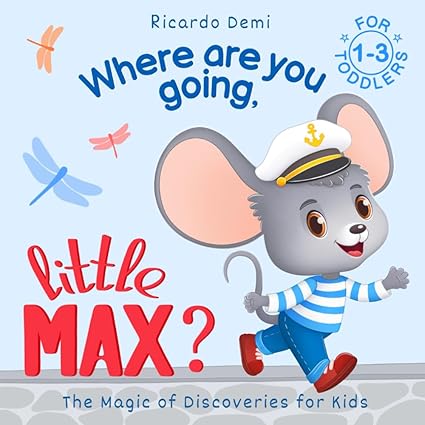

Where Are You Going, Little Max? by Ricardo Demi is a delightful and heartwarming tale that follows a curious mouse named Little Max on his adventure. As Max ventures out, he politely asks various farm animals for items to bring back to his family, using good manners and always saying “please.” Along the way, he gathers eggs, wool, and feathers, making his journey not just an adventure, but a valuable lesson for young readers.
This charming short story is ideal for keeping young children captivated, with its engaging narrative and simple, yet meaningful, messages. Demi cleverly introduces a range of farm animals, seamlessly incorporating the sounds they make, which adds an extra layer of fun for little ones. The author also subtly educates readers about where everyday items like milk and eggs come from, helping children understand the importance of farm animals in our lives. One of the story’s key lessons revolves around the importance of manners, Little Max models how to ask politely for things, a crucial behavior for young readers to learn. The illustrations are vibrant and full of detail, offering plenty for parents and children to discuss as they read together. The concise nature of the story ensures it holds the attention of even the youngest readers, making it a great choice for beginners just starting to explore books on their own. Another valuable theme in the book is sharing—Max doesn’t just collect items for himself, but generously shares them with his friends. This act of kindness serves as a gentle reminder to children about the importance of sharing and caring for others.
Where Are You Going, Little Max? is a sweet, educational read that offers both entertainment and valuable lessons, making it a wonderful addition to any young reader’s bookshelf.
Pages: 28 | ASIN : B0DCPZPX6Z

Where Have You Been, Little Max?

Where Have You Been, Little Max?, by Ricardo Demi, is a heartwarming and engaging tale that introduces young readers to animals, places, and outdoor adventures. Little Max, an enthusiastic and curious mouse, takes readers along on his delightful journey through various exciting locations. He starts at the zoo, where he meets lions, giraffes, and elephants, then heads to the beach to admire dolphins, crabs, and the vast beauty of the ocean. His next stop is the fair, a vibrant spot filled with games, sweets, and music. Max finishes his day at the park, playing on the playground and watching squirrels scurry around.
What makes Demi’s storytelling particularly enjoyable is the way he weaves in educational elements. As Max embarks on his adventures, the narrative provides simple explanations and definitions, helping young readers grasp new concepts. For instance, when Max visits the beach, Demi explains the beach and ocean in a way that’s easy to understand, and at the zoo, the animals’ unique traits are highlighted. The story feels like watching a child experience the joy of discovery, capturing the magic of learning through everyday exploration. I especially appreciated how the entire story takes place outdoors, encouraging children to appreciate the natural world. Demi’s focus on outdoor activities makes this book a great tool for showing young readers how much adventure awaits just beyond their doorstep. The illustrations are equally charming, depicting cheerful scenes full of togetherness and fun. Though the story is brief, Max’s adventures are filled with creativity and excitement, allowing children to explore a variety of environments in a short span.
Where Have You Been, Little Max? not only helps children identify different animals and habitats but also enhances their vocabulary in a fun and engaging way. This sweet, lively story is perfect for young readers eager to learn more about the world around them.
Pages: 52 | ISBN : 978-1963328585
Powerless Victims

The Bird Prison follows a gardener with a vision of what a perfect garden should look like and even sound like, so when birds are drawn to her garden, she does her best to chase them away. What was the inspiration for the setup of your story?
This story isn’t really about gardening at all. It tells about a power struggle in which the ruler of a particular area keeps its inhabitants in a tight grip. It is also a story of selfishness, lack of empathy, and an inability to see the beauty that lies in diversity.
Although I always think about child readers and their needs when I write books, I may choose difficult societal situations as topics. Despite its apparent lightness, The Bird Prison belongs to such books because the themes beneath the surface are challenging.
Current events in the world of adults often make me think about the questions in this fairy tale’s background. Who has the right to define different boundaries, and in which situation is it right to cross them? How far can one go in using power without considering the status and well-being of others? How can families be protected against hostile and unfair behavior? Do the weaker parties have any means at their disposal? What kind of opportunities can be achieved through cooperation and helping?
I found the title of this story interesting, and it made me curious about the story within. How did you decide on the title of this book?
The name of this book was challenging to find. I first thought of many options related to the garden, but I had to reject them all. They were misleading and suggested a harmonious and tame story.
I wanted the title to indicate the book’s actual conflict, represented by the cage rising in the garden. Although the big cage—the bird prison—only appears in the middle of the story, it is clear from the beginning that the birds are not free. There is an ever-increasing threat to their nesting and existence, ultimately leading to captivity.
When I finally settled on The Bird Prison, I knew I was taking a risk because the word prison has such a strong emotional charge. I was willing to take that risk because the conflict with a beautiful garden and capturing birds requires a sufficiently strong title. It’s nice to hear that my choice has aroused interest and curiosity towards the story.
What were the morals you were trying to capture while creating your characters?
There are three main parties in my story. The cruel and selfish gardener, Griselda, represents the most prominent threat to the others in the garden. Her counterparts are the innocent birds, who alone are powerless in the face of evil, and the little but numerous group of ants.
As the story progresses, Griselda’s behavior becomes increasingly inhuman. By describing her progress through various demands and actions, I want readers to notice how gradually the effects of evil spread and grow. This happens in real life as well. If injustices and their progression are not paid attention to in time, fighting them becomes increasingly difficult and may eventually become impossible.
In the description of the birds, I emphasize the pressure and priority for living creatures to take care of their offspring. Birds’ behavior is mainly driven by the focus on securing the nest and caring for the chicks. In that situation and state of mind, their attention and strength are not enough for anything else. This makes the birds, in a way, powerless victims who could not survive without help from the outside.
Ants play a central role in the story. Although they are small, there are an impressive number of them. I want to encourage everyone who feels small and insignificant by highlighting the ants’ role and possibilities as they join their forces for a good purpose. I’m glad illustrator Sofia Panchyshyn managed to bring the ant characters so much friendly determination. The pictures of them wearing boots and shovels fit well into the scene where the birds escape prison through a tunnel.
What is one thing that people point out after reading your book that surprises you?
This book is still so new that I haven’t been able to discuss it with readers very much. The comments I’ve received so far show precisely what I’ve been waiting for. The readers’ reactions, mainly from the book-buying adults, could be divided into different groups based on what they pay attention to—illustrations, gardening, parenting, or powerplays in society in general.
For some readers, book illustrations are crucial—even so important that they rise above the story. The Bird Prison has exceptionally detailed pictures, which are the delicate art of Ukrainian Sofia Panchyshyn. Many visual-art-oriented people have admired them for a long time and devoutly also at the illustration exhibition I arranged at my Wickwick Summer Bookshop in July. Some of the most enthusiastic
home gardeners have studied the flowers and their colors in the drawings and told me about their gardening activities.
Children’s attention is often intensely focused on how to free the birds from the prison cage. So it’s no surprise that they think the most important heroes of the book are the ants, who dig a tunnel under the edge of the cage in the dark of the night.
Some adults immediately notice how serious the book is. The beautiful pictures do not fool them, but they see the themes of imprisonment, freedom, and rights behind the story. I have had good discussions with them about how even serious topics can be handled gently and encouragingly. In general, they find such a book necessary.
I’ll have an excellent opportunity to discuss my book further and hear readers’ comments when I present some of my books at the next Turku Book Fair on the Finnish Youth Authors’ Stage. My theme will be “Freedom and imprisonment in fairy tales”—a topic I like to talk about.
Author Links: GoodReads | Facebook | Website | Amazon
So when noisy, colorful birds start nesting in her garden, Griselda gets angry. Their feathers shimmer in all different colors, and they constantly chirp songs.
It’s time for a merciless battle against the birds!
My Own Emotional Turmoil

New Tomorrows: Love – Courage – Hope follows two people with scars on their hearts who meet in the Appalachian Mountains and discover there is hope for love still. What was the inspiration for the setup of your story?
The inspiration for this story was quite personal and related to my own experiences on the day of 9/11. On that morning, I was teaching 8th grade remedial reading in a town less than 100 miles from Washington, D.C. We had students in the building whose parents worked at the Pentagon. I was also an actively running volunteer EMT. I had to let my students’ needs take first place ahead of my own emotional turmoil. Along with my fellow local first responders, my heart was with the men and women in New York going into that burning building, just as surely as if I had worked beside them on an ambulance call on a regular basis. The fire/EMS brotherhood goes beyond time and place. As a matter of fact, that sentiment is stated by Jon in my story when he tells Allie, “There are no geographical boundaries to the brotherhood.” Every year, as the anniversary approached, I saw and experienced the lasting impact that day had on many of my friends, as well as myself. While my personal trauma was in no way as shattering as that of Jon and Allie in the story, a large number of the people I know in the fire/EMS and health care world have been impacted in ways that changed their lives. It was on the 9th anniversary in 2010, participating in some of the usual remembrance activities, that I began to ask myself the question that is always spinning around in the brain of a writer. “What if?” I began to expand that question and imagine a number of scenarios and finally landed on the question this story is based on. “What if a nurse from New York City and a medic from the greater Washington D.C. area, both struggling with life-altering events that stemmed from 9/11, meet by accident in a rural mountain community and discover a surprising and unexpected attraction between them?” The answer was this book.
The manuscript I started that day was lost, then accidentally rediscovered in 2023, but that is another story altogether.
Jon and Allie both struggle with the fallout of the tragic day of 9/11, leading them to shelter their hearts from others. What trials did you feel were important to highlight the characters’ development?
They both had to learn to trust, themselves and each other, before they could open their hearts to love. But it was going to require work to make that happen. They were at different stages in that process when they met. Allie had learned to reach out for help, in spite of her fiercely independent nature, when she found the original New Tomorrows shelter. Jon, on the other hand, had not willingly accepted the professional counseling offered by the hospital where he worked in New York. Even though they both were pursuing a career that involves caring for others, each had structured their everyday life to avoid close emotional entanglements. As the attraction grew stronger, they faced and overcame uncertainty and danger from Allie’s earlier abuser. The circle of friends that made up the Inner Circle were quietly teaching them, by example, what friendship and love are all about. Allie overcame her fear of both physical and emotional intimacy sooner than Jon faced his own unique demons. It was not until she backed off, forcing Jon to face the possibility of losing what they were building together, that he reached out to get the professional help he so desperately needed.
What was one scene in the novel that you felt captured the morals and message you were trying to deliver to readers?
Without a doubt it is the scene at the closing of the New Tomorrows program launch where the three women – Allie, Wanda, and Louise – share their personal domestic abuse journeys to emphasize the healing power of love, courage, and hope, followed by the incident that made Jon realize he could fully embrace Allie’s career has a firefighter and open his heart to their love. That culminating scene, and the work of the Inner Circle group before that day, gave the reader a close look at the oft-hidden roots of domestic and sexual abuse and important insight into personal actions and attitudes that promote healthy relationships.
I hope the series continues in other books. If so, where will the story take readers?
This was my debut book as writer (published two months shy of my 80th birthday), but there are definitely more to come. The series has already continued with the publication of my second book, Starting Over: A Father by Choice, this past February. I was delighted when that second novel received your Literary Titan Gold Book award! This book tells the story of Randy and Wanda, Allie and Jon’s good friends who were instrumental in the work of the community group creating the domestic abuse advocacy program and shelter. It is another closed-door romance with a bit of mystery sprinkled in and has a strong focus on the true bond that holds a family together – love, not DNA. The third book in the series is in the works with an anticipated publication date of late fall this year. It is tentatively named No Turning Back: A Mountain Woman’s Journey to Personal Freedom. I say tentatively because it has already been renamed twice since I started writing. It tells the story of Tillie, who played a significant role in the first two books. It traces her life from the early sixties when she was deeply involved in the Civil Rights Movement while away at college, up to current times, and contains journals that reveal the family saga of her forebears from the time they arrived in the mountains as Irish immigrants in the 1840s. Though there is a touch of romance, I would not classify it primarily as a romance novel, but rather as mainline historical fiction. After that, there are three other Hidden Valley stories, as well as a Holiday novella, waiting in line in my brain.
Author Links: GoodReads | Facebook | Website
The Kitten That Could Not Meow

In The Kitten Who Could Not Meow by Lolisa Marie Monroe, a litter of five kittens is born on a sunny May morning. Each kitten, varying in color and size, is distinct. As they grow and are ready for adoption, the litter quickly finds homes, except for one little orange kitten who cannot meow. Her mother fears that this unique trait might deter potential adopters. However, hope arises when a family expresses interest in meeting her to see if she would be a perfect companion for their daughter, Grace.
I found this children’s book to be a heartwarming example of the adage, “Don’t judge a book by its cover.” The orange kitten’s inability to meow does not make her weak; instead, it highlights her unique charm. This story teaches children that being different is something to celebrate and appreciate. Embracing our uniqueness is what sets us apart and makes us special.
Monroe’s storytelling is captivating, particularly in her portrayal of the little orange kitten. Without revealing too much, the family that visits the kitten seems destined to be her perfect match. As I read, I felt a surge of anticipation, hoping they would love her as much as I did. I am confident that children will fall in love with the orange kitten just as easily. The illustrations by the Draw & Care Ukraine team are remarkably lifelike. The illustrations perfectly capture the essence of the kittens and add depth to the story.
The combination of Monroe’s engaging narrative and the Draw & Care Ukraine team’s stunning illustrations creates a picture book for any child to cherish. This is an endearing children’s book that shows a love for children and animals.
Pages: 26 | ASIN : B0D4GWQJGC
No Dog Food, Please!

Linda Costarella’s No Dog Food, Please! is a charming children’s novel that explores themes of adjustment, family dynamics, and the special bond between animals and humans. The story, seen through the eyes of Jack, a Labrador Retriever, transitions from city life to rural farm living, offering an engaging contrast for young readers.
The opening chapter, “I’ve Been Moved,” skillfully introduces readers to the family dynamics, highlighting the differing attitudes of the stern grandfather and the more understanding grandmother. As the story progresses, the focus shifts to Jack’s day-to-day farm experiences, presenting a thoughtful exploration of his adjustment process and the family’s life, including their market activities and the grandfather’s traditional views on animals. This portion of the book paints a vivid picture of Jack’s world, lending authenticity to the setting.
The narrative then moves to explore Jack’s interactions with the children, offering a delightful contrast to the grandfather’s views and underscoring the generational differences in perceiving pets. These episodes are particularly effective in showcasing the growing bond between Jack and the children, infusing the story with warmth. The novel revisits Jack’s past, giving readers a poignant glimpse into the events that led to his relocation. This backstory enriches the narrative by providing deeper insight into Jack’s character and emotions.
One thing I particularly enjoyed about this book is the depiction of a family birthday party, which serves as a pivotal moment in illustrating the family dynamics and the affectionate relationship between the children and Jack. This festive element adds wonderful depth to the narrative. The novel culminates in a storyline focused on Jack’s distaste for dog food and his connection with Ben, a child who sympathizes with him. This aspect not only adds a touch of relatability for young readers but also underscores themes of understanding and acceptance within the family amidst adult apprehensions.
No Dog Food, Please! is a delightful and heartwarming tale that expertly captures the nuances of change and the sense of belonging. Costarella’s storytelling has a particular resonance with children, reflecting their experiences of adapting to new environments. The book’s accessible narrative and relatable themes make it an appealing choice for young readers, especially those fond of animal stories.
Pages: 333 | ASIN: B0CJR3G4FM
Acceptance and Diversity
This children’s book feels like a modern-day telling of Aesop’s Fables dealing with contemporary issues and lessons. What was the idea, or spark, that first set off the need to write Welcome to the Zoo?
I started writing as a way to heal from PTSD due to my career as a registered nurse in the ICU.
What were some ideas that were important for you to share in this book?
I think the themes of acceptance and diversity. In my writings I try very hard to be inclusive and supportive of all types of situations that kids experience when growing up. Like racism or the need to come out of the closet for examples.
What experience in your life has had the biggest impact on your writing?
I would say my nursing career. Writing is a great escape from my PTSD.
Will this collection be the start of a series, or are you working on a different story?
This collection is the start of “the zoo” series of short story collections written by myself. You never know what you will find at the zoo.
Author Links: Goodreads | Amazon



 LITERARY TITAN