Blog Archives
Teaching Through Action

Babies on Board Part 2 follows an iguana, a parrot, a squirrel, and a mouse who band together to visit the beach in the middle of the night to help sea turtle hatchlings safely reach the ocean. What was the inspiration for the setup of your story?
I moved to Florida in 2013, and I started to take notice of all the wonderful wildlife and sea creatures that live here in this amazing state. My first residence was right on the beach, and it just happened to be sea turtle nesting season, which occurs May through November ( also Hurricane season). I first noticed the poles with yellow tape all along the beach, and then I met actual volunteers who sit next to the nest at night and wait for the hatchlings to break free from their shells. This occurs exactly two months after the female turtle lays her eggs. The baby sea turtles must make the long trek from their nest to the water, where they will swim to freedom. Only half of the baby turtles survive because there are many predators on land ( crabs, snakes, birds) and sea (sharks, dolphins, barracuda, grouper) waiting to gobble them up. Also, the babies do get confused by the street lights, if there are any around. They instinctively crawl toward the moonlight, which is always over the ocean. This magnificent journey inspired me to educate children about these adorable little sea creatures who are the greatest of survivors.
How did the concept of teamwork among such different animal characters first develop?
The concept for my series started out with a friendship between Grumpy the Iguana and Green Parrot. Afterwards, neighbors in Flamingo Park were introduced into the storyline, like Mr. Squirrel and adopted friend, Little Mouse.
Do you have a personal favorite character to write scenes for?
I love all the characters because they each have their own individual personality. Grumpy is the brains. Green Parrot brings sensibility. Mr. Squirrel is a perfectionist, and Little Mouse is a kid who used to be scared but is now fearless.
How do you balance storytelling with factual environmental education?
I try not to preach, and by teaching through action, I think children will be more willing to absorb the message.
Author Links: GoodReads | X (Twitter) | Facebook | Website | Amazon
Babies on board (part 2) continues the story. Grumpy and friends return to the beach, only this time it is in the middle of the night. They are there to make sure that all of the baby turtles make it safely to the sea where their father anxiously awaits their arrival. But as we all know, nothing ever goes smoothly when it comes to
Grumpy the Iguana, the Green Parrot, Mr. Squirrel and Little Mouse. Follow along and watch as our heroes fight against time and a street light to help the baby sea turtles find their dad..
Babies on Board Part 2 (A Grumpy the Iguana and Green Parrot Adventure)


Babies on Board Part 2, by Susan Marie Chapman, follows Grumpy the Iguana, Green Parrot, Mr. Squirrel, and Little Mouse as they return to the beach in the middle of the night to help a giant sea turtle’s babies make it safely to the ocean. What begins as a moonlit rescue mission becomes a gentle lesson about sea turtle hatchlings, artificial light, teamwork, and the quiet courage it takes to do the right thing when small lives are depending on you.
I liked how the story balances adventure with tenderness. There’s a real sweetness in watching these four friends hold hands in the dark, admit they’re scared, and still keep going. It’s such a small moment, but it says something lovely about bravery: children don’t have to be fearless to be helpful. The writing is simple and earnest, with bits of humor from Mr. Squirrel and Little Mouse that keep the story from feeling too serious. The book feels like it’s trying to comfort and teach at the same time, and mostly, it succeeds.
I appreciated that Chapman introduces children to sea turtle conservation without making the lesson feel cold or lecture-heavy. The danger of artificial lights confusing hatchlings is woven into the plot in a way that children can understand, and the instruction not to touch the baby turtles gives the story a nice sense of responsibility. Natalia Loseva’s artwork has a soft, hand-drawn charm that suits the nighttime setting beautifully. The deep blues, sandy browns, moonlit water, and tiny turtles create a calm, watchful mood. Some pages are sparse, but that openness works, especially when the beach feels wide and dark, and the baby turtles seem so small against it.
I found Babies on Board Part 2 to be a warm and thoughtful picture book with a sincere environmental message and a tender emotional core. It feels like the kind of children’s book I’d read aloud slowly at bedtime, letting my child linger over the moon, the ocean, and the little turtles finding their way home. I’d recommend it for young animal lovers, families who enjoy gentle adventure stories, and parents looking for a sweet way to start a conversation about helping wildlife and caring for the natural world.
Pages: 237 | ASIN : B09GV6TCNQ

A Boy and His Lion
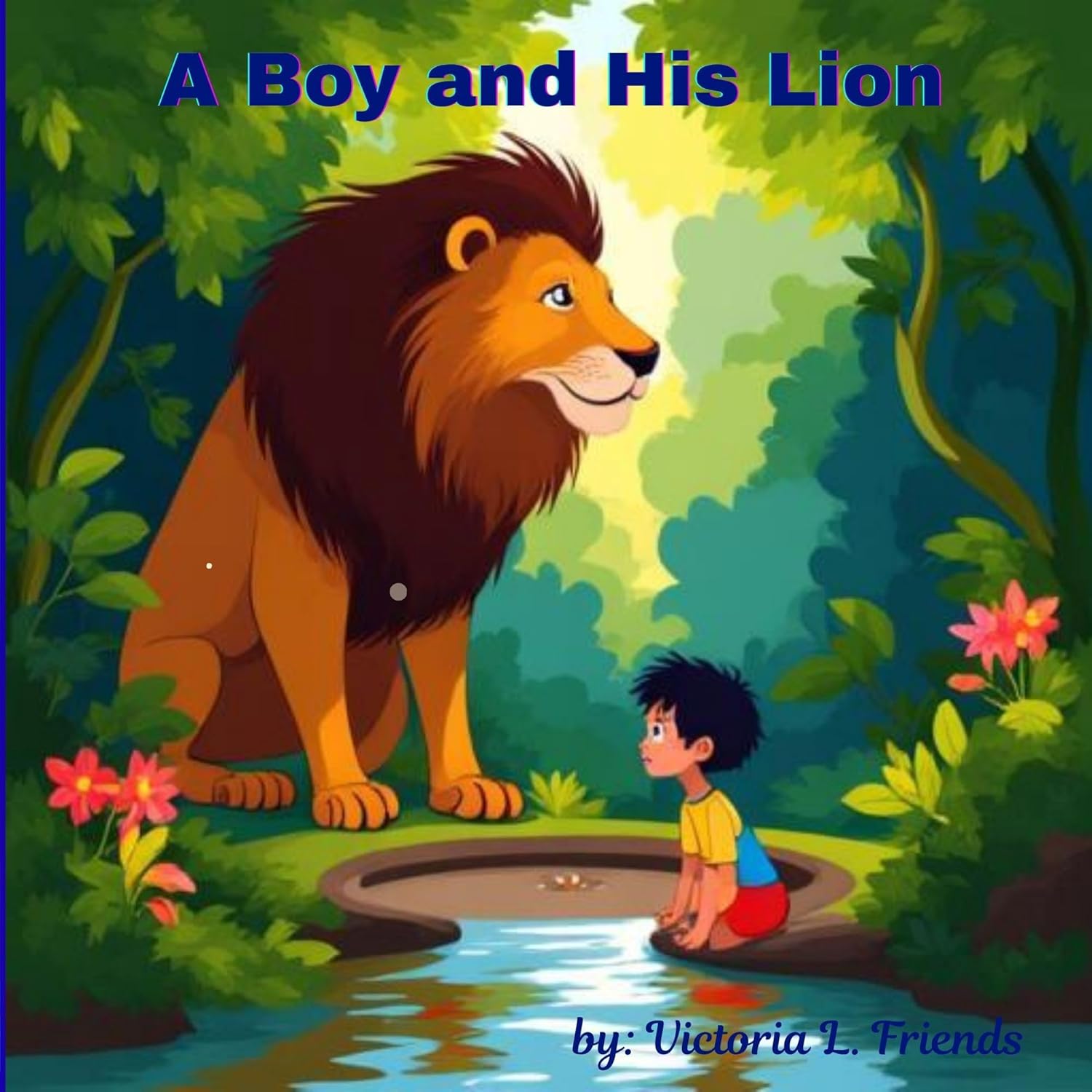

A Boy and His Lion follows Kadence, a young boy from Indonesia, as he invites readers on a jungle adventure with his best friend, Jay the Lion. Together, they meet a lively cast of animals, including an orangutan, a sea turtle, an elephant, a chimpanzee, a tiger, and a Komodo dragon, while taking time to rest, share jackfruit, and dream about a future safari in Africa. It’s a simple, friendly journey built around curiosity, companionship, and the joy of noticing the natural world.
I liked the book’s open-hearted sense of wonder. The story doesn’t rush toward a dramatic conflict, and I actually found that gentle pace comforting. It reads like a child telling you about the best day ever, where every creature is a discovery and every stop matters. The writing is direct and easy for young readers to follow, with a conversational rhythm that makes the book feel like an invitation rather than a lesson. Some of the animal facts are tucked in lightly, which gives the story an educational spark without weighing it down.
The artwork gives the picture book much of its warmth. The bright jungle greens, soft blue rivers, and cheerful animal expressions create a safe, welcoming version of adventure, one that feels imaginative. I liked the sweetness in Kadence’s friendship with Jay the Lion, especially in the quieter picnic scenes, where sharing jackfruit becomes a small but meaningful moment of closeness.
A Boy and His Lion is a tender and colorful children’s book with a sincere love of travel, animals, and friendship at its center. It has the feel of a bedtime adventure, calm enough to soothe but bright enough to stir a child’s imagination. I’d recommend it for preschool and early elementary readers, especially children who love animals, jungle settings, and gentle stories about exploring the world with a trusted friend.
Pages: 25 | ASIN : B0GHZ7GTG4
Benjamin & Honka’s Backyard Adventure: Second Edition

Benjamin & Honka’s Backyard Adventure is a gentle picture book about a six-year-old boy who discovers a woodland duck near the pond in his backyard and names him Honka because of his funny, husky call. What begins as a simple encounter turns into a sweet friendship, with Benjamin learning how to care for Honka properly, including the important lesson that bread isn’t good for ducks and healthier treats are a kinder choice. The story settles into a warm rhythm of pond play, small discoveries, and the quiet promise that ordinary days can hold real wonder.
I liked the tenderness of this book most. It has the feel of a memory a parent might tell at bedtime, soft around the edges and full of backyard magic. The writing is simple and direct, which suits the age group, and I appreciated that the story doesn’t force a big, dramatic lesson. Instead, it lets care and curiosity do the work. Benjamin’s sadness when Honka disappears for a day felt especially true to childhood, that quick little ache children feel when something they love suddenly isn’t where it should be.
The artwork gives the picture book much of its charm. The pond scenes are especially calming, with muted greens, golden light, soft water, and little details like butterflies, reeds, and garden plants that make the backyard feel alive. I also liked how Honka is drawn with personality rather than exaggerated cuteness. He feels like a real animal, a child might observe closely and come to love. There are a few places where the text could be smoother, and some phrasing feels a bit uneven, but the heart of the book comes through clearly. Its best idea is a lovely one: children can learn compassion not through lectures, but through paying attention.
I found Benjamin & Honka’s Backyard Adventure to be an affectionate children’s book with a sincere love for animals and nature. It has a comforting sweetness that stayed with me after I finished it. I’d recommend it for young children who enjoy animal stories, backyard exploration, and gentle books about kindness, especially for parents looking for a calm read-aloud with a little real-world care lesson tucked inside.
Pages: 32 | ASIN : B0GRTCML8T
Fire at the Track – A Harness Racing Mystery

Fire at the Track by M.J. Evans is a harness racing mystery built around a barn fire that kills twenty-eight horses and shakes the Liberty Racetrack community to its core. The book opens with the thrill of the sport, especially the rise of Eat My Dust, then quickly turns that excitement into grief, suspicion, and an insurance investigation. At its center is Callie Oaks, an investigator with real horse-world experience, who goes undercover at the track to find out whether the fire was an accident, negligence, or something far more deliberate.
What makes the book work best is how strongly it understands the emotional world of horse people. The horses aren’t background decoration. They’re the reason everyone is there, and the reason the crime feels personal. The line “They were like family” captures the heart of the story in a simple way, because the loss in Barn 7 isn’t treated as just property damage. It’s a wound shared by owners, trainers, grooms, drivers, and even the night watchman who can’t forgive himself for saving only one horse.
Callie is an appealing lead because she’s capable without feeling slick or distant. Her undercover identity, Haylie Norr, gives the story a nice layer of tension, especially as she gets pulled back into the rhythm of barn life and into training the filly Sunny. The mystery moves through insurance fraud, gambling debts, grief, jealousy, and cover-ups, but it stays grounded in everyday racetrack details: feedings, stall assignments, vet records, training routines, and the politics of a tight community where everyone knows everyone else’s business.
The book also has a warm secondary thread in Callie’s connection with reporter Paul Coffman. Their relationship doesn’t take over the mystery, but it gives the story a softer place to land after some heavy material. By the end, when the investigation has exposed Tommy Valdez and Frank Morrison, and the track begins repairing both its safety systems and its sense of trust, the final stretch with Callie, Sunny, and Paul feels earned. The closing idea that survivors “get back in the sulky, gather the lines, and race toward whatever finish line waits ahead” fits the book’s steady, hopeful view of recovery.
Fire at the Track is a sincere, horse-centered mystery with a strong sense of place and a lot of affection for the harness racing world. It’s part crime story, part community drama, and part comeback story. The best parts are the ones where the book lets readers feel the barn, the track, the grief, and the bond between people and horses. It’s a conversational, accessible read for mystery fans, especially readers who like animals, racetrack settings, and stories where justice matters because the victims mattered.
Pages: 287 | ASIN : B0GMDMX3HY

The Holy Link of the God-Human-Animal Bond: Reimagining Our Stories to Include Animals

Ashley Cooper’s The Holy Link of the God–Human–Animal Bond argues that our relationships with animals are not incidental, sentimental side notes to spiritual life, but part of a living triad in which God, human beings, and animals meet one another in creation, care, grief, and hope. The book moves through a series of “shared” chapters on connection, land, place, experience, spirit, story, wound, distance, and hope, folding biblical interpretation into memoir and pastoral reflection. Cooper returns again and again to concrete scenes, Winston the therapy donkey softening a room full of mourners, Clover teaching the hard limits of loving care, a sparrow in a grocery store parking lot, a service dog on a restaurant patio, even Harry the mouse in Kuwait, to insist that animals are not scenery in Christian theology but neighbors in it.
Cooper writes with the kind of attention that feels earned rather than performed, and that matters because this is a book that could easily have drifted into abstraction or piety. Instead, its best passages have weight and warmth. I kept responding to the way she lets theology rise out of lived encounters rather than pinning it on top of them. Winston is not reduced to a symbol, even when he becomes one. Beau’s slow, hard-won companionship carries real emotional force. The pages on grief, presence, and animal-assisted care have a genuine ache in them, and I found that ache persuasive. Even when I wasn’t fully convinced by every theological extension, I trusted the heart behind it, because Cooper is clearly writing from love, loss, practice, and long attention.
I also found the book intellectually interesting. Its central idea, that Christian thought has often cast too narrow a net and left animals outside its field of concern, is compelling, and the recurring image of refining that “net” gives the argument a useful shape. I liked the book most when it stayed close to that humane, searching pressure. The acronym GHAB, the phrase “Holy Link,” and some of the theological framing are repeated often. There were moments when I wanted a little less restatement. Still, even there, the book’s sincerity kept me engaged, and its moral imagination is hard to dismiss. It asks readers to become more attentive, less domineering, and more answerable to the vulnerable life around them. That’s an argument with real moral and spiritual beauty.
The Holy Link of the God–Human–Animal Bond is an earnest, moving and deeply felt book that enlarges the emotional and theological field it enters. It’s strongest when Cooper trusts the texture of her own stories and lets a donkey’s breath, a dog’s loyalty, or a tiny shared moment of creaturely need carry the meaning. I’d recommend it especially to Christian readers interested in theology, pastoral care, animals, ecology, and the spiritual meaning of ordinary companionship, but also to thoughtful animal lovers who want language for why those bonds can feel so mysteriously significant. It left me feeling gentler, more alert, and a little less willing to treat the living world as background.
Pages: 220 | ASIN : B0GQXF669D
There’s a Rhinoceros in My House

There’s a Rhinoceros in My House! is a playful picture book built around a wonderfully simple misunderstanding. A sleepy mom, stumbling through the house without her glasses, becomes convinced a rhinoceros has invaded the kitchen, only to discover that the supposed beast is really her husband, noisily making breakfast, flipping pancakes, vacuuming the rug, and clattering through the morning routine. The book turns that small domestic mix-up into a comic little adventure, then lands on a family-table ending that feels affectionate rather than merely punchline-driven.
What I liked most is how fully the book commits to its premise. It doesn’t overcomplicate anything. Instead, it trusts the delicious absurdity of a half-awake mind trying to make sense of thuds, crashes, and splashes. That trust pays off. The repeated rhythm of Mom blinking, squinting, and misreading the chaos gives the story a satisfying bounce, and the reveal works because the book has already made the rhinoceros feel real enough for a child to believe in it for a few pages. The humor is warm. The joke is rooted in family life, in the strange exaggerations that happen when we’re tired, annoyed, or not yet fully in the day.
I especially appreciated how the language leaves room for the wonderful illustrations to carry part of the joke. The book’s ideas are gentle and young readers will be able to recognize them. Every page is filled with colorful, lively artwork that gives the story its energy, with expressive scenes and playful visual details that make the household chaos feel funny, inviting, and easy for children to follow. I especially liked the character sketches at the end, which offer a fun glimpse into how the artwork was created. They add an extra layer of charm to the book, and I think children will love trying to draw the characters on their own. It’s a lovely touch that could easily inspire budding young artists.
I came away from this story smiling. It’s an easy book to imagine reading aloud, especially with relish for the sound effects and the slow, teasing build toward recognition. In the end, what stayed with me wasn’t just the joke of the rhinoceros, but the fondness underneath it, that sense of a family translating everyday racket into story. I’d recommend this picture book to young children who love silly visual misdirection, for families who enjoy read-alouds with a theatrical streak, and for anyone partial to picture books that turn ordinary mornings into something slightly magical.
Pages: 25 | ASIN : B0GNJ3CZ63
Inheriting Karma

I went into Inheriting Karma expecting a mystery, maybe some crime or supernatural twist, but this book was something else entirely. It’s mysterious, sure, but not in the usual “whodunit” way. It’s like stepping into someone’s mind after everything has fallen apart. The story is fragmented, poetic, and even a little trippy. It talks about guilt, fate, and what happens when your past won’t stop chasing you. It’s weird, dark, and hypnotic in a way that’s hard to explain and hard to look away from.
It wasn’t easy to follow. The writing feels like a code at times, like the story wants you to dig through the mess to find the meaning. But there’s something addictive about that. The mood is heavy, almost haunting, and I found myself flipping back pages trying to piece together what was real and what was just in the narrator’s head. It’s got that eerie, unsettled vibe that keeps you tense even though you don’t know why.
If you’re the kind of mystery reader who likes neat clues and clean endings, this might throw you off. But if you enjoy stories that play with your head, that make you question what’s happening, this book has that in spades. It’s like a psychological puzzle wrapped in poetry. I wouldn’t call it a traditional thriller, but it definitely gave me chills.
I’d recommend Inheriting Karma to readers who like their mysteries a little offbeat. Fans of surreal or psychological thrillers where the real tension comes from the mind, not the crime. It’s strange, but it’s the kind of strange that sticks with you.
Pages: 328 | ASIN : B0FM6TTGJG


