Blog Archives
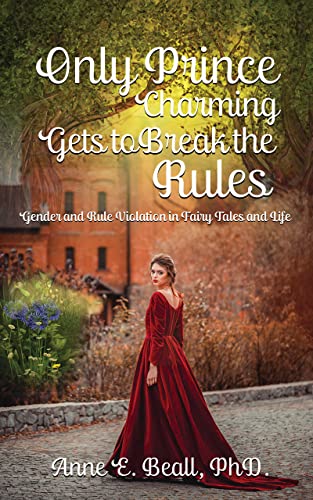
Only Prince Charming Gets to Break the Rules
Posted by Literary Titan

Fairy tales are a reflection of the social values of their time and often serve as vehicles for teaching moral lessons. However, a closer examination of these stories reveals that the actual behaviors and punishments do not always align with our expectations. Only Prince Charming Gets to Break the Rules, a meticulously researched analysis by Dr. Anne E. Beall sheds light on the disparities between male and female characters in both fairy tales and real life.
Beall’s study delves into the rule-breaking behavior of characters in fairy tales, comparing and contrasting the consequences and emotions conveyed. Through a comprehensive global perspective that includes stories from Africa, Asia, Europe, North America, and South America, the author demonstrates how fairy tales communicate societal values that have persisted over time.
The use of statistics and real-life examples helps Beall identify gender differences in rule-breaking patterns, revealing that women are more likely to engage in psychological and physical abuse. Despite the ample data presented, the author maintains an unbiased approach throughout. Although the writing style may at times feel overly factual due to the abundance of statistics, the book remains engaging and informative. In fact, the material presented is well-suited for classroom discussions and anyone interested in understanding societal norms and behaviors.
Overall, Only Prince Charming Gets to Break the Rules: Gender and Rule Violation in Fairy Tales and Life is a refreshing and illuminating read that challenges our preconceived notions of gender roles and expectations. This research into fairytales and mythology is an excellent addition to those studying the impact on literature and gender roles worldwide and through time.
Pages: 154 | ASIN : B0BH3KWH5D

Share this:
- Click to share on X (Opens in new window) X
- Click to share on Facebook (Opens in new window) Facebook
- Click to share on Tumblr (Opens in new window) Tumblr
- Click to share on Reddit (Opens in new window) Reddit
- Click to share on Pinterest (Opens in new window) Pinterest
- Click to share on Pocket (Opens in new window) Pocket
- Click to share on Telegram (Opens in new window) Telegram
- Click to share on WhatsApp (Opens in new window) WhatsApp
- Click to share on LinkedIn (Opens in new window) LinkedIn
- Click to print (Opens in new window) Print
- Click to email a link to a friend (Opens in new window) Email
Posted in Book Reviews, Four Stars
Tags: Anne E. Beall, author, book, book recommendations, book review, book reviews, book shelf, bookblogger, books, books to read, ebook, feminist writing, goodreads, indie author, kindle, kobo, literary criticism, literature, mythology criticism, nonfiction, nook, novel, Only Prince Charming Gets to Break the Rules, read, reader, reading, story, women writers, Women's studies, writer, writing
A Few Hidden Messages
Posted by Literary Titan

Cinderella Didn’t Live Happily Ever After, is an in-depth analysis of fairytales and how women are portrayed and treated in comparison to men. Why was this an important book for you to write?
It’s an important topic because fairy tales are among some of the first stories we learn as children, and these stories are told and re-told in many books and movies. Even modern novels sometimes put forward versions of these fairy tales where the female heroine finally gets her “prince”—the high-status man who has wealth and status. Because these tales are so ubiquitous, it’s important to unpack them and really understand what they’re saying. They have quite a few hidden messages.
What were some ideas that were important for you to share in this book?
One thing that I wanted to get across was that male characters are largely powerful, active, good people. In contrast, female characters tend to be weak, passive, and powerless. And when female characters are powerful, they are often evil. This idea of a powerful woman generally being evil concerns me because it may set us up to be wary of women who have ascended to powerful positions in our society.
What do you hope is one thing readers take away from reading your book?
I want people to really question whether the fairy tale life is desirable. I found that female royalty has very little power and are the most unhappy. Queens cry more than any other character, and princesses are terribly treated—imprisoned, kidnapped, etc. Marrying the prince or king has some tremendous disadvantages in fairy tale land, but that is put forward as the ultimate goal.
What is the next book that you are working on and when will it be available?
My next book is called Only Prince Charming Gets to Break the Rules: Gender and Rule Violation in Fairy Tales and Life. It’s an analysis of fairy tales and folktales from around the world and I learned in my research that male and female characters are treated differently when they break rules in stories. Men are often rewarded or unpunished, whereas women are punished very severely. In fact, one-third of them are executed! I draw parallels with modern life where I found that men and women are treated differently when they break rules. For example, men and women in the legal, financial, and medical fields are given very different punishments for the same behaviors. I hope to have that published later this year or early next year.
Author Links: GoodReads | Twitter | Facebook | Website
Share this:
- Click to share on X (Opens in new window) X
- Click to share on Facebook (Opens in new window) Facebook
- Click to share on Tumblr (Opens in new window) Tumblr
- Click to share on Reddit (Opens in new window) Reddit
- Click to share on Pinterest (Opens in new window) Pinterest
- Click to share on Pocket (Opens in new window) Pocket
- Click to share on Telegram (Opens in new window) Telegram
- Click to share on WhatsApp (Opens in new window) WhatsApp
- Click to share on LinkedIn (Opens in new window) LinkedIn
- Click to print (Opens in new window) Print
- Click to email a link to a friend (Opens in new window) Email
Posted in Interviews
Tags: Anne E. Beall, author, author interview, book, book recommendations, book review, book reviews, book shelf, bookblogger, books, books to read, Cinderella Didn't Live Happily Ever After: The Hidden Messages in Fairy Tales, ebook, education, fairy tale, fairytale, feminism, goodreads, kindle, kobo, literature, mythology, nonfiction, nook, novel, read, reader, reading, story, womens rights, writer, writing
Cinderella Didn’t Live Happily Ever After
Posted by Literary Titan

Fairy tales are a deeply ingrained part of our world’s culture. From Disney adaptations to childhood bedtime stories, very few people haven’t been exposed to the witches, princesses, children, and fairy folk that make up these ageless classics. Good defeats evil, and all live happily ever after, but…are these stories really as wholesome as they appear? Unfortunately, many of the most well-known fairy tales send a wrong message when placed under the microscope with strong undertones of misogyny, ageism, cruelty, and subservience. “Happily ever after” is exposed to a dose of reality as beloved stories become the subject of deeper scrutiny.
In Cinderella Didn’t Live Happily Ever After, author Anne Beall uses her doctorate in psychology to put traditional fairy tales under critical and academic analysis. Throughout the book, she addresses all the absurdities and questions that eventually occur to all reasonable adults about the stories we grew up with. Then, she proceeds to examine each of them, presenting a plethora of research about the formulaic ways they are constructed. Whether intentional or not, much of the shared information deals with the disparity between the sexes throughout fairy tales. In addition, the author provides statistics in various areas such as who holds the most power most frequently, which demographic of characters endure the most suffering, and a basic breakdown of what kind of characters are good vs. evil- just to name a few.
Beyond the deeply analytical nature of the book, it also serves as a fascinating deep dive into some of the lesser-known fairy tales collected by the Grimm brothers. (Their collection of stories specifically was mined for the detailed results as shown here.) Beall repeatedly references the most commonly adapted fairy tales. Such tales are deeply ingrained in cultures worldwide and use frequent excerpts from stories that are not likely to be recognized. It provides an eye-opening look at the wide variety of stories that made their way across Europe at one point in time and also creates a starting point for anyone who wants to know more about a more extensive selection of “classics.”
Cinderella Didn’t Live Happily Ever After: The Hidden Messages in Fairy Tales is an excellent study on the history and the psychological impact of fairy tales. The research is top-notch and backed up with numerous graphs and charts. It’s clear that a great deal of time went into the work here, and the result is a body of work that simply can’t be contested. Readers that want to take a deep dive into the message of fairy tales past and present and look at an in-depth analysis of them will find this book fascinating.
Pages: 127 | ASIN : B07KJHZF2H
Share this:
- Click to share on X (Opens in new window) X
- Click to share on Facebook (Opens in new window) Facebook
- Click to share on Tumblr (Opens in new window) Tumblr
- Click to share on Reddit (Opens in new window) Reddit
- Click to share on Pinterest (Opens in new window) Pinterest
- Click to share on Pocket (Opens in new window) Pocket
- Click to share on Telegram (Opens in new window) Telegram
- Click to share on WhatsApp (Opens in new window) WhatsApp
- Click to share on LinkedIn (Opens in new window) LinkedIn
- Click to print (Opens in new window) Print
- Click to email a link to a friend (Opens in new window) Email
Posted in Book Reviews, Five Stars
Tags: Anne E. Beall, author, book, book recommendations, book review, book reviews, book shelf, bookblogger, books, books to read, Cinderella Didn't Live Happily Ever After, ebook, fairy tales criticism, feminist theory, folk tales criticism, goodreads, kindle, kobo, literature, mythology criticism, nonfiction, nook, novel, psychology, read, reader, reading, story, womens sutudeis, writer, writing