Blog Archives
Good Boy Bad Boy


Joel Primus’s Good Boy Bad Boy is a heartfelt exploration of self-acceptance and the battle within ourselves between societal expectations and personal authenticity. Drawing on his own experiences and blending them with psychological insights, Primus dissects the binary notion of “good” and “bad” that often traps us in cycles of guilt and shame. Through personal anecdotes, philosophical musings, and practical advice, he invites readers to confront their “shadow self,” embrace their complexities, and ultimately, find harmony. The book is both reflective and actionable, moving from the roots of our struggles to solutions for overcoming them.
From the first chapter, when Primus shares his teenage feelings of inadequacy in front of a mirror, you can feel his pain and relate to it deeply. His journey is woven with relatable examples, like the dichotomy of being a “good kid” who follows the rules but internally feels hollow. The chapter on duality, with its Cherokee wolf parable, offers a powerful metaphor for the internal struggle between our better and darker selves. It’s not just abstract philosophy; the examples, like balancing societal expectations with personal truth, felt refreshingly real.
The book’s strongest moments come when it challenges the idea of external validation. For instance, Primus describes a poignant moment when his coach urged him to race for the love of the sport rather than for others’ approval. That conversation resonated with me, as I’ve struggled with the same perfectionist tendencies. His ability to balance personal anecdotes with universal lessons—such as recognizing and integrating your shadow self—made the book incredibly thought-provoking.
Good Boy Bad Boy is a book for anyone seeking personal growth and self-acceptance. Its candid tone and relatable stories make it accessible to readers who feel weighed down by the need to be perfect. Whether you’re grappling with feelings of inadequacy or simply looking to better understand yourself, this book offers a compassionate guide to navigating the messy, beautiful middle ground of being human. I’d recommend it to anyone who wants a blend of introspection and practical advice wrapped in genuine emotion. It left me inspired to look in the mirror with more kindness and curiosity.
Pages: 166 | ASIN : B0DL8H6HVC

Stoic Solutions. Simple Steps to Tranquility. A Handbook of Stoic Principles to Overcome Mental Distress.
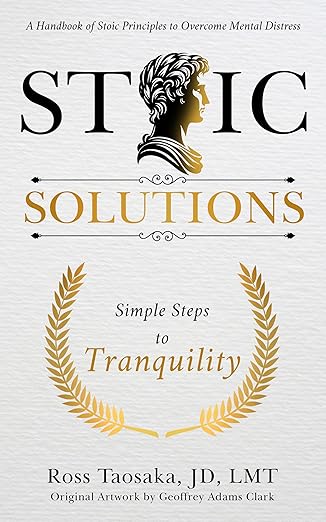
Stoic Solutions, by Ross Taosaka, offers a thoughtful and practical dive into the enduring wisdom of Stoic philosophy. The book explores how timeless teachings from ancient Stoics like Marcus Aurelius, Seneca, and Epictetus can help modern readers tackle stress, anxiety, and uncertainty. Through clear explanations and actionable advice, Taosaka connects the principles of Stoicism to everyday challenges, encouraging readers to build mental resilience, gain clarity, and find peace amid life’s chaos.
What stood out to me most was the way Taosaka distilled complex ideas into bite-sized and relatable lessons. He writes with a conversational tone that feels like talking to a wise friend, and the examples he uses, both historical and modern, help ground these ancient teachings in the real world. The chapters feel like they’re designed to be referenced again and again, each one filled with practical steps to shift your mindset and take control of your emotions.
The integration of history adds depth and credibility to Taosaka’s advice. I found his summaries of Zeno’s stoic founding and Marcus Aurelius’ reflections fascinating and easy to grasp. Often, philosophy books feel bogged down with theory, but Taosaka strikes a perfect balance. His personal anecdotes and real-world strategies, like reframing adversity and focusing on what you can control, make the book relatable and actionable. He even tackles misconceptions about Stoicism, like the idea that it’s all about suppressing emotions, showing instead how it fosters strength, balance, and purpose.
Chapter 7: Temperance – Managing Desires and Emotions really hit home for me, especially the section on living with intention. The idea of starting each day with a clear purpose felt like a breath of fresh air in my often chaotic mornings. The advice to ask, “What virtues do I want to embody today?” or “How can I practice moderation in my actions and thoughts?” was such a simple yet profound shift. I tried it, and it was amazing how setting that mental roadmap calmed my mind and gave me direction. Instead of being pulled in a hundred different directions, I felt grounded and focused. The phrase, “It’s like giving your mind a calming mantra to follow, keeping you grounded and centered,” perfectly captured how this practice helped me let go of stress and approach my day with clarity. It’s such a small change, but it made a huge difference in how I navigate both my emotions and my to-do list.
One of my favorite aspects of the book overall was its structure. The chapters build on one another, creating a sense of progress as you read. And Geoffrey Adams Clark’s illustrations add a creative vibe to the experience.
I highly recommend Stoic Solutions to anyone looking to improve their mental well-being and find a clearer path through life’s challenges. Whether you’re new to Stoicism or already familiar with its teachings, this book has something to offer. It’s perfect for those feeling overwhelmed by modern stress or for anyone curious about philosophy’s practical side.
Pages: 199 | ASIN : B0DLV9Z99N
Not Just a “Mental Game”

Anxiety to Ahh-mazing in 60 Days introduces readers to your HASH60 system, an innovative approach that blends a variety of techniques into a practical and easy-to-follow guide, allowing readers to take control of their emotional well-being. Why was this an important book for you to write?
The motivation behind writing Anxiety to Ahh-mazing in 60 Days stems from a deep desire to provide a truly integrative, accessible approach to emotional well-being. In my years of research and practice, I’ve seen that no single technique or method works for everyone, which is why the HASH60 system blends a variety of approaches—mindfulness, cognitive behavioral techniques, breathwork, and heart-rate variability training.
What makes this book important is that it doesn’t just offer theoretical advice. Instead, it gives readers a structured, yet flexible, path that they can tailor to their own needs. The techniques reinforce one another, creating a synergy that empowers readers to take control of their anxiety and stress. The focus was on making it practical and easy to follow, so people can seamlessly integrate it into their daily lives, leading to lasting transformation.
By blending these different modalities, the HASH60 system addresses both the mind and the body, allowing readers to not only manage anxiety but to build a foundation of sustainable happiness. That integrative approach is at the heart of why this book felt so necessary to write.
What are the common misconceptions people have about anxiety?
A common misconception about anxiety is that it’s purely a mental issue, something that exists solely in the mind and can be “thought” away. While thoughts do play a significant role, anxiety is deeply intertwined with the body. Our physical responses—racing heart, shallow breathing, muscle tension—are often the fuel that keeps anxiety going.
People often believe they can control anxiety through willpower alone, but this overlooks the need to address the physiological side of the problem. That’s why in the HASH60 system, I emphasize techniques like breathwork and heart-rate variability training, which help regulate the body’s stress response.
In reality, anxiety is a complex interplay between the mind and body, and understanding that it’s not just a “mental game” is key to managing it effectively.
What were some ideas that were important for you to share in this book?
In Anxiety to Ahh-mazing in 60 Days, it was important for me to communicate that transforming psychological distress into lasting happiness requires work across several domains. One of the key ideas is that we can’t just focus on one aspect of our well-being and expect everything to fall into place.
First, identifying and living in alignment with one’s core values is essential. When we’re out of sync with what matters most to us, it creates an underlying tension that fuels anxiety and stress. I wanted to emphasize that real transformation begins when we understand our values and make daily decisions that reflect them.
Another vital idea is the power of consistent meditation and heart-rate variability biofeedback (HRVB) practices. These aren’t quick fixes—they’re ongoing practices that gradually retrain both the mind and body to handle stress more effectively. Meditation helps cultivate mental clarity, while HRVB allows us to manage the physiological side of anxiety. Together, they create a balanced system of emotional regulation. Last but not the least, regular physical exercise is of paramount importance.
Finally, I stressed the importance of establishing routines that integrate these learnings into daily life. It’s one thing to know what to do, but without regular practice and structure, those insights don’t translate into real change. The HASH60 system is designed to help people form habits that support long-term well-being, creating a foundation for sustainable happiness rather than temporary relief.
These ideas—working in multiple areas, aligning with values, and committing to consistent practices—are crucial to shifting from distress to well-being.
What is one thing that you hope readers take away from Anxiety to Ahh-mazing in 60 Days?
A key message in Anxiety to Ahh-mazing in 60 Days is that happiness isn’t something we can chase or force into our lives. It’s not a destination we arrive at by checking off a list of achievements or pleasures. Instead, happiness comes when we create the right conditions for it—when we cultivate a space in our mind and body for it to alight, much like a butterfly settling softly on a flower.
Through the HASH60 system, I emphasize practices like mindfulness, heart-rate variability training, and aligning with core values because these build the foundation for happiness. By managing anxiety and stress effectively, we calm the turbulence that often blocks happiness from finding us. The process is about creating inner harmony, rather than pursuing external rewards.
When we stop chasing happiness and focus on cultivating a balanced, calm, and open space within ourselves, happiness has room to naturally appear. It’s not forced—it’s allowed. That’s a key shift in perspective that I hope readers take from the book.
Author Links: GoodReads | X (Twitter) | Facebook | Website | Amazon
In a world where stress, fear and anxiety run rampant, Dr. Harry Somaraju offers a refreshing perspective in his book “Anxiety to Ahh-mazing in 60 Days”. He delves deep into the root causes of these modern plagues, examining them with a critical eye. But Dr. Somaraju doesn’t stop there. Instead, he guides you on a practical journey, one step at a time, showing you how to conquer these overwhelming emotions and construct a fulfilling and blissful life.
Dr. Somaraju’s ability to bridge the scientific with the accessible sets his book apart from similar reads. Drawing inspiration from ancient traditions such as Buddhism and Stoicism, he crafts practical solutions that anyone can grasp and apply. His approach is nothing short of transformative.
“Anxiety to Ahh-mazing in 60 Days” is more than just a book; it’s a roadmap for a life transformation within a mere 60 days. If you’re ready to unlock meaningful joy from within and embark on the journey toward a balanced , peaceful life, this book is a must-read.
Anxiety to Ahh-mazing in 60 Days: Transforming Stress, Anxiety and Anger into Sustainable Happiness

Dr. Harry Somaraju’s Anxiety to Ahh-mazing in 60 Days offers a deep exploration of self-help and emotional regulation. The book culminates in the introduction of the author’s groundbreaking HASH60 system. This innovative approach blends a variety of techniques into a practical and easy-to-follow guide that empowers readers to take control of their emotional well-being. By offering clear and actionable strategies the author helps readers apply these methods to their daily lives and foster a sense of calm and emotional balance. Drawing from an impressive range of disciplines, Somaraju integrates wisdom from Buddhist teachings, Stoicism, modern self-help practices, and positive psychology. He even delves into heart rate variability training which offers a holistic approach to emotional regulation.
Through his own journey of mastering his emotions Somaraju shares his personal growth and the invaluable tools he’s gathered along the way. This book stands out to me for its depth and rigor. It is not the typical surface-level self-help book that is filled with vague platitudes. Instead Somaraju offers well-researched insights and practical advice that is rooted in ancient wisdom and cutting-edge science. From the heart-brain connection to mindfulness and positive neuroplasticity Somaraju’s exploration is both thorough and grounded in science.
His intelligent and thoughtful approach makes complex concepts accessible to a broad audience. One of the most impressive aspects of the book is the depth of information it provides. Somaraju goes into great detail, offering clear instructions for readers to experiment with the techniques themselves. He introduces a range of meditation and mindfulness practices that provide a fantastic foundation for people who are new to these practices.
It is evident that Somaraju has personally benefited from mastering his emotions and his writing reflects a sense of calm and fulfillment that comes from living in alignment with core values. His passion for the topics discussed make the book engaging and inspiring. The HASH60 program, introduced towards the end of the book, offers a simple yet powerful framework for implementing real change. Somaraju’s clear and encouraging writing style ensures that readers feel empowered to embark on their own journeys toward emotional well-being. He highlights practical strategies for reducing modern-day stress and enhancing overall mental health which, I think, makes the book relevant to today’s fast-paced world.
Anxiety to Ahh-mazing in 60 Days: Transforming Stress, Anxiety and Anger into Sustainable Happiness is a thoroughly researched and thoughtfully written guide to emotional mastery. It provides real value to readers by offering the knowledge and tools needed to make meaningful changes. I highly recommend this book to anyone seeking to enhance their emotional well-being and live a fulfilling life.
Pages: 382 | ASIN : B0D7W7D8G2
Break the Chains

In your memoir Trust Yourself to Be All In: Safe to Love and Let Go, readers will find a deeply personal and emotional account of how divorce and personal loss have affected your life. What motivated you to share your story with the world?
I believe we experience loss and other pain in life in order to heal and then help others. We aren’t supposed to keep it for ourselves. I know there are many people suffering the pain of emotional abandonment, grief, and trauma, and I have found healing and a solution that not only sets me free but gives my life purpose. I’m compelled to share this healing with others. It’s as simple as that…something inside pushes me to help others.
I greatly appreciate the candid and transparent nature of the story you have shared. Would you be able to shed some light on the most arduous aspect of the writing process?
Personally, rewriting Chapter 1, “The Catalyst,” about my brother’s overdose, our childhood memories (some pleasant, others, not so much), my anger about his addiction and death, and eventually how his death set me free, was very difficult. I would find myself in disbelief that I was crying, again. It was also challenging to see the truth of my story. Seeing the reality of some painful events, in black and white, was emotionally draining. In general, I didn’t find the writing process arduous. It was a period of divine inspiration and came quite naturally to me. The hardest part was deciding which parts to keep and which parts to toss. I felt much of what was removed was important, but I had to make very honest decisions about if it added or detracted from the main message and the power of the book. It was a humbling process.
What is one piece of advice you wish someone had given you when you were younger that could have helped you deal with personal loss and grow from these challenges?
You are good, worthy, and loved no matter what. Know that other people’s actions and behaviors are not about you, and you are not responsible for anyone else’s happiness.
I understand that your story is important to you and you want your readers to connect with it. Can you please help me understand what message you want your readers to take away from your story?
Healing your personal pain holds the power to heal the collective. It’s the only power we truly have. Finding comfort in all of your emotions by healing your grief and trauma, building an unshakable foundation of self-worth and self-love, and trusting yourself to show up for yourself in good times and “bad” creates an open heart of unconditional love and compassion, for yourself and others. It’s time to break the chains of generational family dysfunction, address your pain, and do the work to heal. Your life, and the lives of others, depend on it.
Author Links: GoodReads | Instagram | Facebook | Website
Everyone leaves you or hurts you. This false myth of generational family dysfunction, compounded through trauma, appeared frighteningly true to Amanda the moment her brother overdosed and died. Devastated, she shined up the emotional armor she wore to protect herself from pain and soldiered on. But a decade of self-reflection and personal growth in 12-step recovery could not save her from herself. Attempting to destroy everything around her, including her troubled marriage, she experienced a spiritual awakening that radically transformed deeply engrained lies about love, loss, and connection. Lies she didn’t even know she believed.
Trust Yourself to Be All In: Safe to Love and Let Go is a pragmatic yet soulful inspirational memoir delivering uncompromising self-love that heals deep wounds. Amanda’s revealing, thought-provoking narrative will guide you to find comfort in your emotions and meaning in your suffering, while organically bridging an inseverable, trustworthy connection with self, others, and the universe.
Trust Yourself to Be All In: Safe to Love and Let Go

The narrative of Amanda’s life, as depicted in this book, offers a raw and poignant exploration of the impact of divorce and personal loss. Amanda’s journey begins in the wake of her parents’ separation, primarily due to her father’s affair, a situation that significantly alters her familial landscape. The book delves into her deep connection with her brother, Jeremy, who, despite his own struggles with addiction, serves as a crucial pillar of support until his untimely death. Tragically, Amanda faces a series of losses, including the passing of five close individuals within a span of three years.
This book candidly portrays her struggle with alcohol addiction as a coping mechanism and how these experiences leave indelible marks on her life. Particularly moving is how Amanda cherishes memories, such as a shared love for the band Pearl Jam, highlighting the bittersweet nature of remembrance. Amanda’s story is not just about loss and grief but also about resilience and healing. The narrative follows her as she confronts and manages an anxiety disorder, navigates the near breakdown of her marriage, and embarks on a journey toward recovery. The decision to relocate and the challenges of adapting to a new environment without familiar support systems are also explored, showcasing her strength and adaptability. The author’s candidness and emotional depth make this memoir particularly engaging. Amanda’s experiences are conveyed with a sincerity that invites empathy and reflection.
Trust Yourself to Be All In: Safe to Love and Let Go is not just a chronicle of hardships; it’s a testament to the human spirit’s capacity to endure and grow. This book is a compelling read for those interested in memoirs that offer a deeply personal and touching narrative filled with genuine emotion and the triumphs of overcoming life’s adversities.
Pages: 193 | ASIN : B0C4M137BJ
NeuroMastery: Retraining Your Brain to Conquer Anxiety, Fear, and Panic Attacks

In the vast realm of mental health literature, NeuroMastery, by Ugochukwu Uche, stands out as an invaluable guide into the intricate world of anxiety, fear, and panic attacks. Drawing upon recent findings, the book highlights the profound effects these emotional states have on individuals, underscoring the importance of grasping the underlying neuroscience required to formulate interventions. The book artfully differentiates between anxiety, fear, and panic attacks, delving into their psychological and biological roots. Uche adeptly illustrates insights from neuroscience, helping readers better understand the reasons behind these emotional experiences and their influence on behavior. A noteworthy highlight is the concept of neuroplasticity, showcasing the brain’s incredible adaptability over one’s lifespan. Throughout the narrative, Uche champions the optimistic message that positive change and recovery are attainable.
Grounded in solid neuroscientific principles, NeuroMastery delivers a thorough analysis of anxiety, fear, and panic attacks. Beyond mere theoretical discourse, Uche emphasizes the tangible applications of these principles, making them actionable for individuals striving to manage or overcome these challenges. The introduction of Lucy’s story as an example serves as a beacon, helping readers visualize the practical application of theoretical concepts in real-life scenarios. The content, comprehensive yet digestible, is methodically arranged, breaking down intricate concepts for easy comprehension.
Ugochukwu Uche’s literary contribution is undeniably enlightening, offering a look at anxiety, fear, and panic attacks through a neuroscientific prism. The no-nonsense language and structured introduction to the subject not only set the book’s tone but also highlight the author’s unwavering professionalism throughout the narrative. The unique intertwining of emotional experiences with neuroscience renders this book invaluable. The discussion on neuroplasticity, in particular, is captivating. NeuroMastery is an essential read for those grappling with anxiety, fear, and panic attacks.
NeuroMastery: Retraining Your Brain to Conquer Anxiety, Fear, and Panic Attacks is an articulate, succinct, and methodically curated guide that demystifies a complex topic for those unfamiliar with neuroscience. Lucy’s narrative significantly enhances the reader’s engagement, making the content even more relatable. Uche’s writing, infused with hope and novel insights, promises to pave new avenues in addressing mental health challenges.
Pages: 128 | ASIN : B0CJ6DWND9


