Blog Archives
Ice and Fire: Thawing a Murderer’s Heart
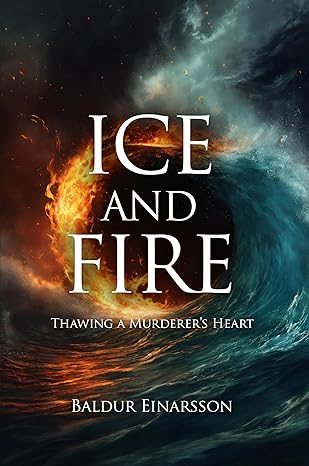

Ice and Fire: Thawing a Murderer’s Heart is a riveting memoir that navigates the tumultuous life of Baldur Einarsson, a man whose odyssey from chaos and violence to redemption captivates and inspires in equal measure. Set against the stark and icy landscapes of Iceland, the narrative opens with Baldur’s harrowing childhood, a period scarred by abuse, neglect, and despair. These formative years propel him into the shadowy abyss of Iceland’s criminal underworld. Baldur’s descent into addiction and crime unfolds with haunting clarity.
The memoir paints a stark portrait of a life spiraling into darkness, punctuated by moments of brutal violence and profound loss. Yet, it does not linger in despair. Instead, the focus shifts to Baldur’s astonishing transformation, chronicling his rise from the depths of hopelessness to a life filled with purpose, healing, and an unshakeable belief in the possibility of change. Grace, love, and faith emerge as unexpected yet powerful catalysts in his journey toward redemption. Through raw, unvarnished storytelling and vividly drawn scenes, Baldur invites readers into his fractured world. He bares his pain, his struggles, and his triumphs with remarkable candor. This openness not only sheds light on the enduring scars of trauma but also underscores the resilience of the human spirit and its boundless capacity for renewal. From the first page, Baldur Einarsson plunges readers into a visceral world of fear and survival. The icy backdrop of Iceland is brought to life in prose that is both clear and hauntingly evocative. The depiction of his abusive childhood is unflinching yet never gratuitous, laying the foundation for the extraordinary redemption that follows.
Baldur’s honesty as an author is striking. He confronts his past without embellishment or self-pity, allowing readers to fully grasp the weight of his struggles while maintaining an unrelenting sense of authenticity. The turning point in Baldur’s life—his path toward redemption—is as gripping as the chaos that preceded it. Love and faith are central themes, seamlessly interwoven into the narrative without veering into sentimentality or preachiness. As Baldur’s story shifts from despair to hope, the writing evolves, mirroring his emotional journey. What begins as stark and unyielding prose transforms into something warm and introspective, a reflection of his healing and self-discovery.
Despite its emotional intensity, Ice and Fire ultimately leaves readers with a profound sense of hope. It reminds us that redemption is always within reach and that even the most broken lives can be pieced back together. The memoir transcends its genre, becoming an invitation to believe in the transformative powers of love, faith, and perseverance. Baldur’s story resonates deeply, lingering in the heart and mind long after the final page is turned. For readers who appreciate true crime, tales of personal transformation, or deeply human narratives, Ice and Fire is a must-read. Baldur Einarsson’s journey is a haunting, uplifting, and unforgettable testament to the enduring strength of the human spirit.
Pages: 292 | ASIN : B0D3WW21DM

Chained Birds: A True Crime Memoir


Chained Birds, by Carla Conti, is a compelling true crime memoir that delves into the wrongful conviction of Kevin Sanders, accused of a brutal stabbing within a maximum-security prison. The story isn’t just about the crime itself, which is described briefly. Instead, it focuses on the ten-year legal battle that followed. The author, writing under a pseudonym, is a close friend of Scott Powell, the attorney representing Kevin, and becomes personally involved when prison gangs take an interest in her role.
This memoir stands apart from the typical true crime genre. It isn’t just about the violent crime or the mystery of “whodunit.” Instead, it digs deep into the long, complex legal fight that followed the incident. Conti exposes the layers of corruption within the prison system, where self-preservation runs rampant, and uncovers the harsh reality of prison gangs that pull the strings behind the scenes. The book offers a rare look into how these underground groups exert control over nearly every aspect of prison life, creating a chilling backdrop to the wrongful conviction. What makes Chained Birds unique is its focus on the legal process rather than the crime. This is not the book for those seeking a fast-paced thriller full of suspense or shocking revelations. Instead, it’s for readers who appreciate the painstaking detail of legal proceedings. Conti doesn’t shy away from the courtroom minutiae, clarifying questions, procedural clarifications, and other aspects that most books would gloss over. At times, the narrative reads like a court transcript, which may feel slow or overly detailed for some, but it captures the authenticity of the drawn-out legal process.
Chained Birds offers a different kind of true crime experience. It’s a thought-provoking examination of justice, corruption, and the hidden world of prison power structures. This book is best suited for readers with an interest in the legal aftermath of crime, rather than the crime itself. If you’re fascinated by courtroom dramas and the inner workings of the legal system, this memoir will provide a deep and unsettling dive into both.
Pages: 438 | ASIN : B0DGYPXNNC
LETHAL DOSES: The Story Behind “The Godfather Of Fentanyl”

Lethal Doses by John Madinger offers an intense and meticulously detailed look into the life of George Erik Marquardt, a brilliant yet malevolent figure responsible for the deaths of many through the production of fentanyl and other illicit drugs. Madinger presents an educational and gripping narrative, tracing Erik’s journey from his high school days, where his love for chemistry first sparked, to his eventual descent into a world of drug manufacturing. Erik’s story is a stark reminder of how intelligence and ambition can have devastating consequences when paired with moral corruption.
Madinger masterfully takes us through the key stages of Erik’s life, illustrating how his fascination with chemistry led to darker pursuits. One of the most shocking aspects of the story is Erik’s lack of remorse. Even after countless deaths and his eventual arrest, he makes it clear that he would return to his dangerous trade. This case is a stark reminder that society must take these threats more seriously to prevent further harm. Readers gain a nuanced view of this complex character through detailed depictions of his hobbies, his thoughts on himself, and how others perceived him. Erik’s love for classical music, particularly composers like Beethoven and Mozart, contrasts sharply with his involvement in criminal activity, adding layers to his persona. His charm, confidence, and pride are ever-present, making him a figure that fascinates and repels in equal measure. Lethal Doses’s structure is unique and engaging, blending quotes from Erik, excerpts from publications, and Madinger’s reflections. This approach lends the book an almost documentary-like feel, appealing to those with intellectual curiosity and a love for intricately detailed storytelling. Each chapter is filled with high-stakes moments—police raids, criminal plots, and daring escapes—that make the narrative as thrilling as it is informative.
Lethal Doses raises profound questions about justice, morality, and free will. It challenges readers to consider the consequences of unchecked ambition and the moral responsibility of both individuals and society. I found myself alternating between admiration for Erik’s intellect and disgust for his actions, fully absorbed in a story that left me both enlightened and disturbed. This book is a must-read for fans of true crime, history, and those interested in the shadowy intersections of science and criminality.
Pages: 444 | ASIN : B0DD4KKWN3
Postscript of My Professional Career

Busting Drug Dealers: Diaries of a DEA Special Agent shares your stories and experiences from working out in the field for the DEA and how this impacted your life and the lives of the people you encountered. Why was this an important book for you to write?
As I wrote briefly in the book’s Introduction, for decades, I toyed with the idea of writing a novel. The protagonist was to be an intrepid DEA agent. His story would be based upon my personal experiences and those of my fellow special agents. Over time, however, following the loss of my parents, I developed an interest in genealogy and my ancestry. When I learned that I had multiple ancestors who had been American police officers in the 1600s, I began thinking about writing a collection of law enforcement stories relating fictional or imagined experiences of my ancestors, combined with my own true personal experiences, and those of my father and brother (also former law enforcement officers).
In recent years, however, I decided that a memoir would be the appropriate medium for my story. My true-life experiences equaled or surpassed those I might imagine in a fictional novel. More than that, however, I felt a memoir would provide me with the opportunity to explain to my daughters and son, aspects of my life that we have never discussed in depth. By writing my story rather than verbalizing it, I have attempted to provide some level of explanation for my absences, my inattention, and my early prioritization of career over family. In some ways, the book has been a way to bridge a previous lack of communication with my children.
This memoir is a postscript of my professional career. Other than myself and my family, the people impacted by my work are, for the most part, dead and gone. Whether due to their lifestyle(s) or other reasons, I seem to have outlived the individuals I previously investigated and sent to prison. My career was an evolving and ongoing education for me, as well as often being an adrenaline rush. Regardless of all the highs and lows over the years, I loved my job as a DEA Special Agent. I’ve reached a stage in my life where I want to share my adventures.
I appreciated the candid nature with which you told your story. What was the hardest thing for you to write about?
When I was a young man, I had a feeling of certainty; feelings of indestructibility and omnipotence. I was one of the “good guys.” Nothing bad could happen to me. The good guys always won. Over the years, however, and especially when facing the facts while writing my book, it was embarrassing to realize how wrong I sometimes was. My prioritization of the job conflicted dramatically with family life. It was difficult to come to terms with my misplaced “machismo,” and the fact that although it provided me with personal goals and self-satisfaction, it negatively affected my family. The murder of my second wife, and the loss of friends (both DEA agents and foreign national police officers) along the way, were also especially difficult.
What were some goals you set for yourself as a writer in this book?
My primary goal was to share stories of my career with family and close friends. Once I decided to write the book, I committed myself to learn about self-publishing, and to make my book as professional a product as I could, fully knowing that I may never recoup that expense through book sales. For me, the goal is to tell the story in a way to make it interesting; not to worry about the commercialization of the book.
What is the next book you are working on, and when will it be published?
I end Busting Drug Dealers: Diaries of a DEA Special Agent as I leave Lahore, Pakistan, and am promoted into a supervisory field position in San Juan, Puerto Rico. This first book is written from the perspective of a “street agent” in domestic and overseas assignments. I have the material and have begun work on a second book that will begin with my supervisory assignment in San Juan, and follow the remainder of my DEA career through that 3-year assignment, over six additional years assigned as head of DEA foreign operations for five countries in South Asia, two years at DEA headquarters in Washington, DC (with another promotion to oversee all DEA domestic and international chemical investigations), and finally, three post-retirement years working on contract to DEA international operations, identifying, vetting, equipping, and training foreign national police officers for special counternarcotics units to support DEA operations in US Embassies overseas. I do not yet have an anticipated publication date.
Author Links: GoodReads | Facebook | Website | BookBub | Amazon
While the rest of us were safe in our homes, DEA Special Agent Mike Fredericks was busting dopers around the world and preventing illicit drugs from hitting the streets in the US.
Written from his extensive diaries and court documents obtained through Freedom of Information Act requests, the real-life adventures of Mike Fredericks read like fiction—and will either scare the pants off you or assure you that daring agents like Fredericks are on the job.
From Portland to Pakistan, Colombia to the Caribbean, Fredericks was working hard and playing harder, ripping and running, buying drugs undercover, driving fast cars, arresting felons and fugitives, busting redneck meth labs in remote Oregon sites, raiding clandestine cocaine labs in dense Colombian jungles, training with US Army special forces, investigating heroin traffickers in Pakistan, and working internationally to dismantle worldwide drug distribution organizations.
This memoir is the inside story of decorated Drug Enforcement Administration Special Agent, Mike Fredericks.
Warning: This book contains scenes of terrorism and weapons use, drugs and drug trafficking, and torture. It also contains profanity. For adult readers only.
Busting Drug Dealers: Diaries of a DEA Special Agent

Busting Drug Dealers: Diaries of a DEA Special Agent is an engaging, true account of the life and career of law enforcement officer Mike Fredericks. Fredericks’s journey from a customs officer to a DEA Special Agent offers an insightful look into the illegal drug trade in the U.S. and internationally.
The book is crafted from Fredericks’s detailed notes and court documents, creating a compelling narrative. The inclusion of photographs enhances the reader’s connection to the events, bringing a vivid and immediate quality to the storytelling. Fredericks demonstrates his skill as a writer, balancing engaging storytelling with attention to detail. His meticulous recounting of events, down to clothing and vehicles, immerses the reader in the scenes, allowing them to experience the action from his perspective.
What sets this book apart is its depth. It goes beyond being a mere recounting of drug busts. Fredericks paints a comprehensive picture of himself as a law enforcement officer and a family man deeply committed to his wife and son. His wife’s portrayal as a strong, supportive partner adds a personal dimension to the narrative. The book touches on the broader impact of drugs on families and communities, adding a layer of social commentary. As the book concludes with Fredericks transitioning to a desk job, it leaves the reader curious about his future endeavors and contributions.
Busting Drug Dealers: Diaries of a DEA Special Agent is not just a chronicle of crime and enforcement; it’s a multifaceted story of dedication, family, and the complexities of battling a pervasive societal issue. It’s a compelling read for those interested in true crime and the personal stories behind law enforcement careers, offering a unique blend of professional dedication and personal narrative.
Pages: 413 | ASIN : B0C62HLFHG




 LITERARY TITAN