Blog Archives
Born Missionary: The Islay Walden Story
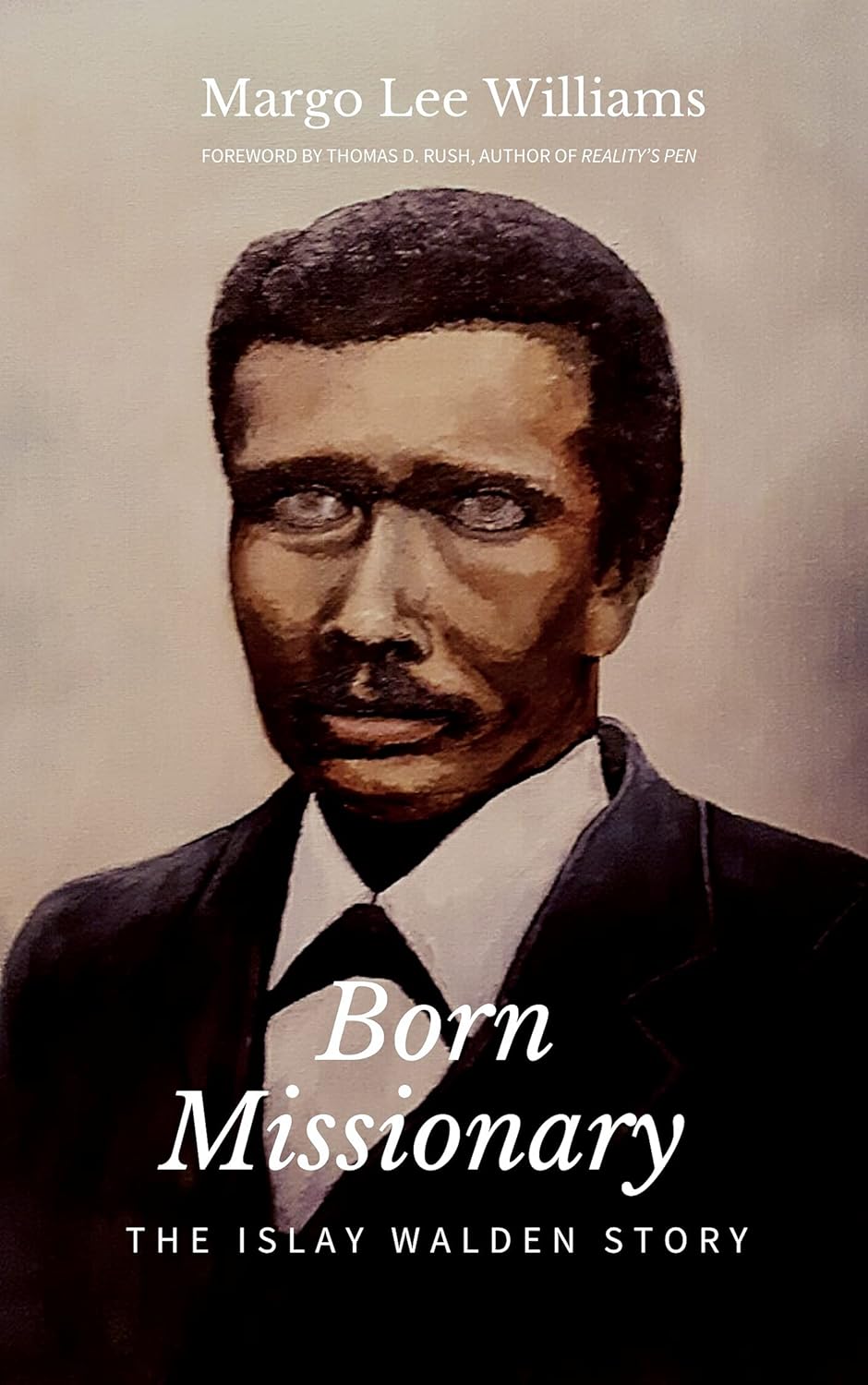

Margo Lee Williams’s Born Missionary tells the remarkable life story of Islay Walden, a man born into slavery who overcame blindness, poverty, and prejudice to become an educator, poet, and minister. The book traces his journey from the plantations of North Carolina to the halls of Howard University and the New Brunswick Theological Seminary, where he became one of the first African Americans ordained in the Reformed Church in America. Through meticulous research and a clear narrative voice, Williams reconstructs a life of faith and resilience. She doesn’t just recount events. She restores the humanity and voice of a man who was almost lost to history.
Reading this book stirred something deep in me. I could feel the grit in Islay’s story. His persistence through blindness and hardship hit me hard. The way Williams weaves letters, poetry, and newspaper clippings into a vivid picture of his struggles makes the past feel close. Her writing feels both scholarly and warm, and she lets the historical documents breathe. I’ll admit, there were moments when the detail slowed me down, but I didn’t mind. The care she took made me trust her. I found myself rooting for Islay, not as a distant historical figure, but as someone I might have known. Williams also captures the contradictions of his time, the faith that built him up, and the racism that tried to keep him small.
Emotionally, I found myself angry, proud, and sometimes just quiet after reading a passage. Williams doesn’t sermonize; she shows the quiet power of purpose. Her portrait of Islay’s devotion to teaching and preaching made me think about how education itself was a kind of rebellion. I liked how she handled the tension between his poetry and his ministry. You can sense that both were ways for him to see beyond blindness, to express what light looked like to him. It’s moving without ever feeling forced.
I’d recommend Born Missionary to anyone who loves history that feels alive. It’s perfect for readers interested in African American heritage, the Reconstruction era, or stories of perseverance that don’t sugarcoat the past. Teachers, pastors, and anyone who believes in second chances will find something here. It’s not just a biography, it’s a reminder of how one life, lived with courage and faith, can echo through generations.
Pages: 121 | ASIN : B091MF5B48

Nothing So Broken
Chris Richards’s Nothing So Broken is a heartfelt memoir that weaves together family, friendship, and the long shadows cast by war. It’s told through a lens that shifts between generations, the Vietnam experiences of Richards’s father, and the tangled, messy journey of growing up in small-town America. The book captures what it means to inherit pain without ever being in the war yourself. It’s not just a story about Vietnam or divorce or youth; it’s about how those things mix together to shape who we become. Richards writes with a storyteller’s rhythm, turning memory into something vivid and cinematic, but also deeply personal.
The writing feels alive, sharp and tender at once. The way Richards talks about fathers and sons, love and loss, is both funny and painful. Some scenes had me smiling because they reminded me of my own childhood, while others just sat heavy in my chest for hours afterward. The tone is conversational, like he’s sitting across from you with a beer, just telling you how it all went down. The shifts between boyhood memories and reflections on his father’s war experiences work beautifully. They pull you into the idea that trauma doesn’t stop at the person who lived it. It seeps into the next life, quiet and steady. His language is simple, but it hits deep, no fluff, just truth.
The family stuff, especially the divorce and the father’s illness, his a deep emotional chord. But I loved that honesty. Richards doesn’t clean up the mess or try to make anyone a hero. Everyone is human, flawed, and trying their best. That’s what makes the book work. The emotional range, grief, humor, confusion, hope, feels real because life feels like that. He captures that strange middle ground between heartbreak and gratitude, and it made me feel like I knew these people, like I’d grown up right next door.
If you’ve ever wondered what it’s like to live with the echo of someone else’s war or if you just like stories about complicated families and growing up, this one’s for you. I’d recommend Nothing So Broken to anyone who appreciates honest, character-driven stories that don’t sugarcoat real life.
Pages: 201 | ASIN : B0FCSHMDMW

Healing is Possible

Mother’s Ruin is a brutally honest and heartbreaking memoir that shares with readers your tumultuous childhood and early adulthood life as you coped with the effects of your mother’s alcoholism and emotional instability. Why was this an important book for you to write?
Definitely for my own healing and for that of those facing similar circumstances. My mother’s addiction and untimely passing have long since overshadowed me, and I needed to share my story to achieve full emotional freedom from this.
Despite what the stigma may have you believe, addiction is a trauma-response and never a choice. Nobody wakes up one morning and decides to pick up a bottle of alcohol or similar, and this was something that I was desperate to convey through my writing.
How did you decide what to include and leave out in your memoir?
This was something that I struggled with: the fine line between oversharing and undersharing. I wanted my writing to be rich and emotive, but to also not read like a personal diary, and I hope that I have achieved this.
I do believe that having already outlined my second memoir at the time also helped in choosing what to include (alongside endless rounds of editing, of course!).
What was the most challenging part of writing your memoir, and what was the most rewarding?
The flashbacks and the fear of being perceived were equally challenging. Long-suppressed memories were suddenly boiling to the surface, and not only did I have to address and write about these, but I also had to learn to do so in a safe, controlled and healthy manner, without reverting to previous toxic coping mechanisms.
Though my mum may not have been my protector, I have spent my life believing that I should be hers. With this in mind, I was worried that people would believe that I was villainising her in some way, when this could not be further from the truth.
That said, Mum may well have been poorly, but this is no justification for her actions, and I am tired of living a life enshrouded in secrets and lies to protect a collective.
The most rewarding aspect has definitely been the feedback that I have received. Though it pains me to know how many people can relate to my story, I am also proud of and thankful for those who have reached out to me whilst on their own healing journeys.
What do you hope is one thing readers take away from your story?
That healing from trauma may be painful, messy, and never linear, but it is always possible.
Raised fatherless on a ’90s poverty-stricken council estate, in the East Midlands, Belle details the struggles faced as she shared the role of young carer with her older brother, and the difficult transitional period as their relationship changed from brother and sister to child and caregiver, following court-approved legal guardianship.
MOTHER’S RUIN is an honest account of the devastating long-term impact of a mother’s addiction, dangerous actions and untimely death, just before her daughter’s eleventh birthday.
A Realistic Picture

Living the Dream is a raw and detailed memoir that chronicles your journey through the Thames Valley Police’s Direct Entry Detective program, sharing insights into the bureaucracy, exhaustion, moral conflicts, and the emotional highs and lows. Why was this an important book for you to write and share?
I felt it was important to write this book because I know I’m not alone in this experience. Many good people join the police determined to make a difference, but after only a few years they leave disillusioned and burnt out. I wanted to shine a light on why the system isn’t working, and the most powerful way to do that was by sharing my own story.
What were some ideas that were important for you to share in this book?
I wanted to highlight some of the issues within British policing, particularly with regards to training of new recruits, but also in the wider culture and processes of the organisation. It was equally important for me to share a realistic picture of policing—not the glamour and heroics portrayed on TV, but the reality of the work, with all its pressures and complexities.
What was the most challenging part of writing your memoir, and what was the most rewarding?
The most challenging part was revisiting certain events in detail, some of which were quite upsetting. That’s why I couldn’t begin writing immediately after leaving the police—I needed time and distance from the more difficult memories. The most rewarding part has been seeing the finished book, which I’m incredibly proud of. On top of that, receiving such positive feedback has been hugely rewarding. Even close friends and family have said they now understand much more clearly what I went through.
What do you hope is one thing readers take away from your story?
I hope readers find the book both insightful and engaging—a genuine look behind the scenes of real police work. More than that, I hope it gives people a sense of just how demanding the job is, and why we should value the officers who do it every day. Finally, if the book reaches those in positions of influence, I hope it offers an honest insight into the urgent changes needed to repair and strengthen the policing system.
Author Links: GoodReads | Instagram
This powerful memoir will captivate, enlighten, and take you far beyond TV’s glamour and heroics. Join Jade on a journey that is eye-opening, deeply personal, and profoundly human—as she discovers what it truly means to live the dream.
Mother’s Ruin: A Mother’s Addiction and her Daughter’s Survival

Belle Mills’ Mother’s Ruin is a brutally honest and heartbreaking memoir that follows the author’s tumultuous childhood and early adulthood as she copes with the effects of her mother’s alcoholism and emotional instability. Written in raw and intimate prose, the book is both a confession and a cry for connection. It tracks Belle’s experiences growing up in a working-class British town, surrounded by love yet starved of the nurturing and stability she craved. Her account weaves together personal memories, therapy sessions, and vivid reflections on trauma, mental illness, and the weight of abandonment, all told through the lens of someone fighting to make sense of her own pain.
Reading this book shook me. It left me feeling like I’d sat beside Belle through each moment, watching her as a child search for her mother’s approval, as a teenager drowning under the pressure of school and self-worth, and later as a young woman walking the tightrope between survival and collapse. The writing is emotionally dense but easy to follow. Belle doesn’t use fancy words to impress; she tells it like it is. And that’s where the strength lies. Her vulnerability is disarming. I found myself rooting for her, crying with her, and getting angry on her behalf. The structure bounces between timelines at times, but it only makes her struggle feel more lived-in. You feel how trauma isn’t linear. It loops and claws and resurfaces when you least expect it.
What struck me most was how well Belle captures the duality of love and pain, especially the love for a parent who keeps letting you down. The parts about her mother are some of the hardest to read because they’re not one-note. Belle doesn’t just paint her as a villain. She mourns the person her mother used to be and the one she might have been. It’s complicated and messy, and that makes it feel so real. I also appreciated how much Belle lets us into her head. The way she describes dissociation, panic attacks, and suicidal ideation is visceral and chilling. She doesn’t shy away from the darkness. But there’s also beauty in her resilience. Her relationship with her brother, her dogs, and even with strangers who show her small kindnesses, all of it reminds you that survival isn’t always dramatic. Sometimes it’s just continuing.
Mother’s Ruin is for anyone who’s grown up with a parent who couldn’t parent. For anyone who’s carried too much, too young. For survivors of trauma who don’t have tidy endings but still keep going. I wouldn’t recommend this book to someone looking for light reading or an uplifting memoir. But if you want to read something brave, human, and painfully relatable, then this one is worth every page.
Pages: 201 | ASIN : B0DVLYD3C7
Brothers for Life: Hoosiers at the Crossroads


M. Franklin Parrish’s Brothers for Life is a heartfelt family memoir that traces over a century of American history through the eyes and lives of two remarkable brothers, Richard and Myles Parrish. The book weaves together tales of grit, sacrifice, family bonds, and small-town values. Spanning from the Civil War to post-World War II America, it shows the deep imprint that hardship leaves on generations. Rooted in Decatur, Indiana, it chronicles the Parrish family’s journey through war, poverty, loss, and triumph. It also offers a broader commentary on what it means to endure and thrive in the face of both historic and personal adversity.
The storytelling is deeply personal, almost confessional, like sitting across from a wise, soft-spoken elder who is sharing memories. The writing itself isn’t flashy or literary. It’s straight talk, steeped in emotion and thick with detail. That’s part of its charm. It’s not trying to impress; it’s trying to remember, and in doing so, it invites the reader to feel a connection. I teared up more than once, moved by the quiet beauty of brotherhood and unspoken family devotion. When Richard gives his car to Myles for a honeymoon or when young boys lead their blind father door-to-door to sell brooms, it struck an emotional chord I didn’t see coming.
What impressed me most wasn’t the history lessons or the political tidbits, though those were fascinating too, but the way the book unpacks the idea of legacy. These men weren’t just living for themselves. They were laying down stepping stones for others, holding up their whole family like scaffolding. The book doesn’t pretend they were perfect. They were opinionated, scarred, and even eccentric at times. But they were fiercely loyal, and that loyalty shows up again and again in small moments that feel big because they’re real. At times, the book dips into family record-keeping, and some chapters lean into formality, but the heartbeat always comes back strong.
I’d recommend Brothers for Life to anyone who wants a story that feels lived-in. If you’ve ever cared deeply about your family or tried to understand where you came from, this book will speak to you. It’s for history buffs. But more than that, it’s for people who believe character matters and small-town stories can carry the weight of a nation’s soul. It reminded me that our past isn’t just in textbooks, it’s alive in the choices we make, the people we love, and the stories we choose to tell.
Pages: 149 | ASIN : B0F251CZYZ
Living the Dream: Confessions of a Trainee Detective
Jade Cameron’s Living the Dream is a raw and detailed memoir chronicling her journey through the Thames Valley Police’s Direct Entry Detective program. From training school at Sulhamstead to the intense rotations in frontline policing, CID, and the Domestic Abuse Investigation Unit, Cameron walks us through every major stage of her policing experience. Her voice is candid and self-aware, painting a picture that is often at odds with the glossy, heroic portrayals of policing in popular media. Rather than just highlighting dramatic chases or high-profile arrests, the book delves into the bureaucracy, exhaustion, moral conflicts, and the emotional highs and lows of trying to serve justice from inside a creaking, often contradictory system.
What struck me most about Cameron’s writing was how unfiltered it felt. Her tone is not academic or lofty, it’s personal, conversational, and painfully honest. She doesn’t flinch from showing us the mess behind the badge: the inconsistencies in training, the petty politics, the emotional toll of witnessing trauma, and the disillusionment that sets in when reality doesn’t match the dream. I found myself frustrated on her behalf, especially during the parts where senior officers were more obsessed with hat angles than officer readiness. The sense of institutional rigidity, the disconnect between the supposed values of the police and their day-to-day actions, came through powerfully. Her prose didn’t try to impress; it tried to tell the truth. That made it all the more impactful.
At the same time, what made the book really compelling was that it wasn’t just a complaint. Cameron never acts like she’s above the job or the people she worked with. She respects the mission of policing and clearly cares about victims and doing good work. But she also refuses to ignore the cracks in the system or the way people burn out trying to patch them. Some of the more emotional chapters, especially her breakdown, the cases that haunted her, and her eventual decision to quit, were tough to read. You could feel the weight of it all pressing down. Her honesty about the mental strain and the constant balancing act between professionalism and personal wellness felt incredibly important.
I’d recommend Living the Dream to anyone curious about what being a modern-day detective is actually like, beyond the TV scripts and recruitment posters. It’s not a sensationalized tell-all. It’s the story of someone who believed in the job, gave it her all, and eventually had to walk away. If you’re thinking about joining the police, if you’ve ever burned out from a system that didn’t quite work the way it should, or if you just want to understand the complex realities of public service, this book is worth your time. It’s thoughtful, brutally real, sometimes funny, and often heartbreaking.
Pages: 230 | ASIN : B0F7C6X6KK
Musings of Mannarkoil Professor: Now and then here and there
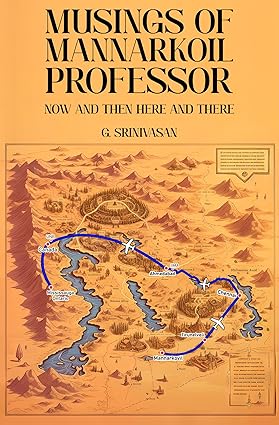
Musings of Mannarkoil Professor is a delightful collection of autobiographical essays by G. Srinivasan, a retired academic who traces his journey from a temple village in Tamil Nadu to a fulfilling professional life in Canada. The book skips across time and place with warmth, humor, and surprising insight, offering personal tales that touch on family, education, cultural identity, and the everyday absurdities of life. From playful musings on spelling and name pronunciation to deeply rooted reflections on migration and belonging, Srinivasan stitches together a life story that feels both intimate and quietly epic.
Reading this book felt like chatting with a wise, well-traveled friend who always has something interesting to say. The author’s recounting of being mistakenly addressed as everything from “Spinivasan” to “Scinivasan,” a result of bureaucratic misinterpretations of South Indian naming conventions, was both humorous and revealing. These anecdotes not only elicited genuine laughter but also prompted reflection on how names encapsulate identity, geography, personal history, and the enduring influence of colonial languages. Particularly memorable was his wry response to those inquiring about the pronunciation of his name: “Please don’t. I am alive.” It is uncommon to encounter a writer who so seamlessly blends self-deprecating wit with insightful commentary.
The childhood recollections are rendered with a poignant nostalgia that remains measured and never overly sentimental. The vividness of his descriptions evokes a tactile sense of the era; one can almost feel the cool surface of a slate or hear the distinctive tickticki of the itinerant barber’s clippers. His attention to detail, whether it is feeding pencil shavings to a peacock feather or applying ivy gourd leaves to a slate for their supposed medicinal properties, imbues everyday moments with remarkable vitality. These memories are layered with emotional nuance, effortlessly shifting the reader from quiet amusement to unexpected poignancy. His account of his mother calmly examining a cracked slate and pronouncing it fit for another year of use encapsulates both the affectionate pragmatism and quiet discipline that characterize life in a large, traditional Indian household.
What stood out most to me was how the author seamlessly connects the dots between the personal and the cultural, especially in the later chapters. His story about selling used notebooks to sweet vendors and then getting those same pages back as food wrappers was not just funny, it was such a vivid snapshot of frugality, circular economy, and childhood ingenuity in small-town India. An intimate knowledge of Tamil Nadu is by no means a prerequisite to appreciating his narrative. His storytelling possesses a rare generosity, inviting and inclusive, it resonates across cultural boundaries.
Musings of Mannarkoil Professor is a lovely, gently funny, and surprisingly profound read. It’s perfect for anyone who enjoys memoirs, especially those filled with culture, wit, and old-school charm. If you’ve ever migrated, struggled to explain your name, or just reminisced about the weird tools of your schooldays, this book is for you. I’d especially recommend it to diaspora readers and South Asians of all ages. Anyone with an appreciation for well-crafted narratives imbued with warmth and humor will find much to admire in this work. Though now retired, the professor’s storytelling remains as compelling and incisive as ever.
Pages: 161 | ASIN : B0F757C98J



 LITERARY TITAN