Blog Archives
Peernovation 365: A Practical Guide and Workbook for Building Peer-Sustained Performance


Peernovation 365 is a practical workbook that tries to turn the ideas of Peernovation into a daily system for teams, not just a one-off training. It explains the “performance paradox,” treats peer influence as the hidden engine of culture, and then lays out the 3–6–5 structure of three core dynamics, six long-term outcomes, and five conditions that keep the system running. The middle sections move from concepts like the Learning–Achieving Cycle, intentional and collateral learning, and the Servant Leadership Triad into tools such as scorecards, behavior trackers, and detailed Practice Labs, and the final chapters focus on rollout, internal facilitation, and readiness surveys, so the approach becomes part of how the organization works over the whole year.
Reading it, I felt a mix of relief and urgency. Relief, because the book says out loud what many leaders quietly feel, that effort, programs, and software do not stick if peer expectations stay the same. Urgency, because the argument that peer norms are the real operating system feels accurate. I liked how clearly the performance paradox is framed and how the three dynamics fit together, especially the Learning–Achieving Cycle and the simple loop diagram, with learning, sharing, applying, achieving, and celebrating all linked in one circle. I also appreciated the distinction between intentional learning and collateral learning, shown in the yin-yang image in Chapter 3, since it made me look at every meeting as a kind of quiet culture class where people learn how safe it really is to speak.
The tone is calm and respectful, and the author speaks in straightforward language that stays away from hype, which I liked. The workbook style uses plenty of repetition and bullet points, which made it easy for me to move quickly through the reflective questions while still recognizing how useful they were. The diagrams, such as the Servant Leadership Triad, are clear and help fix the ideas in my head, and the Practice Lab section later in the book, where real work becomes the “curriculum,” felt very concrete and energizing for me.
I see Peernovation 365 as a serious tool set rather than a casual leadership read. I would recommend it to team leaders, HR partners, internal facilitators, and peer-group organizers who are ready to do deliberate work over many months and who want a shared language for learning, accountability, and psychological safety. For a leader who wants to turn “we should work better together” into an actual rhythm of meetings, labs, and habits, this workbook feels like a critical tool.
Pages: 140 | ASIN : B0GGT76MYP

The Irrelevant Old Brand
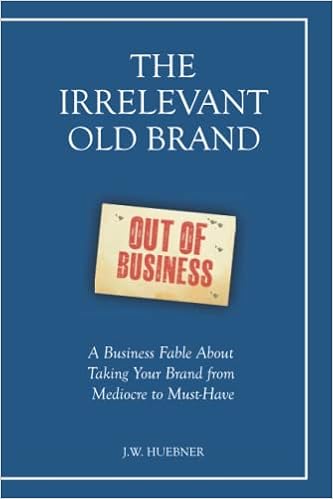
In The Irrelevant Old Brand, J. W. Huebner shares tips on running a business, staying relevant, and maintaining the top position. The author has tips for everyone, whether small, medium-sized, or large businesses. J. W. Huebner has demonstrated his experience in branding and marketing, and through his work, one can conclude that he is an expert in the industry. The advice the author gives, the examples he writes about, the challenges he discusses, and the solutions he offers all apply to business owners and individuals in entrepreneurship.
The book follows the story of a fictional company and its CEO Bob. The narration and flow of the story are impressive; it almost feels real. J. W.’s creative writing skills are revealed through the story of Bob. In the tale, Bob owns a manufacturing company which at some point starts becoming irrelevant, as almost every department of the company is dying. The sales numbers were not looking good, margins shrunk, and the company was also having problems with the bank, among other issues. Bob was in a difficult place and a miserable phase in his life. So, what to do? Enter Peter, a consultant who is good at his job. From the story, every company needs a Peter as he is the man that can bring back to life a company that is considered dying.
The fictional story helps the reader better understand what J. W. Huebner is talking about. In addition, the story of Bob helps give perspective and even makes the discussion more relatable. Having a tale to help the reader comprehend what the author wrote about was intentional and a significant element in The Irrelevant Old Brand.
This book has a different appeal from other books that discuss branding and marketing. The author’s narration style, his breaking down of technical terms, and the inclusion of real-life happenings are commendable. In addition, J. W. Huebner knows how to relate with his readers and further engage them on various topics.
The Irrelevant Old Brand: A Business Fable about Taking Your Brand from Mediocre to Must Have is a short book full of gems. This educational book has multiple lessons on entrepreneurship and running a company. The most crucial lessons I learned were customer relations, brand positioning, financial planning, value addition, marketing, employer-employee relations, cutting costs, and other important subjects. By the end of the reading, you will have learned how to switch from being a dull brand to standing out among your peers in the market.
Pages: 188 | ASIN : B0BGJPNTK8
The Leadership Quotient

In The Leadership Quotient: Practice Meets Theory, the author provides an in depth examination of the qualities of a leader, explains how to be the best leader, helps readers deal with different characters, and shows readers how to apply their intelligence in their quest to guide others. Author Tony Marolt is well versed in matters of leadership and he is detailed when expounding on topics that are not familiar to many. Every topic in this enlightening book is well-researched and well-written. The author does not write based on assumptions; he uses facts and experiences.
The author starts by explaining the various quotients that a leader needs to have. Tony Marolt writes about Intelligent Quotient (IQ), Emotional Quotient (EQ), Action Quotient (AQ), and Decision Quotient (DQ). The author explains how crucial each of these quotients are for a leader, and how they should balance. I really enjoyed the discussions on AC and DQ as I found it most relevant to me personally. I especially appreciate how clear the author was when discussing those terms, given that they are not as known or observed as IQ and EQ. The author’s description of Action Quotient was apt and learning about Decision Quotient was fulfilling. The author advises readers on how to behave as a leader, and what to display to those that are looking up to you. Are you required to say yes, no, or maybe? The reader is enlightened on making decisions and how to respond when faced with a dilemma.
As a reader, you get immersed in the world of leadership, get exposed to the challenges those in positions of power face, and even gauge your leadership skills. The author is practical and knows how to engage his audience. As you read every chapter, you get to connect with the author on different levels. The author shares lessons that will help you become a leader and grow in whatever capacity of leadership you have.
My favorite part of the book was the tips shared and the exercises. Tony Marolt also shares his experiences while in the Navy and in corporate life. The author’s stories are enlightening, entertaining and carry with them substantial life lessons. My biggest takeaway from the author was how to take charge of your environment. I learned that you can control a situation even as an individual who is not in a leadership position.
This book is the ideal guide for individuals that are aiming to be leaders in both small and big positions. Are you looking for a management position? Do you want to head your department? Do you want to earn more respect as the head of your family? Tony Marolt has all the answers for you. With practical guidance and actionable tips The Leadership Quotient is the decisive guide that prospective leaders need.
Pages: 132 | ASIN: B093L5MJSB


