Blog Archives
Lunch Tales: Teagan


From the very first page of Lunch Tales: Teagan, I was pulled straight into Teagan Quinn’s world. The book begins with warmth, ease, and a glimpse into a contented life, marriage, motherhood, and family. Then suddenly, that life is shattered. Her husband dies in a freak accident, and we follow her through the crushing grief that follows. We see her try to put one foot in front of the other. There’s love, loss, friendship, heartbreak, and a tentative hope that life can still hold beauty, even when it feels like the world has gone cold. The story unfolds through Teagan’s eyes as she faces widowhood, single motherhood, and the slow, painful path toward healing.
Reading this felt like listening to a friend spill her heart. Teagan’s voice is honest. Author Lucille Guarino doesn’t palliate grief. It’s raw, messy, and stretches out longer than you’d think. What I loved most is that she doesn’t turn Teagan into a saint. She’s angry. She’s tired. She lashes out. She feels selfish. She feels broken. But she keeps trying, and that’s what makes her feel real. The writing is clean, almost conversational. At times it’s quietly poetic, but mostly it’s grounded, warm, and intimate. And while the story could easily slip into melodrama, it doesn’t. The emotions feel earned. I laughed. I cried. I caught my breath in parts. There were scenes I had to reread just to sit with the weight of them.
What surprised me was how much I came to love the side characters. Suellen, Bridget, even Luke. Everyone felt like someone I’d met in real life. The friendships, especially among the lunch moms, were such a balm. They held her up when she couldn’t stand. And while there’s a flicker of new romance by the end, it’s not rushed or forced. It’s more like a door left slightly open. The book isn’t about moving on. It’s about moving forward. There’s a big difference. And Guarino nails that. She doesn’t give us a fairytale. She gives us the slow, stumbling rhythm of real healing.
I’d recommend Lunch Tales: Teagan to anyone who’s ever had to start over when they didn’t want to. It’s a gentle, moving story for readers who crave depth and feeling over plot twists and speed. I found that the book reminded me somewhat of The Light We Lost in its raw emotional core, and it had echoes of Still Me with its theme of rebuilding life, though it carries a gentler, more hopeful tone overall. I think this book is for women who understand how complicated love is. And how precious.
Pages: 288 | ASIN : B0FR582BPJ

Connection vs Performance

The Influencer’s Canvas follows an elite nail artist from London who is invited to an exclusive Maldives retreat for elite creators, where, while she does their nails, she documents their hidden lives. I think this original idea is intriguing. How did you come up with this idea and develop it into a story?
The idea came directly from my work. I’ve been doing nails for influencers and celebrities in London for years, and there’s something about the intimacy of that process: having someone’s hands in yours for an hour whilst they’re away from their cameras. That’s when people drop their guards completely. I started noticing this pattern. Their online personas were completely different from who they became during our sessions.
X, my nail artist character, first appeared in Polished Edges as someone who collects these unguarded moments. When I was developing her story arc, the Maldives retreat setting felt natural because I’d heard about these exclusive influencer events where the performance pressure is even more intense. The isolation, the competition, the need to create content even whilst supposedly relaxing: it creates the perfect pressure cooker for masks to slip.
The lives of social media content creators are intriguing, as is their die-hard followers’ obsession. What aspects of the human condition do you find particularly interesting that could make for great fiction?
The performance of authenticity fascinates me. We’re living through this moment where being ‘authentic’ has become a brand strategy, where people curate their vulnerability for maximum engagement. There’s something deeply human about our need to be seen and loved, but social media has commodified that need.
I’m drawn to characters caught between who they are and who they think they need to be to survive. The influencers in my book aren’t villains; they’re people trapped in a system that rewards them for turning their lives into content. That tension between genuine connection and strategic self-presentation feels universal now.
I found this novel to be a cutting piece of satire. What is one thing that you hope readers take away from your book?
I hope they start questioning the difference between connection and performance in their own lives. The book is satirical, but the real target isn’t individual influencers: it’s the systems that turn human relationships into metrics.
If readers think more critically about what they consume online and what they share themselves, that’s success. We’re all performing to some degree now. The question is whether we can still recognise ourselves underneath the performance.
What is the next book you are working on, and when can fans expect it to be released?
I’m working on Project Mirror, which takes these themes into speculative territory. It’s about a world where beauty becomes algorithmic: people subscribe to facial features and get software updates for their appearance. My protagonist is a technician who fixes glitches in people’s neural aesthetic systems.
What unsettles me is how plausible it feels when you look at where beauty technology is heading. We’re already filtering ourselves in real-time during video calls. Neural implants for aesthetic modification seem like the logical next step.
No firm publication date yet, but I’m deep into the writing process. The research keeps making my fictional dystopia look conservative.
Author Links: GoodReads | Facebook | Website
What you’ll find insideConfessions at the manicure table
Each chapter is a fresh set of nails and a fresh secret, from burnout hidden beneath flawless French tips to crypto fraud masked by liquid-gold chrome.
High-gloss social satire with a beating heart
Picture White Lotus colliding with The Devil Wears Prada, written in micro-cinematic detail and edged with sly wit.
A thriller of algorithms and aesthetics
Beneath the sunsets and “sustainable luxury” hashtags lurks Project Chimera, an AI experiment that scores every guest’s malleability. Recommendation: neutralize or recruit.
Sensory prose that sparks the feed
Sharp dialogue, vivid color palettes, and scroll-stopping quotes perfect for BookTok or Instagram.
Perfect for readers whoScroll Instagram before they blink and wonder what is real
Devour sharp, contemporary fiction like Crazy Rich Asians and Such a Fun Age
Love luxury-world settings, moral gray areas, and plot twists that sting like acetone on a paper cut
Will the polish crack, or will the algorithm win?
The Influencer’s Canvas peels back the gel-coat glam to expose the messy, human nailbed beneath, then asks whether authenticity can survive once the cameras stop rolling.
One retreat. Two weeks. A million followers waiting.
Swipe in if you dare.
The Influencer’s Canvas


Julia Zolotova’s The Influencer’s Canvas follows the story of Miss X, a nail artist in London who moonlights as a secret observer of the influencer elite. Through her eyes, we’re pulled behind the glittering façade of social media perfection into a shadowy, often absurd retreat called Elysian Fields. The book begins with her being invited to this exclusive Maldives getaway, not as a guest but as staff, which provides the perfect cover for her ongoing project of documenting influencers’ hidden lives. As she paints nails, she extracts confessions, each one staining her metaphorical canvas. The novel is part satire, part social critique, and part psychological thriller. It starts like a sly comedy of manners and gradually spirals into something darker, with undertones of surveillance, manipulation, and existential dread lurking beneath the pastel filters and hashtags.
I found myself laughing at the sharp wit in Zolotova’s writing, especially when she skewers the hollowness of influencer culture. The exaggerations feel absurd yet somehow believable, and the sarcasm keeps the prose lively. At the same time, there’s a humanity beneath it all that surprised me. The influencers are ridiculous, but they’re also broken and vulnerable. Watching them unravel during the so-called digital detox was oddly moving. I caught myself sympathizing with characters I initially rolled my eyes at, which I didn’t expect.
There were moments when the cynicism felt relentless. Sometimes the satire veered so sharply it almost cut through the story itself, leaving me more amused than invested. But then a line of vulnerability or fear would slip in, and I’d be pulled right back. The pacing was also unusual, swinging from slow, detailed observations to sudden bursts of drama. At first, I thought it was uneven, but eventually I realized it mirrored the chaotic rhythm of online life, the lulls, the surges, the constant undercurrent of performance.
The Influencer’s Canvas is clever, biting, and unexpectedly tender. It’s a book for anyone curious about the machinery behind the glossy feeds and hashtags. I’d recommend it especially to readers who enjoy satire with teeth, people fascinated by social media’s impact, and anyone who likes their fiction served with equal parts glamour and grit.
Pages: 104 | ASIN : B0DFX3Q3VC

The Arch Mage

The Arch Mage throws readers headfirst into a world where alliances between light and dark are fragile, the stakes are cosmic, and the characters carry both swords and scars. This third installment of The Ebon Knight Chronicles follows Kelso, the Ebon Knight, as he navigates political tension, ancient vendettas, and his personal mission to rescue Ava, the Dark Witch, from the clutches of her own twisted sister. The book moves between tense councils, brutal fights, and moments of raw emotion, all under the looming threat of “the Other,” a force bent on total annihilation. Author James Wood layers the story with intrigue, moral compromise, and supernatural spectacle, making it an intense continuation for fans of the series.
I found myself pulled in by the emotional core of Kelso’s quest. His determination to save Ava isn’t dressed up in noble sacrifice; it’s gritty, stubborn, and rooted in a deep bond that feels real. The interplay between factions, Furies, Ghouls, Knights, and Sorcerers crackles with personality and danger. Wood writes action in a way that feels immediate but never hollow, and his dialogue gives the characters teeth. The politics sometimes tangle so thickly that I had to slow down to keep track. The number of factions, titles, and power plays might be overwhelming for a casual reader, but for someone invested in the world, it’s a feast.
What impressed me most was how unflinching the book is about its darker moments. The villains aren’t cartoonishly evil, they’re intelligent, cunning, and terrifying in ways that feel disturbingly plausible. Jesslyn, in particular, is written with a level of menace that made me genuinely uneasy. At the same time, there’s room for humor and warmth, especially in Kelso’s interactions with his dog and his begrudging banter with his cursed sword, Argenta. Those moments keep the story from drowning in grimness and make the characters feel lived-in.
If you’ve followed The Ebon Knight Chronicles this far, The Arch Mage is a worthy and rewarding next step. It’s best suited for readers who like their fantasy sharp-edged, with layered characters and high-stakes conflicts that don’t pull punches. You’ll need to bring your full attention to keep pace, but if you do, you’ll find a story that is absolutely gripping. This isn’t a casual wander through a magic-filled land, it’s a march into war, and it’s well worth the journey.
Pages: 476 | ASIN : B0D32QKL7Z
JOHAN
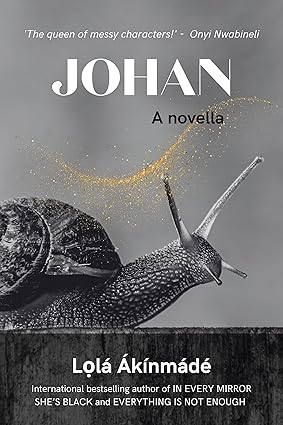
The novel follows Johan von Lundin, heir to a powerful Swedish dynasty, as he grows from a lonely, misunderstood boy into a complicated man whose desires often blur the lines between love, obsession, and control. Spanning decades, the story shows his struggles with privilege, identity, and intimacy, all while he chases Maya Daniels, the Jamaican-British girl who becomes both his anchor and undoing. It’s a portrait of a character both magnetic and unsettling, someone who wants nothing more than to be understood but rarely knows how to bridge the gap between his yearning and the world’s perception of him.
I found myself torn while reading this book. On one hand, the writing is sharp and immersive. The scenes have a way of pulling you in, whether Johan is crushing snails as a boy or running through the streets of London in pursuit of Maya. There’s a precision to the language that makes his world vivid. Yet at the same time, Johan’s mind is not an easy place to sit with. His intensity, his awkward silences, his fixation on control, it made me uncomfortable, but in that way where you can’t look away. It felt like being invited into someone’s private darkness, and part of me didn’t want to stay, but I did anyway.
What struck me most was the way the book makes you feel complicit. I kept questioning myself as I read. Why was I rooting for him in some moments when I knew his choices were troubling? Why did I feel a pang of sympathy for someone who could be manipulative and obsessive? That tension is the book’s strength. It doesn’t give you clean lines between love and possession, between care and harm. The book left me unsettled, even jittery, because it refused to give me the relief of easy answers.
I think this is a book for readers who crave complexity and aren’t afraid of messy characters who make you squirm. If you liked In Every Mirror She’s Black, you’ll appreciate how this novel expands that universe, offering Johan’s point of view in all its raw, often disturbing honesty.
Pages: 158 | ASIN : B0FJMZJ11Q
Mercy Town
Nancy Chadwick’s Mercy Town is a tender and stirring story about grief, forgiveness, and the roots that keep us tethered to home, whether we like it or not. It follows Margaret “Ret” Payne, a reporter who returns to her rural hometown of Waunasha, Wisconsin, under the guise of a journalistic assignment. As she digs into the town’s latest development project, she’s forced to unearth the long-buried trauma of her younger brother’s accidental death and confront the emotional wreckage that followed. It’s a story that swings between past and present, personal memory and community reckoning, heartbreak and healing.
Reading Mercy Town hit me harder than I expected. Chadwick’s writing is patient. Her prose breathes, settling deep into the emotional grain of things without ever rushing. She’s especially good at capturing the feel of a small town. Its rhythms, its silences, its gossip, its grudges. The scenes between Margaret and her husband Jesse are warm and believable, full of the kind of understated affection that makes a relationship feel real. And Bean, Margaret’s younger brother, is rendered so vividly in memory that his absence aches. Chadwick doesn’t just tell us what loss looks like. She lets us sit with it, wander around inside it, and see how it shapes a life.
Some scenes leaned on introspection and repetition, and the back-and-forth between timelines occasionally blurred the story’s forward motion. Still, I appreciated that the book didn’t sugarcoat the complexity of grief. Margaret isn’t always likable, and she doesn’t have all the answers. But that’s what made her journey resonate. There’s something relatable in her hesitation, in the way she avoids her pain until it corners her. The way Chadwick threads this emotional unraveling through the lens of a journalist chasing a story made for a compelling structure.
I’d recommend Mercy Town to readers who enjoy quiet, character-driven novels with emotional depth. If you’ve ever carried the weight of unfinished grief or struggled to forgive someone (including yourself), this book will feel like a gentle, persistent tug at your heart. It’s not a fast read, but it’s a worthwhile one.
Pages: 248 | ASIN : B0DVD27S8R
Search for the Summer Stone
Reba Birmingham’s Search for the Summer Stone takes readers on another wild ride in the Hercynian Forest Series, blending fantasy, adventure, and social commentary into one entertaining package. This time, Panda Fowler and her crew set off on a mission to Africa in search of the fabled Summer Stone, a powerful magical artifact. Along the way, they deal with old enemies, ancient prophecies, and their own evolving abilities. At the same time, trouble is brewing back home in Merryville, where political tensions mirror the global fight against the oppressive forces of Lupus Imperium. The book weaves magic and reality together in a way that feels both fantastical and eerily relevant.
Right from the prologue, the book plunges readers into high-stakes action. The opening scene in the Namib Desert sets the tone, immediately painting a brutal and desperate situation. I loved how Birmingham doesn’t waste time with long-winded exposition—she throws us into the deep end and lets us figure it out along the way. Panda’s narration, laced with dry humor and self-doubt, makes the journey feel personal. She’s not some fearless warrior; she’s a tax preparer who just happens to have a destiny, and that’s what makes her so relatable. Her struggle to harness her “Raven magic” is a running theme, and I found it fascinating how she doubts herself even as everyone else places their hopes on her.
One of the most unexpected joys of the book was the blend of humor and tension. The airport chase scene with Mitzi and Lulu had me laughing, especially Mitzi’s inner monologue about driving Panda’s car. It’s a testament to Birmingham’s skill that she can make moments of genuine danger feel fun without undercutting the stakes. The social conflicts in Merryville, like the protests over Virginia Merry’s statue and the “Native California Patriots” group, add another layer of depth. It’s fantasy, sure, but it also holds a mirror up to real-world issues, making the world feel grounded despite all the magic.
The emotional weight of the story resonated with me in the scenes at the Ute Reservation. Panda’s struggles with self-worth and responsibility come to a head when she trains with Ahanu, an elder who refuses to coddle her. Their interactions are some of the most powerful in the book, and it’s here that we really see Panda start to grow. The lesson about balance, how fighting evil isn’t about total destruction but about restoring harmony, felt deep. It gave the fantasy elements a deeper purpose, something more than just a battle between good and evil. I also appreciated how Valerie’s Native American heritage was explored with respect and authenticity, adding another layer of richness to the world-building.
Search for the Summer Stone is a must-read for fans of character-driven fantasy. If you enjoy witty protagonists, high-stakes magic, and stories that weave social issues into adventure, this book is for you. Longtime readers of the Hercynian Forest series will love how past characters circle back, but even newcomers will find plenty to enjoy. It’s fast-paced, thought-provoking, and just plain fun.
Pages: 235 | ASIN : B0DWLYJFYX



 LITERARY TITAN