Blog Archives
It Could Happen

The Red in the Wrong Profession follows a widowed history teacher and his 12-year-old daughter who, at the local bookstore, discover a coded message tucked inside a classic novel, leading them to a possible espionage plot. What was the inspiration for the setup of your story?
I had learned that spies left messages in some rather unusual places, back before there was an Internet and electronic ways to communicate with their handlers or with other spies. It intrigued me no end! So I thought it would be fun for my readers to have a bookstore used as a “spy drop.” Hey, Internet or no, it could still happen…
Spencer is a history teacher who ends up living inside history. How did you think about that irony while writing him?
I had a feeling someone like Spencer, who is an honorable character, even though he’s got a wicked sense of humor about the spy, Zinnia, would just love it if he became a part of history. Suddenly he’s no longer teaching about the Cold War – he’s living it, and in the best way possible, by involving his brother who just happens to be in the FBI.
Preston straddles family loyalty and professional duty. What interested you most about that tension?
There are some things that Preston is prohibited from revealing, even to his family members. And he doesn’t like that, but what can he do? I think he does a terrific job of informing his brother and niece as far as he possibly can as the three of them work together to resolve what they found out was happening regarding the spy in their midst.
The novel shows how misinformation and rumors spread through casual conversation. Was that a deliberate parallel to espionage?
It was more like I was trying to show who could and couldn’t be trusted. Quite a few characters aren’t what they appear to be. There’s certainly a lot of suspicion going on in that little town in Virginia where the story is set!
Author Links: GoodReads | X | Facebook | Website
As Preston races to decipher the message, he finds himself caught between loyalty, secrecy, and a ruthless enemy determined to unearth America’s most guarded innovations. What begins as a child’s accidental discovery soon escalates into a perilous hunt across the capital, where every page turned could expose a new betrayal.
The question isn’t just whether Preston can stop the spies—it’s whether he can do so before the next secret falls into Soviet hands, changing the course of the Cold War forever.
Say Goodbye, Misty Day
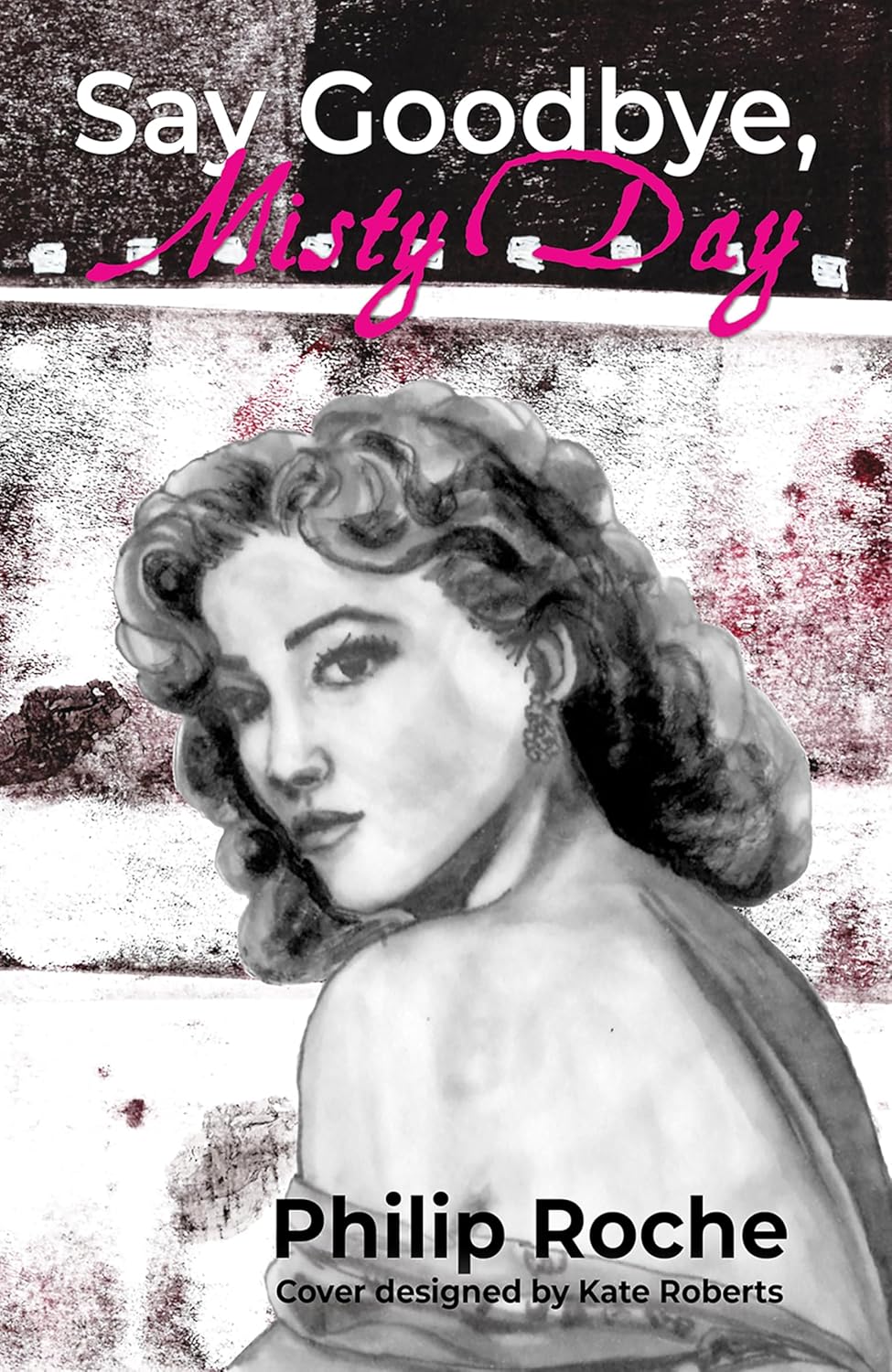

Say Goodbye, Misty Day by Philip Roche is a character-driven mystery that opens with a death already thick with theatrical melancholy. A glamorous film star, Misty Day, is found dead in a faded Yorkshire hotel, and the novel fans outward from that moment into a chorus of lives orbiting the Morning Glory Hotel. Through shifting perspectives, Roche stitches together entertainers, eccentrics, drifters, and strivers, building a social tapestry in which personal histories, buried grief, and quiet ambitions are as important as the central question of how, and why, Misty Day died.
I liked that the book seems to have an affection for its characters. The author spends time exploring them, allowing backstories to sprawl and voices to settle into their own rhythms. I found myself less concerned with narrative efficiency than with atmosphere: the tired glamour of performers past their peak, the comedy edged with sadness, the sense of lives paused in half-light. Sometimes the prose drifts, but it does so with intention, like a storyteller who knows the pleasure of taking the long way round. When the novel slows, it is usually to deepen emotional texture rather than to stall.
Emotionally, the book surprised me. Beneath its stylised wit and occasional farce lies a tenderness toward loss. Lost youth, lost children, lost chances. Some passages are blunt, even raw, particularly when grief enters the frame, and those moments ground the novel when it risks becoming overly theatrical. I admired Roche’s willingness to let discomfort stand without polish. Not every scene lands cleanly, but the sincerity is unmistakable, and that sincerity carries the reader through.
This book will appeal to readers drawn to literary mystery, character-driven crime fiction, and historical noir with theatrical flair, especially those who enjoy ensemble casts and eccentric communities. It reminded me at times of Agatha Christie’s closed-circle mysteries, filtered through the bruised humanity of a Patrick Hamilton novel. Say Goodbye, Misty Day is less about the mechanics of death than the residue it leaves behind. In the end, it feels like a slow-burning elegy disguised as a whodunit. Say Goodbye, Misty Day is a novel that mourns as much as it investigates.
Pages: 234 | ASIN : B0FYNKS2RL

Overcharged Ambition

Nether Land is a reflective true crime memoir about ambition, memory, and the friend you never stop trying to understand. You begin with Ed’s funeral and then move backward through time. Why did you choose to frame the story around memory instead of chronology?
The mind works in mysterious ways… Ed was never a friend, and only after his funeral did I discover his complicated life of overcharged ambition. Due to his need for monetary fortune and fame, he damaged so many. It seemed most appropriate to set the strange reality of what happened after his funeral with the grudge I’d held since 1972.
This book lives between memoir, true crime, and investigation. How did you decide what kind of book it wanted to be?
After Ed’s death, I was simply interested in what this fellow student did. Like peeling an onion, every new layer of his exploits was surprising, fascinating, and too frequently disgusting. This book started as a nonfiction short story, but with the discoveries and interviews, it became more intense. It took ten years to thoroughly document his misguided adventures… and I did not disclose all I found and documented. I had a personal issue to settle…. and yet, as the title says, that “resolution” was stolen.
The book openly acknowledges resentment, admiration, and confusion. How important was it to let your bias remain visible on the page?
It was essential.
What do you think writing this book changed for you, personally?
We are all products of our parents, schooling, careers, loves… I was blessed with excellent parents, so many friends, a loving wife, and great opportunities. Ed chose to go down a strange, sad, and eventually dangerous path. His needs eventually caught up with him… He had an impact on me, one reminding me to be careful…but not cynical.. and of the importance of trust, honesty, and care for others. At 72, I can look back and smile with constant gratitude.
Author Links: GoodReads | Facebook | Website | Amazon
Questions Remain Unanswered

- Genluminati follows a group of brilliant young scientists who invent a DNA-based religion as a cynical experiment—only to lose control of it when belief spreads, and a charismatic prophet emerges. Did the concept begin as satire for you, or did you always see it turning dark?
It started as an experiment as well. I was fascinated by cult and religious leaders, the power they wield over people, and what may be happening in their own hearts as events unfold, especially if they know that all they proclaim is not true. The weight of responsibility, the mental balance, and the unexpected consequences.
I didn’t know how things would turn out, but the characters started on an innocent enough path; however, power and curiosity are also powerful influences that lead to chaos.
The book asks whether belief can ever be “controlled.” What fascinates you about belief as a force?
Belief is a powerful force; it can inspire people to do amazing things they wouldn’t attempt without faith, but it can also lead people to do horrible things, including hatred, discrimination, and war. In Genluminati, I try to explore what people hungry for faith would accept and do in pursuit of their beliefs. What are the limits the “religious leaders” can cross, and what would they tell themselves?
How much did social media, viral movements, and online communities influence the story?
In Genluminati, social media helps build a community, amplify Genluminati beliefs, and strengthen its economic network. However, social media can amplify marginal social movements, synthetically foster a sense of belonging, and be dangerously exploited to manipulate and abuse people.
What do you hope readers are left thinking about once the book ends?
I would like people to think more independently about their own beliefs, not allow themselves to be manipulated. I would like people to consider the consequences of the pranks we sometimes pull, and, last, I would like us to think more about the responsibility for our own actions. I would like people to have enjoyed the thriller, but to know that, beneath Genluminati, many moral and ethical questions remain unanswered.
Author Interview: GoodReads | X | LinkedIn
What begins as a cynical experiment—a mix of curiosity, ambition, and a desire to stay connected—quickly grows beyond anything they intended. Their “innocent” idea spreads, gathering followers who take the message far more seriously than expected. A single misinterpreted “divine” insight sets off a chain of events that spirals toward real harm, forcing the founders to confront what they started and the responsibility they tried to ignore.
A story about science, belief, and the fragile line between fascination and fanaticism.
The book describes the overreaches of religious and governmental institutions that continuously endanger our ability to act as free, autonomous, and thoughtful individuals.
Terrifying and Darkly Funny

Unorganised Crime follows two down-on-their-luck publicans who make a deal with a loan shark to collect a man from the airport, but they run into trouble when he later goes missing, and they get the blame. What was the inspiration for the setup of your story?
Guy Ritchie’s early films were an enormous influence on me, especially Lock, Stock and Two Smoking Barrels and Snatch. I loved those hyperkinetic crime capers where small-time crooks blunder into big-time trouble, and everything spirals from one bad decision into the next until it all clicks into place at the end.
That style really shaped the setup of Unorganised Crime. On paper, it’s simple. Two debt-ridden publicans agree to pick up a Korean man from the airport for a local loan shark, in exchange for some debt relief. The fun is watching it unravel, because once your “everyman” characters are in over their heads, the chaos becomes the engine of the story.
Magdalena Black is unforgettable. Where did she come from, and how did you approach writing a character who’s both terrifying and darkly funny?
Thank you. Magdalena was one of my favourite characters to write. She took on a life of her own and became this intelligent, wolf-like apex predator who looms over the story like a dark, Armani-wearing cloud.
Truth be told, she started life as Leon Black, a sleazy, Hawaiian-shirt-wearing buffoon. But in a very male-centric cast, Leon never quite landed, and I realised I needed a bigger presence for the story’s main villain. It clicked after I saw Australian comedian Morgana Robinson on Taskmaster. Morgana has this perfect mix of beauty, elegance, intelligence, and, most of all, Aussie spunk that suited a character like Magdalena Black. I rewrote the character from scratch, gave her a posh voice and privileged upbringing, and Magdalena was born. The humour comes from how calm and practical she is. She treats intimidation like admin, which makes her both terrifying and darkly funny.
The book balances genuine danger with laugh-out-loud moments. How do you walk that line without undercutting the stakes?
Plotting and editing are my best tools for keeping that balance. With so many intersecting storylines, Unorganised Crime has to be tightly structured, otherwise the tension falls apart. The comedy works best when the stakes are real, and the humour comes from character, not from undercutting the danger.
A lot of it comes down to pacing. Sometimes it’s as simple as swapping the order of scenes, easing off the pressure with a lighter moment before ratcheting things up again. Editing is where I find the line. I have cut plenty of jokes that dragged or slowed the story down. Less is more, and if I can get a genuine laugh every few pages without losing momentum, I know I’m close.
Do you see more stories for Jack and Hung—or others in this world?
Absolutely, assuming my brand of quirky, darkly comedic crime capers finds its audience. I would love to keep exploring this world, and I’m especially drawn to an anthology approach, a bit like the Fargo television series. Different cities, different time periods, different crews of misfits making terrible decisions, with Easter eggs and recurring characters connecting it all together.
I would also love to revisit Jack and Hung down the track, a decade or two after the events of Unorganised Crime, and tie up a few loose ends.
Author Links: GoodReads | Facebook | Website | Amazon
On Australia’s glittering Gold Coast, two small-time publicans owe money to the wrong woman. Magdalena Black doesn’t offer lifelines … she deals in shackles.
To keep their pub afloat, Jack and Hung agree to do her one simple errand: collect a mysterious Korean man from the airport.
But when their passenger vanishes, the debt-ridden pair are suddenly prime suspects in a kidnapping they didn’t commit. Cue a violent chain reaction of Korean gangsters, bent detectives, and Melbourne hitmen … each more ruthless and ridiculous than the last.
Bodies fall. Tempers flare. Beer spills. And Jack and Hung are running out of luck on the Glitter Strip.
Darkly comic, fast-paced, and brimming with double-crosses, Unorganised Crime is Aussie noir in the vein of Guy Ritchie’s ‘Snatch’ and Elmore Leonard’s sharp-tongued crime capers. Perfect for readers who like their crime fast, funny, and unapologetically Australian!
It Feels Personal

The Stanton Falls Mysteries: Promotion to Peril follows the newly appointed Police Chief and his team as they navigate the murky waters of corruption and injustice. Why did you choose to tell this book as three interconnected short stories rather than a single continuous mystery?
I chose three short stories because the trouble in Stanton Falls doesn’t show up all at once. It comes in pieces. Each story lets the new Police Chief face a different problem, and together they show how the corruption connects underneath it all. Breaking it up kept the pace tight and let me focus on one challenge at a time while still building the bigger mystery.
What drew you to exploring betrayal from inside the system?
Betrayal inside the police force hits harder than anything coming from outside. When the people who are supposed to protect and serve the town become part of the problem, it changes everything. It forces the Chief to question who he can trust and how deep the damage goes. That kind of betrayal affects the whole community, and that’s why I wanted to explore it.
What aspects of small-town life make it effective for exploring secrets and corruption?
Small towns are perfect for stories about secrets because everyone knows everyone, or thinks they do. People have long memories, old grudges, and close ties that make problems harder to spot and harder to fix. When something goes wrong in a place that close‑knit, it feels personal. Secrets spread quietly, loyalties get messy, and corruption can hide in plain sight.
Can you tell us more about what’s in store for Stanton Falls and the direction of the third book?
The third book, Undercurrents of Betrayal, came out last year. I held off on releasing Promotion to Peril for a while because the cover wasn’t finished, but once that was taken care of, the book was ready. This story takes Stanton Falls in a new direction with a fresh storyline. I didn’t want to repeat the same conflict fromPromotion to Peril. I wanted to show how the town moves forward and how new problems can rise up even after old ones are settled. There are new characters, new challenges, and a different kind of trouble working its way into the town. It opens the door to the next phase of Stanton Falls and shows that the town still has plenty of secrets left to uncover.
Author Links: GoodReads | Facebook | Website | Amazon
In the quiet town of Stanton Falls, danger lurks beneath the surface. Chief Dan Ross and his dedicated team are back, determined to bring justice to those who have wronged the innocent.
When Chief Ross’s home is ravaged by a mysterious fire, the stakes are raised. As the team delves deeper into the investigation, they uncover a web of deceit and corruption that threatens to engulf the entire town. With unwavering support from each other, they must navigate a perilous path to uncover the truth.
As secrets are revealed and alliances are tested, Chief Ross and his team face their most challenging case yet. Will they be able to bring the culprits to justice, or will the darkness of Stanton Falls consume them?
“Promotion to Peril” is a gripping tale of suspense, loyalty, and the relentless pursuit of justice. Join Chief Dan Ross and his team as they battle against time and treachery in this thrilling continuation of the Stanton Falls Mysteries.
Genluminati

D. T. Levy’s Genluminati is a nervy “what-if” thriller disguised as a confessional novel. What if a handful of clever, disillusioned grad-school types decided, half as satire, half as experiment, to manufacture a faith based on science, and then discovered that belief is a force you don’t get to control once you’ve unleashed it?
The story is framed by Matt, the narrator, hiding in the Mayan jungle in Chiapas, running a small B&B, and trying to write down everything before the past catches up with him. This structure works well. The jungle calm gives the book a haunted stillness, and Matt’s voice, at once analytical and self-justifying, keeps the reader in that uneasy space between confession and rationalization.
At the center are five friends whose intimacy becomes both their strength and their blind spot. The early chapters capture the particular chemistry of smart young scientists who feel allergic to inherited dogma, bonded by private jokes and a shared disdain for proselytizers. That anti-religious posture isn’t just characterization, it’s the novel’s ignition source. Their contempt for fanaticism curdles into a challenge: if people will believe anything, why not prove it?
The spark comes after they encounter protests outside a research institute: anti–stem cell rhetoric mixed with mystical claims about souls, punishment, and “reincarnated scientists.” From there, in a boozy, half-serious brainstorm, Matt blurts the idea that becomes the book’s central sin: “We should create a new religion… A religion based on scientific data.” The author nails the moment when irony crosses into commitment: everyone laughs, but the laughter is the mask that lets them move forward without admitting what they’re doing.
As a concept, I think Genluminati is deliciously contemporary. A pseudo-spiritual path built on DNA as scripture, with techniques that blend meditation, chanting sequences, and guided fantasy, self-help language with a biotech sheen. The novel’s best satirical bite comes from how plausible the packaging feels. The author understands that modern devotion often arrives wearing the costume of wellness, optimization, and insider knowledge.
But the book refuses to stay a satire. Once Daniel is in the mix, the project gains the one ingredient that turns a movement into a religion: a charismatic figure. The text makes his function explicit; he becomes “Our Guide,” the “Spiritual Leader,” the centerpiece of gatherings marketed to followers hungry for an embodied authority. This is where the story’s interpersonal dynamics matter. Emma and Daniel appear as a couple for a time, and that relationship becomes a fault line inside the founding group. Meanwhile, Ben’s long-simmering love for Emma and Daniel’s possessive reaction create a pressure-cooker atmosphere that threatens not just friendships but the stability of the religion itself.
I think the author’s sharpest insight is that power doesn’t only corrupt through greed. Here, the founders insist they aren’t driven by ambition. They claim it began as “a confrontation against fanaticism… a joke, to see how far people would go, how far we would go.” That “how far we would go” is the chilling part. The experiment becomes a mirror, revealing their own appetite for influence.
And then come the consequences. The book’s darker, more urgent second life. Daniel begins to believe his role on a deeper level. Matt and the others start talking about him as someone who thinks he’s a prophet, and the group’s fear shifts from embarrassment or exposure to real-world harm. Matt voices the dread plainly: it’s not only about Daniel’s mental health, but what he might do “with his followers.”
That fear culminates in an extreme act: they remove Daniel from the movement, effectively holding him in captivity, with the stated aim of protecting him and protecting the public from him. The ethical knot here is the novel’s most provocative tangle. The founders started by playing at gods of meaning; by the time they’re isolating their own “prophet,” they’ve drifted into the logic of authoritarian control, deciding who gets freedom, who gets silenced, and what risks justify coercion. Even their strategic calculus has an eerie realism: will Daniel’s disappearance weaken the faith, or make him a martyr and strengthen it?
The book also widens its lens to show collateral damage. Followers spinning theories, offices overwhelmed by calls, people unsure how to proceed without someone “dictating the agenda.” In other words, belief doesn’t evaporate when the founders panic. It mutates, decentralizes, and keeps moving.
Genluminati succeeds most when it leans into that escalation from witty premise to grim inevitability. The friendships feel textured and messy, the Boston-to-jungle framing gives the narrative urgency, and Daniel’s transformation into a focal point of devotion is handled with believable menace. The novel sometimes explains its themes as directly as it dramatizes them. Matt can be self-aware in ways that smooth over ambiguity. Still, that’s also consistent with a narrator trying to justify himself while confessing.
Genluminati is a cautionary tale for an era addicted to viral ideas. You can invent a religion as a prank, but you can’t prank people into believing. Belief is already waiting for a container. Levy’s five friends build that container, and the novel’s sting comes from watching them realize, too late, that they’ve built something that can build back. If you like the morally fraught, idea-driven suspense of Dan Brown’s The Da Vinci Code, the philosophical sci-fi edge of Blake Crouch, or the cultish social unease of Dave Eggers’ The Circle, you’ll find Genluminati a smart, darkly propulsive read, and an easy recommendation for anyone drawn to stories about belief, influence, and the dangerous consequences of playing with power.
Pages: 480 | ASIN : B0FZ998JBT
On the Brink—Chaos and Mayhem at the Office

On the Brink is a coming-of-age business novel that follows Dave Powers from a sharp, restless childhood into the pressure cooker of adult ambition. The book traces how early trauma, raw intelligence, and a hunger to succeed push Dave toward entrepreneurship, first in scrappy childhood schemes and later into the unforgiving world of advertising and office politics. It is a story about momentum. How one choice leads to another. How talent can open doors, but character decides what happens once you step through them.
What struck me first was how readable this novel is. Sisti’s writing moves fast and clean, especially in the early chapters. Scenes from Dave’s youth feel grounded and vivid without trying too hard to impress. The fireworks episode, in particular, does a lot of heavy lifting. It is funny, tense, and quietly revealing. You see Dave’s instincts for business forming alongside his blind spots. Sisti has a knack for showing lessons instead of announcing them. When authority figures step in, especially Dave’s father, the moments feel earned rather than preachy. That balance is not easy to pull off.
As the book shifts into adulthood, the tone darkens in a natural way. The office becomes its own kind of wilderness. Less predictable than the woods and far more punishing. I appreciated how author Michael Sisti portrays work culture as something that can shape you or slowly grind you down, depending on how aware you are. There is humor here, but it is the kind that comes from recognition rather than jokes. If you have ever watched a smart person underestimate the emotional cost of ambition, this will feel familiar.
On the Brink feels like a blend of business fiction and a classic coming-of-age story, with a strong autobiographical pulse running underneath. I closed the book feeling like I had spent time with someone who wanted to tell the truth about success, not just celebrate it. I would recommend this novel to readers who enjoy character-driven stories about work, ambition, and personal growth. I think it is especially well-suited for aspiring entrepreneurs, young professionals, or anyone curious about how early life shapes the way we move through the adult world.
Pages: 307 | ASIN : B0DM2V1WBD



