Blog Archives
Journey Into Romance

A Is for Amy follows a widowed mother of three who stumbles back into romance, desire, and selfhood through a chaotic alphabet of flirtation, exhaustion, and second chances, discovering that opening your heart again is both ridiculous and necessary. What was the inspiration for your story?
I wrote this novella when my two youngest children were under 3. Though I loved being a parent, I felt my prior self was completely submerged in the care of my kids. So, I decided to write something quick with a big heart, something for grown-ups to explore. A journey into romance grounded in the real-world of parenting young kids. I wanted to capture the economy and directness of short fiction with the ability to follow the significant development of a main character that comes with the novel.
The novella never treats motherhood as separate from desire. Why was it important to keep those parts of Amy’s identity intertwined?
She is a whole person. Her sexuality is a part of this wholeness. Her loss and suffering have affected how she perceives herself and her life. Her negativity at the beginning can be reductive and limiting. Sexuality is one way we can awaken to our true spirit. Amy is awakening in this novella.
The idea of Amy naming her life one piece at a time: Attraction, Baby Bartlette, Freedom, and Nutella, gives the structure emotional meaning. Did those specific entries arrive early, or did they accumulate through drafting?
Those are names that I choose, not Amy. Amy would see them as part of the ebb and flow of her life. They are details, not necessarily stages. They are on the cover to engage the reader. I see the cover as the beginning of the book, the beginning of the adventure for the reader. These words are welcome, mystery, and invitation. A tease if you like.
The alphabet format also makes the book look like a children’s picture book from the outside. Was that visual misdirection intentional — and what do you want a reader to feel when they open it and discover what’s actually inside?
Yes, the cover is deliberately deceptive. So parents, grandparents, and any caregivers can read the book incognito as they care for the children. The deception is clearly stated on the back cover. The inside design is quite different, too. It is for grownups. Like the story. I wanted the reading experience to be a refuge for the reader. A world grounded in the reality of parenting, but free from it at the same time. This is a book for the person every parent was before they were a parent. A place to laugh and cry and engage with a compelling character – to celebrate and suffer with her. To read not for a child, but for themselves. I hope the readers feel at their ease as they journey. My goal is to delight them.
Author Links: GoodReads | Instagram | Website | Amazon
Amy Dellaconta Franklin is an independent mother of 3 kids under 5. Her life is often exhausting and isolating. Then, one day, love comes knocking at her front door.
Amy is a sassy, charming, yet lonely young widow who unexpectedly finds herself on the path of finding love again. Surprises overturn expectations at nearly every turn in this novella, which tells the story of how a life that seemed trapped in the too-hard basket became a voyage of romantic discovery.
A is for Amy tells it fast, straight and funny. From negativity to bliss. With no fluff and no wasted words.
Do you like reading but never seem to have enough space to start (or finish) a book? Each chapter in this romancecan be enjoyed in the time it takes to drink a good cup of coffee.
This is a great gift for parents or parents-to-be. It looks like an alphabet book for children. But inside, it’s a romantic adventure for grown-ups with a surprise ending that will touch your heart.
Unspoken Signals
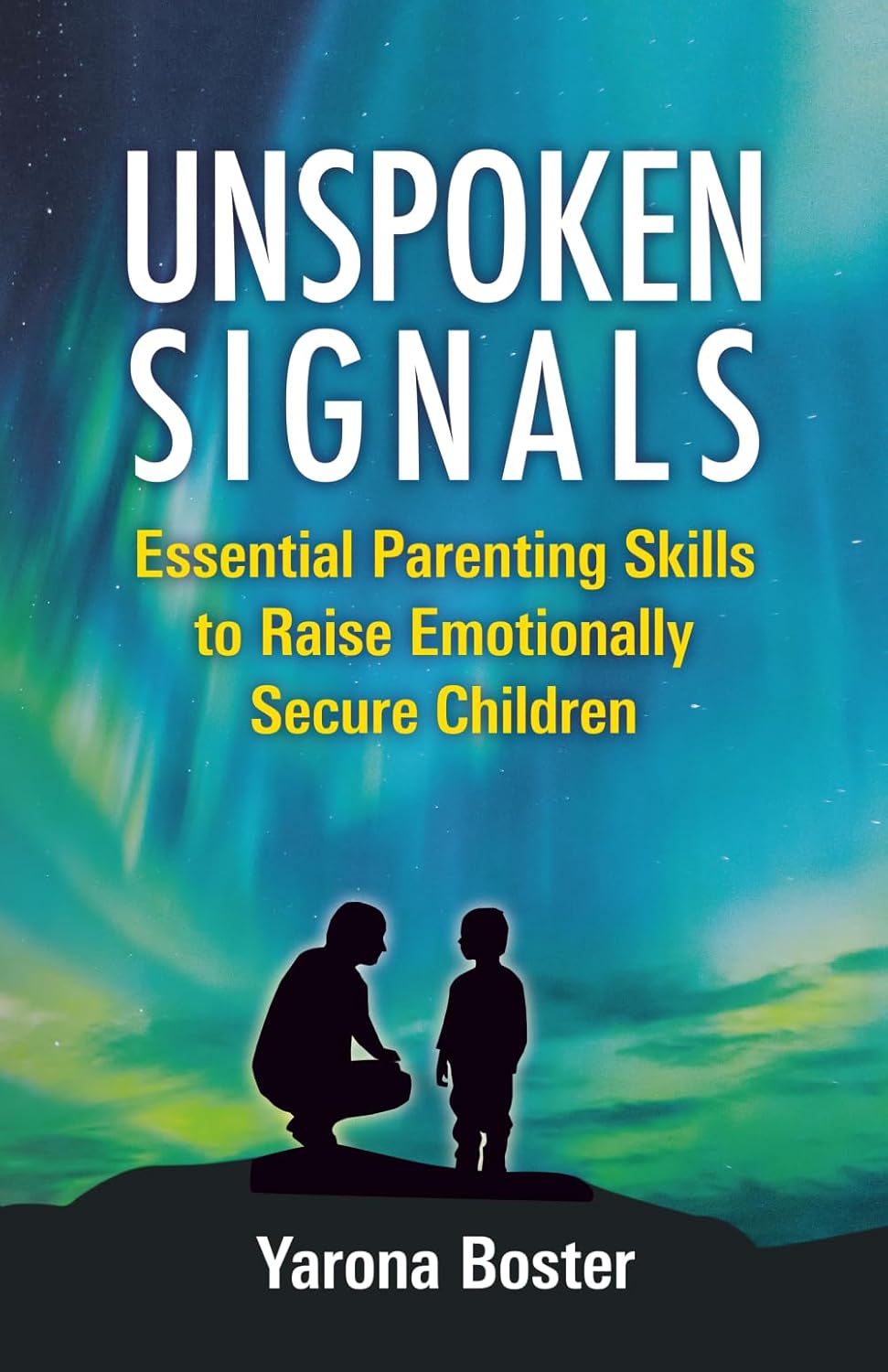

In Unspoken Signals, Yarona Boster examines parenting as a language of tone, timing, presence, absence, boundaries, and repair, arguing that children absorb far more than our spoken lessons. The book moves from inherited parenting patterns into developmental insight, then into practical frameworks such as the 3 C’s of connection, control, and competency, always returning to the same central concern: how parents can raise children who feel emotionally secure enough to become capable, resilient adults. What gives the book its shape is Boster’s willingness to braid professional guidance with intimate memory, from her father’s gentleness and trauma as a Holocaust survivor, to her mother’s volatility and pain, to her own moments with Connor, including the startling tenderness of him saying she would always be “You’ll always be here, in my heart.”
Boster is at her strongest when a small domestic scene opens into a larger emotional truth: her son echoing her impatient driving from the back seat, a four-year-old morning undone by lumpy farina and itchy clothing tags, Mateo’s joy when allowed to pour his own juice, Connor’s proud struggle to buckle his car seat, or the ridiculous sweetness of “testicles in my elbow.” These moments keep the ideas from floating into abstraction. They reminded me that parenting is rarely transformed in grand declarations. It changes in the pause before snapping, in the choice not to overhelp, in the repair after a rough exchange. I appreciated how the writing gives parents room to feel grief, shame, tenderness, and hope without turning any of those feelings into a verdict.
The ideas in the book are compassionate, but they aren’t soft in the sentimental sense. Boster’s insistence that children need both warmth and boundaries feels earned, especially because she writes from the ache of inconsistency rather than from clinical distance. I was particularly moved by the chapters on grief and legacy, where the book widens from parenting technique into a meditation on what remains after us. Her memory of wanting to call her dead mother from Arizona to talk about palm trees, and later seeing her mother’s hands in her own while holding her son, gives the book a quiet ache that lingers.
What stayed with me is the book’s humane conviction that parents don’t need to become flawless, only more awake. Unspoken Signals is a reflective, emotionally generous guide for parents who want to understand not just what their children do, but what their behavior may be asking for beneath the surface. It will be especially meaningful for parents trying to break inherited cycles, caregivers raising young children, and adults who want to parent with more steadiness than they received. I recommend it to readers who are willing to look inward while learning outward, because this is not only a book about raising children; it’s a book about becoming the kind of person whose love feels safe enough to carry forward.
Pages: 236 | ISBN : 978-1544551890

Formative Experiences

Actually Invisible centers around a gay high school teacher struggling with grief, marriage, and infertility as she faces public scrutiny following homophobic remarks from a student. Where did the idea for this novel come from?
The idea for this novel came from many of my lived experiences as a human, but particularly as a queer public school teacher. We make headlines, but our fears and daily lives are so rarely described anywhere. I wrote the book I had always wanted to read.
The novel moves between past and present in a way that lets memory actively shape the story. How did you structure that timeline?
I structured the timeline by thinking about what kinds of formative experiences could have informed Josie’s present mindset. This took quite a bit of outlining, but I wanted to make sure I highlighted that she is—as we all are—a culmination of every experience we’ve ever had. I think it also humanizes her even more for the reader.
How did you approach the school storyline and the dynamics of public scrutiny?
I took some stories I had heard about in the news and on social media and essentially combined them with the fears that sometimes kept me up at night.
What is one thing you hope readers take away from Actually Invisible?
I hope readers take away the idea that all anyone wants is to feel seen, understood, and valued. We are all on this Earth searching for those things. Queer teachers are in a unique, complicated position where that experience can be dangerous, but it’s also worthwhile to take the risk, not only for ourselves and our mental health but also for representation for our students—queer and otherwise.
Author Links: GoodReads | TikTok | Instagram | Facebook | Website | Amazon
…until a student comes out to her in a writing assignment, and she is thrust into a small-town spotlight. As the target of the student’s angry parents and a slew of anonymous threats, Josie must decide if it’s finally time to speak up for herself and risk her job, her family, and her ambivalence.
Actually Invisible

Actually Invisible is a contemporary literary novel that follows Josie Rein-Thompson, a gay high school English teacher trying to hold together grief, marriage, motherhood, fertility struggles, and a sudden wave of public scrutiny after a student’s homophobic comment turns her private life into a community issue. The book moves between Josie’s present-day life in 2019 and earlier moments from her youth, letting us see how her bond with her late father, her first experiences of desire, and her long habit of making herself smaller all feed into the woman she has become. By the end, the story brings those threads together in a way that feels earned, with Josie finding both public affirmation and a deeply personal bit of hope.
Author Elisa Greb does not try to make Josie neat or polished all the time, and I appreciated that. She is funny, sharp, insecure, loving, petty, generous, exhausted, and very believable. The voice has that intimate quality where it feels like someone is telling you the truth before they have had time to clean it up. I liked that a lot. The book is at its best when it trusts ordinary moments to carry emotional weight: a classroom exchange, a fertility appointment, a memory in a car, a glance across a room. Even when the novel gets heavy, it keeps its feet on the ground.
I also admired the author’s structural choices. The back-and-forth timeline could have felt busy, but here it works because the past is not just background. It keeps answering the present. Josie’s father is not treated like a sentimental device. He feels like a living force in the book, especially through the robin motif, which could have been too much in another novel but works here because it grows naturally out of memory, grief, and repetition. The school storyline is handled with more nuance than I expected. The novel is clearly angry about prejudice, but it is more interested in the daily wear of being made visible on other people’s terms, and in the quiet bravery it takes to stop apologizing for existing. That landed hard for me.
I would recommend Actually Invisible most to readers who like character-driven fiction, queer fiction, and contemporary literary novels that care more about emotional truth than flashy plot. It will especially speak to people drawn to stories about teachers, family grief, chosen family, and the strange mix of tenderness and fury involved in being seen clearly at last. I think readers who want a reflective, intimate novel with a steady heart will get the most from it. It is not trying to dazzle. It is trying to be honest. And for me, that honesty is exactly what gives it its power.
Pages: 298 | ASIN : B0CW1M5M7W
Scars and All


Scars and All is a hybrid of memoir, self-help, and conversational reflection, built around one deceptively simple idea: the wounds we carry can either keep us trapped in old pain or become a way of recognizing and easing pain in others. Lara Portelli opens with a stranger dropping milk in a Sydney supermarket, then follows that moment into a chain of encounters, most memorably with Helen at the Hydro Majestic, where a spilled carton becomes the trigger for a buried schoolyard humiliation, and later with Mia, whose mirror-bound self-loathing exposes how easily beauty standards colonize a woman’s inner life. From there, the book widens into chapters on self-harm, invisibility, dress size, cutting remarks, and visible scarring, always circling back to the same invitation: look at your scars honestly, then decide whether they’ll remain reminders or become a map forward.
Portelli writes like someone leaning across the table, saying, listen, this matters. At its best, that makes the book feel intimate in a way many books in this lane never do. Helen’s story, especially the awful convergence of guilt, self-harm, and the old humiliation of chocolate milk in her hair, has genuine force. So does the quieter ache of Mia asking whether she can “compete” with the women she sees in magazines, only to be told, beautifully and bluntly, “You don’t.” I also found the chapter on clothing size unexpectedly effective. The changing-room scene with the ruby-red dress is funny, a little chaotic, and painfully recognizable, which is exactly why it lands. The book is strongest when Portelli lets scenes breathe like that, when the ideas rise out of lived moments instead of arriving as instruction.
The writing has warmth, rhythm, and an unguarded sincerity I appreciated, even when it wanders into reflective detours. There are moments when the narrative shifts from personal storytelling into broader reflections, motivational language, and ideas around NLP, past life regression, and inherited trauma. Those sections didn’t resonate with me quite as strongly as the more intimate, lived scenes, though they still felt consistent with the book’s searching and deeply personal spirit. I trusted Portelli most when she was describing a room, a look, a humiliation, a sudden kindness, the soft light of Holly Difford’s photo shoot, or the raw fact of Turia Pitt refusing to let “5 seconds of pain and agony” define the rest of her life. I never doubted the sincerity underneath everything. The book’s moral imagination is generous. It wants people to be gentler with themselves and more alert to the hurt in others, and that conviction gives it a pulse.
Scars and All is heartfelt and genuinely affecting. I think it succeeds because Portelli is willing to be raw, personal, and earnest in service of a deeply human belief: that pain can enlarge us instead of reducing us. By the time she returns to the image of walking someone “to the safety of that dry space,” the book had earned its tenderness. I’d recommend it most to readers who like personal-development books with memoir blood in them, especially women navigating reinvention, self-worth, body image, or the long afterlife of emotional injury.
Pages: 96 | ASIN : B0FYNQG85V
A Father’s Presence
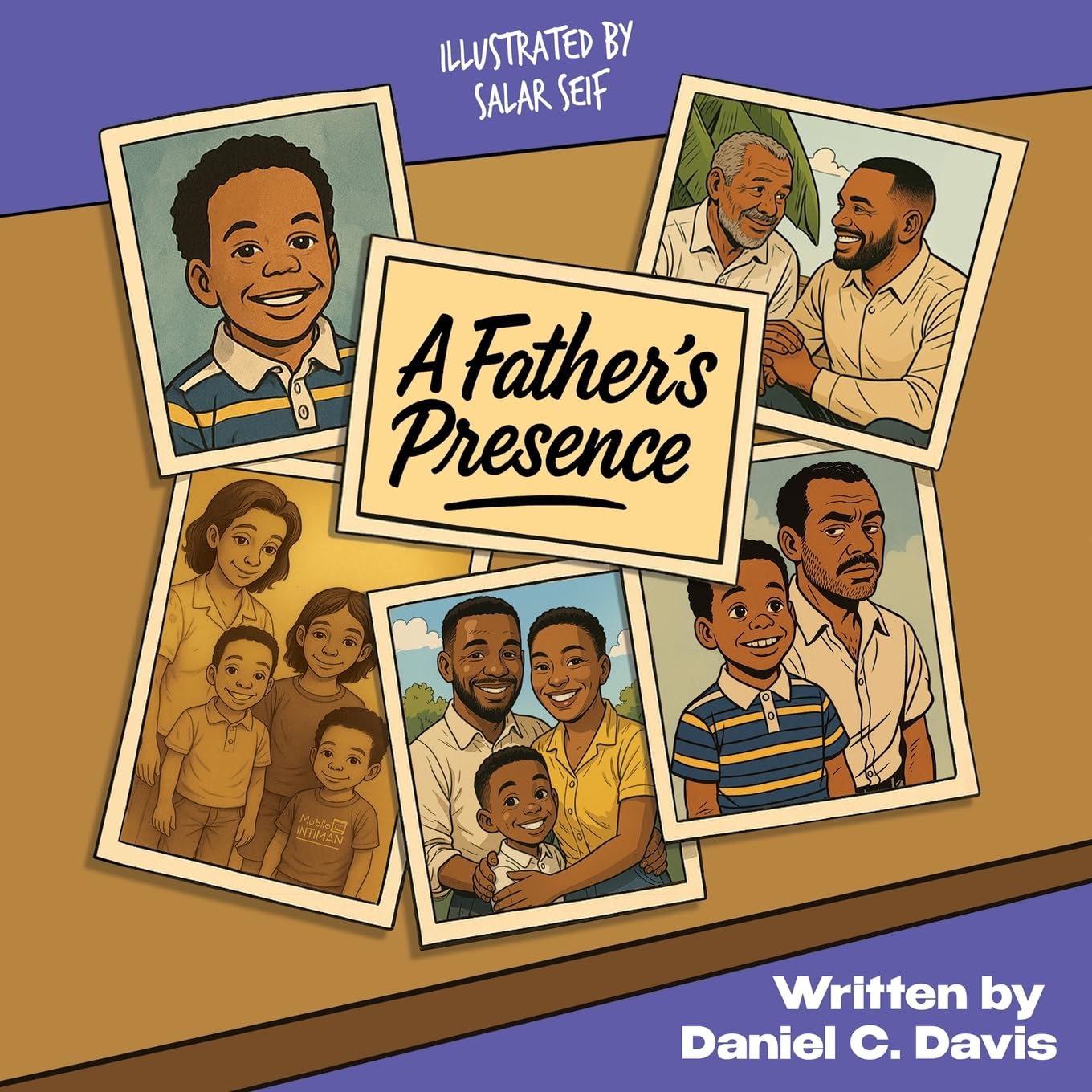
A Father’s Presence tells the story of Curtis and his father, tracing the ripples of absence that echo through generations of men learning what it truly means to “be there.” It begins with a boy whose father, though physically present, feels distant, carrying the quiet ache of growing up without his own dad. Through small, tender moments and the wisdom of mentors like a patient coach, Curtis learns how listening and empathy can heal old wounds. The story blooms into a celebration of connection, showing how one family breaks free from the heavy weight of inherited silence to build something whole and loving.
Reading this children’s book stirred something deep in me. The writing feels honest and simple, yet it cuts right to the heart. Each page carries warmth and quiet power through its words and its illustrations. The author doesn’t hide behind fancy words or big speeches. Instead, he shows us the small gestures like a pat on the head, an empty chair, a son’s whispered promise, that build and break a life. The pacing is gentle, but the emotions sneak up on you. By the end, I wasn’t just reading about Curtis and his father. I was thinking about my own family, about the times I could have listened more or spoken less. There’s something raw and comforting about that.
I loved how the book balances pain and hope. The illustrations by Salar Seif add another layer of heart, soft and sincere, helping the story feel alive. The scene where Curtis and his dad finally spoke, not as man and boy, but as two souls trying to understand each other, that scene hit me hardest. It reminded me that presence isn’t about showing up, it’s about seeing, hearing, and feeling with someone.
I’d recommend A Father’s Presence to anyone who’s ever wished for a deeper connection with their parents, their children, or themselves. It’s a picture book for fathers trying to unlearn the quiet, for sons who crave more than words, and for anyone brave enough to break old cycles. This children’s book doesn’t just tell a story. It gives you a reason to sit down, listen, and start again.
Pages: 20 | ASIN : B0FRQ28YTJ

We Can Do This Better

The Adoption Paradox weaves together your story, historical records, and interviews with nearly a hundred people from across the “adoption constellation” into an unflinching look at the industry’s ethical and emotional complexities. Why was this an important book for you to write?
I started out wanting to write a deep exploration of adoption’s emotional complexities from all sides. I’m very new to this internal awakening in my life’s journey. As an adoptee from a standard closed adoption from 1965, I had an overall good experience. As my parent’s only child, I felt loved and accepted for the most part within my family and our larger culture.
Then in 2020 with both of my adopted parents gone, I finally started to search for my birth family, which fueled the emotional curiosity that led to this work. I read books written by adoptees about their search. Then others about the birth mothers who relinquished us back in the era I was born in. What I learned shocked and saddened me. I felt this deep inner shift, and started questioning the typical storyline I’d always been fed. It was one thing to know that in ’65 my mother didn’t have the same choices I did growing up in the 1980s. It was another thing to come face to face with how badly many of these young women were treated.
There was more to tell in all of this I was sure, but I didn’t see any other books out there that had the voices and the deep research and thru lines for everyone in the adoption triad: adoptees, along with birth and adoptive parents. So, I decided to audaciously tackle that niche myself. That’s what started it all. This book is for me, in part, but my hope is that in reconciling the stories within, others find it helpful too.
What were some ideas that were important for you to share in this book?
There is no one adoption story. Ever. There are many sides, and all have this vastly diverse lived experience, even within one family. You can have an adoptee who feels completely seen and understood by the people who raise them, and another who feels isolated, lost and alone and their parents have no idea they are struggling. That’s heartbreaking. Adoption always begins with a loss, and our society completely forgets that narrative in popular culture. It’s just assumed we are lucky as adoptees, and that our families are fantastic! The truth is it’s often a mix.
There are misconceptions and oversimplifications about adoption and foster care among the general public. Adoption can heal, save lives and fulfill its potential to create a loving home for a child who needs one. But in modern times that is not generally what’s driving a relinquishment. Infant adoptions usually occur due to a lack of resources experienced by the natural parent(s). Then, understand we have allowed commercialism and an unchecked profit motive to proliferate within an industry that is responsible for the placement of children into homes. How can that possibly be beneficial for those affected or our society at large? Most people are complexly unaware of these realities. What gets lost in the shuffle of that are the needs of the adopted person. Not just as a youngster, but for their entire lives.
When we make assumptions about people, we flatten out their stories and miss the depth and nuances that are part of each and every family. I can have a good adoption story, and there is always some sadness behind it. We need to live in places of truth, both fiercely and gently with each other, and how we build or defend our families.
What was the most challenging part of writing your book, and what was the most rewarding?
Definitely stories of abuse were the hardest to hear, and it was also I think essential for those folks to feel seen and heard. Listening and sitting with them through their pain was validating for both them and me. Receiving the trust from all of those interviewed was by far the most rewarding experience.
The other bonuses have come from adoptees, adoptive parents and birth parents who unknown to me have already shared how the book has helped them feel affirmed, taught them something, or caused a shift in their mindset. They are the reason – because we can do this better.
What is one thing that you hope readers take away from The Adoption Paradox?
If parents are more informed before they adopt, their kids do better and are less likely to struggle. If natural parents and treated with dignity and fairness by our statutes then their rights are protected, because they deserve nothing less than that. My hope is the general public will understand our laws need revising and modernizing beyond the way we currently practice adoption.
In most states, we still overwrite adoptees birth certificates as part of this legal process and seal them away – inaccessible without a court order. Why can’t we create a “certificate of parentage” that doesn’t overwrite a person’s truth of who they are, where they came from, and deny them access to their medical history? Everyone in this story deserves better than these archaic systems we currently have.
I am not anti-adoption, but I am interested in our culture evolving to embrace a better future for how we practice adoption and answer the real needs of families interacting with the child welfare system. The most important thing is that we talk honestly with each other and listen. I hope my book begins and stirs that conversation. Thank you!
Author Links: GoodReads | Facebook | Website
Adoption impacts countless families worldwide, yet the voices of those directly involved—especially adoptees, the central focus of the process—are rarely highlighted. In The Adoption Paradox, nearly one hundred individuals are interviewed, from domestic, international, and transracial adoptions, as well as foster care, along with adoptive and birth parents, therapists, experts, and allies. These narratives reveal both the love and the emotional costs borne by everyone affected, exposing adoption as a complex and challenging experience. Healing is possible with the right support, but addressing adoption’s hidden issues requires activism to confront unethical practices that lack oversight. These moving stories shed light on unaddressed pain and systemic flaws, calling for a more transparent and compassionate approach to adoption.
The Adoption Paradox: Putting Adoption in Perspective

Jean Kelly Widner’s The Adoption Paradox is both a sweeping history and a deeply personal exploration of adoption in America. It weaves together her own adoptee story, historical records, interviews with nearly a hundred people from across the “adoption constellation,” and an unflinching look at the industry’s ethical and emotional complexities. From the history of orphan trains and the Baby Scoop Era to the modern foster system and open adoptions, Widner covers the many ways adoption has shaped and sometimes wounded those involved. The book moves between heart-wrenching firsthand accounts, legal and cultural context, and thoughtful calls for reform, all while acknowledging the strange dualities at the heart of adoption: love and loss, gratitude and grief, hope and harm.
I was struck by the sheer variety of voices in this book, from adoptees, birth parents, and adoptive parents. Each is speaking in their own words, often with raw vulnerability. Widner doesn’t sanitize their stories, and she doesn’t steer the reader toward easy conclusions. I appreciated her willingness to admit there’s no single truth here, no one-size-fits-all narrative. There’s a tenderness in her approach, but also a certain steel; she makes it clear that the industry needs scrutiny, and that the myths we’ve been fed, especially the “all adoption is beautiful” trope, do real harm. At times, the weight of the stories struck me deeply, but that’s part of what made the reading experience so powerful.
I also found myself impressed by the way Widner balances the historical with the personal. She’ll pull you deep into archival laws or social movements, then drop you right into a living room or hospital hallway where someone’s telling the story of the day their child was taken, found, or lost forever. The shift between head and heart kept me engaged, even when the subject matter was painful.
I’d recommend The Adoption Paradox to anyone touched by adoption, whether you’re an adoptee, a birth parent, an adoptive parent, or simply someone who wants to better understand what adoption really means beyond the Hallmark version. It’s not light reading, but it’s the kind that stays with you. This is a book for people who can hold complexity, who aren’t afraid to see the cracks alongside the light. It’s a brave and necessary book.
Pages: 487 | ASIN : B0F6X136JN


