Blog Archives
Being Present

The Caregiver’s Game is a gripping memoir and investigative true story surrounding your mother’s dementia and manipulation by caretakers that exposes the hidden realities of elder financial abuse. What first made you realize something was wrong with your mother’s situation?
The first sign I wasn’t aware of. When my mother told my sister she had a “new friend.” I blew it off. However, that seems to be a very common remark made at the beginning of these situations. I went to visit about 4 weeks after that remark. My mother’s refrigerator was stuffed. I knew that was wrong, but not living in town I couldn’t do anything about it. I just assumed the caregiver was just over-buying. I looked at my mother to ask for receipts but she said nothing. I figured, how bad could it be? That was March 2018. I visited again in Sept 2018. Nothing seemed different from my last visit.
My sister visited in Jun 2019 and told me mother was not doing well, but was acting in denial. We pushed for a doctor’s capacity determination. When that was delivered and showed my mother did not have the capacity for financial decisions, we figured that would cover any issues. Then, 10 days later, we were removed from the Medical POA. That’s when we suspected a bigger issue, but again, never thinking it was going to be this bad.
How did you begin reconstructing the financial trail?
I started about 3 weeks after my mother passed away. We found out about the new will and the annuity for the caregiver a week after her death. I was in shock. These things happen to other people, not us. Then I got mad.
I started trying to log into her broker account. I had the password previously. That had been changed, but I knew the security questions and had her old phone, which had her email account. This allowed me to fetch the bank code to set up a new password.
Once into the account, I started reconstructing the statements and pulling check copies. I wanted to see how much the caregiver was really getting paid. I also wanted to see if there were any patterns or locations that were different from where my mother would normally visit. I used a couple of reporting tools to visualize and map the shopping habits.
Next, I pulled her credit report from the Lifelock app on her phone. That’s when I saw the new department store credit card. I asked the CPA about it, and he knew nothing of it.
What are the most common warning signs families miss, and what is the single most important preventive step families can take?
I mentioned above. The person tells their family they have a new friend. Others are seeing the caregiver answering for the patient or not being able to get a hold of the person.
The most important preventive is being present in the home on a regular basis. This is what the neighbor’s daughter did. She was there every day at different times. She even set up cameras around the condo to monitor. This constant monitoring drove the caregiver to find another victim in the building.
What would you change about elder protection systems?
The process of obtaining a Guardianship needs to be reviewed. Each county can have a different experience. The one my mother was living in was known for not agreeing to them. Others nearby were easier.
The challenge is that once you are granted a Guardianship, you can make the relative very mad, and they will then remove you from the will or estate.
It was suggested to me by a probate attorney that if you see this situation going on, do not attempt a Guardianship, but just wait until they pass and address it then.
There should be a resource like FINRA.org that monitors the financial industry workers, like brokers. A centralized place to report caregivers for incidents like being removed from the caregiving agency for bad behavior. Background checks only scratch the surface, depending on what your request.
The other challenge is that most of the reporting is done by front-line workers or those within the Adult Protective Services. These resources are only as good as they are trained or the tools available to them.
Author Links: GoodReads | Amazon
The credit card charges didn’t make sense. Groceries seven times the national average for a woman who never topped 105 pounds. Hundreds at Sam’s Club five days before she died while she was housebound in assisted living, barely eating, her apartment nearly empty. The caregiver had an answer for everything. So did the lawyer. So did the bank.
Then the caregiver died. Or disappeared.
The body was the wrong weight. Seventy pounds too heavy at cremation. No obituary. No funeral. No daughters on the death certificate. A death at a hospital an hour from home, one she’d visited months earlier, driving past three closer ones to get there.
Eight days earlier, Charles Wallace had blocked a $250,000 annuity payout, the last big payday from his mother’s estate.
It started simply enough. A caregiver knocked on Joell Fleming’s door with bagels and a smile. The 78-year-old widow — sharp-tongued, fiercely independent, survivor of five marriages, let a predator inside.
Esmarelda Gomez sat in the room when the neurologist scored Joell 16 out of 30 on cognitive testing. She watched the diagnosis happen. Then the spending exploded. Within three years, nearly $1 million was gone. Children removed from medical power of attorney. A new will naming the caregiver for a six-figure annuity. Credit cards used at the caregiver’s home address twenty-five miles away the last charge the day after Joell died.
Doctors, lawyers, banks, and Adult Protective Services all missed it.
From 700 miles away, Charles Wallace spent five years pulling a decade of credit card records and building the forensic case the professionals never did. Cards that went from two declines in seven years to a 59% decline rate. Two cards cycled at the register within seconds of each other. A dual food supply prepared meals for his mother, bulk groceries for someone else’s household.
She’d done this before. An elderly man years earlier. Same playbook. Same attorney handling both victims across thirteen years. Fired from a caregiving agency for misusing client data, she kept working privately invisible to every system designed to stop her.
Then came the exit. A secluded house purchased before she emptied the storage unit. A U-Haul returned with 460 extra miles. Forty-three boxes never delivered to charity. A death at a remote hospital she’d established herself at months earlier. Eighteen months later, her executor quietly bought that house.
The Caregiver’s Game is a forensic true crime investigation and a warning for every family with an aging parent. It exposes how caregiver fraud hides in plain sight in the credit card statements no one checks, the groceries that don’t add up, the documents signed by someone who can’t understand them and it arms you with the warning signs before it’s too late.
If the charges on your parent’s credit card don’t make sense, this book will show you what to look for. And what happens when no one does.
Both a true crime investigation and a safeguard. For readers of Ann Rule and for every adult child who worries about a parent, especially the ones who think it could never happen to them.
The Caregiver’s Game: Unraveling Financial Deceit in the Shadows of Dementia
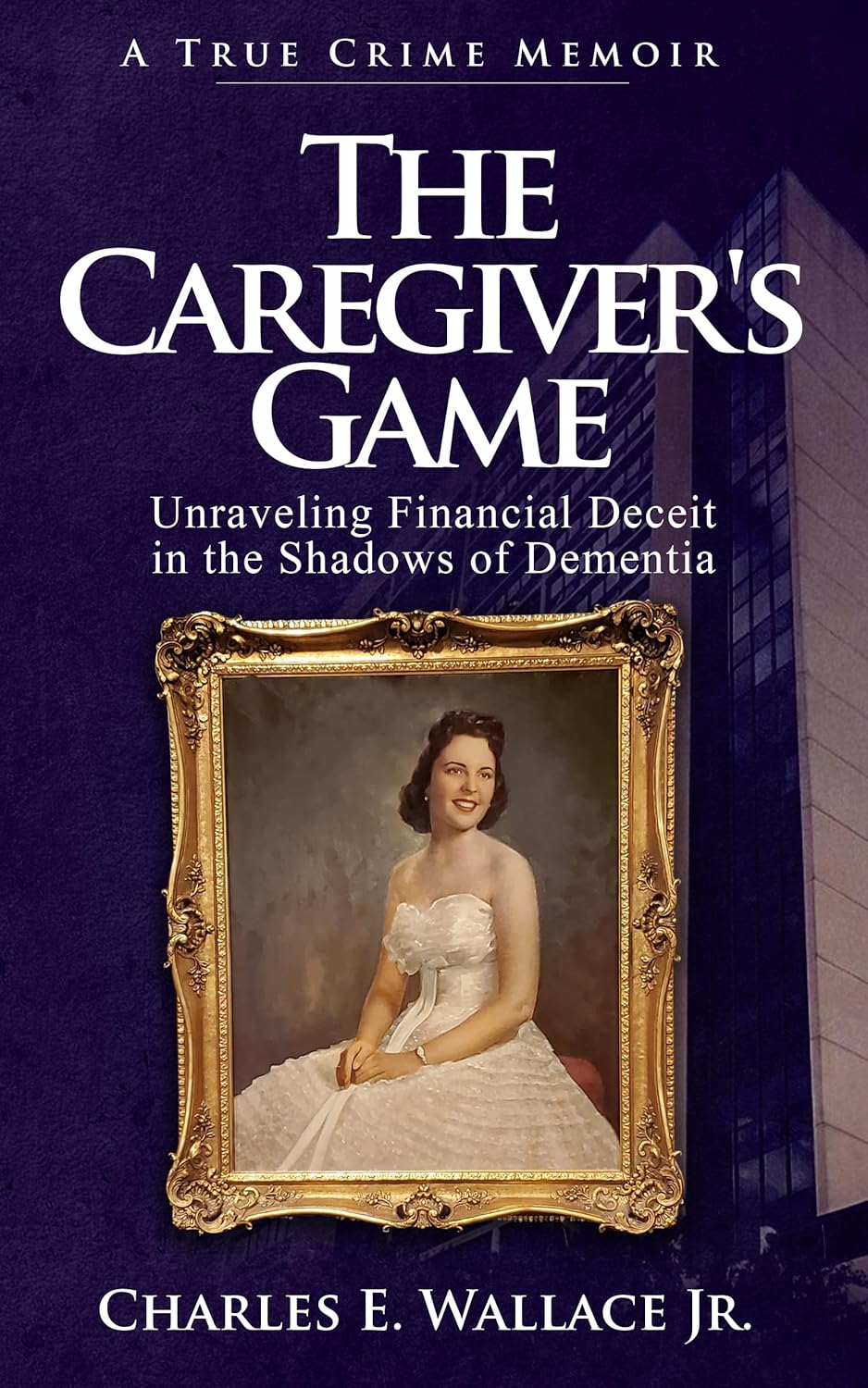

The Caregiver’s Game is a grief-soaked memoir and a warning label at the same time. Author Charles E. Wallace Jr. walks through the slow unraveling of his mother’s mind, her complicated history as a vain, often cold parent, and the way a charming caregiver and a shady doctor slid into the gaps and took over her life, her money, and eventually even her story. The book moves from family memories to the nuts and bolts of financial abuse, then lands in a more practical section that lays out concrete steps for protecting vulnerable parents from predatory caregivers and weak systems around them.
Reading it, I felt a knot in my stomach most of the time. The writing has a plain, conversational feel, and that actually made the horror land harder for me. He describes lost photo albums, empty storage units, fake diagnoses, weird “vitamin” schemes, and bank accounts bleeding out, and he just tells it straight. The emotion sits in the details. I really liked that he refuses to polish his mother into a saint. She’s vain, sharp, often unkind, and the book leans into that. That honesty made the whole thing feel more trustworthy. The narrative jumps across dates, money trails, and visits. I could feel his obsession with piecing everything together, and that energy gives the book urgency.
The core ideas hit hard, though. Dementia here is not only a disease, it is a door that opens for other people’s greed. The book shows how one caregiver, one lazy CPA, one self-serving doctor, and a slow-moving legal system can wreck a whole family’s history, not just an inheritance. I found the later chapters especially strong, when Wallace stops replaying every twist of the “game” and starts talking directly to the reader about patterns of abuse, how financial exploitation creeps in, and what he wishes he had done earlier. His practical tips on things like monitoring accounts, demanding receipts, using alerts, and always being the one who hires and fires caregivers feel grounded in pain, not theory. That mix of raw story and specific advice gave the book a sense of purpose.
By the end, I felt angry for his mother and angry at her at the same time, and also grateful that he let the messiness stay on the page. The writing is not flashy, but it feels sincere. Some passages feel slow when he works through every transaction or theory about what Esmarelda and readers who want a neat true-crime resolution, may feel frustrated, because real life does not give him much closure. For me, that unresolved feeling matched the subject. Elder abuse often never gets the big courtroom scene or tidy justice, and the book sits inside that reality instead of pretending otherwise.
I would recommend The Caregiver’s Game to adult children who are starting to see small red flags with an aging parent, to caregivers who want to understand how their role can be abused, and to anyone who works around elder care, finance, or estate planning. It’s not light reading. It stirs up fear and guilt and “what if” questions, and it might make you pick up the phone and check on someone. If you want a personal, sometimes messy, deeply felt account that doubles as a cautionary handbook, this fits that lane really well.
Pages: 245 | ASIN : B0FYCS2X9H

Protecting Mama: Surviving the Legal Guardianship Swamp
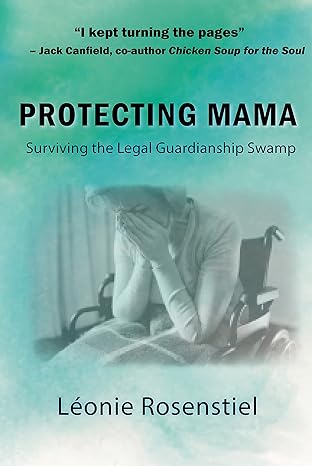
Protecting Mama is an intense, deeply personal, and often shocking memoir that dives into the murky, bureaucratic, and, at times, sinister world of legal guardianship in the United States. Author Léonie Rosenstiel shares the painful saga of her mother’s entanglement in a guardianship system that seems more interested in control and profit than care or dignity. Backed by over 40,000 pages of legal documentation and her own relentless determination, Rosenstiel walks us through years of institutional deception, family secrets, courtroom manipulation, and the emotional toll of fighting a system that feels rigged from the start.
What really gripped me was the raw, unfiltered way Rosenstiel lays out her story. This isn’t some detached legal analysis. It’s deeply human, almost unbearably so at times. The moment she describes how her mother’s guardian removed her beloved Egyptian bark paintings replacing them with photos of her abusers, that broke me. It wasn’t just a decorating choice; it was a cruel erasure of identity and comfort. Rosenstiel doesn’t just tell us what happened, she makes us feel the outrage, the helplessness, the absurdity of a system that hands so much unchecked power to total strangers. Her writing isn’t flashy or polished to a high literary shine. It’s straightforward, emotional, and piercingly honest. I wouldn’t want it any other way.
Rosenstiel also has a sharp, sarcastic edge that I really appreciated. When she fact-checks a New Mexico bureaucrat who claimed almost no one complains about the guardianship system, Rosenstiel does a quick Google search and finds millions of hits for “guardianship abuse.” That’s the kind of mic-drop moment that makes this book more than a personal story; it becomes a wake-up call. She’s done her homework, and she’s not afraid to take aim at judges, attorneys, and “professional guardians” who profit off of the vulnerable. I admired her restraint, too she never veers into conspiracy theory territory. She sticks to what she can prove, and she can prove a lot.
At the same time, this book isn’t just about a broken system, it’s about a family and all the messy, unresolved history that comes with it. I was struck by the honesty with which Rosenstiel reflects on her mother’s past and her own role in trying to untangle decades of secrecy and trauma. You can feel how desperate she was to find any way to help. That level of emotional vulnerability, combined with the bureaucratic horror show she was navigating, made this a uniquely powerful read.
Protecting Mama is a gut punch of a book. It’s not light reading, but it’s important. If you have aging parents, or if you work in law, healthcare, or elder care, this book should be required. It’s a warning, a protest, and a love letter all rolled into one. Rosenstiel pulls back the curtain on a system that thrives in secrecy and shows us why silence is not an option. For those willing to face the uncomfortable truth, Protecting Mama delivers it with fierce honesty and heartbreaking clarity.
Pages: 481 | ASIN : B09MV3XMMB
Protecting Mama: Surviving the Legal Guardianship Swamp
Léonie Rosenstiel’s Protecting Mama: Surviving the Legal Guardianship Swamp is a poignant exploration of love, loss, and the relentless pursuit of justice. When her mother falls victim to the ravages of Alzheimer’s disease, Léonie faces an arduous battle against a complex and often opaque legal system. A court-appointed guardian, shrouded in secrecy, becomes a formidable barrier between Léonie and her mother’s wishes. At the heart of this compelling narrative is the profound bond between a daughter and her mother. Léonie’s unwavering determination to honor her mother’s desire to share their story highlights their unbreakable connection. As she navigates a maze of legal and ethical challenges, the author provides a candid look at the devastating impact of Alzheimer’s on families.
Beyond the personal tragedy, the book serves as a scathing critique of the guardianship system. Rosenstiel exposes a framework often more focused on control and financial gain than on the well-being of its wards. This critique extends to the hospitality industry, where vulnerable individuals and their families can become targets of exploitation. Through Léonie’s experiences, readers gain valuable insights into the importance of financial planning and meticulous record-keeping. These practical lessons are crucial for safeguarding the future of loved ones and underscore the necessity for compassionate care and companionship for the elderly. Protecting Mama is a powerful story of resilience and the human spirit. Léonie’s tenacity in challenging the status quo is truly inspirational. The book provides a significant perspective on a complex issue that affects countless families.
I highly recommend Protecting Mama to anyone seeking a deeper understanding of the challenges faced by families with elderly members, the intricacies of the legal system, and the importance of advocating for those who cannot advocate for themselves. While the narrative is intense at times, it is essential reading for anyone interested in elder care, legal reform, and the human condition.
Pages: 481 | ASIN : B09MV3XMMB


