Blog Archives
Design, Compliance, and Execution

The Teeny Tiny Guide to Living Big in a Small Space shows how tiny home living can unlock freedom, clarity, and intention by offering readers practical guidance and real-life insight. What first drew you to tiny home living, beyond the trend or aesthetics?
What first drew me to tiny home living wasn’t the trend or the aesthetics at all — it was the problem it solved.
I kept seeing good people doing everything “right” and still feeling stuck: massive mortgages, years of financial pressure, and homes that owned them instead of the other way around. The size of the house kept growing, but freedom kept shrinking. Tiny homes flipped that equation.
What really hooked me was the idea that space should earn its keep. When you design within constraints, you’re forced to be intentional — about layout, storage, light, and how you actually live day to day. That mindset creates clarity far beyond housing.
Tiny homes also remove unnecessary friction:
- Less debt
- Fewer ongoing costs
- Faster builds
- Less maintenance
- More flexibility in how and where people live
- But the biggest draw for me was control. Tiny home living gives people the ability to make a decisive move forward instead of waiting years to feel secure enough to live the life they want.
That’s why this book isn’t about living small — it’s about living deliberately. Tiny homes just happen to be one of the most powerful tools I’ve seen for making that possible.
What misconception about tiny homes did you most want to challenge, and what mistakes do first-time tiny home buyers make most often?
The biggest misconception I’ve always wanted to challenge is that tiny homes are somehow “lesser” homes — temporary, non-compliant, or only suitable for weekend use.
In reality, a well-designed tiny or modular home can be a fully compliant, Class 1A, permanent residence that meets the same building standards as a traditional house. Steel framing, engineered foundations, proper insulation, energy ratings, and council approvals all matter. Size doesn’t determine quality or legality — design, compliance, and execution do.
As for first-time buyers, the most common mistakes I see are:
- Focusing on price before compliance
Many buyers are drawn to the cheapest option without realising it may not be council-approvable, financeable, or insurable. A bargain build can quickly become an expensive mistake if it can’t be legally lived in. - Not understanding their land and council requirements early enough
Zoning, overlays, setbacks, BAL ratings, and access can all affect what’s possible. People often buy a home first and ask questions later — it should be the other way around. - Underestimating how important layout is
In a smaller footprint, every millimetre counts. Poor layouts lead to regret fast. First-timers often prioritise features over flow and liveability. - Assuming all “tiny home” builders are the same
There’s a huge difference between a trailer-based novelty build and a properly engineered modular home. Buyers don’t always realise that until it’s too late. - Not thinking long-term
A tiny home should still work for future needs — resale, rentals, ageing, or family changes. First-time buyers often design for now instead of what’s next.
At the end of the day, the goal isn’t just to go smaller — it’s to live smarter, without sacrificing comfort, compliance, or peace of mind.
Downsizing can feel scary—how do you help readers work through that fear?
Downsizing is scary — and I think the first step is not pretending it isn’t. Most people aren’t just downsizing their space; they’re downsizing habits, expectations, and sometimes even parts of their identity. So we start by acknowledging that fear as completely normal.
I help people work through it by reframing what downsizing actually means. It’s not about giving things up — it’s about choosing what truly earns its place in your life. When people realise they’re not losing comfort or quality, but instead gaining clarity, freedom, and financial breathing room, the fear starts to soften.
Practically, we break it down into steps:
- We visualise daily life, not just floor plans — where you make your coffee, sit at night, work, and relax.
- We focus on smart design and storage, showing how a smaller home can still feel open, calm, and generous.
- We talk through real numbers — lower mortgages, fewer bills, less maintenance — because peace of mind is incredibly grounding.
- And we encourage people to take it gradually. Downsizing doesn’t have to be abrupt or extreme; it can be intentional and empowering.
Most importantly, I remind people that a home should support your life, not weigh it down. Once that clicks, downsizing stops feeling like a loss — and starts feeling like a relief.
How can readers use this book even if they never move into a tiny home?
This book isn’t only about tiny homes — it’s about intentional living.
Even if a reader never moves into a tiny home, they can use the book as a practical guide to simplifying decisions, space, and lifestyle. The principles apply just as powerfully to a family home, an apartment, or even a busy work life.
Readers can use it to:
- Re-evaluate what they actually need versus what they’ve accumulated
- Design their spaces — and routines — more deliberately
- Reduce financial and mental clutter
- Make smarter choices about spending, storage, and layout
- Feel more in control of their environment instead of being overwhelmed by it
At its core, the book helps people ask better questions:
What do I use every day? What adds value? What’s just taking up space — physically or mentally?
You don’t have to live small to live well. The lessons in this book are about clarity, freedom, and alignment, and those are useful no matter where — or how — you live.
Author Links: Website

Build Financial Security

Strategic Planning for a Prosperous Retirement offers readers a clear and comprehensive guide to help them navigate the process of saving for retirement by encouraging them to envision their ideal retirement lifestyle and covering topics such as Medicare, inflation, and financial security. Why was this an essential book for you to write?
Strategic Planning for a Prosperous Retirement was an essential book for me to write because I’ve seen firsthand how a lack of planning can lead to stress and uncertainty in what should be a fulfilling and enjoyable phase of life. Retirement is not just about finances; it’s about creating a lifestyle that reflects your dreams, values, and priorities. This book allows me to share insights that can empower individuals to take control of their future, address challenges like inflation and healthcare costs, and build financial security. It’s deeply rewarding to guide readers toward making informed decisions and achieving a secure and truly prosperous retirement.
How much research did you undertake for this book, and how much time did it take to put it all together?
Writing Strategic Planning for a Prosperous Retirement required extensive research to ensure the information was accurate, relevant, and practical for readers. I spent months diving into topics like retirement savings strategies, the nuances of Medicare, the impact of inflation on retirement funds, and various financial security tools. This involved reviewing the latest data, consulting with financial planners, and analyzing real-world case studies to provide actionable insights.
The process of gathering, organizing, and writing took about a year. This included drafting the content, refining the message to make it accessible to readers, and collaborating with experts to validate the material. The effort was well worth it, knowing the book could serve as a valuable roadmap for individuals navigating the complexities of retirement planning.
What ideas were important for you to share in this book?
In Strategic Planning for a Prosperous Retirement, several key ideas were central to my message:
Envision Your Ideal Retirement: Retirement isn’t just about financial numbers; it’s about understanding the lifestyle you want and planning for it. I wanted readers to feel encouraged to dream and define what a fulfilling retirement looks like for them.
Start Early but Know It’s Never Too Late: While starting early is ideal, I emphasized that effective strategies can still be implemented later in life to improve financial outcomes.
Navigate Medicare and Healthcare with Confidence: Healthcare is one of the most significant retirement concerns. I made it a priority to demystify Medicare, address long-term care planning, and provide practical steps to manage healthcare expenses.
Combat Inflation and Plan for Longevity: I highlighted the importance of understanding inflation’s impact and planning for a longer life expectancy to ensure financial resources don’t run out.
Financial Security Through Diversification: I emphasized the value of diversifying income sources—such as investments, pensions, and Social Security—to create a stable and sustainable financial foundation.
Emotional and Lifestyle Preparedness: Retirement is also an emotional transition. I included insights on finding purpose, maintaining relationships, and staying active and engaged.
Author Links: GoodReads | Website | Amazon
Key Benefits:
Gain confidence in planning for retirement with practical tools and checklists.
Understand investment strategies that align with your financial goals.
Protect your assets and prepare for potential health expenses.
Enjoy peace of mind with a solid, tailored retirement plan for stability and success.
Whether you’re just starting to plan or looking to refine your strategy, Strategic Planning for a Prosperous Retirement offers a path to a secure and fulfilling future.
My Early Retirement Purpose

Escape The Clock offers readers a comprehensive guide to achieving financial independence and planning for early retirement. Why was this an important book for you to write?
Escape The Clock was an important book for me to write because I’ve lived the financial challenges and breakthroughs it addresses. I started out over $100,000 in debt after putting myself through school, and as someone naturally organized, I developed strategies and action plans to turn my situation around. My career as a professional program manager at some of the largest companies in the world refined those skills even further, teaching me how to design and execute complex programs.
When I retired early, it shocked a lot of people—many who had been on autopilot with their careers and finances. They started asking me how I did it, and I realized I had something valuable to share. Writing this book became my early retirement purpose: to provide others with the guide I wish I had at 17—the “secret cheatsheet” to taking control of your time, money, and life.
I wrote Escape The Clock to help people at every stage of their journey: those just starting out, those aiming to finish work early, and even those already retired who want to thrive and make the most of their independence.
How much and what type of research did you undertake in order to put this book together?
About 80% of this book came naturally because I’ve been doing the research for the past 20 years while running my own program. Over that time, I worked with more than a dozen financial and tax advisors, learning everything I could, and translating those lessons into actionable strategies was both fun and rewarding.
The final 20% required deeper research. For example, while I had extensive experience with stocks, including options trading, I hadn’t explored futures or margin trading. Similarly, while I owned my own home, I had no personal experience with real estate investing. To fill these gaps, I sought out experts—interviewing people who specialize in these areas and digging into additional research.
Between personal experience, expert interviews, and feedback from pilot reviewers, I ended up learning a lot myself as I worked to make this book as comprehensive as possible.
What is one misconception you think many people have regarding retirement planning?
A common misconception is that retirement planning requires paying a financial advisor to figure out how to save an unrealistic amount of money for a far-off, late-in-life retirement. More people are beginning to realize that they don’t have to wait until a government-prescribed age to truly start living their lives.
The truth is, it’s much harder to follow your own agenda when you’re older, so creating a path to leave work earlier is a smart and achievable goal. Unfortunately, societal norms often scare people away from this idea. Some financial advisors may even prey on those fears, pushing overly large savings goals.
In reality, if you understand what you want to do with your retirement and can get your average annual costs under control, you can use proven, real-world strategies to save enough—and even replace the lost cash flow that comes from quitting work early.
What is one thing you hope readers take away from Escape The Clock?
The one thing I hope readers take away from Escape The Clock is that they can have a healthier relationship with work, money, and time. The “norm” tells us to start working as soon as possible and give our all for 50-plus years, but this can be soul-draining and leave people feeling trapped.
When you reframe work as a means to an end—achieving financial freedom—you suddenly feel more empowered. You might push for that raise you deserve, take an extended break to avoid burnout, or talk about money more openly. Honest conversations about fair wages and financial goals ensure that your most valuable resource—your time—is properly compensated.
Ultimately, the biggest takeaway is this: your time is your most valuable commodity. If you can create a path to escape the cycle of work and reclaim it, you might surprise yourself with how you spend it and the freedom you feel.
Author Links: GoodReads | Amazon
Escape The Clock is your ultimate guide to achieving financial freedom on your terms. Written by a retired professional program manager who led successful initiatives at some of the largest companies in the world—and achieved early retirement in his early 40s using his own proven financial plan—this book provides practical, step-by-step strategies for building wealth to retire early, while still ensuring a secure full retirement later.
Leveraging decades of expertise in strategic planning and execution, Escape The Clock equips you with the tools to create a personalized financial plan that works for your goals. From understanding costs and forecasting income to setting SMART milestones and mastering long-term planning, this book turns complex financial concepts into actionable, achievable steps.
Whether you’re just starting out or refining your financial strategy, Escape The Clock delivers the knowledge and confidence you need to stop living paycheck to paycheck and start creating the life you’ve always dreamed of. Your journey to financial freedom begins here.
Escape The Clock – Your Program Guide for Financial Freedom and Early Retirement
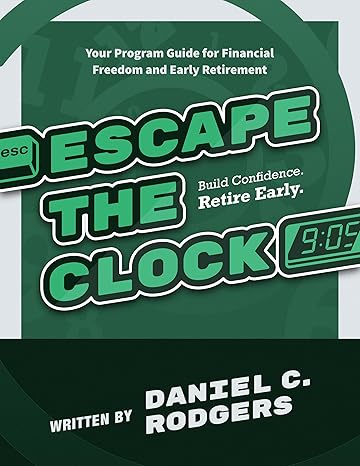

Daniel C. Rodgers’ Escape the Clock is a comprehensive manual that redefines how we think about work, wealth, and retirement. The book meticulously guides readers through the journey of achieving financial independence and embracing early retirement. It draws from the author’s personal experiences and professional expertise in program management. By blending narrative elements with practical advice, Rodgers provides a roadmap to reclaiming time and crafting a purpose-driven post-work life.
What stands out most about Rodgers’ writing is its clarity and relatability. He opens the book by describing the suffocating grind of the modern work-life cycle—a sentiment many can resonate with. The chapter “Trapped by the Clock” is particularly compelling as it details the emotional and physical toll of overwork. Rodgers’ candor about his own struggles adds authenticity, and his emphasis on financial independence as a means of reclaiming life makes the narrative deeply motivational. At times, some of his anecdotes cover similar ground, which can slightly soften the impact of his otherwise sharp insights.
The book’s strength lies in its structured approach to financial planning. Rodgers simplifies intimidating financial concepts, breaking them into digestible steps. Chapters like “Build Your Program for Financial Independence and Early Retirement” are treasure troves of tips—whether it’s calculating a financial baseline or setting measurable goals. I appreciated how the book demystifies investment jargon, though some of the more detailed strategies, like leveraging dividend stocks or rebalancing portfolios, might feel a bit complex for beginners. I think a slightly greater focus on balancing technical advice with simpler explanations could have made these sections more approachable.
Rodgers also shines in promoting a holistic vision of retirement. Instead of framing it as an end, he encourages readers to view it as a beginning—a chance to pursue passions and give back. The chapter “Retire Purposefully” is a standout, brimming with ideas for leading a fulfilling post-retirement life. There is a noticeable focus on ambitious goals, which might feel a bit lofty for readers seeking a more straightforward or minimalist approach to retirement.
Escape the Clock is an inspiring and meticulously detailed guide that will resonate with anyone determined to break free from the rat race. I feel it’s ideal for professionals in their 30s to 50s who are financially savvy and open to detailed planning. If you are looking for a practical framework paired with emotional encouragement to achieve early retirement then I think this book is a must-read.
Pages: 356 | ASIN : B0DPLP1D1V

Level Up! 50 Game-Changing Life Skills for Young Adults+
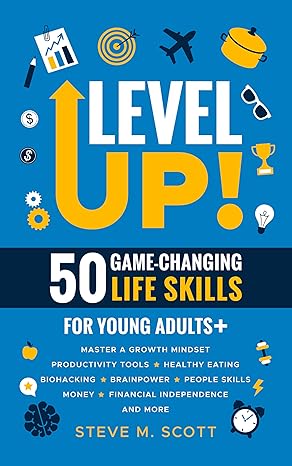

Level Up! 50 Game-Changing Life Skills for Adults+, by Steve M. Scott, is an invaluable guide designed to equip young adults with the practical skills needed to navigate the complexities of adulthood. Transitioning into this phase is anything but straightforward. Friends diverge onto different paths—some pursue further education, others launch their careers, and a few even start families. In this whirlwind, there’s no universal blueprint for living life to the fullest. However, Scott emphasizes that honing new skills and nurturing individual talents are critical for growth and self-assurance. His book delivers an impressive toolkit for success, covering everything from boosting mental acuity and fostering a resilient mindset to staying physically healthy and mastering financial literacy, including budgeting, investing, and planning for the future.
What truly sets Scott’s guide apart from others is its holistic approach. He leaves no stone unturned, addressing every realm young adults might grapple with. Scott recognizes that thriving in adult life demands more than just financial savvy; it requires a well-rounded strategy that includes emotional intelligence, critical and creative thinking, physical wellness, and mental resilience. The emphasis on maintaining a balance between a strong mind and a healthy body stands out, a reminder of how intertwined these elements are in achieving long-term success. Often, we neglect essential aspects like proper nutrition, exercise, and rest while trying to excel in other areas, but Scott underscores the importance of prioritizing them all.
As a college student myself, I found the financial guidance particularly eye-opening. Stepping into adulthood in a time of rising inflation feels daunting, and Scott’s straightforward advice on saving, investing, and even planning for retirement brought clarity. I had never seriously considered retirement planning before, but this book illuminated why it matters and how even small, informed actions can make a difference. Scott manages to make these concepts less intimidating and more accessible, empowering readers to approach financial decisions with confidence. Drawing from my background in psychology, I can vouch for the depth and practical relevance of the skills Scott shares. His insights are well-chosen, and designed to assist anyone feeling stuck or falling behind compared to their peers. He doesn’t promise an easy solution—life is unpredictable and messy—but he does offer a fresh perspective, instilling hope and a proactive mindset for the uncertainties of adulthood. This book is not just about surviving but thriving, and it encourages readers to view life as a series of opportunities rather than obstacles.
For anyone feeling overwhelmed or in need of a spark to propel them forward, Level Up! 50 Game-Changing Life Skills for Adults+ is a must-read. Scott’s guide is more than inspirational; it’s practical, actionable, and deeply motivating. If you’re searching for the push you need to conquer the adult world with confidence and vigor, this book will equip you with the skills to win in every aspect of life. Highly recommended.
Pages: 346 | ASIN : B0DHYN9P8N
THE U.S. 2023 HIGH POWER-BILL CRISIS CUT YOUR HIGH POWER-BILLS IN HALF TODAY: The Simple Art of Reducing Energy Consumption -The Definitive Guide-
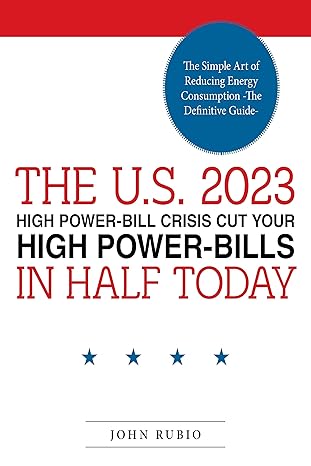
In The U.S. 2023 High Power-Bill Crisis: Cut Your High Power Bill In Half Today, author John Rubio tackles the pressing issue of surging power costs in the United States with a pragmatic and accessible approach. As power bills soar, Rubio’s book serves as a beacon, guiding individuals and households through the complexities of energy consumption with the aim of significantly reducing their financial burden.
Rubio’s style is engaging and easy to follow, employing straightforward language and relatable examples to demystify topics like “amp draw” that may be unfamiliar to some readers. His tone is conversational and inviting, reminiscent of a knowledgeable friend sharing valuable insights. While I feel some readers may find the book’s font somewhat distracting, its brevity ensures that this does not detract significantly from the overall reading experience.
Central to the book is the concept of empowering the average American, particularly those who might not have prior knowledge of energy-saving techniques. From homeowners to renters, Rubio addresses a broad audience, offering tangible strategies to cut power bills in half. This approach not only benefits individuals financially but also contributes positively to broader societal and environmental goals, aligning with eco-friendly practices.
The U.S. 2023 High Power-Bill Crisis is particularly relevant for those experiencing the strain of high energy costs, as well as individuals keen on adopting a more sustainable lifestyle. While the environmental angle is not explicitly stated, it is an underlying theme that resonates throughout the book.
Rubio’s commitment to providing practical and immediate solutions is evident in his writing, which resonates with a sense of urgency and relevance. The U.S. 2023 High Power-Bill Crisis is an essential guide for anyone looking to navigate the challenges of high energy costs in 2023, offering valuable insights for both novices and those more acquainted with energy-saving practices. As a resource for financial savings and sustainable living, Rubio’s work is a noteworthy contribution to the literature on domestic energy consumption.
Pages: 109 | ASIN : B0CFH2CVJ9
Wealthy is Not a Destination

Many people hear about accumulating wealth but have no idea where to start. What was the idea, or spark, that first set off the need to write Wealth Your Way?
The idea for this book came about as a happy accident rather than by design. It simply grew out of my efforts to teach financial matters to my two children. Neither of them had much interest in spending time delving into financial topics or “boring business stuff” as they would often say. I didn’t blame them–few people get as jazzed up about personal financial planning as I do.
As the years went by, the conversations kept broadening out, first to several nieces and nephews, and then to business associates, friends, and neighbors. I started summarizing my thoughts in a monthly email, each covering a different aspect of personal finance. The distribution and forwarding of those emails, which started with just a few family members, struck a chord and quickly expanded. Shortly thereafter, several readers suggested I put my thoughts all in one place and the idea for this book was born.
How much research did you undertake for this book, and how much time did it take to put it all together?
I often say the book is 34 years of research – my entire working and investing career followed by eighteen months of focused writing and editing. It is my lifetime of knowledge and learned experiences (good and bad) that shaped my views on wealth management, allowed me to achieve financial independence, and created a modicum of wisdom for me to pass along. Writing forces clarity of thought and I hope readers can learn from mine as they plan their own path to reach financial security. The book is my humble attempt to pay it forward.
What is one thing that you hope readers take away from Wealth Your Way?
Everyone has their own interests and passions to follow. My simple wish for readers (including my children) is that they learn how planning for money matters can enhance their personal life’s journey and maybe the lessons in the book can also help them avoid a few missteps along the way. Everyone’s journey is personal and unique. To hell with ‘keeping up with the Joneses’ or ‘beating the market.’ Take a deep breath and realize the only person you need to beat tomorrow is the person you are today.
Wealthy is not a destination; it’s a habit. Learning good money habits, including the importance of planning with purpose, will get you on the path to financial freedom. And know this, taking steps in the right direction rarely ends up in the wrong place.
What is the next book you are working on, and when is that book due out?
I don’t currently have plans for another book, but since the first one was an unplanned team effort, I will never say never. The feedback on Wealth Your Way has been tremendously positive and led me to start a free money newsletter, Wealth Your Way Insights. Lots of good ideas and questions are coming from the book’s readership so maybe a follow-up book would be a good idea.
Author Links: GoodReads | Twitter | Website | Amazon
Financial independence buys you the most valuable asset on the planet—freedom. The freedom to spend your money, and more importantly, your time, however you see fit.
Still, reaching financial independence requires more than mere investing. Unlike other books that try to tell you what to think, Wealth Your Way teaches you how to think about growing your wealth, with real-life examples of the pitfalls you might encounter and strategies to avoid them.
As with most things in life, the more carefully you plan for financial independence, making course corrections along the way, the less you’ll need to worry about the outcome. Live your best life today with the satisfaction and comfort of knowing your financial future is in good hands—your own.


