Blog Archives
The Principle of the Five Chairs


Phil Graffoe’s The Principle of the Five Chairs is a practical self-development book built around a simple idea: the people we spend the most meaningful time with gradually shape our beliefs, habits, standards, ambitions, and character. Graffoe turns that idea into the image of five chairs, each occupied by an influence in our lives. His point is that influence usually works through repeated conversations and familiar behavior. Early in the book, he sums up the central principle plainly: “You become like the people you spend the most time with.” That idea gives the book an easy-to-understand foundation and makes it natural to start thinking about who might be sitting in your own chairs.
From there, Graffoe explores different kinds of people who can occupy those seats. He writes about the Chairs of Ambition, Accountability, Wisdom, Character, Action, Courage, and Energy, as well as the damaging influence of Negativity. Each chair represents something slightly different. Ambition pushes you beyond comfort, accountability challenges your excuses, wisdom brings perspective, character raises your standards, courage helps you act despite fear, and energy creates momentum. The examples are usually drawn from ordinary situations involving careers, friendships, health, business, and personal goals, which keeps the ideas grounded. One of the book’s strengths is that the chair metaphor makes abstract subjects like influence and self-awareness feel concrete enough to examine in your own life.
The book becomes especially useful when Graffoe introduces “The Audit,” where readers are encouraged to identify the people who actually have the greatest influence over their thinking. He makes an important distinction here: the chairs aren’t necessarily five separate people, and the different chair labels are categories of influence. The Empty Chair and Reserved Chair expand the idea further by asking readers to consider what kind of influence may be missing from their lives. Maybe someone has encouragement but no accountability, or ambition but no wisdom. This part gives the book a more active purpose because the reader isn’t just observing existing relationships. They’re being asked to think intentionally about the kinds of conversations, mentors, and examples they may need next.
Graffoe’s style is direct, motivational, and intentionally repetitive. Important ideas such as action creating confidence, hesitation costing opportunities, and environment shaping behavior return throughout the book in slightly different forms. At times, that repetition makes the message feel more like a series of connected talks than a tightly compressed argument, but it also reinforces the book’s central theme: repeated ideas have power precisely because repetition influences how we think. The many illustrations support that approach as well. Chairs, paths, waiting rooms, mirrors, and crossroads turn the book’s concepts into visual reminders. By the later chapters, Graffoe also shifts the focus from choosing good influences to recognizing that every reader is already influencing somebody else. That change gives the book more weight because it adds responsibility to the idea of personal growth.
That final shift is what stayed with me most. The Principle of the Five Chairs asks two connected questions: Who is shaping you, and who are you shaping? Graffoe argues that everyday conversations, habits, encouragement, criticism, and examples can remain with people long after the moment itself has passed. His later “Sixth Principle” even extends this beyond long-term relationships by considering brief encounters with strangers or acquaintances that can unexpectedly change a person’s direction. Near the end, Graffoe writes, “The greatest legacy is not what you leave behind. It is what you leave within people.” That captures the book well. It’s a conversational guide to becoming more deliberate about the influences you accept, the examples you follow, and the kind of chair you occupy in someone else’s life.
Pages: 238 | ASIN : B0H6VSVFGQ

Gilt Free: Ditching Your Gilded Cage for Good

Keren Eldad’s Gilt Free: Ditching Your Gilded Cage for Good is a lively self-help and personal development book for high achievers who’ve discovered that conventional success doesn’t automatically produce a satisfying life. Eldad examines the habits that keep capable people performing for approval, including perfectionism, overwork, comparison, control, and dependence on external validation. Her central image, the gilded cage, gives the book a clear emotional and practical focus: achievement becomes confining when it costs you honesty, peace, and a sense of belonging to yourself.
The author writes like a candid coach who’s comfortable mixing Jungian psychology, spirituality, manifestation, pop culture, business lessons, and sharp humor in the same conversation. References range from Consuelo Vanderbilt and Julia Child to Taylor Swift, Seinfeld, the Chicago Bulls, and Crazy Rich Asians, giving the ideas a contemporary, energetic feel. Her voice is confident and occasionally provocative, especially when she challenges the spiritual-growth industry’s tendency to turn insight into another performance. Readers who enjoy spiritual self-help, success mindset books, and books for recovering perfectionists will likely appreciate how she translates abstract ideas such as alignment, surrender, individuation, and abundance into everyday decisions.
Eldad presents a memorable GOLD framework: Good Enough, Open, Lit Up, and Devoted. Within that structure, there are eight playful “anti-rules,” such as stopping your reliance on other people’s opinions, assuming you’re liked, taking life a little easier, asking for what you really want, aligning before acting, choosing consistency over talent, passing life’s tests, and responding to fear through service. This makes Gilt Free an unusually usable motivational book. The reflection exercises, journaling questions, personal stories, and concrete practices give readers plenty to apply beyond the initial burst of inspiration.
At its heart, Gilt Free is a book about replacing frantic achievement with steadier ambition. Eldad’s version of freedom still includes meaningful work, wealth, creativity, love, and influence, but it asks readers to pursue them from integrity rather than fear. The later chapters deepen the message by emphasizing consistency, patience, humility, devotion, and service, so the journey doesn’t end with personal liberation. It moves toward contribution. The result is a warm and direct self-help book that encourages readers to build success they can actually inhabit, enjoy, and share.
Pages: 196 | ASIN : B0GY5ZNHPK
How To Think and Succeed by Empowering Your Mind


How to Think and Succeed by Empowering Your Mind, by Lori Gradley, is a practical self-help guide built around the belief that lasting change begins in the disciplined inner life. Gradley leads readers through self-discovery, purpose, self-image, limiting beliefs, gratitude, goal setting, visualization, the mind-body connection, stress reduction, and decisive action, using quizzes, journal prompts, affirmations, and personal stories to keep the material grounded. Her account of recovering from a serious car accident gives the book its emotional center, while later stories, including her work around Tiny Talent Time, her encounter with Bob Proctor, and the transformation of her client Marsha, show how deeply she connects mindset with direction, resilience, and renewal.
I appreciated the sincerity of Gradley’s voice. She writes with the tone of someone who has lived with the questions she’s asking, not merely arranged them into tidy chapters. The book is most persuasive when it becomes personal: the hospital bed after the collision, the hard decision to leave a career and stay home with her children, the almost electric recognition she describes while watching children perform with joy, and then seeing that same purposeful energy in Bob Proctor. Those moments give warmth to ideas that might otherwise feel familiar. I also liked the book’s insistence on participation. The self-assessment questions, life-purpose exercises, attitude quiz, vision board guidance, and action checklist make the reading experience less passive. Gradley isn’t asking readers to admire growth from a distance. She’s asking them to sit quietly, tell the truth, and begin.
Gradley’s ideas about positivity, visualization, cybernetic programming, and the subconscious mind are presented with confidence, and for many readers, that confidence will be encouraging. For me, the strongest passages were the ones that allowed pain, failure, and complexity to breathe a little. Her acknowledgment that people dealing with depression, trauma, or mental illness may need smaller goals or professional help gives the book a more compassionate register. The writing is direct, encouraging, and highly accessible. There’s a steadiness in the structure. Each chapter builds like a hand placed gently at the reader’s back, urging forward movement without pretending the work is effortless.
How to Think and Succeed by Empowering Your Mind is an earnest, usable, and emotionally generous guide for readers who are ready to examine their habits of thought and take deliberate action toward a clearer life. Its best quality is conviction: Gradley believes deeply in the possibility of personal change, and that belief gives the book its uniqueness. I’d recommend it to readers who enjoy reflective self-help with exercises, especially those feeling stalled, discouraged, or in need of a structured reset around purpose, self-image, attitude, and goal setting. It’s a thoughtful companion for anyone willing to do the inner work rather than simply read about it.
Pages: 150 | ASIN : B0CWFMNV4T
PS. Some Things Really Are Easy

The Passive Income Power Plan isn’t about getting rich quickly; it is a guide to help readers build income streams that give them more breathing room. What is the biggest barrier to wealth, practical or emotional?
To me, our mindset is our biggest barrier, as any belief starts in our minds. As Henry Ford said, “Whether you believe you can or you believe you can’t, you’re right.” That belief system will lie to you and tell you that you’re too old or you don’t have the right education or your partner won’t support you or it’s too expensive to get started (I could go on… and on).
Even the shift from active to passive income begins in your mind. Do you believe you can only exchange hours for dollars? Might it be possible for you to earn income that was tied to something physical, like a house rental or someone purchasing a product that you had created? Once you set up these systems, they exist without much or any involvement from you. For many, it’s a matter of exchanging a belief of what financial freedom really looks like.
You frame passive income as “sovereignty” rather than hustle. What does financial freedom actually look like in lived, everyday terms?
I get asked this question when I speak. And the question is, what does it look like for you? For someone it might be the ability to build a tiny home and live off the land. For someone else it might mean $100 million. we’re almost everyone I’ve spoken with, it means time freedom: I can do with my day what I desire. And money freedom — I don’t have to worry about my bills. Where are you fall on that spectrum is up to you. Consciously focusing on what this would look like — creating images of it in your head and then going and living inside of those images — can help create a safe space for you where this is actually possible in real life.
The book ends with a simple directive: pick one idea and act. Why is that so difficult for people to do?
I love this question so much! We tend to overcomplicate things. Many people have a belief that simple and easy are the same thing. But they’re not. We will tell ourselves “That’s too easy! It won’t work.” What we are really saying here is that it’s too simple and therefore, I don’t believe that it will work. Quite a difference. Coaching can help shift your mindset here – even the bumper sticker coaching, I included in the book can be quite transformational. Yet many people won’t even try, because they want a 15 step system. PS. Some things really are easy.
What are the biggest financial mistakes beginners make when chasing passive income?
The first one is going where they think the money is as opposed to creating the stream they really care about. I believe that alignment is everything. You have to choose the thing that you’re going to want to stick with when there are bumps in the road.
I also see people making basic business mistakes because they haven’t bothered with business basics. If you started making income, put a portion aside for taxes. Simple, right? So much of this can be learned online right now.
Not doing basic market research before starting their passive stream. Are you in an industry where the kind of product that you want to create is already done trending? Do you want to open a laundromat but there are already four in your local area? Using AI tools, market research that used to take days or weeks can now be done in minutes.
The biggest financial mistake I see is people not getting started because they’re afraid they don’t have the money. I think something like half of the passive income streams mentioned in the Passive Income Power Plan can be started with less than $500! Some can be started for free, using just your brain and your computer. This bring us back to your mindset. Are you willing to believe in yourself and to know that the desire you seek is also seeking you?
Author Website
If you’ve ever thought, There’s got to be more than this — you’re right. The Passive Income Power Plan is your starting line.
In this powerful guide, transformational wealth coach and business strategist Halle Eavelyn delivers 108 proven ways to earn income while you sleep—no hype, no fluff, just practical ideas that work. Whether you’re stuck in a 9-to-5, running a business that owns you, or finally ready to make your money work harder than you do, this is your roadmap to financial freedom.
Inside, you’ll discover:
108 income ideas—from simple side hustles to scalable digital assets
How to turn what you already know (or own) into recurring cash flow
Mindset shifts to stop stalling and start building
Practical tools to grow wealth without grinding 24/7
You don’t need an MBA. You don’t need a six-figure budget.
You just need to take the first step.
Because freedom isn’t luck. It’s leverage. And this book shows you exactly how to build it.
The Passive Income Power Plan: 108 Ways to Make Money While You Sleep

What I found in The Passive Income Power Plan is less a strict investing manual than a wide-ranging, motivational field guide to financial diversification. Author Halle Eavelyn opens with a personal argument against trading your life for a paycheck, frames passive income as a form of sovereignty rather than a hustle fantasy, and then moves through 108 possibilities that range from dividend stocks, REITs, and lease-to-own agreements to tiny home rentals, niche job boards, online courses, blogging, podcasting, membership sites, and domain flipping. Along the way, she threads in short mindset refrains she calls “Bumper Sticker Coaching,” and the book ends not by complicating the plan, but by stripping it down to a blunt imperative: pick one idea, act on it, and build from there.
Eavelyn writes like a coach who has sat across from too many exhausted people and decided she’s no longer interested in speaking softly about their resignation. When she recalls the client who cried every day for twenty years on the way to a job he hated, or her own experience of watching one industry collapse and then another until she was down to minus ten dollars, the book acquires real pulse. That urgency gives the project its moral center. I also liked the odd, revealing mix of practicality and personal belief. A line like “Yes, please, more and thank you” could have felt airy in another book, but here it sits beside discussions of management fees, separate bank accounts, and the need to vet borrowers, which creates an interesting texture. It’s earnest, sometimes almost disarmingly so. I found that warmth appealing, even when the language veers into the glossy, high-vibration register of contemporary coaching.
The book’s great virtue is range. Many of the 108 entries are more like invitations than analyses, and the line between truly passive income and simply different kinds of work can get blurry. A reader moving from dividend stocks to ATMs, from vacation homes in Augusta to smart lockers for laundry pickup, and then into online courses, audiobooks, YouTube, and SaaS will absolutely come away with options, but not always with enough detail. That said, I admired the book’s candor in places. She admits some markets are saturated, notes that some ideas require real upfront capital, and repeatedly insists on doing your own research. I also appreciated the way her examples reveal her sensibility: she doesn’t just like scalable things, she likes overlooked things, slightly eccentric things, things with texture. Mailbox rentals, equipment libraries, and vending machines stocked for “mind, body, and soul” are not the usual boilerplate examples, and that gives the book personality.
I read this book as a persuasive nudge out of passivity. Its writing is vivid, repetitive by design, and its central idea is compassionate: freedom is built by creating assets, systems, and choices before desperation makes your decisions for you. I would recommend it to readers who feel financially stuck, intimidated, or overidentified with the paycheck-to-paycheck script and need a warm, forceful, idea-rich push into possibility. It’s best for the person who doesn’t need another theory of money so much as a reason to believe they can begin.
Pages: 148 | ASIN : B0FP6TGSY1

AI for Beginners Demystified
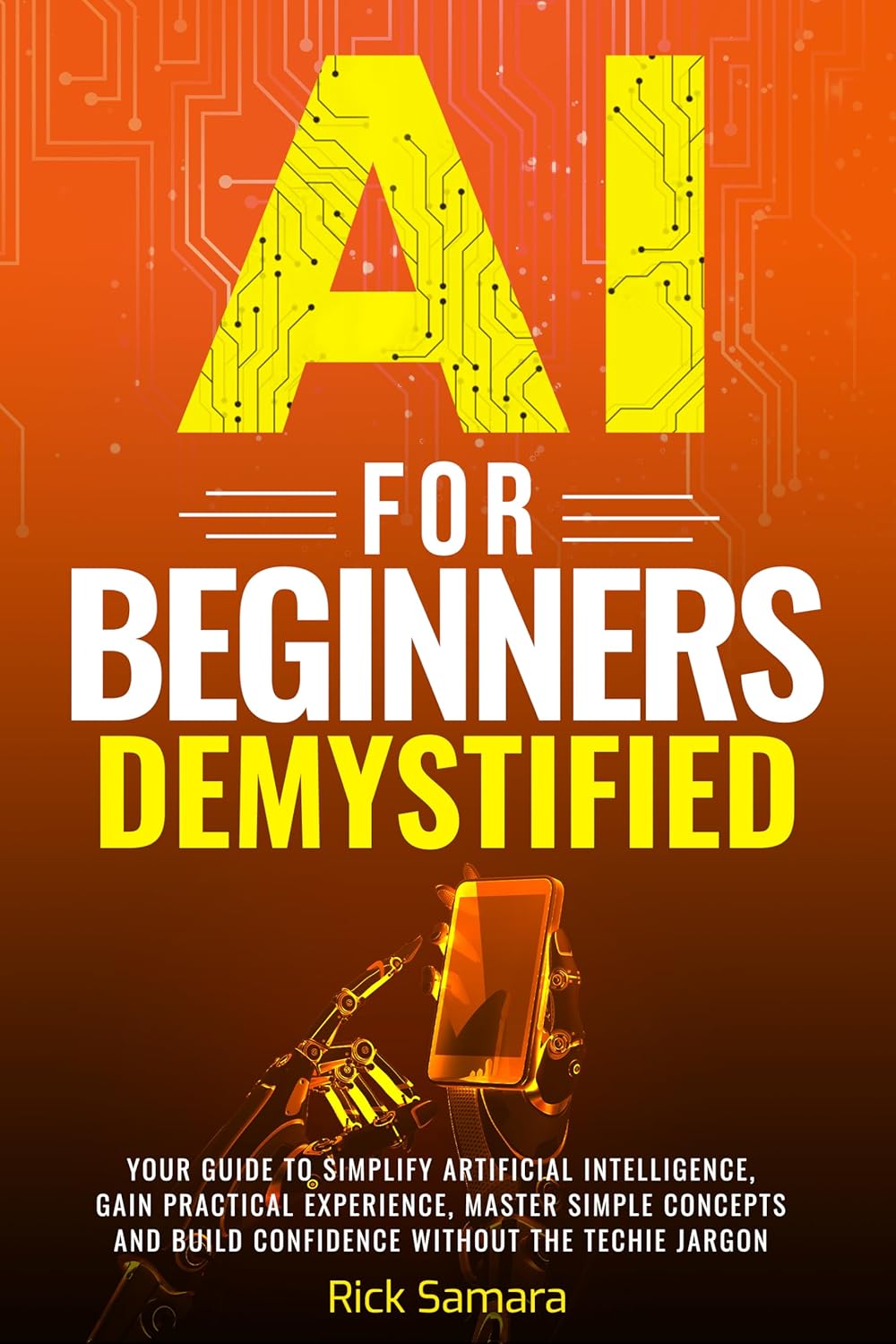
AI for Beginners Demystified by Rick Samara is an introductory guide to artificial intelligence that walks the reader from basic concepts to real-world uses in business and everyday life. It starts with the fear and confusion around AI, then explains core ideas like machine learning, neural networks, deep learning, and generative AI in plain language. From there, it tours familiar spaces such as smartphones, smart homes, social media, transportation, healthcare, finance, and education, then moves into ethics, bias, misinformation, and finally, practical next steps like courses, Facebook groups, and an addendum on using AI in business. The book aims to turn AI from a hazy buzzword into something a non-technical reader can talk about and actually use.
The tone stayed warm, reassuring, and a little chatty, which fit the target audience. He uses a lot of personal stories from the Air Force, from his marketing work, and from family life, and those stories kept me engaged. I liked the way he came back again and again to the idea of making the complex simple and actually stuck to that promise. The explanations of AI versus machine learning versus neural networks versus deep learning felt clear and grounded, and the nesting doll image for those layers worked for me.
I liked how practical the book felt. The sections on everyday AI, like smartphones, smart homes, shopping, and banking, pulled AI out of the clouds and into real life with examples that almost anyone can recognize. The “easy and fun exercise” pieces sprinkled throughout were a nice touch. They nudged me to pause and connect the material to my own habits. The ethics chapter and the parts on surveillance, bias, and job loss anxiety added a needed sense of seriousness. When the author talks about balancing innovation and responsibility, and about collaboration between companies, governments, and the public, the tone stays accessible instead of academic, which I found refreshing.
I actually liked the structure and depth of the book. It feels like a friendly guided tour, inviting me to wander through different ideas. The way the focus moves from one domain to another, then loops back to themes like job security and lifelong learning, gives the book a conversational rhythm. Beginners will benefit from the upbeat tone and clear enthusiasm. The business addendum works well as a starter checklist and offers a broad, accessible foundation that leaves room for readers to seek out their own case studies and frameworks later. Since the goal is to build comfort and confidence rather than teach a technical course, the approach feels right. When I picture someone who feels intimidated by AI opening this book, the welcoming tone and relaxed pacing seem perfectly chosen.
I would recommend this book to readers who feel uneasy or left behind when people talk about AI, especially adults who do not see themselves as “tech people” but still want to understand what is happening and how to keep up. I think it suits small business owners, teachers, parents, and older professionals who need a gentle on-ramp rather than dense theory or code. For someone at the true beginner level who wants a calm voice, real-life examples, and a path to keep learning, this book is a solid and encouraging read.
Pages: 138 | ASIN : B0FLW34RKW
I Was Tired of Starting Over

Side Hustle & Flow: The Daily Grind – 365 Days to Shine is a yearlong guide of short, daily reflections designed to help creatives, entrepreneurs, and side-hustlers build momentum without burnout. Was there a moment in your life when consistency finally “clicked” for you?
Yes. It was not some glamorous breakthrough. It was when I was tired of starting over. I had talent. I had ideas. I had big goals. But I kept relying on motivation. The real shift happened during my health journey when I reversed Type 2 diabetes and lost 50 pounds. I realized it was not about intensity. It was about daily reps. Same with sobriety. Same with building my music catalog. Same with scaling operations at Beautytap. Once I saw that small, boring, repeatable actions compound into freedom, consistency stopped feeling restrictive and started feeling empowering. That is when it clicked.
Your background spans music, business, and operations. How did those worlds shape this book?
Music taught me rhythm and discipline. You do not get better on stage. You get better in rehearsal. Business taught me structure. Systems beat willpower every time. Operations taught me leverage. If something is not documented and repeatable, it does not scale.
This book sits at the intersection of all three. It is creative but structured. It is motivational but practical. I am an artist who also thinks like an operator. So The Daily Grind is not just inspiration. It is about building frameworks that help creatives, entrepreneurs, and professionals win long term. Whether I am producing a record, hosting Deeper Grooves, or managing digital operations, the principle is the same. Show up. Execute. Improve.
What does “showing up” actually look like on days when motivation is gone?
It looks smaller than you think. It might mean writing one paragraph instead of ten pages. It might mean walking instead of crushing a two-hour workout. It might mean sending one email instead of building the whole funnel.
Showing up is protecting the streak. It is voting for the identity you want. On bad days, I lower the bar, but I do not remove it. I focus on one non-negotiable action that moves the needle forward. Momentum is easier to maintain than to restart. Most people quit because they think showing up has to be dramatic. It does not. It just has to be consistent.
How do you recommend readers use this book—morning ritual, night reflection, or something else?
I designed it to be flexible but powerful. Morning is ideal because it sets intention. It helps you frame the day before the world gets loud. But night reflection works too. It can help you audit how you showed up.
Personally, I like pairing it with a short daily planning session. Read the reflection. Identify one action for the day. Then execute. Every 30 day,s there is a deeper challenge, which I see as a reset point. It is not about perfection. It is about rhythm.
The goal is not to finish the book. The goal is to build a life where you do not need motivation to move forward.
Author Links: GoodReads | X | Facebook | Website
Side Hustle & Flow: The Daily Grind – 365 Days to Shine is your year-long guide to consistency, clarity, and momentum. Designed for creatives, entrepreneurs, side-hustlers, and anyone chasing a better version of themselves, this book delivers 365 short, powerful daily reflections to help you stay focused, motivated, and moving forward—even on the hard days.
Written by entrepreneur, musician, author, and VP of Digital & Operations Cliff Beach, The Daily Grind blends real-world experience with practical wisdom. Each day offers a concise lesson, mindset shift, or action prompt you can apply immediately—no fluff, no overwhelm.
This isn’t about hustle culture burnout. It’s about intentional progress, sustainable habits, and showing up for your goals one day at a time.
Inside, you’ll discover:
Daily motivation you can read in under two minutes
Practical insights on discipline, confidence, health, creativity, and money
Honest reflections on doubt, failure, growth, and resilience
Monthly reflection checkpoints to recalibrate your direction
A steady reminder that consistency beats intensity—every time
Whether you’re building a side hustle, leveling up your career, improving your health, or simply trying to stay inspired in a noisy world, this book meets you where you are—and helps you keep going.
You don’t need a perfect plan.
You don’t need permission.
You just need to show up today.
One day. One page. One step closer to shining.
Side Hustle & Flow: The Daily Grind
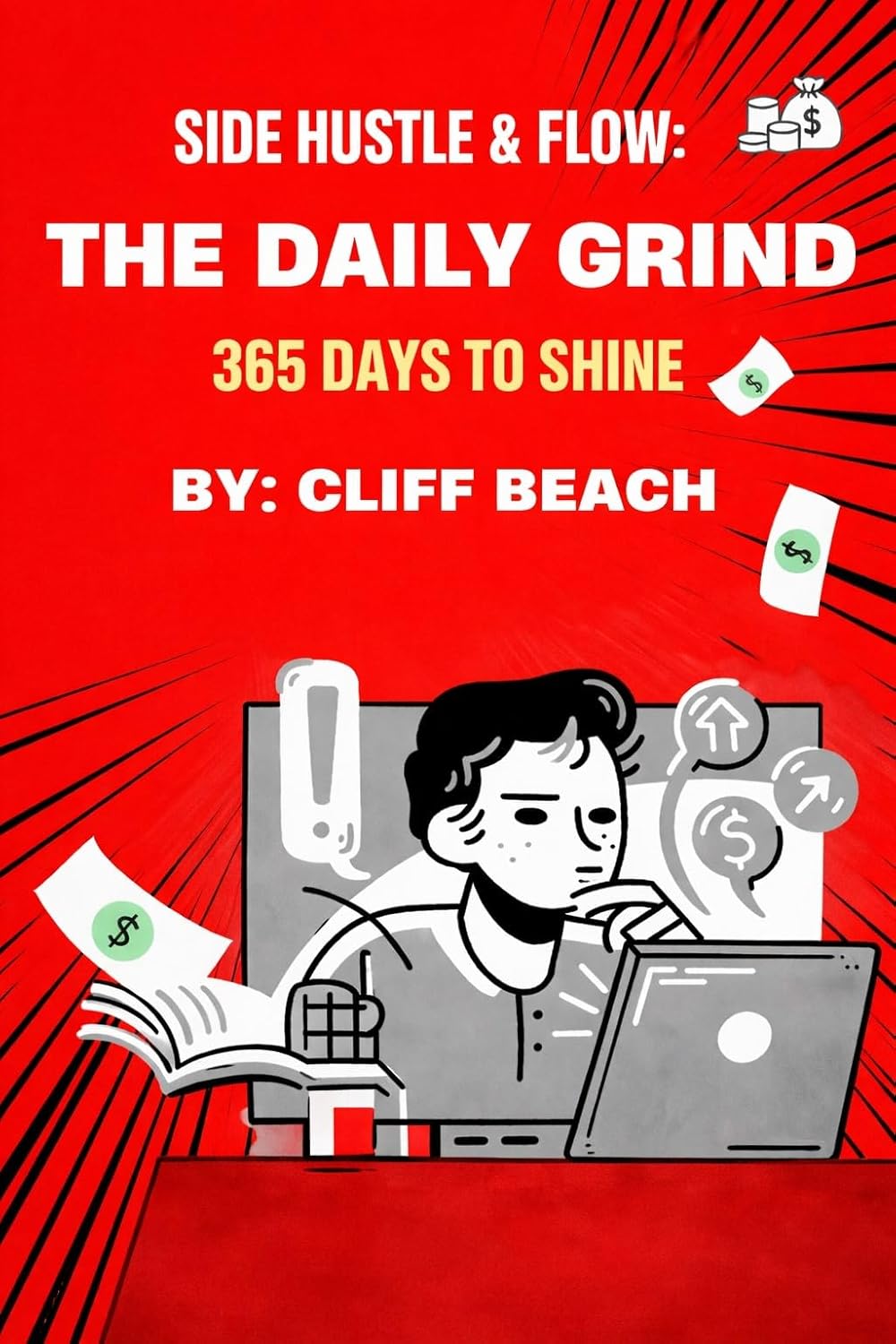

Side Hustle & Flow lays out a year’s worth of short daily reflections that nudge you toward steady progress and personal growth. Each entry gives a simple idea that builds on the last, and the rhythm of the book feels like a long conversation about staying focused and grounded while pursuing your goals. It’s a mix of encouragement, tough love, and practical reminders, all wrapped in a calendar format that makes the journey feel structured and personal.
As I made my way through the book, I found myself settling into its cadence. Some days really resonated with me and felt personally applicable, especially the ones that lean into patience or the messy nature of growth. The writing is direct without feeling harsh. It tries to lighten the load even when it reminds you that the grind is yours to carry. I caught myself nodding along more than once, which surprised me because the daily-motivation can feel repetitive. Here, though, the repetition works and gives the book a steady heartbeat.
I also enjoyed how the ideas stay simple. There’s no preachy tone, no ten-step systems, no complicated theories. Just daily nudges that feel doable, even on the days when your energy is low. Sometimes I wanted the book to go deeper into storytelling or personal examples. Still, the minimal style kept the focus on me and my own thoughts, which made the experience feel intimate. The book felt like a daily life coach.
Day 141 struck me on a personal level because it put the responsibility back in my hands in a way that felt both grounding and energizing, “If you wanttoseechange,bethechange.” I caught myself thinking about how often I wait for things around me to shift, when in truth I could take the first step and set the tone. Day 225 hit even deeper. The reflection, “Reflection: What’s one thing you can control today that will help you make progress?” helped me, and reminded me that day, to focus on what I can control. Together, they made me feel lighter and more capable, almost as if the path forward cleared just by choosing to act on what is already mine to manage.
I would recommend this book to anyone who wants a gentle push to stay consistent with a personal or professional goal. It works especially well for people who feel overwhelmed by huge ambitions and need smaller, steady reminders to keep going. If you like daily journals, habit trackers, or motivational quotes, this would fit right into your routine. It’s a book you can read easily read at the start of every day to get you ready and motivated to tackle the world.
Pages: 385 | ASIN : B0GDW12379


