Blog Archives
Freedom Boulevard


L. Winfrey Young’s Freedom Boulevard offers a vivid journey through post-Civil War Kentucky, as it tells the story of four young African American girls grappling with their new sense of freedom in a world still scarred by slavery. Set in 1875, this historical fiction novel deftly explores the complexities of life during this transformative period, focusing on the lingering impact of slavery, the burgeoning civil rights movement, and the evolving racial and societal dynamics of the time. The narrative compellingly portrays the characters’ resilience in the face of adversity and their unwavering pursuit of a brighter future despite the unfair challenges they encounter.
One of the standout elements of this book is the intricate relationship between James Simmers and Charlotte. Their dynamic beautifully captures the nuanced nature of human emotions, illustrating their interactions of love and frustration. The book’s rich character development and the exploration of their emotional depths are a highlight, though, at times, the abundance of characters and the rapid shift between perspectives can be somewhat overwhelming. A more streamlined narrative could enhance the reading experience, yet those interested in historical and character-driven novels will likely appreciate the depth and detail.
Winfrey’s narrative style is bold and unflinching, particularly in portraying racial themes. The book does not shy away from depicting the harsh realities of racism and its deep-rooted presence in society, even post-slavery. This raw honesty in storytelling, while sometimes confronting, adds a powerful layer of authenticity to the book. It resonates personally, especially as it reflects the continuous struggle against racial prejudices and the internal conflicts faced by African-American communities.
Freedom Boulevard excels in immersing readers in a pivotal historical era, providing an insightful look into the enduring effects of slavery. Its compelling content makes it a significant read for those interested in historical narratives, the complexities of human relationships, and the ongoing journey toward social justice and equality.
Pages: 637 | ASIN : B0CP4ZN6LW

Unusual Friendships Creating Understanding

Shadow of the West follows the daughter of an American diplomat stationed in Berlin in the 70s who makes friends with teenagers from East Berlin. What was the inspiration for the setup of your story?
While the novel is fiction, the set up for the story is based on my own experiences living in West Berlin in the late 70s. My father was a diplomat at the U.S. Mission in the American Sector in West Berlin. With my diplomatic passport, I was allowed to cross into East Berlin and stay over. My best friend—who lived in the East where her father was a diplomat at the U.S. Embassy to the German Democratic Republic (East Germany)—and I became friends with teenagers in the East. This was unusual—and certainly not encouraged. For a decade, I corresponded with my East German friend. His letters arrived opened and censored until, after the Wall fell in 1989, when he was finally able to write freely. We were reunited in 2011 when he and his family came to visit us when we were living in Istanbul. Our children were curious how we met, and their questions sparked a discussion of our uncommon friendship. It then dawned on me how much my perspective of that strange time differed from his—and how few people ever experienced that chapter in history as I had.
Your coming-of-age story blends the lives of Americans, West Germans, and East Germans at a critical time both in history and their lives. What was your approach to writing the interactions between characters?
I decided to write the story of the protagonist in the West in first person to induce a sense of familiarity, to draw the reader in with a sense that the friendships in the West were like typical high schoolers anytime and anywhere–focused, as teenagers are, more on their own struggles and dramas than on the bigger picture of what is happening in the world around them. The story in the East is developed with a third person narrative, allowing a greater sense of alienation, and to make the reader feel less comfortable, less secure, with less understanding—and so more guarded—which is how I envision most East German citizens had to live. Yet when the characters from the two worlds meet, these differences seem to fade with the sheer force of our shared humanness. Depicting how East German teenagers on the other side of the Wall had no choice but to acknowledge the bigger picture creates a poignant contrast that offers insight: feeling safe and being free is indeed something no one should take for granted. The experiences forever change the protagonist, reshaping her worldview which impacts her interactions with her friends back in the West—thereby having repercussions that extend far beyond her. I wanted to show that friendships across cultural divides can be rewarding and impactful in ways that can exceed the relationships themselves.
What were some themes that were important for you to explore in this book?
I wanted to explore the notion of freedom, its significance to people in different environments, and how its interpretation should matter to each of us. Another theme was individuality: what does it mean in terms of responsibility to the greater good? What happens, both good and bad, when we revere individual thought? How do our experiences influence and challenge our ways of thinking? To what extent are we truly individuals or simply products of our societies? It was also important for me to explore the notion of friendships, how they are not dependent solely on proximity or the length of time people know each other, but rather on the depth of experiences shared. And while only subtly touched upon in this story, I wanted to show tolerance of diversity, and how all of us are entitled to a safe journey through life as our authentic selves.
What is the next book that you are working on and when will it be available?
I am struggling on which of two books I’ve started to focus my attention on first. One is a fictionalized version of my grandmother’s life when living in occupied Japan after WWII. The other is another “diplomat’s daughter” story that takes place in Istanbul in the 80s. It’s anybody’s guess when I’ll finish either one, but I’m doing my best!
Author Links: Facebook | Instagram | Website
Divided Berlin is the face of the Cold War in the 70s. Kate is new at Berlin American High School in West Berlin, confused how life works in an island of freedom walled in by a totalitarian state.
Life in the American Sector takes off when Kate befriends Amy, joins cross country, and discovers Berlin’s quirky nightlife, while falling quietly in love.
On the other side of the Wall, siblings Michael and Anika are alone, struggling to stay true to their values despite State repression and manipulations of a creepy relative who works for the Stasi. Anika must find the courage to reveal her dark secret to her brother.
Worlds separated by the Wall: when they merge, the result is an explosion of courage as love leads the way.
End of Morrow


J.P. Manning’s End of Morrow takes readers on an exhilarating journey through a world steeped in intrigue, featuring a gripping conflict between the Guardians of the East and the formidable God King, Sargon. At its core, the narrative centers around the resolute guardian, Kar, whose mission to rescue the Pledians from Akkadian domination sets the stage for a tale of epic proportions. Kar’s determination to expose the vulnerability of the authoritarian God King, Sargon, and spark a revolution is nothing short of inspiring.
The narrative seamlessly shifts between past and present, with the year 1850 AD serving as the backdrop for the adventures of archaeologist Fred Baker and his team. Their quest to uncover the lost city of Assur by delving into the ancient tales of the Guardians adds a layer of intrigue that keeps readers eagerly turning the pages. What truly shines in End of Morrow is the unwavering sense of purpose that drives the characters. Their conviction that their lives hold profound meaning influences every decision and action, making their defiance of Sargon’s oppressive rule all the more compelling. Witnessing the Guardians’ bravery in a seemingly futile war, all fueled by their sense of purpose, adds depth to their characters.
Manning’s meticulous attention to cultural details enriches the narrative, immersing readers in the diverse beliefs and practices of the Guardians, Gutians, and Akkadians. This rich cultural tapestry enhances the overall story, providing a vivid and immersive reading experience. While End of Morrow is a standout novel in a trilogy, I believe it’s worth noting that new readers might benefit from a more comprehensive introduction to the characters and their relationships. I feel the assumption of prior knowledge can be a bit challenging for those unfamiliar with the series, but this does not diminish the story.
End of Morrow is a captivating tale that will resonate with mature readers who appreciate a blend of fantasy, historical fiction, and narratives that pit underdogs against almost impossible odds. This book delivers a thrilling and culturally rich adventure that is sure to leave a lasting impression.
ASIN : B0CNMYPWLL

Family and Belonging

Cinnamon Girl follows a fifteen-year-old girl who, after her grandmother’s death, heads off on an adventure, looking for romance, only to discover a world more dangerous than she imagined. What was the inspiration for the setup of your story?
I’ve always been fascinated by the politics of the late 1960s and the 1970s. I did live through that era but like Eli I was young and didn’t understand a lot of what was going on. The set up has a basis in my life. I did grow up in an environment of arts and music, and for one year of my life I lived in Webster Groves, Missouri, with my older brother and his wife and kids. Like Eli’s dad, my brother was against the war in Vietnam, but there the similarities stop.
Eli’s story is not your typical coming-of-age tale of a young girl; rather, she encounters a world filled with anger and strife as the country goes through a period of drastic changes and revolution. What were some driving ideals behind your character’s development?
When Eli encounters some members of the Black Panthers she gets an inside look at racism and is exposed to her own unconscious bias. But because her step-grandmother was a free spirit and open-minded, Eli is able to understand the unfairness of the situation. I know it’s a cliché these days, but those hippie ideals of “peace, love, and brotherhood” do come to matter to her.
What were some themes that were important for you to explore in this book?
This is a story about family and belonging. Eli is constantly searching for and creating family wherever she goes. But none of them are permanent. It isn’t till the end that she finds the home she’s been looking for.
What is the next book that you are working on, and when will it be available?
We have just released a second edition of my memoir, The Hummingbird Kiss: My Life as an Addict in the 1970s. The audiobook version of that will be released in February of 2024. And in January we are re-releasing my later memoir, My Mother’s Requiem.
Author Links: GoodReads | Twitter | Facebook | Website
When her beloved step-grandmother, a semi-retired opera singer, dies of cancer in 1970, 15-year-old Eli Burnes runs away with a draft-dodger, thinking she’s on the road to adventure and romance. What she finds instead is a world of underground Weathermen, Black Power revolutionaries, snitches and shoot-first police. Eventually Eli is rescued by her father, who turns out both more responsible and more revolutionary than she’d imagined. But when he gets in trouble with the law, she finds herself on the road again, searching for the allies who will help her learn how to save herself.
Blending the Past with the Present

Rome’s Last Noble Palace follows the lives of two women living over a century apart who are connected through a shared location of an attic room in the Palazzo Brancaccio. What was the inspiration for the setup of your story?
The Palazzo Brancaccio is a real monument in Rome. I was inspired to write the story after moving beside this palace and, one night, seeing a ghostly light and what seemed like a hand adjusting a window of one of the attic rooms. This image, combined with the real-life story of the American princess who married into an Italian noble family and used her wealth to build the Brancaccio Palace, sparked my imagination for this story.
What character did you enjoy writing for? Was there one that was more challenging to write for?
I enjoyed writing all of my characters, but I always find myself fascinated by the past, so I was truly drawn into Isabelle’s story in fin de siècle Rome – such an exciting time, in the “new” capital of a newly united Italy. Rome was a heady mix of new ideas in art, music, literature, art and urban planning – and I loved creating my character in the midst of this optimistic time.
What were some themes that were important for you to explore in this book?
As always with my historical fiction, I love to draw parallels between the past and the present, and to create connections between characters in our contemporary world and those who came before us. This novel also includes themes of self-realization, resilience, embracing change and overcoming hardships, and the strong female friendships that help us through our greatest challenges.
What is the next book that you are working on and when can your fans expect it to be out?
I switch between historical and contemporary fiction (the latter requiring a lot less research!) My next, out in spring 2024, is a sequel to my first, contemporary novel, Three Coins. It’s been four years since Emma, Annarita and Tiffany threw their coins in Rome’s Trevi Fountain and cemented a friendship that would change their lives, in more ways than one. Emma has departed Rome for the charming Umbrian village of Todi. where she’s busy managing the Three Coins Inn, while Annarita and her husband run the hotel’s cooking classes. When a new set of hotel guests descend on the idyllic property, eager to recharge and leave their problems far behind, will the inn manage to work its magic on them?
Author Links: GoodReads | Website
American Isabelle Field has been shipped off to Rome to live with her aunt, Princess Elizabeth Brancaccio. Isabelle’s aunt and mother share a common goal – replicating Elizabeth’s success by marrying Isabelle off to a European nobleman.
But Rome in 1896 is on the cusp of a new century and Isabelle longs for more than a titled husband. She secretly designs costumes for Rome’s burgeoning theatre environment and dreams of opening a fashion atelier. Can she gather the courage to forge a life for herself, even if it means going against expectations?
Over a century later, doctoral candidate Sophie Nouri can’t believe her good fortune when she is selected to intern in Rome’s Near Eastern Art Museum. Even better, the position includes an attic apartment in the spectacular museum property, the Palazzo Brancaccio.
Overseeing a major exhibition is stressful, but tension alone can’t explain the disturbing nighttime presence in the deserted hallways of the grand palace – especially one no one else can sense. Almost as if a spectral being is trying to communicate with Sophie directly. Or warn her.
Power
Danny Blaine’s return to Tegucigalpa in Chuck Fair’s Power is a gripping odyssey. Twenty-five years ago, Blaine was in Tegucigalpa as a young ex-marine roped into the CIA’s covert games. Now, his mission is more personal and noble: rescuing Violate Chavera, a dauntless freedom fighter, echoing a debt of life saved years ago. Chavera’s imprisonment by the tyrannical Daniel Ortiz, who rules Nicaragua with ruthless control, sets the stage for a thrilling narrative. Despite the violent history of Nicaragua, a place Blain once vowed never to return to, he finds himself compelled to face his past and answer a call of duty and honor.
Power is more than a contemporary thriller; it’s a journey into the shadows of history. Author Chuck Fair intertwines Nicaragua’s turbulent political past with a narrative of personal redemption. It’s a part of history often neglected in American discourse, yet Fair addresses it with more depth and finesse.
Told through Blaine’s perspective, Power feels like a revelation and a reckoning. Blaine, a character shaped by warfare, confronts his past actions in a country scarred by conflict. I was captivated by his internal struggle – a soldier trained for destruction but seeking to forge a different path as he nears sixty. Fair doesn’t shy away from the harsh truths of war and the lasting impact of a soldier’s life. His storytelling is raw and unflinching, revealing the unending cycle of conflict and the dichotomy of creation and destruction inherent in a soldier’s skills. This narrative choice, while challenging, makes Power a profoundly impactful read. It’s a book that doesn’t just tell a story; it imparts lessons about war, duty, and the complexities of human nature.
Power is a riveting story that combines historical insight with personal introspection. It’s a book that should be on the reading list of anyone interested in understanding the lingering ghosts of war and the possibility of personal redemption amidst geopolitical turmoil.
Pages: 295
Cinnamon Girl

Trish MacEnulty’s Cinnamon Girl is a compelling foray into the historical fiction genre set in the 1970s. It’s a novel that masterfully captures the essence of a tumultuous era, making it an intriguing read for those fascinated by this significant period in American history.
MacEnulty’s prose is a particular standout in Cinnamon Girl. It’s rich, evocative, and a perfect vehicle for transporting readers back in time. The balance of poetic and gritty language in the book is impressive, skillfully reflecting the emotional and social conflicts of the era. This stylistic choice enhances the immersive experience, making the setting and characters come alive in a vivid and authentic way.
The protagonist, Eli Burnes, embodies the rebellious spirit that defined much of the youth culture of the 70s. Her journey, set against the backdrop of post-Vietnam War America, is both compelling and heart-wrenching. MacEnulty’s portrayal of Eli’s struggle for identity and belonging amidst societal upheaval is deeply impactful, striking a chord with readers who may find parallels in their own search for self amidst chaos. One of the book’s greatest strengths lies in its unflinching approach to controversial topics. MacEnulty doesn’t shy away from the realities of drugs, politics, sex, family dynamics, and betrayal, making Cinnamon Girl a bold and honest portrayal of the era. This candid approach adds a layer of authenticity to the narrative, making it not just a story about a girl growing up but a reflection of a society in flux.
Cinnamon Girl transcends the typical boundaries of coming-of-age fiction, offering a thought-provoking, immersive experience. It’s a novel that resonates long after the final page, making it a must-read for those who appreciate historical narratives that don’t just recount events but delve into the emotional undercurrents of an era. MacEnulty has created a memorable work that is as educational as it is entertaining, making it a highly recommended book for readers who enjoy a deep, meaningful exploration of history through the lens of personal growth and societal change.
Pages: 311 | ASIN : B0CHC8N4BS
My Dearest Miss Fairfax
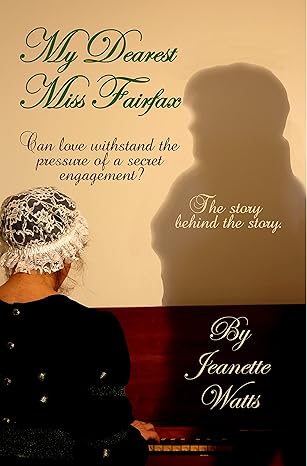
Immerse yourself in the captivating world of My Dearest Miss Fairfax, a novel that breathes new life into Jane Fairfax, a memorable character from Jane Austen’s Emma. In this inspired retelling, Jeanette Watts masterfully unfolds the hidden layers of Jane’s life, exploring her secret engagement with Mr. Frank Churchill. As Jane navigates the aftermath of her parents’ demise, she bravely faces a future as a governess, despite her refined upbringing. Her journey takes her from Weymouth alongside the newlywed Sophie Campbell to the quaint town of Highbury, the residence of her grandmother and Aunt Bates.
This novel is not just a story; it’s a vibrant tapestry woven with the intricate threads of character-driven narrative and eloquent dialogue. Readers are invited to delve deep into Jane’s inner world, experiencing her struggles and resilience amid a society obsessed with the lives of others. The blossoming, yet covert, romance between Jane and Frank is both touching and fraught with challenges, making their journey a heart-rending experience. While the climactic resolution of their love story and Jane’s final reckoning with the meddlesome townsfolk may leave one yearning for a more gratifying closure, the overall experience is a delightful foray into Austen’s world.
Watts’ narrative prowess shines through every page, seamlessly introducing a rich array of characters and their motivations. The story’s brisk pace and engaging dialogue bring each character to life, offering a fresh perspective on both beloved and lesser-known individuals from Emma. Whether you’re a devout Jane Austen fan or a newcomer to her works, My Dearest Miss Fairfax promises a journey filled with intrigue, romance, and a nuanced exploration of societal norms. Step into Jane’s shoes and embark on a journey that will leave you contemplating the intricate dynamics of love, society, and personal fortitude.
Pages: 322 | ASIN : B09TG5XMWX



 LITERARY TITAN