Blog Archives
Boy of Heaven
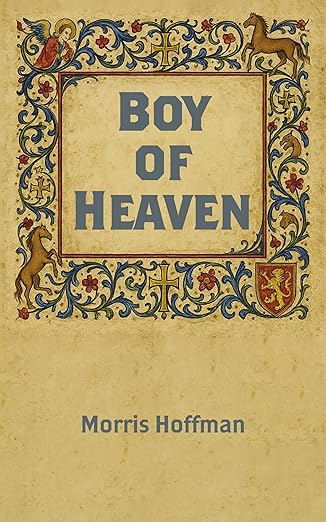

Boy of Heaven, by Morris Hoffman, tells the story of an orphan boy in 17th-century Milan who discovers a fading mural, Leonardo da Vinci’s The Last Supper, hidden in what has become the stables of a Dominican priory. As the boy labors among horses, he has named after constellations; he alone sees the painting’s slow return to clarity. What unfolds is a lyrical meditation on suffering, faith, grief, and vision. Hoffman’s novel blends historical fiction with a mystical edge, threading deep emotion through a richly imagined world.
Reading this book pulled something quiet but insistent from me. Hoffman’s writing is unusual, almost liturgical in rhythm. It doesn’t always make for an easy read, but it makes for a rewarding one. There were passages I reread just to feel them again. The boy’s interior world is raw and lonely, but never melodramatic. There’s very little action in the conventional sense. Instead, the story unfolds through daily labor, small kindnesses, and sacred echoes. And yet, I found myself emotionally swept up in the boy’s grief for a horse, his awe at a fresco, his quiet yearning to be seen.
I feel the book drifts at times. There were sections where the pace slowed, where there were long descriptions of the priory or repeated imagery. Everything is so reverent. Still, what the book lacks in momentum, it makes up for in heart. The blend of the sacred and the mundane, the way the horses become mythic, the mystery of the fresco, that’s where it shines. It doesn’t explain itself, and that made it feel more honest and more relatable.
Boy of Heaven isn’t just about art or faith or even memory. It’s about seeing what others miss and holding on to what shouldn’t be forgotten. It’s a quiet book, but it left a loud feeling. I’d recommend it to anyone who loves poetic writing, historical fiction with a spiritual bend, or stories where nothing much happens on the outside but everything changes on the inside. This is not a book to speed through. It’s one to sit with, one to cherish in silence.
Pages: 90 | ASIN : B0F7C4BSRP

Honesty in Writing

Ciao, Amore, Ciao follows a jaded journalist whose career is fading fast, who discovers an old WWII photo in his dying father’s home, and after posting it online, he begins to uncover long-buried secrets and a dark legacy that needs to remain hidden. What was the inspiration for the setup of your story?
The inspiration was both cathartic—I began the novel a week after my dad passed away, and I hardly even recall writing the first draft—and to tell the story of my family, a family of no ones, and the story of boys whose sacrifices were conveniently forgotten by the very people who sent them to their deaths. I guess you could say the inspiration was personal: a personal account to try and make sense of what happened—to me, to my uncle (who was one of the tens of thousands who vanished into the Russian steppes in 1943), and my dad, who spent a life living with the wounds of that tragedy.
Some events in the book bear chilling similarities to real-life events. Did you take any inspiration from real life when developing this book?
A lot of the novel is based on “true events”, including many of the scenes with the narrator watching his dad’s slow passing. The war scenes, too, were taken from hundreds of sources and a decade’s worth of research. I tried to meld all those soldiers’ recollections into the novel so that the novel remains true to what those boys suffered in Stalingrad. I think that’s what resonates in the novel, the “truth” of it. When you read those scenes, it’s sobering to remember that hardly any of it came from imagination. They’re just a retelling of stories told by survivors, and diaries and letters from those who, like my uncle, never came home. Not even their bodies, they just vanished into the ice. The tragedy was both what happened to them during those horror-filled days of their retreat, and what happened to the survivors because it was over a decade before any of their recollections were allowed to be published. Not until the mid-’50s did Italy begin to understand the true depth of the disaster. By then, of course, Italy was already in a hurry to move on to a new future, and that entire history was conveniently forgotten by everyone except those who were there, and those families who had to find a way to deal with that unspeakable heartbreak.
What was one of the hardest parts of Ciao, Amore, Ciao for you to write?
Writing about my family and my dad was difficult because the novel could only work if I wrote honestly. And honesty in writing is the most difficult thing of all because there’s no hiding once you choose to go on that path. Reliving the moment when I saw my dad, the night he left, and I had come to the hospital alone to see him there in his bed—that was hard. I edit a lot, that’s part of my process, but for that scene, I wrote it once and never went back to it again. Sometimes, a first take is all it takes, and editing that scene would have been to try and polish a raw emotion. That’s never a good idea because instinct is to try and change things, to make the “hero” a better man or whatever.
What is the next book that you are working on, and when can your fans expect it to be out?
My next novel is Book 2 in Alex Lago’s series, set in South Africa. The “hero” this time around is the legendary South African golfer, Bobby Locke. I know, golf, right? But Locke is a perfect metaphor for the true hero of the book, Johannesburg, in all its tragic, violent colour. Similarly to both my previous novels—Ciao, Amore, Ciao, and Tracks: Racing the Sun—it’s a dual-timeline historical fiction/mystery/autofiction. Yes, maybe one day I’ll find an actual genre! But probably not. My novels are about emotion, and this new one tells the story of a man who spent his life running from them. And what that cost his family was unimaginable. I expect it to be published in 2026, the manuscript is virtually complete.
Author Links: GoodReads | X (Twitter) | Facebook | Website | Amazon
In the winter of 1942, an Italian army of young men vanishes in the icefields of the Eastern Front. In the summer of 1945, a massacre in Schio, northeastern Italy, where families grieve the dead, makes international headlines.
In present-day Veneto, an ordinary man is about to stumble onto a horrifying secret.
Alex Lago is a jaded journalist whose career is fading as fast as his marriage. When he discovers an aged World War II photo in his dying father’s home, and innocently posts it to a Facebook group, he gets an urgent message: Take it down. NOW.
Alex finds himself digging into a past that needs to stay hidden. What he’s about to uncover is a secret that can topple a political dynasty buried under seventy years of rubble. Suddenly entangled in a deadly legacy, he encounters the one person who can offer him redemption, for an unimaginable price.
Told from three alternating points of view, Martini’s World War II tale of intrigue, war, and heartbreak pulls the Iron Curtain back to reveal a country nursing its wounds after horrific defeat, an army of boys forever frozen at the gates of Stalingrad, British spies scheming to reshape Italy’s future, and the stinging unsolved murder of a partisan hero.
Ciao, Amore, Ciao is a gripping story of the most heroic, untold battle of the Second World War, and a brilliantly woven novel that brings the deceits of the past and the reckoning of the present together.
Ciao, Amore, Ciao

Sandro Martini’s Ciao, Amore, Ciao is a soul-wrenching blend of memoir and historical fiction that begins with the quiet unraveling of a family and ends with the thunderous echoes of a nation’s buried past. Told through the eyes of a grieving son, the story moves between present-day Italy and fragments of a family’s long-buried secrets, tracing the last days of the narrator’s parents while peeling back layers of memory, guilt, and unresolved trauma. It’s a story of death and love, fathers and sons, and the way history bleeds into the present, whether we ask for it or not.
This book left me aching. Martini’s voice is raw and self-deprecating, not overly polished, which makes it feel incredibly relatable. I loved how he didn’t try to wrap up his grief in a neat little bow. Instead, he let it run wild through the streets of Piovene, scream through the halls of a hospital, and settle into the quiet spaces of a father’s old car. And the prose is beautiful. Sharp and vivid, like a Polaroid that won’t stop developing. There were passages where I had to stop and breathe, not because they were hard to understand, but because they were so true.
The ideas in this book haunted me. Martini doesn’t just write about family loss; he goes after the rot that lies underneath nations and legacies. There’s bitterness here—about fascism, about immigration, about how Italy remembers and forgets its sons. But there’s also a weird kind of love buried in all that anger. The kind of love that’s too painful to talk about directly, so it comes out sideways, in jokes and cigarette smoke and rusting old cars.
I’d recommend Ciao, Amore, Ciao to anyone who’s lost a parent, anyone who’s tried to understand their family too late, or anyone who thinks history lives only in textbooks. This book is messy, emotional, and full of ghosts. But it’s also deeply honest and strangely comforting, like a long night drive with someone who knows when not to talk. I wouldn’t say it’s easy reading, but if you let it, it’ll stay with you long after the last page.
Pages: 426 | ASIN : B0DXLC2LJC

What Once Was Promised
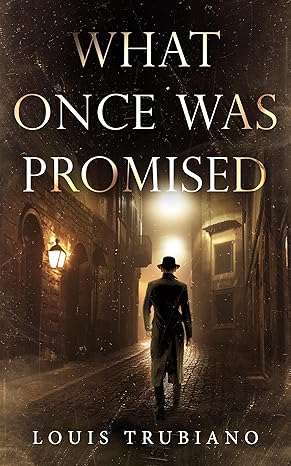

Set in 1914, What Once Was Promised by Louis Trubiano opens with sixteen-year-old Domenic Bassini, who boards the Cretic, bound for America and a future filled with unknowns. Leaving his family behind in Italy, Domenic’s journey across the Atlantic is one of hope and uncertainty. Aboard the ship, he meets Cologero and Francesca, a young married couple brimming with dreams of a new life, and Ermino, a stowaway searching desperately for his father. Together, they envision a land of promise and opportunity, unaware that the paths they embark on will twist and bind them together for decades in ways they could never have foreseen.
What Once Was Promised is a rich, multigenerational saga that vividly portrays the Italian immigrant experience in early 20th-century Boston. Trubiano masterfully blends themes of love, loss, family, and survival with the gritty realities of politics and organized crime. The setting bursts to life with meticulous detail, drawing readers deep into the vibrant world of Boston’s North End. Every corner of the city pulses with authenticity, from its cramped tenements to its bustling markets, without ever bogging down the narrative with overwrought descriptions. Instead, the immersion feels effortless, making you experience the hardships, the joys, and the perseverance of a community bound by heritage and resilience. What keeps this novel so captivating is the powerful sense of family that courses through its pages. The characters’ struggles against racism, punishing labor conditions, and the challenges of tenement life are rendered with empathy and depth. Trubiano weaves a story where survival isn’t just about overcoming obstacles but about the bonds that sustain and uplift. In a world battered by the flu epidemic, the Great Depression, and World War II, the lesson is clear: everything starts and ends with family, a timeless truth passed down through generations. The novel’s characters are unforgettable. Domenic, Ermino, Cologero, Francesca, and the many others who populate this story feel achingly real. Trubiano’s gift for character development ensures that each person leaves an indelible mark on the reader. Their choices shape their destinies in unexpected ways, and witnessing how their lives unfold is as rewarding as it is heart-wrenching.
The narrative evokes a spectrum of emotions, moments that made me laugh out loud, passages that brought tears, and scenes that left me gasping in shock. I found myself so engrossed in their world that I often paused to look up real events and figures from history, eager to know more. What Once Was Promised is a triumph of historical fiction that offers a deeply moving glimpse into the past. It’s a story of dreams, survival, and the enduring power of family, one that lingers long after the final page. Truly, I never wanted it to end.
Pages: 314 | ASIN : B0D57JJRJJ
A Historical Journey

The Road to Moresco follows an Italian woman and her daughter who, during WWII, faced multiple tragedies and had to find a way to survive amidst the constant turmoil. What was the inspiration for the setup of your story?
I was inspired by the actual life events of these two women and even more so their perseverance in the face of these events. I had the good fortune to meet the daughter, Clara, and through conversation with her, I began to also get details about her mother. The time periods and events these women had to endure mirrored a life existence that my own parents and their parents had. It was eye-opening to see this same time period through a different lens. I started doing research into the historical events during those times. I asked deeper questions about how societal shifts in mindsets influenced events and actions. First, I wanted to structure the story as a historical journey, staying true to the timetable of these events like landmarks on a road trip. Along the way, I noticed that the characters’ reactions and emotions became much more important, while the historical references shifted into the background as environmental. The dialogue between characters was the hardest part for me. I wanted to balance the “show don’t tell” aspect of conveying their thoughts and emotions with an almost Socratic-like approach to give the reader a better understanding about how their way of thinking was also changing over time. I do not think I would have been as passionate about telling their story in this manner and doing this work if I had not been so moved and inspired by them in the first place.
What are some things that you find interesting about the human condition that you think make for great fiction?
The human condition – what we feel, our emotions, the life events we encounter – can be the basis for empathy and connection to a reader. This goes beyond the psychology or philosophy that a reader may be looking for. There is an acknowledgement, the understanding, that binds the reader to the character leading to a condition where the reader cares about and for the character in the book. The reader sees themselves. They can live through the fiction as if they were there themselves. In that moment, they are on the same journey as the character. They are looking for the same thing. I tried to do that with my storytelling, so that at the end of the book it becomes a shared effort, that the reader, too, has been all along on the road to Moresco.
What were some themes that were important for you to explore in this book?
There is a central theme of water, first as destruction and catalyst for change, but also a binding element that brings people together. And ultimately a peaceful and serene element that conveys resolution and calm. I was also keen to explore the various theories of psychology and philosophy that not only were driven by shifts in societal norms but also that impacted the characters directly in how they coped with certain events or with each other. Blending Eastern versus Western philosophy was cathartic because I also had to infuse so much of myself into the book and into the characters, my imagination, and my real-life experiences having to fill the gaps.
Will there be a follow-up novel to this story? If so, what aspects of the story will the next book cover?
I think The Road to Moresco has its own place in my heart, with a certain sense of completeness and depth that I do not want to dilute. I wrote with a certain purposefulness and intended for the context to be approachable while also delivering on ideas and concepts that provoke introspection. I am hopeful people will read this book many times over and get something new from each time. I do not think there is a follow-up to this story. However, I am beginning to work on a new story. It is in the formative stages. I did not consider myself to be a writer before publishing Moresco, but I really enjoyed the process and the result.
Author Links: GoodReads | Website | Amazon
But when multiple tragedies struck – earthquakes and storms, unexpected deaths, World War II, broken relationships, even murders – she, and later her daughter Chiara, were forced to find a way forward despite their irreplaceable losses. Against the backdrop of a Europe in constant turmoil, their survival instincts, persistence, and resilience became their path forward. Discover more about these astounding, complicated, talented women in The Road to Moresco.
The Road to Moresco

Mark Jamilkowski’s inaugural novel, The Road to Moresco, presents a sweeping narrative that spans over 150 years, intricately weaving the threads of global historical events with the intimate saga of an Italian family. The novel’s canvas stretches from the mid-1800s in Sicily to contemporary Italy, tracing the Moresco family’s odyssey across continents and generations. Jamilkowski blends historical fact with fiction, creating a richly detailed world where readers can vividly experience both the grandeur and the turmoil of the times.
The novel’s strength lies in its complex and dynamic characters. It features a diverse ensemble, each navigating the turbulent waters of their personal and political realities. Particularly noteworthy are the novel’s female characters. They are portrayed as formidable and resilient, actively shaping their destinies against the backdrop of societal constraints.
Jamilkowski’s prose is evocative, painting each scene with such vivid imagery that readers feel transported into the heart of the story, experiencing its highs and lows alongside the characters. At the core of The Road to Moresco are themes of fascism, Nazism, and the ramifications of the Second World War. The narrative delves into the intricate dynamics of a mother-daughter relationship set against this tumultuous historical backdrop.
The story primarily focuses on Maria-Luisa Moresco, a determined pianist, as she juggles her career ambitions with the demands of family and motherhood, and her daughter, Chiara, who navigates her own complex path of love and duty. Their relationship, marked by love and conflict, mirrors the larger historical and cultural shifts of the era.
Jamilkowski’s debut novel blends music, war, love, and family life. It all comes together in a resonant and powerful narrative. This book is an engaging read for those interested in the interplay of history, culture, politics, and personal stories within the grand tapestry of a family saga. Jamilkowski’s work leaves an indelible mark, making The Road to Moresco a commendable addition to the genre.
Pages: 310 | ASIN : B0CCK7DMPJ


