Blog Archives
Resonance of the Soul -Flowers and Harmonics
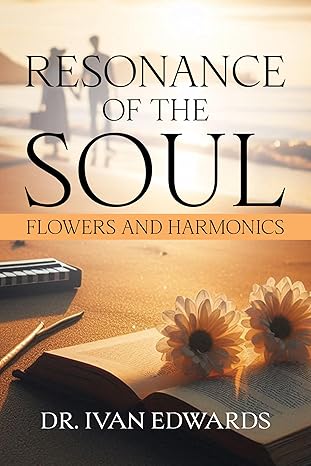

Dr. Ivan Edwards’ Resonance of the Soul – Flowers and Harmonics is a heartfelt and unfiltered collection of poems that dives into love, identity, culture, struggle, healing, and faith. Each section is like a room in a house built on raw emotion and lived experience. The poems weave together the intimate and the universal, from first love lost too soon to biting political commentary, from cultural pride to spiritual survival. It’s a spiritual map made of pain, joy, humor, and truth, written with a clarity that cuts and a tenderness that soothes.
Reading this book made me feel a range of things. Hopeful, angry, nostalgic, and sometimes just quiet. I loved the groundedness of it. Edwards doesn’t pretend to float above reality. He rolls around in it. His words hit you because they come from somewhere real. The poem about the mango, for example, starts sweet and ends as a bitter lament for what greed and corruption can destroy. There’s beauty, but also a sharp awareness that beauty is fragile. I was especially moved by “My Lioness,” which read like a love song with teeth. He writes women with deep reverence, and that matters. Some poems could feel a bit sermon-like, but even when he preaches, it’s from a place that feels earned, not lofty.
I also found his writing incredibly rhythmic and easy to feel, even when the topics were hard to face. The language is warm, clear, and full of music. No line feels accidental. He plays with structure, short bursts, long breaths, and questions that hang in the air. Sometimes it’s angry, sometimes forgiving. Sometimes it’s tired, then suddenly it’s dancing. There’s wisdom here, not just in ideas but in form. His poems about disability and struggle are some of the most honest I’ve read this year.
If you’ve ever loved someone deeply, if you’ve ever lost your way, if you’ve ever been underestimated, or if you just like poetry that speaks from the gut, this book is for you. It’s good for people who want their reading to feel like conversation, prayer, and protest all in one. I’d give this to artists, parents, students, wanderers, or anyone looking to feel seen.
Pages: 122 | ASIN : B0FJ8KLFTQ

Writing in the Moment

Always Something Heartfelt: Life, Love, and Heartbreak is a raw, vulnerable, and deeply personal collection of poetry and reflective prose exploring a myriad of human experiences. What inspired you to write this particular collection of poems?
Every piece in this collection was hand-stitched with everything I was feeling inside at the time of its inception. Growing up, it felt like the only time I was allowed to be sad, disappointed, hurt, etc. was at funerals. I started journaling when I was 17. It was a newfound outlet to what started to feel like a form of freedom to be able to communicate my raw emotions. Then, one near-fatal curveball in life, in the form of a car accident that physically propelled me from a vehicle, pushed me to open up to the world because life wasn’t promised. I gained the confidence to boldly articulate things I felt. Life became too short to be anything other than authentic. Through performing at spoken word events, I got feedback that showed me that my expressions were relatable. When I chose the poems from my collection to put together Always Something Heartfelt, I focused on providing my most genuine expressions. The goal was to expound on the notion that my experiences, though deeply personal, were relatable to others.
How do you approach writing about deeply personal or emotional topics?
I write what I feel in the moment with as much honesty as I can manage. I approach emotion the way I used to approach music—as therapy. Whether I’m hurting, reflecting, or just trying to understand something, I let the pen run freely. Free verse gives me the room to speak plainly and honestly, without worrying about form getting in the way of truth. I aim for clarity, and I hope that clarity resonates with people who’ve felt something similar.
Do you have a favorite poem in the book, and if so, why does it hold special meaning for you?
I do not have one particular favorite, but there are some poems I really like. That list includes poems like “She trusted Me”, “TV Failed Me”, “Maybe I never loved her”, “Windows”, “The next guy”, “Temporary insanity”, “I really wanted to”, and “Like you”. These are poems that are pivotal spaces and times in my life. To me, it’s like going through the pages of your life and marking them with a highlighter.
How has this poetry book changed you as a writer, or what did you learn about yourself through writing it?
Writing this book showed me that authentic emotions, though deeply personal, are very relatable beyond just the community that I’ve shared my expressions with over the years. These poems represent universal concepts that express how we all can feel at any given moment in life. That notion encourages me to keep writing and count myself as blessed to even have experiences to share. Though considered fleeting and temporary, emotions provide substance to your experiences and help you set, change, or stay the course in life.
Always Something Heartfelt Life Love and Heartbreak

Always Something Heartfelt is a raw, vulnerable, and deeply personal collection of poetry and reflective prose by Ashton Harper. Spanning multiple emotional phases of the author’s life, the book travels through love, heartbreak, fatherhood, self-doubt, spiritual resilience, depression, and healing. Divided into five parts, it weaves a nonlinear journey of introspection and reckoning, delivered through conversational yet impactful language. Harper reflects on intimate experiences and societal observations with unfiltered honesty, never shying away from emotional depth.
Reading this book felt like being invited into someone’s private journal—except the handwriting was lyrical and honest to the bone. Harper’s writing isn’t polished in the traditional literary sense, and that’s what makes it special. His language is colloquial, immediate, and unpretentious. There’s something deeply brave about the way he lays his pain bare—whether it’s about being alone, yearning for his child, or admitting where he’s gone wrong in love. He manages to ask the kind of questions we all keep buried. And when he’s angry or defeated or full of love, he lets it rip. It’s messy, but it’s real. At times, I found myself underlining lines like I was trying to hold onto pieces of someone else’s heartbreak to better understand my own.
The emotional weight can be heavy, and the lack of traditional structure might not be for everyone. But then again, that may be the point. Love, grief, identity—none of it follows rules. And Harper’s refusal to wrap his pain in bows or follow poetic conventions feels like an act of rebellion. A lot of his strongest pieces come when he shifts from personal reflection to cultural critique, challenging toxic masculinity, absentee parenting, and community disconnection. That balance of personal story and broader relevance gives the book its power.
If you’ve ever loved someone who left you, struggled to find your place in the world, or looked in the mirror unsure of what you saw, then Always Something Heartfelt Life Love and Heartbreak will feel like a conversation you didn’t know you needed. I’d recommend this book to readers who crave vulnerability and aren’t afraid to sit with discomfort. It’s soulful, heavy, and at times, beautifully healing.
Pages: 148 | ASIN : B0CTFPG56X

Navigate the Emotional Terrain

Downriver shares your story, starting with your childhood in Florida and continuing through the invasion of Iraq, the collapse of your marriage, and the aftermath of a Wall Street crash—all woven together with heartfelt prose and stirring poetry. Why was this an important book for you to write?
Downriver began as something deeply personal—a collection of journal entries and poems I wrote over the years to process grief, trauma, and the disorientation that came with life after war. At first, I wrote it for myself. It was never about creating a book; it was about survival. Writing became my way to navigate the emotional terrain that followed combat, heartbreak, and the collapse of what I thought life was supposed to look like.
For a long time, the manuscript sat untouched. But as I watched more veterans take their own lives, I felt a responsibility to finish it—not just as a form of personal closure, but as a way to contribute something honest to the conversation around healing, identity, and hope. I waited until my youngest child reached adulthood before publishing. I needed the time and distance to share something this vulnerable with the world. In the end, I wrote Downriver because I had to. I’m sharing it now because I believe it might help someone.
What was the most challenging part of writing your memoir, and what was the most rewarding?
The most challenging part was learning to shift from writing for my own catharsis to crafting a story that others could truly connect with. In the beginning, I was still working through many of the emotions tied to my experiences, and that made it difficult to shape a clear narrative. It took time—and distance—to move from simply processing events on the page to telling a story with structure, rhythm, and emotional accessibility for the reader.
The most rewarding part has been the connection it created—first with friends and mentors who read early drafts and offered honest feedback and encouragement, and now with a broader audience. Knowing that my words might resonate with someone else, especially another veteran or anyone navigating loss or identity, gives the project purpose beyond my own healing. If Downriver helps even one person feel seen or less alone, that will be the greatest reward.
How has writing your memoir impacted or changed your life?
The writing process has unfolded over decades—it’s been a companion through the many seasons of my life. In revisiting old journal entries and poetry, I could see not only how my writing evolved, but how I evolved as a person. Writing Downriver gave me the space to reflect on where I’ve been, what I’ve endured, and how my perspective has shifted with time.
It taught me to embrace life’s unpredictability—to see it less as a straight path and more as a river, full of twists and turns that shape us along the way. More than anything, it helped me reconnect with what truly matters: family, purpose, and peace of mind. Writing this memoir didn’t just help me make sense of the past—it helped me let go of it.
What do you hope is one thing readers take away from your story?
In writing Downriver, I tried to “show, not tell”—to invite readers into the story rather than prescribe what they should take from it. In that way, the book often feels like a kind of Rorschach test: what you see in it may reflect where you are in your own journey, or where you’ve been. Everyone brings their own lens, and I welcome that.
That said, my hope is that Downriver prompts readers to reflect on their own lives—to find moments of connection, resilience, or healing within the story. And if it helps even a few readers deepen their sense of empathy—for veterans, for family members, or even for themselves—then I’ll consider the book a success.
Author Links: GoodReads | X (Twitter) | Facebook | Website | Amazon
Downriver: Memoir of a Warrior Poet
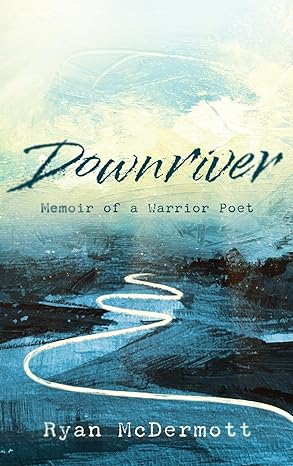
Ryan McDermott’s Downriver is a gripping, soul-baring journey through war, love, loss, and redemption. Told with brutal honesty and poetic depth, the memoir follows McDermott from his childhood in Florida through the invasion of Iraq, the collapse of his marriage, and the aftermath of a Wall Street crash—all woven together with heartfelt prose and stirring poetry. What sets Downriver apart is how it tackles both battlefield chaos and the quiet devastation of postwar life, showing that the real war often begins once the uniform comes off.
Right away, I was pulled in by how personal this book feels. McDermott doesn’t hold back. He opens with a harrowing moment—bruised and bloodied after a home invasion, alone in a city apartment, stripped of everything but memory. That raw vulnerability never lets up. He takes us through childhood in a fractured home, trying to make sense of who he is without a father. Chapters like “Foreclosing of a Dream” hit hard; the foreclosure wasn’t just on a house, but on his sense of stability and identity. It’s not often you read a military memoir that starts this far upstream, and I appreciated that McDermott let us walk with him through every bend of the river.
The writing, at times, just knocked the wind out of me. His use of poetry throughout—like the haunting “Remains of the Night”—adds emotional punch in all the right places. When he writes about leaving for war in “Saying Goodbye,” or about the surreal emptiness of returning home in “Coming Home,” I didn’t feel like a reader. I felt like I was there, sitting beside him, taking the same blows. His style is clean and unpretentious, yet layered with meaning. Even the way he describes seemingly mundane things—like living off canned tuna in a DC apartment—feels heavy with metaphor. This guy doesn’t just tell you what happened. He makes you feel why it mattered.
That said, it’s not all poetry and heartbreak. There’s grit here. There’s leadership, courage, and a whole lot of failure-turned-growth. I loved the chapters about his early military training, particularly “Becoming a Leader.” The scenes of combat are vivid but not glorified, and what stuck with me wasn’t the action but the moral gray zones, the toll on the soul. I saw echoes of The Things They Carried and even a bit of Catcher in the Rye, but with more sand, steel, and stock market crashes. When he pivots into his postwar life—working at Lehman Brothers during the 2008 collapse, then spiraling—it’s not a smooth arc. It’s jagged, messy, human. Just like real life.
In the end, this book left me with a deep respect for what veterans face—not just in uniform, but in the years that follow. Downriver isn’t just about surviving war. It’s about surviving everything after. I’d recommend this book to anyone who wants to understand the emotional aftermath of war, or who’s ever felt lost and tried to find meaning through pain. It’s a must-read for fans of memoirs, veterans, poets, and anyone wondering what resilience really looks like when the river turns dark.
Pages: 294 | ASIN : B0DYRH1GLN
My Lost Pages

Poetry collections are always an enigma, their depths as varied as the voices that create them. Sneha Sabu’s My Lost Pages offers an immersive journey into the poet’s psyche, where each poem unfolds like a spontaneous dialogue with her subconscious. This collection brims with fleeting moods and restless introspection, carrying the reader through meditations on identity, existence, and the enigmatic essence of being alive.
Written in free verse, Sabu’s poetry defies structure while embracing rhythm, drawing comparisons to literary greats like William Blake, Ezra Pound, and Emily Dickinson. Some pieces stand solitary, sharp and self-contained, while others spill into one another, creating a seamless stream of thought. Reading these poems feels akin to stepping into a lucid dream, where the boundaries between musings and realities blur. Sabu muses on the delicate threads connecting life’s vastness to her inner world, weaving disparate ideas into an intricate tapestry of thought.
The collection invites two modes of engagement. One can focus on the impact of individual poems, letting their emotional resonance linger and evolve. Alternatively, one might search for a greater narrative—subtle connections bridging the poems into a singular exploration of meaning. Both approaches reward the reader with insights that feel both deeply personal and universally reflective. A unique touch comes from Sabu’s candid notes accompanying each piece. These glimpses into her creative process transform the collection into an intimate conversation, fostering a sense of closeness between poet and reader. The transparency adds another layer of depth, allowing the audience to peer into the moments of inspiration behind the verses. Together, these poems form a soothing cascade, washing over the reader with their contemplative tones and evocative imagery.
The collection creates an atmosphere of serenity rarely achieved in prose, inviting reflection and stillness. Sabu’s voice emerges as both plaintive and probing—confident in some moments, tentatively exploring in others. She traverses the complexities of existence with grace and curiosity, seeking to unravel life’s intricate mysteries.
My Lost Pages is a lyrical meditation, one that lingers in the mind and invites repeated readings. It is as much an exploration of the poet’s inner world as it is a mirror for the reader’s own thoughts and feelings. Sabu proves herself a voice worth listening to—raw, reflective, and profoundly human.
Pages: 87 | ASIN : B0CX5CBV6S
Honoring My Life Through Poetry

In Little River of Amazements, you invite readers to explore the human experience through your collection of poems featuring a variety of themes from travel to faith and religion. What inspired you to share this collection of poetry?
As I began to work on this collection of new and selected poems, at the urging of my wonderful editor, Diane Frank, of Blue Light Press, I realized it was different from compiling my earlier poetry books. It was constructing a life in poems, a creation of a personal mythology. It took me a long time to complete it – more than three years. Fifty pages are new poems – the others are from my previous collections. I love doing readings from this book because it feels that I am honoring my life, the people, the experiences, the learnings that are its center. And I think much of it relates to universal experience.
Of all the topics you write about in your poems, what is the one that resonates most with you? Do you have a favorite selection?
I can’t really choose one. Several themes unite the poems in this book and run through my life: the sacredness of nature and of the body, the lives of women in history — ancient, medieval, contemporary, the emergence of voice from deep silence and the spiritual silence we grow into, a lifetime search for meaning. My favorite poem in the book is a sequence of poems called “In the Margins of the Pages.” It originally appeared in my book The Illuminations from 2006 and came out of a study of the the Book of Kells, an eighth century illuminated manuscript on display in the library of Trinity College, Dublin. I loved responding to the medieval drawings with a woman’s interpretation. It pulls together so many of the themes that weave throughout all my poems – Celtic and medieval culture, architecture, symbolism, sexuality, interpretations of Christianity, visual art, immanence in nature.
I have also written some wonderful love poems.
What is one thing you hope readers are able to take away from your collection?
I began writing poetry as a response to life and a search for personal illumination. I hope my poems inspire others on their journey and touch people with beauty through the music of language.
Can fans look forward to more poetry from you soon? What are you currently working on?
I am always writing poems and making books. My challenge is to create beauty in new ways. That’s what I am working on.
I will end with a quote from poet Nicholas Gulig: In my experience, poetry, at its best, breathes life into communities because poetry is, in essence, a deeply communal act.
Author Links: Facebook | Website
Little River of Amazements: New and Selected Poems

Little River of Amazements is a captivating poetry collection that delves into a diverse range of themes, from the intimate dynamics of family to the boundless horizons of travel. Mary Kay Rummel’s poems invite readers to contemplate the complexities of the human experience. Her exploration of spirituality, particularly in pieces like “Life is Losing and Reinvention,” is both compelling and relatable, offering a candid perspective on faith and religion.
Rummel’s keen observation of the natural world is evident throughout the collection. Her ability to capture the essence of her surroundings is truly remarkable, as showcased in “Seven Ways to Change the Names of the Days.” The warmth and nostalgia in her portrayal of her deep connection with her grandmother add a poignant layer to the collection. These evocative poems stir memories of time spent with loved ones, creating a sense of intimacy between the reader and the author.
The author’s mastery of language is undeniable. Rummel crafts intricate sentence structures and employs vivid imagery, creating a truly immersive reading experience. Her poetry is both inspiring and challenging, encouraging readers to view the world through a fresh lens. Ordinary experiences are transformed into extraordinary poetic moments through her skillful use of language.
For those with a wanderlust spirit, Rummel’s travel poems offer a vicarious adventure. Her words transport readers to distant lands, inviting them to share in her experiences and insights. Through her poetry, one can almost feel the sun on their skin, the wind in their hair, and the wonder of new cultures. Little River of Amazements by Mary Kay Rummel is an invitation to view the world through the lens of the author. Rummel’s work is a testament to the power of language to evoke emotion, inspire thought, and broaden perspectives. Her ability to find beauty and meaning in the ordinary is a gift she generously shares with her readers.
Pages: 236 | ISBN : 978-1421835570


 LITERARY TITAN