Blog Archives
The Goldilocks Genome


The Goldilocks Genome blends grief, science, and revenge into a fast, unsettling medical thriller. It opens with Wendy Watanabe von Gelden’s suicide from the Golden Gate Bridge, a scene written with heartbreaking clarity as she weighs her odds, studies the geology around her, and quietly accepts her choice. Her death pulls the story into motion, setting up a chain reaction that exposes how a mismatch between her genetics and her prescribed antidepressant, fluoxetine, may have doomed her from the start.
Wendy’s voice is sad, sharp, and painfully rational, and the writing pulls you into her head without melodrama. The small scientific observations she made, even minutes from death, got to me the most because they felt like the last sparks of the person she was. That restraint in the writing made the moment linger long after I turned the page.
Jonas, her husband, is a totally different emotional experience. He’s arrogant, rigid, and weirdly fragile, and watching him spiral after Wendy’s death was both frustrating and compelling. His disbelief feels delusional, and yet very human. When Anne later explains the “Goldilocks effect,” the shock and fury Jonas feels actually rubbed off on me. The data about CYP2D6 variants and how Wendy couldn’t metabolize Prozac correctly made the tragedy feel maddeningly preventable.
The book really hooked me once Jonas shifts from grieving to calculating. His transformation into a methodical avenger is slow enough that I caught myself almost sympathizing before remembering he’s crossing lines he can’t uncross. His “gift” to Wendy’s psychiatrist, a rare 1811 port that becomes his chosen method of revenge, was one of those scenes where I literally whispered “oh no, don’t open that.” It’s twisted, but in the gripping, can’t-look-away way.
What surprised me most is how entertaining the science is. Pharmacogenomics, enzyme polymorphisms, metabolizer types, none of this should feel dramatic, but it does because the book keeps tying the technical details to emotional stakes. By the end, I was thinking less about the murders and more about how often real-world medicine relies on guesswork.
I’d recommend The Goldilocks Genome to readers who enjoy thrillers grounded in real science, fans of Crichton, medical mysteries, or anything that mixes brains with adrenaline. It’s sharp, tense, and surprisingly moving.
Pages: 306 | ASIN : B0CJBQX6WR

Sick
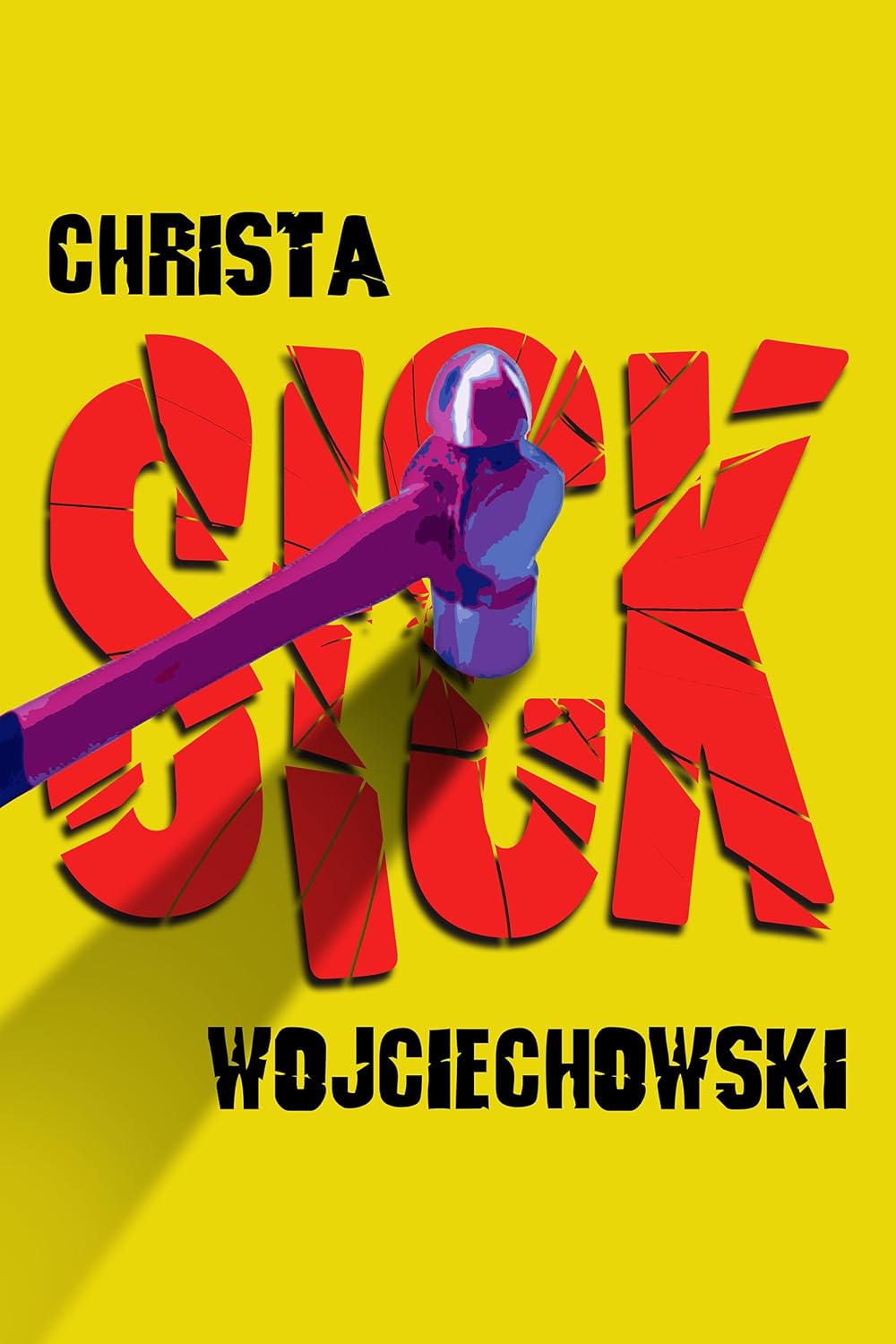
Sick is a deeply unsettling psychological horror novel that follows the toxic, codependent relationship between Susan and her chronically ill husband, John. What begins as a tale of dutiful care gradually descends into something far more sinister. The book explores themes of love, martyrdom, manipulation, and the blurry line between devotion and delusion. At the center is a marriage teetering on the edge of madness, where illness, real or imagined, becomes both the glue and the weapon that binds them.
It wasn’t just the disturbing imagery or the suffocating atmosphere, it was how intimate it all felt. I was drawn in by the clean, evocative prose and the slow, relentless build-up of dread. Author Christa Wojciechowski doesn’t rely on cheap scares. Instead, she weaponizes empathy, using Susan’s exhaustion and desperation like a knife twisting in your gut. Anyone who’s ever been trapped in a one-sided relationship or felt obligated to care for someone while losing themselves will feel that sting.
John is infuriating. He is charming, pathetic, childlike, and monstrous all at once. I found myself swaying between pity and revulsion. And Susan is no angel either. Her love feels noble one minute and complicit the next. Wojciechowski manages to make the reader complicit, too. I kept asking myself why I felt sorry for someone who was clearly manipulating the woman who loved him. But then I’d see his suffering again, and it would all blur. That’s the genius of this book. It messes with your moral compass.
There’s a smell to this book. Not literally, of course, but in the way Wojciechowski describes bodies, fluids, wounds, and rooms filled with neglect. And beneath it all, I could feel this aching, awful love. The writing doesn’t scream. It whispers. And that’s so much worse. It made me uncomfortable, not with violence or gore, but with how honest it was about how far people will go to feel needed.
There were times when I wanted to yell at Susan to run. Other times, I wanted to wrap her in a blanket and tell her it was okay to stop giving so much of herself. I think that’s why the story is so effective, it holds a mirror up to all the ways we lose ourselves in caring for others. The manipulation in this book is terrifying, not because it’s extreme, but because it’s familiar.
If you want a slow-burn, character-driven descent into psychological horror that feels both intimate and raw, Sick is a must-read. It’s perfect for readers who enjoy books like Gone Girl or The Shining, but crave something smaller in scale and more emotionally claustrophobic. It’s not just horror. It’s heartbreak in disguise. I’d recommend it to anyone interested in the darker sides of love, mental illness, and the twisted things we do in the name of care.
Pages: 282 | ASIN: B0FL5RTYQ9
Difference in Perspective

Conversations with My Mother tells the tender and heartbreaking story of a son watching his mother fade into dementia. What was the inspiration for the setup of your story?
I started writing the book after a weeklong stay with my mother, during which she’d been diagnosed with vascular dementia. Afraid that the mother I’d known was fast disappearing, I began visiting and calling her as often as possible. Consequently, from her initial diagnosis through her passing several years later, I periodically witnessed both firsthand and at a remove her growing disorientation and anxiety as well as her increasing bursts of candor and flights of fancy. It was this on-again, off-again exposure to the effects of her condition that led to the episodic construction of the book, whose chapters recount particular days or moments in the course of the heroine’s long and debilitating illness.
Are there any emotions or memories from your own life that you put into your character’s life?
Since Conversations With My Mother is a kind of fictionalized memoir, many of the narrator Rob’s emotions and perceptions reflect my own. From 70 to 80 percent of the book’s events are based on memories, though some were melded or otherwise modified to support its narrative and thematic development.
What were some themes that were important for you to explore in this book?
The book’s central theme is that loss is not always as complete as it might seem. Though a dementia victim’s personality may fade or shatter, fragments of it often remain, and we should do our best to recognize, respect, and cherish them, however few.
Another important theme is the disparity between a geographically distant offspring’s experience of a parent’s dementia and that of an offspring who is a caregiver and, as such, in constant contact with the parent. For example, the book’s narrator, Rob, lives several states away from his mother, so he experiences her decline only in periodic phone calls and visits, whereas his sister, Diane, her primary caregiver, experiences its consequences daily. This leads to a difference in perspective between the two, with Rob being more focused on the emotional and Diane on the practical. Rob, from his insulated remove, occasionally glosses over or sentimentalizes issues, which is easy to do from a distance, while Diane, being in the thick of caregiving, sometimes feels overwhelmed and becomes impatient, which is understandable, given the demanding, continuous nature of caregiving. Neither perspective is more valid than the other. Each is simply the result of the character’s particular circumstances.
What is the next book that you are working on, and when is that book due out?
My next book is a family saga describing the experiences of a French-Canadian immigrant woman from the dawn of the 20th century through the 1980s, contrasting her early life’s poverty and hardships with the different challenges faced by her more affluent children and grandchildren. Like Conversations with My Mother, it’s based on my family’s history, drawing on the experiences of both my maternal and paternal grandmothers. I expect it to be ready for publication sometime in 2027.
Author Links: GoodReads | Amazon
Distinguished Favorite, New Fiction, 2025 Independent Press Award
Honorable Mention, 2021 Lorian Hemingway Short Story Competition
Conversations With My Mother, a Novel of Dementia on the Maine Coast

Conversations with My Mother tells the tender and heartbreaking story of a son watching his mother fade into dementia. Set on the coast of Maine, the book unfolds through small, vivid vignettes that capture the everyday beauty and sorrow of a family coping with loss long before death arrives. Through these fragments, each like a brief conversation or memory, the narrator shows his mother’s slow descent into confusion and fragility, while also revealing flashes of her wit, compassion, and stubborn humor. It’s as much about remembering as it is about forgetting, about holding on when life insists on letting go. The setting, with its shifting skies and sea winds, mirrors the mother’s mind, sometimes calm and lucid, sometimes clouded and unpredictable.
Reading this book felt like sitting in a quiet room, listening to two people who love each other deeply but know time is running out. The writing is simple yet piercing, with a kind of understated poetry that sneaks up on you. I found myself laughing at the mother’s dry remarks one moment and then, without warning, feeling my throat tighten the next. Gilbert doesn’t dramatize dementia; instead, he honors it with honesty. The story never begs for pity. It just shows life as it is, messy, unfair, beautiful. I admired how the author used humor to cut through the sadness. It’s the kind of humor that comes from people who’ve lived long enough to know that grief and laughter are two sides of the same coin.
What struck me most was the way Gilbert made the ordinary feel sacred. A drive to a hair salon, a walk to the beach, a chat about blueberries, these moments hold whole worlds of memory and meaning. The mother’s voice lingers long after you finish, a mix of sharp wit, old-world grace, and quiet resignation. There were times I wanted to reach into the page and hold her hand. The author’s restraint, his refusal to sugarcoat or sensationalize, gives the book its power. It’s a love letter wrapped in loss.
I’d recommend Conversations with My Mother to anyone who has cared for an aging parent or watched a loved one slip away piece by piece. It’s not a light read, but it’s a comforting one, full of truth and tenderness. This book is for readers who value quiet stories that move slowly and hit hard. It left me sad but grateful, reflective but strangely uplifted. Gilbert reminds us that even as memory fades, love stays, steady, stubborn, and shining through the fog.
Pages: 315 | ASIN : B0DHW9B73V

The Doc’s Christmas Miracle


S.A. Stolin’s The Doc’s Christmas Miracle is a heartfelt romance set in a snowy mountain town, centering on Dr. Mark Moore, a disgraced Alzheimer’s researcher seeking redemption, and Dr. Susan Pace, a guarded psychiatrist fiercely devoted to her holistic treatment methods. Mark brings with him a controversial memory-repair machine, hoping to prove its worth at the Sam Heard Clinic. What follows is a tender, often tense story of healing, trust, second chances, and the unspoken grief both doctors carry, all under the soft glow of Christmas lights.
What I liked most about the writing was its emotional depth. The author doesn’t rush the romance, which I appreciated. Mark and Susan’s push-pull dynamic felt believable. Their baggage isn’t treated like plot filler; it actually shapes who they are and how they relate to each other. The story touches on serious themes like Alzheimer’s, professional betrayal, and grief, yet never lets the weight of those topics overshadow the spark of hope running through it. The dialogue, while occasionally dramatic, felt natural and kept me emotionally invested. The snowy setting, the warmth of the townsfolk, and the spark between the leads all came together beautifully. I could practically hear the fire crackling in Mark’s cabin and smell the spaghetti sauce in Susan’s kitchen.
I do feel that some of the early exposition took a bit of time to settle into, especially the technical descriptions of Mark’s memory machine. While clearly important to the story, those sections felt slightly more clinical than the emotional tone elsewhere. Susan’s initial aloofness also came across a touch stronger than expected, though it made her gradual softening all the more satisfying. And Dr. King, while serving his role well, occasionally edged close to a familiar “corporate antagonist” mold. These were small moments in an otherwise well-paced, heartfelt narrative that gave its characters room to breathe and grow.
The Doc’s Christmas Miracle is a lovely and warm story with a genuine heart. If you enjoy clean, character-driven romances with medical backdrops and small-town charm, you’ll want to curl up with this one on a snowy night. It’s for readers who believe in second chances, both in love and in life.
Pages: 194
Rampant Spread of Misinformation

Toxic Minds is a high-stakes medical thriller that plunges a hospitalist into a deadly collision of grief, cultish ideology, and the seductive power of misinformation. What was the inspiration for the setup of your story?
My books in the Dr. Mark Lin Medical Thrillers series involve a new approach to the medical thriller genre, by exploring the intersection between the world of healthcare and society at large. I can imagine plenty of ways where villainous actions out in society result in unusual medical mysteries and crises, such that Dr. Mark Lin, who is disgusted with the worst of humanity, is motivated to go beyond the hospital and tackle the problem at its root. My previous novel, Doctor Lucifer, dealt with a computer hacker interfering with medicine. This time, my latest novel Toxic Minds takes on the issue of cults and disinformation disrupting healthcare.
The inspiration for Toxic Minds draws from my concern about the rampant spread of misinformation and disinformation, particularly in the last decade or so. Whether it involves medicine, science, news, or politics, and whether it’s spread through social media, podcasts, or other routes, misinformation and disinformation have been a serious concern. We have seen tragic deaths during the COVID-19 pandemic that could be attributed to false information about how to treat that disease. Outside of medicine, false information has caused massive divisions and bitter arguments related to major topics like climate change and elections. Then there are examples in which strong belief in ideas contrary to real-world evidence has led to threats of or actual attempts at violence.
As for the issue of cults, they’ve always been around and they still are. I especially remember the Heaven’s Gate cult in the late 1990s, where members had committed mass suicide out of the belief that they can be freed from their bodies and taken away by a comet passing by Earth. That was the first time in my life where I heard about a cult doing something extremely dangerous. It stuck with me for a while.
Altogether, my strong concerns about cults and disinformation led me to create a fictional cult that spreads medical disinformation. That, in turn, led to the writing of Toxic Minds.
The bombing scene is written with restraint but hits hard. What was your approach to writing trauma without relying on graphic imagery?
I’ve always appreciated the technique of hinting at a horror without being explicit about it. A classic example of this is the movie Jaws, where you know a big shark is coming even though you don’t actually see it during its approach. For this scene in Toxic Minds, having the protagonist witness the bombing audibly via a phone call is a perfect way to inflict trauma without imagery.
How did you research the blend of medical realism and conspiracy-driven ideology?
I did plenty of reading into cults in general, along with specific examples of cults like Heaven’s Gate, the Branch Davidians, and the Children of God. The big takeaway is that it doesn’t matter how absurd the cult’s beliefs are. As long as the human mind is susceptible to psychological manipulation, it is possible to get anyone to believe pretty much anything. This made it relatively easy to create the Path to Purity, the fictional cult in my novel. I did not have to follow rules about how cults work because there is no limit to how they function and what their beliefs are. I just created whatever I felt like. Once I did that, then it was a matter of figuring out what medical ailments would result from the Path to Purity. My previous background in medicine made that part easy.
What is the next book that you are working on, and when will it be available?
I have begun working on the third novel of the Dr. Mark Lin Medical Thrillers series. I do not wish to disclose the topic at this time, but let’s just say it’s one that plenty of past medical thrillers have tackled. Still, it will be my own unique take on it.
Author Links: GoodReads | Website | Amazon
For hospital physician Dr. Mark Lin, nothing is more gut-wrenching than saving a life only to see it taken by murder.
When one of his patients is killed by a suicide bomber blowing up a clinic, everyone points the finger at a group of anti-abortion extremists. Mark, however, knows the killer’s final words and has a different theory about the culprit: a secretive healing cult called the Path to Purity. It seems the only way to get answers and avenge his patient is to join the Path himself.
Juggling the dual roles of doctor and undercover cult follower, Mark treats patients for ill effects of the Path’s dangerous practices while also proving his worth and advancing along the Path’s ranks. He has only one goal: get close to the mysterious leader known as the Sun Priest and destroy the cult. But the deeper he goes, the deadlier things get. Mark will stop at nothing to uncover the truth, before getting trapped in a heinous plot that could spell devastation on a massive scale.
Toxic Minds is Anthony Lee’s medical thriller where healthcare collides with disinformation and a hateful mind losing touch with reality is the most dangerous of all.
My Medical “Fate”

Memory Weavers follows Rachel, who is haunted by past trauma, and Hadley, who is unraveling from memory loss, as their lives intertwine in a journey of heartbreak, resilience, and self-discovery. What was the inspiration for the setup of your story?
My mother had Alzheimer’s disease, and I was her primary caregiver. I am also a Master’s prepared psych nurse (U of Pa, ’84) and drew from professional experience.
The contrast between Rachel’s deep friendships and Hadley’s more performative relationships is striking. Was this intentional from the start?
No, it was not intentional.
The GenSeq DNA-testing subplot adds a unique element to Hadley’s story—what drew you to include this?
I knew a woman who was asymptomatic and suddenly learned she had a large brain tumor. I decided to get my genome sequenced to learn my medical “fate.” While doing so, I learned what was involved in the sequencing and experienced the angst associated with waiting for and learning the results.
What is the next book that you are working on, and when will it be available?
I am working on a novel about a person with bipolar disorder. I founded the International Bipolar Foundation and have extensive experience in this field. I do not know when the book will be ready.
Author Links: LinkedIn | Facebook | Website
Memory Weavers
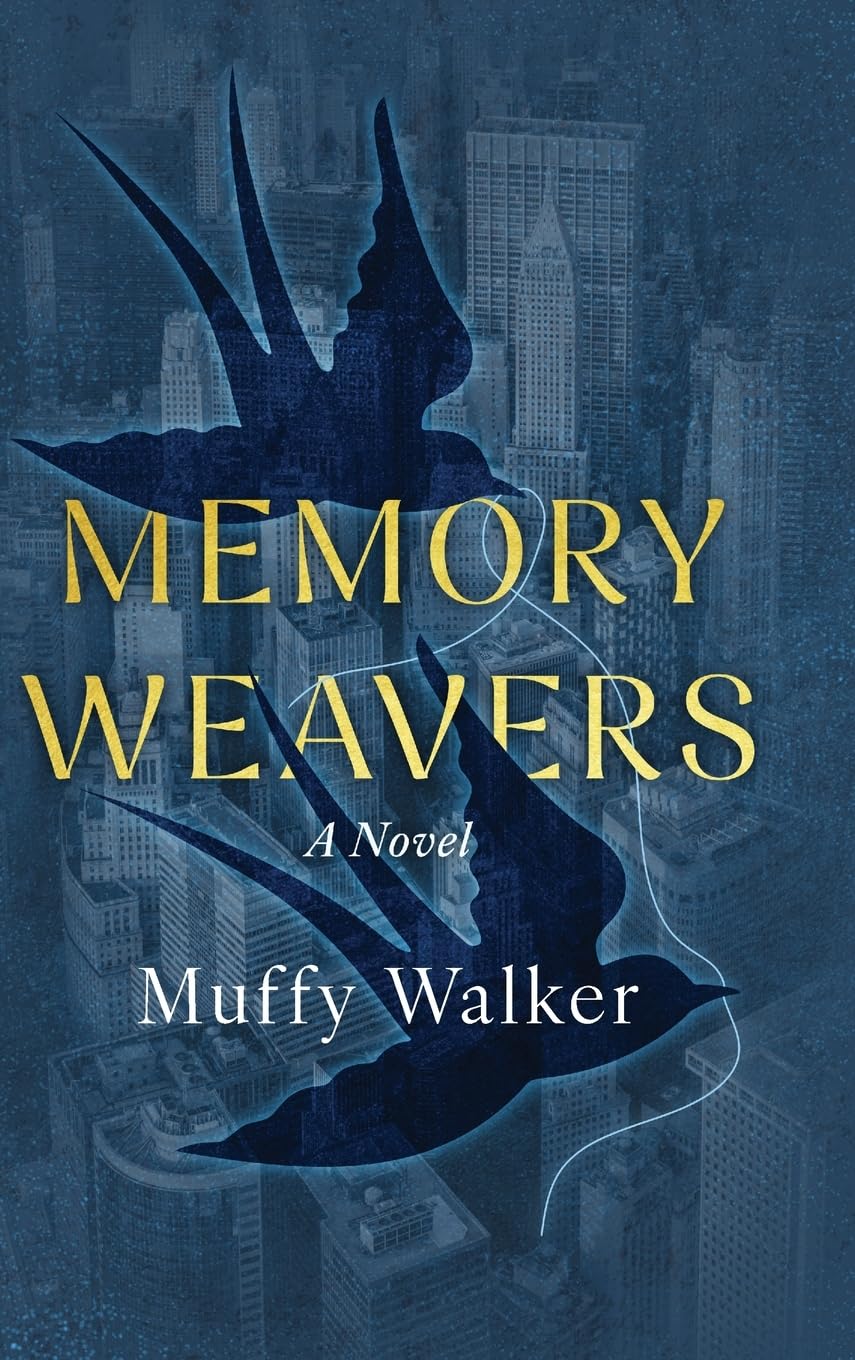
Muffy Walker’s Memory Weavers intertwines the lives of two protagonists, Rachel, a young woman grappling with the shadows of past trauma, and Hadley, a driven professional navigating memory loss amidst an outwardly perfect life. The narrative alternates between their perspectives, weaving a rich tapestry of heartbreak, resilience, and self-discovery. Through Rachel’s struggles with PTSD and Hadley’s unraveling as she confronts the gaps in her memory, the book explores the fragility of identity and the ways we confront pain to reclaim ourselves.
Walker’s prose is sharp and evocative, and the opening scene with Rachel and her dying friend Hadley is beautifully intimate, setting the stage with raw vulnerability. You can almost feel the texture of the lavender oil and the unspoken words between them. Some sections, such as Rachel’s detailed recounting of a failed Tinder date or Hadley’s over-meticulous party planning, seemed slower for me, and I found myself wishing the narrative would stick more to the emotional core rather than veering into minutiae.
The themes Walker addresses, such as trauma, memory, and the fight for autonomy, are deeply moving, but there’s a subtle imbalance in execution. Rachel’s chapters are heartrending, particularly the vivid depiction of her PTSD triggers, like when the scent of aftershave catapults her into a flashback. These moments feel visceral, raw, and uncomfortably real. Hadley’s storyline, on the other hand, didn’t quite grip me as much. While the GenSeq DNA-testing subplot is intriguing, the emotional stakes felt diluted compared to Rachel’s journey. That said, Hadley’s reflection on a photograph she can’t remember, a Sanibel beach trip with her family, is haunting and relatable, a quiet metaphor for her unraveling.
Walker’s strength lies in her portrayal of female friendships and the quiet, sustaining power they hold. Rachel’s relationship with Mandy is a standout, embodying unwavering support and warmth. Even Rachel’s occasional prickliness doesn’t diminish the sincerity of their bond. On the flip side, Hadley’s interactions with her friends feel more performative, offering a subtle critique of the superficiality that can exist in seemingly perfect lives. These contrasts enrich the novel’s exploration of connection and authenticity.
By the end, Memory Weavers left me reflective. It’s a story that doesn’t shy away from pain but also offers a glimmer of hope. I’d recommend this book to readers who appreciate emotionally layered stories about overcoming inner demons. While its pacing and focus sometimes waver, its emotional depth and honesty make it a poignant, memorable read.
Pages: 272 | ASIN: B0DT7V6K3L


 LITERARY TITAN