Blog Archives
Femme Led
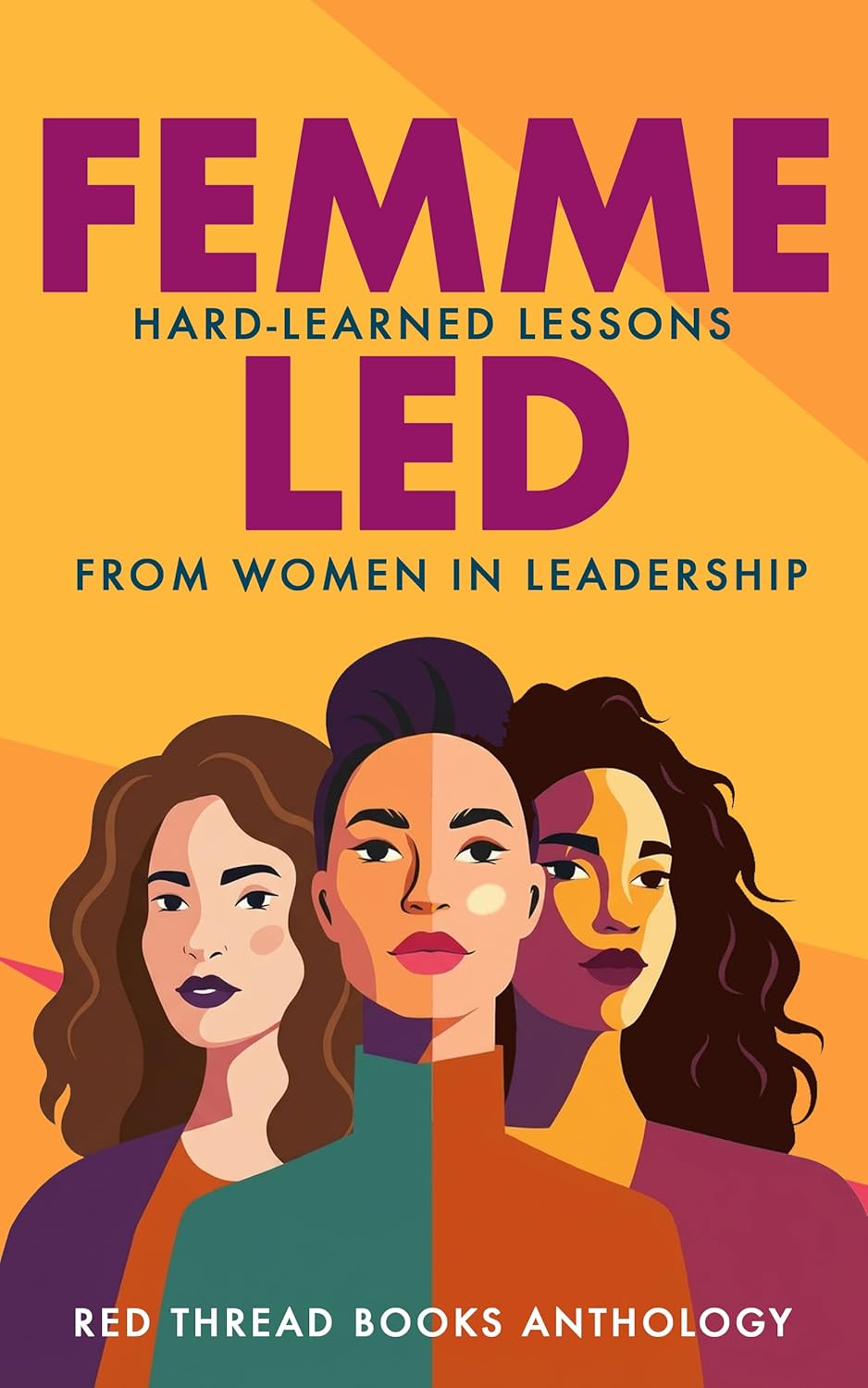

Femme Led: Hard-Learned Lessons from Women in Leadership is an anthology of women’s leadership stories that asks what becomes possible when leadership is no longer treated as control, performance, or self-erasure, but as truth lived in public. Across its chapters, the book moves from Sierra Melcher and Stephanie Mikulasek’s framing of the “leadership leap” to stories of reinvention, illness, entrepreneurship, grief, courage, and generosity. Catalina Escobar Bravo’s memories of growing up in Medellín, sleeping with taped windows during years of violence, eventually deepen into her purpose-driven work with Makaia. Carol Britton’s account of stepping into a high-pressure procurement role at the Bank of New York turns fear into a managerial instrument rather than an obstacle. Anna Dravland’s stroke and her transformation from a woman who did everything into a leader who built like a starfish instead of a spider web may be the book’s most tender image of all. Together, these essays argue that leadership isn’t a costume women must wear correctly. It’s a reckoning with one’s own voice, limits, power, and capacity to keep becoming.
What moved me most was the book’s assertion that the body often knows before the résumé does. I felt that idea gathering force each time a woman chose alignment over appearances: Tracy Macdonald turning in her badge and weapon after realizing the Secret Service no longer fit the life or values she could carry, Catalina stepping aside from the CEO role at Makaia to protect the mission rather than her title, Stephanie admitting that certainty itself had become a cage. These aren’t tidy triumphs. They ache. The book does a great job of showing how the emotional truth of leadership is often found in unmarketable moments: fatigue that rest doesn’t fix, ambition that has gone hollow, success that starts to feel like betrayal. I admired the way the authors return again and again to intuition without making it flimsy. Here, intuition is data of another kind, less quantifiable, perhaps, but no less exacting.
Some chapters read like polished keynote addresses, clear, instructive, almost ceremonious. Others arrive closer to confession, with rougher edges and a more immediate heat. Anna’s chapter, shaped around the aftermath of brain injury, resists a conventional arc, and I found that choice not only compassionate but artistically right. It lets form carry meaning. I was also struck by the range of metaphors the book earns rather than merely decorates with: the “leadership leap,” the internal flame, the spider web in a storm, the starfish that can keep functioning while it heals. The ideas circle familiar territory around purpose, resilience, and authenticity, but the best pieces refresh those words by grounding them in the particulars that people actually lived through, like Janice Marquardt leasing an office so her work would stop being absorbed by the quiet gravity of household labor, or Alexandra Yung reframing business as giving rather than transaction.
Femme Led respects uncertainty as part of the work. Leadership becomes most humane when women stop asking permission to be whole. I’d recommend this book to women in transition, founders, executives, coaches, nonprofit leaders, creatives, and anyone who has achieved the thing they thought they wanted only to feel some private truth pressing against the edges of it. This book’s gift is reminding us that crossing over can be frightening, scary, and necessary all at once.
Pages: 200 | ASIN : B0GQJPDW8Q

Maximizing Organizational Performance: A Guide to Effective Performance Coaching

Maximizing Organizational Performance is a practical guide that dives deep into the power of performance coaching within organizations. Dr. Patrick Behar-Courtois lays out a clear, real-world approach to building coaching systems that help people grow and perform at their best. The book covers everything from understanding coaching fundamentals and identifying performance gaps to measuring success and adapting to hybrid work environments. Each chapter is full of case studies, personal stories, and actionable tools meant to empower leaders, HR professionals, and coaches alike to create high-impact coaching cultures.
What stood out most to me was the author’s voice. It’s rare to find a book that mixes business savvy with raw honesty in such a relatable way. Patrick’s early career failures and triumphs set the tone right away. It didn’t feel like he was preaching from a mountaintop. Instead, it felt like sitting across from someone who’s been through the trenches. Someone who learned the hard way that performance isn’t just about pushing people harder, but about supporting them smarter. The stories about his early coaching experiences gave the book emotional depth. I found myself pausing at moments just to reflect on my own leadership habits. His writing struck a balance between tough love and genuine care. It made me think more deeply about how I show up for my team.
As for the ideas themselves, they’re refreshingly no-nonsense. The book doesn’t try to dazzle with corporate buzzwords or theories. Instead, it’s packed with down-to-earth advice that works. I appreciated how Behar-Courtois emphasized tailoring coaching plans to individuals, respecting each person’s unique strengths, struggles, and pace. He also tackled common leadership blind spots like overestimating one’s impact or skipping structured feedback, with clarity and candor. While some concepts like SMART goals or 360-degree feedback aren’t new, the way they’re applied here, layered with real examples and plenty of practical detail, makes them feel fresh and worth revisiting. I also loved the emphasis on creating a coaching culture, not just one-off interventions. That shift in mindset is key.
I think this book delivers what so many leadership guides promise but rarely accomplish, it teaches you how to help people get better in ways that actually stick. If you’re an HR leader, coach, or people manager trying to drive real change, Maximizing Organizational Performance is a must-read. It’s perfect for those who want to grow their people with purpose.
Pages: 232 | ASIN : B0FDGT5PZZ

The Second-Best Business Book Ever Written: The Pursuit of Thought Leadership in Sales, Marketing, and Life

The Second-Best Business Book Ever Written: The Pursuit of Thought Leadership in Sales, Marketing, and Life presents a refreshing and incisive critique of modern business theories and practices, boldly challenging the conventional wisdom that often dominates the corporate world. Author Tom Marks encourages readers to rethink the principles of thought leadership, a concept he argues has endured since the days of Socrates, Plato, Aristotle, and Aspasia. According to the author, thought leadership remains timeless, yet many contemporary experts fail to keep pace with the ever-evolving economic landscape, leaving readers without the guidance they need to navigate current challenges.
The author’s perspective on thought leadership is particularly compelling, as he argues that it is not about the size or resources of a company but rather about the adaptability and relevance of its ideas. This approach feels especially pertinent in today’s dynamic business environment. Marks’ book is both insightful and comprehensive, capturing business leadership as an organic, fluid entity that grows and evolves over time. His detailed exploration of his perspective is balanced and open-minded, acknowledging differing opinions while making a strong case for his own views. Marks emphasizes the importance of recognizing and learning from these smaller organizations, which frequently implement innovative practices and philosophies that, while not always in the spotlight, have a significant impact. This point is especially relevant for small business owners, who may find validation and inspiration in Marks’ focus on the value of their experiences. In a commendable display of impartiality and courage, Marks also critiques the pitfalls of modern business strategies, such as the fleeting nature of trends and the hollow promises of so-called thought leaders more interested in self-promotion than genuine innovation. His ability to tie these critiques into the broader theme of the book is a testament to his writing skills and deep passion for the subject. His use of relatable and realistic scenarios helps readers grasp why this is a crucial conversation to have in today’s business world. The book is rich with real-world examples drawn from Marks’ extensive experience working with both large corporations and smaller enterprises. His writing is enlivened by these examples and peppered with sharp quips, making for an engaging and memorable read.
From the moment you encounter the title, it’s clear that The Second-Best Business Book Ever Written is something special. Marks maintains a simplicity and relatability throughout the book that ensures it resonates with a wide audience. This is a thought-provoking read that challenges readers to look beyond the noise of current business trends and focus on what truly matters: knowledge, authenticity, and the pursuit of a better world. Marks’ insights are sure to inspire and resonate with readers, regardless of their background or reasons for picking up the book. This is the kind of book that not only inspires but also drives meaningful impact.
Pages: 296 | ASIN : B0D96MXPY4


