Blog Archives
Hope is Real

In Starving for Acceptance, you share with readers your personal struggle with eating disorders and body image issues and the hope that emerged after your hard-fought battle. Why was this an important book for you to write?
This book reflects the core values in its Mission Statement: breaking the silence around men’s struggles with eating disorders, body image, and low self-esteem. These challenges often go unspoken due to stigma, denial, and shame, leaving many to suffer in isolation. My purpose was to let those who are struggling know they are not alone—that help is possible, and hope is real.
I appreciated the candid nature with which you told your story. What was the hardest thing for you to write about?
The hardest thing for me to write about was revisiting the painful nature of living with an eating disorder. It has been a number of years since I dealt with Ed to the extent and depth that I was compelled to do in the memoir. For the book to be relatable to others, I felt vulnerability and honesty were essential.
What is one misconception you believe many people have regarding eating disorders?
I believe most people are under the impression eating disorders are the territory of adolescent, white, middle-class females. Period. Nothing could be further from the truth. Eating disorders cross all racial, gender, and economic brackets. Males constitute over 30% of all eating disorders, and even that may be grossly understated due to the stigma and shame of their silence.
Another big misconception is that there must be a single cause for the disease. We are complex beings, thus there is no easy answer. It is a complex issue comprised of any combination of physical, emotional, and environmental factors, including low self-esteem, perfectionism, depression, and feelings of being unworthy.
What do you hope is one thing readers take away from your story?
My wish is that the reader will derive hope and a deeper understanding of the process they are going through. Eating disorders are difficult to deal with. The sooner someone can identify they have disordered eating (such as constant food and body image thoughts, rules, and rituals) and the sooner they seek help with a therapist, family member, or trusted friend, the more likely they are to find peace within themselves. Silence is the killer. Trying to ignore the symptoms is no better. Recognizing the growing disorder and taking action is where the recovery begins.
Author Links: GoodReads | Amazon
I never would have believed that most of my life would be dominated by the challenges
of an eating disorder. Why do individuals develop eating disorders? There are certain threads
that bind those wrestling with disordered eating: the weight of anxiety and darkness from
depression; the pursuit of perfection; the onus of low self-esteem; and the constant ache of high
sensitivity.
These emotions and traits can intertwine, leading to a dance with obsessive-compulsive
disorder, cloaked in shame, fueled by feelings of inadequacy, and driven by external
validation rather than inner worth. It is a complex web of factors:
a search for identity,
the echoing pressures of society and the media,
the wounds of trauma,
the maddening obsession for control,
the whispers of biology and genetics,
the demands of sports that emphasize size and shape.
But this list is far from complete. For each individual a unique combination of factors
can trigger the descent into an eating disorder. Not everyone who shares these
struggles succumbs to the same fate, just as not everyone with a heartache ends up
broken. I’ve battled anorexia and bulimia for nearly half my life, reaching out to
countless resources in search of answers.
My path has been punctuated by the realization that the discussion and support most
often revolve around the female experience. Yet I know that as a man, I am not alone. I
am convinced that what I’ve witnessed is merely the tip of a well-concealed iceberg,
hiding a vast expanse of male voices stifled by secrecy.
Starving for Acceptance: One Man’s Journey with Anorexia and Bulimia is my
attempt to cast a brighter light on this shadowed corner of reality. My purpose is to
share my experiences and struggles with eating disorders and body image obsessions.
I hope other men will see themselves in my story. I urge anyone who suspects they have
an eating disorder to accept their infirmity and seek help.
Starving for Acceptance: One Man’s Journey with Anorexia and Bulimia
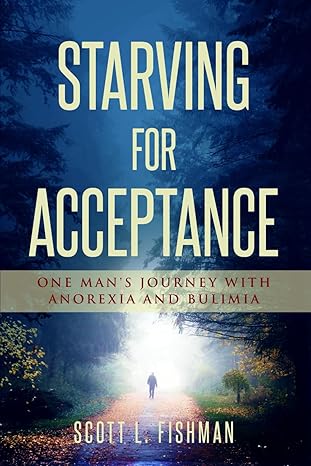

Starving for Acceptance is a raw and honest memoir that delves into Scott Fishman’s decades-long struggle with anorexia, bulimia, and body image issues. The memoir chronicles Fishman’s life from childhood to his eventual steps toward recovery, offering a rare and necessary perspective on male eating disorders. His journey is told with unflinching candor, shedding light on a topic often shrouded in stigma and misunderstanding.
What struck me first was how relatable Fishman’s early insecurities felt. His yearning for athleticism and approval from his father is heartbreakingly detailed in chapters like “The Concert,” where his father’s lateness to a pivotal performance underscored a recurring sense of neglect. That pain resonated deeply with me and set the stage for understanding how Fishman’s self-esteem eroded over time. His vulnerability is palpable, and it’s hard not to root for him, even as he describes the darker moments.
Fishman’s writing shines in its ability to balance the deeply personal with the universal. In “The Scale,” his obsession with weight is both alarming and sadly familiar in a world fixated on appearances. He describes sneaking onto bathroom scales with such detail that I could feel his anxiety through the pages. This isn’t just a story about numbers or calories. It’s about control, self-worth, and the lies our minds tell us. The intensity of his inner conflict, likened to a battle with an alter ego named “Ed,” makes the memoir unforgettable.
The structure of the book, with its focus on moments that shaped Fishman’s relationship with food and his body, is effective. One standout is the chapter “The Basketball Game,” where a casual compliment about his physique becomes a pivotal moment, shifting his identity toward his body’s appearance. His excitement, paired with the foreshadowed tragedy of obsession, had me simultaneously cheering and cringing. This blend of triumph and heartbreak encapsulates the emotional rollercoaster Fishman navigates.
Fishman emphasizes hope, albeit hard-won, and stresses the importance of addressing eating disorders early. His ability to reflect on his journey with humility and humor makes his story as inspiring as it is informative. The memoir doesn’t shy away from its darker moments, but it also never loses sight of the possibility of recovery.
I’d recommend Starving for Acceptance to anyone looking to understand the complexities of eating disorders, especially as they relate to men. It’s a must-read for educators, therapists, and families, but also for anyone who’s ever felt unseen or unworthy.
Pages: 264 | ASIN : B0DNJ5KQ5N

Past Abuses and Struggles

A Mad Box of Rain shares your story of surviving and recovering from the sexual, physical, emotional, mental, institutional, and substance abuse you experienced in your childhood and teenage years. Why was this an important book for you to write?
I recently wrote this as a wedding gift for my second wife and her two teen children. I also have two teen sons. I found it difficult to verbally communicate with them about past abuses and struggles as a teen; and they had no real understanding of what growing up in Memphis in the 1980s meant, seeing that we live in Portland, Oregon. I wrote the book in six months, and I think it does a decent job explaining this to them. Mom and wife were the main editors.
How did you decide what to include and leave out in your memoir?
There were a lot of euphemisms that I took out based on the advice of a senior editor. I also had to change the names of a lot of the characters in order to protect their anonymity. I left out or changed a few details as well in order to continue the protection. It was very important to me not to break any innocent’s anonymity.
What was the most challenging part of writing your memoir, and what was the most rewarding?
The most challenging was opening myself up fully to the reader about my thoughts and feelings going through a lot of the abuse I endured. I had to be raw and honest with myself. Those feelings were not easy to feel. The most rewarding was the closeness I felt towards loved ones who supported me through this. I truly felt encouraged and loved. I was also very excited to be a finalist in this year’s Storytrade Book Awards.
What do you hope is one thing readers take away from your story?
That overcoming adversity makes you a stronger and better person. Don’t settle, be the good person you were meant to be. Don’t let anyone ever take that away from you.
Author Links: GoodReads | Website | Amazon
A fabulous and incredibly moving coming of age tale, Brian narrates his experiences growing up in a small southern town outside of Memphis, TN in the 1980’s, and how he survived and overcame personal tragedies dealing with abuse ranging from sexual to institutional. His emotional capacity to interweave the impact of childhood trauma with critiques on the overall mental health system serves as an honest and raw look at broader social issues. His introspective commentary and personal anecdotes help provide a deep connection to the reader with a conclusion that is extremely enlightening.
A Mad Box of Rain

A Mad Box of Rain by Brian J. Quattlebaum is a deeply moving and unflinchingly honest account of the author’s turbulent early years. Set against the backdrop of Memphis, Tennessee, Quattlebaum recounts a childhood shadowed by trauma yet marked by resilience. He narrates the lasting impact of the sexual abuse he suffered at the hands of a teenage family friend, a secret he carried into adulthood. Interwoven with this painful reality is the chaos of his family life, shaped by an older brother’s destructive spiral into alcohol and addiction before even reaching his teens. Their parents, well-meaning and devout Christians, fought to anchor their sons amidst this turmoil, balancing AA meetings with church in a desperate bid to keep their family afloat.
Quattlebaum’s story isn’t simply one of hardship. It’s about survival, strength, and the extraordinary will of a young boy who emerged from a brutal world determined to be something greater. It’s a testament to the human spirit’s capacity to heal, even when wounds run deep. Reading this memoir is not just witnessing a life but experiencing it: the humor, the heartbreak, and the unsettling truths that come with growing up in such circumstances. The book challenges the reader with its raw, unvarnished depiction of abuse. Quattlebaum doesn’t shy away from the discomfort or confusion that victims often feel, candidly sharing how he grappled with the complexity of his body’s reactions and the emotional weight of keeping such a dark secret. A particularly poignant moment describes his first attempt to run away at just nine years old, overwhelmed by his silence and guilt. His admission that his parents didn’t deserve the pain his escape caused is a line that strikes with full emotional force. Despite the darkness, Quattlebaum infuses his narrative with Southern humor and irony, making moments of levity shine through the grim reality. This juxtaposition brings a layered complexity to his writing, balancing the heaviness with a uniquely human touch. The author’s reflections reveal how he survived and has healed, speaking with bravery and self-awareness that inspires.
A Mad Box of Rain is both a challenging and rewarding read, punctuated by moments that will make you laugh unexpectedly and others that will leave you reflecting deeply. Brian J. Quattlebaum’s courage to share his story is commendable, and his hope of reaching those who might feel alone in their struggles is palpable. This book serves as a powerful reminder to remain vigilant and compassionate; after all, unseen battles often rage behind the faces we encounter every day. For that reason, I urge everyone to read this remarkable memoir; it leaves you with a greater sense of awareness and a renewed commitment to treating others with kindness.
Pages: 256 | ASIN : B0CZT4SN28
Not Just a “Mental Game”

Anxiety to Ahh-mazing in 60 Days introduces readers to your HASH60 system, an innovative approach that blends a variety of techniques into a practical and easy-to-follow guide, allowing readers to take control of their emotional well-being. Why was this an important book for you to write?
The motivation behind writing Anxiety to Ahh-mazing in 60 Days stems from a deep desire to provide a truly integrative, accessible approach to emotional well-being. In my years of research and practice, I’ve seen that no single technique or method works for everyone, which is why the HASH60 system blends a variety of approaches—mindfulness, cognitive behavioral techniques, breathwork, and heart-rate variability training.
What makes this book important is that it doesn’t just offer theoretical advice. Instead, it gives readers a structured, yet flexible, path that they can tailor to their own needs. The techniques reinforce one another, creating a synergy that empowers readers to take control of their anxiety and stress. The focus was on making it practical and easy to follow, so people can seamlessly integrate it into their daily lives, leading to lasting transformation.
By blending these different modalities, the HASH60 system addresses both the mind and the body, allowing readers to not only manage anxiety but to build a foundation of sustainable happiness. That integrative approach is at the heart of why this book felt so necessary to write.
What are the common misconceptions people have about anxiety?
A common misconception about anxiety is that it’s purely a mental issue, something that exists solely in the mind and can be “thought” away. While thoughts do play a significant role, anxiety is deeply intertwined with the body. Our physical responses—racing heart, shallow breathing, muscle tension—are often the fuel that keeps anxiety going.
People often believe they can control anxiety through willpower alone, but this overlooks the need to address the physiological side of the problem. That’s why in the HASH60 system, I emphasize techniques like breathwork and heart-rate variability training, which help regulate the body’s stress response.
In reality, anxiety is a complex interplay between the mind and body, and understanding that it’s not just a “mental game” is key to managing it effectively.
What were some ideas that were important for you to share in this book?
In Anxiety to Ahh-mazing in 60 Days, it was important for me to communicate that transforming psychological distress into lasting happiness requires work across several domains. One of the key ideas is that we can’t just focus on one aspect of our well-being and expect everything to fall into place.
First, identifying and living in alignment with one’s core values is essential. When we’re out of sync with what matters most to us, it creates an underlying tension that fuels anxiety and stress. I wanted to emphasize that real transformation begins when we understand our values and make daily decisions that reflect them.
Another vital idea is the power of consistent meditation and heart-rate variability biofeedback (HRVB) practices. These aren’t quick fixes—they’re ongoing practices that gradually retrain both the mind and body to handle stress more effectively. Meditation helps cultivate mental clarity, while HRVB allows us to manage the physiological side of anxiety. Together, they create a balanced system of emotional regulation. Last but not the least, regular physical exercise is of paramount importance.
Finally, I stressed the importance of establishing routines that integrate these learnings into daily life. It’s one thing to know what to do, but without regular practice and structure, those insights don’t translate into real change. The HASH60 system is designed to help people form habits that support long-term well-being, creating a foundation for sustainable happiness rather than temporary relief.
These ideas—working in multiple areas, aligning with values, and committing to consistent practices—are crucial to shifting from distress to well-being.
What is one thing that you hope readers take away from Anxiety to Ahh-mazing in 60 Days?
A key message in Anxiety to Ahh-mazing in 60 Days is that happiness isn’t something we can chase or force into our lives. It’s not a destination we arrive at by checking off a list of achievements or pleasures. Instead, happiness comes when we create the right conditions for it—when we cultivate a space in our mind and body for it to alight, much like a butterfly settling softly on a flower.
Through the HASH60 system, I emphasize practices like mindfulness, heart-rate variability training, and aligning with core values because these build the foundation for happiness. By managing anxiety and stress effectively, we calm the turbulence that often blocks happiness from finding us. The process is about creating inner harmony, rather than pursuing external rewards.
When we stop chasing happiness and focus on cultivating a balanced, calm, and open space within ourselves, happiness has room to naturally appear. It’s not forced—it’s allowed. That’s a key shift in perspective that I hope readers take from the book.
Author Links: GoodReads | X (Twitter) | Facebook | Website | Amazon
In a world where stress, fear and anxiety run rampant, Dr. Harry Somaraju offers a refreshing perspective in his book “Anxiety to Ahh-mazing in 60 Days”. He delves deep into the root causes of these modern plagues, examining them with a critical eye. But Dr. Somaraju doesn’t stop there. Instead, he guides you on a practical journey, one step at a time, showing you how to conquer these overwhelming emotions and construct a fulfilling and blissful life.
Dr. Somaraju’s ability to bridge the scientific with the accessible sets his book apart from similar reads. Drawing inspiration from ancient traditions such as Buddhism and Stoicism, he crafts practical solutions that anyone can grasp and apply. His approach is nothing short of transformative.
“Anxiety to Ahh-mazing in 60 Days” is more than just a book; it’s a roadmap for a life transformation within a mere 60 days. If you’re ready to unlock meaningful joy from within and embark on the journey toward a balanced , peaceful life, this book is a must-read.


