Blog Archives
Anxiety Reset 30 Days to Find Calm: A Self-Regulation Workbook for Busy Adults


Anxiety Reset 30 Days to Find Calm: A Self-Regulation Workbook for Busy Adults is a structured 30-day guide to understanding and managing anxiety. It blends science-backed strategies with practical exercises, moving step-by-step from identifying personal anxiety patterns to mastering self-regulation techniques. The book begins with self-assessment mapping triggers, physical symptoms, and thought patterns before teaching both in-the-moment relief skills and long-term habits. It covers modern stressors like digital overload, workplace pressure, and life transitions, offering tools for building emotional resilience. The program feels intentional, with each day adding a piece to an integrated framework, culminating in a personalized plan for ongoing calm.
What struck me most was how grounded and personal the approach feels. Many books on anxiety either drown you in theory or throw a list of tips at you without context. This one makes you slow down and really notice your own patterns, which was surprisingly emotional. I found myself reflecting more deeply than I expected and connecting dots between physical sensations, old thought habits, and the modern chaos that feeds them. It’s not preachy, and it doesn’t assume you can drop everything for two hours of meditation each day. It works with real-life, messy schedules and all.
The writing is clear, warm, and refreshing. I appreciated the mix of science explanations with relatable stories from people like “Sarah” and “Michael,” which made the material easier to connect with. Sometimes the number of exercises felt a little intense, especially if you’re already stressed, but that’s where the “do what you can” attitude helped. I also liked that it didn’t stop at symptom relief, it’s about rewiring habits and building resilience.
This book is ideal for busy adults who feel stuck in an ongoing cycle of stress and want something more than quick fixes. If you like practical structure but also want space for self-reflection, this will likely hit the mark. It’s a guide you can work through once, then revisit whenever life ramps up again, and it leaves you feeling not just calmer, but more in control.
Pages: 463 | ASIN : B0FH1SK85C

Letting Go of Overthinking and Anxiety in Relationships: 57 Easy Techniques to Stop Overanalyzing, Rewire Your Anxious Thoughts and Build Trust in Your Relationship


Letting Go of Overthinking and Anxiety in Relationships is a compassionate and clear-eyed guide that gently walks readers through the emotional maze of anxiety and overthinking in romantic relationships. With 57 practical techniques, the book aims to unravel the tight knots that overanalysis and insecurity can tie between partners. It balances clinical insight with real-life advice, focusing on emotional awareness, cognitive reframing, and communication strategies that are not only actionable but empathetic.
I found myself moved by how much this book “gets it.” The author speaks to the experience of lying awake at night, spinning in silent spirals of doubt and fear, and validates those feelings without judgment. What struck me most was the simplicity of the tools—many are things you can do right away, without therapy sessions or fancy journals. In Chapter 1, the visualization script of a secure relationship felt like an emotional balm. I paused to do it myself. The imagined warmth, the calm space, the supportive presence of a partner—it was powerful. Later chapters dig even deeper. The section on “Defensive Awareness Check-Ins” offered one of the most refreshingly honest approaches to managing conflict I’ve read. It wasn’t about blame; it was about pausing and choosing empathy over ego.
Chapter 7, Nurturing a Resilient Mindset for Long-Term Relationship Success, is one of the book’s most empowering and quietly motivating chapters. It shifts the focus from fixing anxiety in the moment to building lasting emotional strength that can weather the ups and downs of love. The author emphasizes that resilience in relationships isn’t about being unaffected by conflict—it’s about bouncing back with understanding, empathy, and commitment. What resonated with me most was the idea that resilience is something you build, not something you’re born with. Techniques like setting shared goals, reflecting on past victories as a couple, and practicing emotional regulation in stressful times are all presented as realistic, do-able practices.
I’d absolutely recommend this book to anyone who’s ever felt emotionally hijacked by their own thoughts in a relationship. Whether you’re newly dating or in a long-term partnership, this book has value. It’s especially helpful for folks navigating anxious attachment, or for partners who want to better understand each other’s triggers and emotional patterns. It’s the kind of book you dog-ear, return to, and maybe even read out loud together on a quiet Sunday night.
Pages: 168 | ASIN : B0DTL5VB7Z
Stoic Solutions. Simple Steps to Tranquility. A Handbook of Stoic Principles to Overcome Mental Distress.
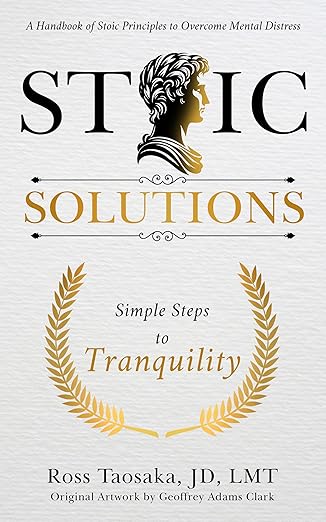
Stoic Solutions, by Ross Taosaka, offers a thoughtful and practical dive into the enduring wisdom of Stoic philosophy. The book explores how timeless teachings from ancient Stoics like Marcus Aurelius, Seneca, and Epictetus can help modern readers tackle stress, anxiety, and uncertainty. Through clear explanations and actionable advice, Taosaka connects the principles of Stoicism to everyday challenges, encouraging readers to build mental resilience, gain clarity, and find peace amid life’s chaos.
What stood out to me most was the way Taosaka distilled complex ideas into bite-sized and relatable lessons. He writes with a conversational tone that feels like talking to a wise friend, and the examples he uses, both historical and modern, help ground these ancient teachings in the real world. The chapters feel like they’re designed to be referenced again and again, each one filled with practical steps to shift your mindset and take control of your emotions.
The integration of history adds depth and credibility to Taosaka’s advice. I found his summaries of Zeno’s stoic founding and Marcus Aurelius’ reflections fascinating and easy to grasp. Often, philosophy books feel bogged down with theory, but Taosaka strikes a perfect balance. His personal anecdotes and real-world strategies, like reframing adversity and focusing on what you can control, make the book relatable and actionable. He even tackles misconceptions about Stoicism, like the idea that it’s all about suppressing emotions, showing instead how it fosters strength, balance, and purpose.
Chapter 7: Temperance – Managing Desires and Emotions really hit home for me, especially the section on living with intention. The idea of starting each day with a clear purpose felt like a breath of fresh air in my often chaotic mornings. The advice to ask, “What virtues do I want to embody today?” or “How can I practice moderation in my actions and thoughts?” was such a simple yet profound shift. I tried it, and it was amazing how setting that mental roadmap calmed my mind and gave me direction. Instead of being pulled in a hundred different directions, I felt grounded and focused. The phrase, “It’s like giving your mind a calming mantra to follow, keeping you grounded and centered,” perfectly captured how this practice helped me let go of stress and approach my day with clarity. It’s such a small change, but it made a huge difference in how I navigate both my emotions and my to-do list.
One of my favorite aspects of the book overall was its structure. The chapters build on one another, creating a sense of progress as you read. And Geoffrey Adams Clark’s illustrations add a creative vibe to the experience.
I highly recommend Stoic Solutions to anyone looking to improve their mental well-being and find a clearer path through life’s challenges. Whether you’re new to Stoicism or already familiar with its teachings, this book has something to offer. It’s perfect for those feeling overwhelmed by modern stress or for anyone curious about philosophy’s practical side.
Pages: 199 | ASIN : B0DLV9Z99N
An Air of Mysticism
The Dragon’s Fly follows a reclusive woman battling social anxiety who finds out her estranged daughter is murdered while on a camping trip in what can only be described as a nightmare by the sole survivor. What was the inspiration for the setup of your story?
The inspiration for my story came from a desire to translate my vision of how a nightmare might look into words. As a devoted fan of horror, I knew this novel would firmly belong to that genre. I began by imagining some of the worst possible scenarios that a human could endure and began organizing these ideas. This process led me to dig into some of my own personal fears and phobias – the fact that I struggle with social anxiety, am deeply claustrophobic, terrified of the dark, and have a paralyzing fear of heights. From there, a tale began to take shape.
I find the world you created in this novel brimming with possibilities. Where did the inspiration for the setting come from and how did it change as you were writing?
The world I created in this book is a comparison of two distinct realms designed to both parallel and contrast one another. The setting was inspired by my desire to observe the grey areas in the story where the boundaries between human and monster nature would blur. What sets humans apart from the Sihashee? Where do we overlap in the eternal struggle between good and evil? How could I address the answers to these questions and, most importantly, describe this? I concluded that these questions were essential to shaping the setting and attempted to show duality through Vicky’s jaded view of the human world and Colby’s treacherous journey within the Sihashee’s society. I also wanted to emphasize the “all too familiar” dynamics of hierarchy and privilege rooted in wealth and power, as well as the clash of cruelty and kindness governing both worlds. Despite their monstrous nature, the Sihashee demonstrate tenderness and care towards those they value, much like humans. Unlike humans, their world is a deep, dark subterranean civilization hidden from the pristine presence of sunlight and fresh air. The setting is a stark contrast between Vicky’s quiet, isolated existence and the chaotic, noisy world droning along dozens of miles beneath her feet. The environment gradually evolves to accommodate the dichotomy and gently carry readers between both worlds. I found myself having to resist the temptation of delving too deeply into the complexities of the Sihashee’s realm, realizing that I could save those details for a future novel.
What were some themes that were important for you to explore in this book?
Some key themes I explored in this novel are overcoming fear, power and corruption, and love and loss. Perhaps Vicky’s greatest struggle is overcoming fear. I highlight her vulnerabilities by walking readers through her daily experiences to show her struggle with anxiety, depression, and guilt. These internal conflicts get in the way of her longing to connect with her estranged daughter and an admirer’s romantic pursuit.
The theme of power and corruption is more apparent within the Sihashee society where monstrous beings dominate through ruthless control over one another and their human captives. Through Colby’s eyes, readers navigate an underground empire ripe with resentment, brutality, and an air of mysticism.
Meanwhile, love and loss acts as the catalyst dictating Vicky’s fragile reality. From her failed relationship with her ex-fiancé, Roe, to the estrangement from her daughter, and the awkward tension she feels towards her family, these themes interweave to create a story that examines hopelessness, the nuances of relationships, and the cost of navigating a society defined by both humanity and monstrosity.
Will there be a follow-up novel to this story? If so, what aspects of the story will the next book cover?
Yes, I am currently working on the framework for the sequel. Without revealing too much, the next story may possibly follow the adventure of another character from The Dragon’s Fly more closely. I’d like to give readers the opportunity to experience this world through a different lens and navigate new dimensions of the narrative.
Author Links: GoodReads | X (Twitter) | Amazon



 LITERARY TITAN