Blog Archives
Embrace the Challenge

In Surviving the Stroke, you share your journey to recovery following a hemorrhagic stroke as well as actionable advice for those coping with the daily challenges of rehabilitation. Why was this an important book for you to share?
There is a saying ‘knowledge is power.’ While I was in the ICU for that first week and the rehabilitation hospital for three weeks, there was a lot of knowledge passed on, however, most of that knowledge was not about predicting the future as it related to recovery and rehabilitation. While I’m sure the information was available, but at the time I thought it would have been nice to have some of that information. After the rehab hospital, I was in outpatient therapy for 10 months. I met other stroke victims during that time and it was there that I decided to write the book because we all had shared experiences and agreed that there was not a good supply of resources to prepare us for the day-to-day future in being prepared for, and what to expect during recovery, rehabilitation, and later.
I appreciated the candid nature with which you told your story. What was the hardest thing for you to write about?
This is a good question and in hindsight, I think the hardest part was probably in the beginning when I discussed the actual stroke experience and my conversation with God. I think that was because in the moment of the stroke occurring, there was uncertainty of what was happening and if I was dying, or what was happening, therefore I think that was probably the most difficult.
What is one misconception you believe many people may have about recovering from a stroke?
During interactions with other stroke victims at outpatient therapy, we discussed this subject and there are some misconceptions relating to the severity of a stroke. The term mini-stroke is used a lot and I think when people hear the word, stroke, they automatically associate it with mini-strokes and celebrities like Hailey Bieber who appeared to be fine afterward and returned to their activities. Although, there are other celebrities like Randy Travis who have severe strokes, paralysis, and other challenges, and they fade away from the public eye.
In outpatient therapy, there was a woman in her first week and she was similar to me in the severity of the stroke. Her employer called her twice in the previous week asking when she was returning to work, which was upsetting to her and demonstrated to us a lack of empathy, a lack of understanding, and the reality of what a stroke really is.
What is one thing you hope readers take away from your experience?
There is a section in the book “I Quit,” that discusses quitting and dying. My hope is that when a stroke happens, it is not the end of the world. A positive attitude coupled with occasional humor can overcome life’s challenges. Do not give up, do not quit, and embrace the challenge ahead.
Author Links: GoodReads | X (Twitter) | Facebook | Website | Surviving the Stroke | Amazon
Surviving the Stroke: A Minute with God: A Recovery and Rehabilitation Guide
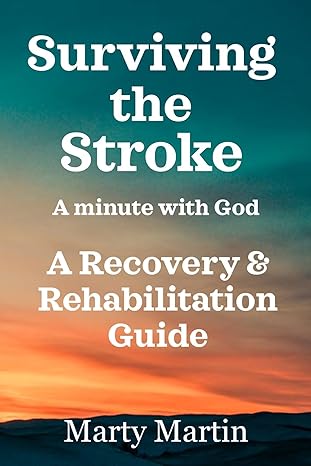

Marty Martin’s Surviving the Stroke: A Minute with God is both a recovery memoir and a practical guide for those navigating the turbulent aftermath of a stroke. The book chronicles Martin’s harrowing experience with a hemorrhagic stroke and his extensive rehabilitation journey, weaving personal anecdotes with actionable advice. From the initial trauma to the daily realities of therapy and family dynamics, Martin lays bare his vulnerabilities, offering hope and camaraderie to readers facing similar struggles.
What struck me most was Martin’s ability to blend raw honesty with humor. Early in the book, his description of the initial moments of his stroke—his leg buckling and his puppy, Izzie, licking his hand as he struggled to reach his phone—is both heart-wrenching and oddly endearing. This balance of gravity and levity continues throughout, making the narrative compelling and relatable. Martin’s conversational tone, especially when recounting his struggles with spasticity and the quirks of therapy, makes you feel like you’re sitting across from a friend who’s baring their soul.
One of the standout sections is Martin’s emphasis on attitude as a critical factor in recovery. He doesn’t shy away from admitting his initial struggles with self-pity but quickly pivots to the importance of embracing his new reality. The book shines in its actionable advice for stroke survivors and caregivers. From navigating hospital protocols to understanding the “toddler effect” of relearning to walk, Martin’s insights are grounded in lived experience. I found his tips on overcoming spasticity and the benefits of speech-to-text technology particularly useful.
Surviving the Stroke is more than a memoir; it’s a lifeline for those grappling with the aftermath of a stroke. Martin’s candid storytelling, bolstered by his unwavering determination and faith, makes this book a valuable resource. I recommend this book to stroke survivors, caregivers, and even medical professionals seeking to understand the human side of recovery. If you’re looking for a guide that mixes practical advice with heartfelt storytelling, Marty Martin’s journey will leave you inspired and better prepared to face life’s toughest challenges.
Pages: 111 | ASIN : B0DQHT2658

Healing in Advance: Your Prehabilitation Handbook
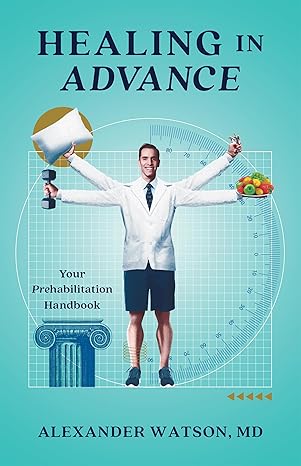
Alexander Watson’s Healing in Advance is a comprehensive guide designed to empower individuals navigating challenging medical journeys. Whether managing chronic illnesses, preparing for major surgeries, or undergoing acute treatments, this book introduces a transformative concept: “prehabilitation” (prehab). Watson positions prehab as a proactive strategy to build physical and mental resilience before medical interventions. Through a focus on exercise, lifestyle changes, and nervous system care—what he calls the “three pillars”—the book equips readers with tools to optimize outcomes and enhance quality of life.
Backed by evidence-based insights and current research, Watson presents practical strategies grounded in science. Readers benefit from detailed exercises, nutritional guidance, and stress management techniques, all tailored to diverse conditions. Emerging treatments, including innovative drug combinations and cutting-edge therapies, reflect the book’s forward-thinking approach. This breadth of information ensures the content remains inclusive and relevant, appealing to a wide audience.
Watson writes with empathy and support, acknowledging the emotional and psychological toll of medical challenges. The tone reassures without minimizing the difficulty of these journeys, empowering readers to take actionable steps with confidence. By combining research-backed interventions with a conversational, non-judgmental style, the book becomes both a credible resource and a comforting companion. Clear disclaimers encourage consultation with healthcare professionals, reinforcing its role as a supplemental guide rather than a replacement for medical advice.
Watson employs an accessible, direct style that balances technical detail with relatability. Relatable metaphors and analogies—such as likening medical challenges to navigating a fast-moving vehicle—simplify complex concepts. The book’s structured chapters, clear headings, and use of bullet points ensure a logical flow, making it easy for readers to digest and apply the information.
Alexander Watson’s Healing in Advance is an essential guide for anyone seeking clarity in the complexities of medical preparation. It blends empathy, scientific rigor, and actionable advice to serve as both a roadmap and a source of reassurance. Watson’s focus on preparation transforms feelings of helplessness into purposeful action, offering a sense of control during uncertain times. With its engaging tone and well-organized content, Healing in Advance is a vital contribution to the fields of patient empowerment and prehabilitation literature.
Pages: 270 | ASIN : B0DNWJYB8M
Yes I Can!
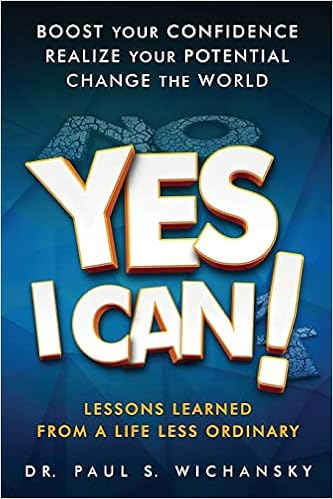
Yes I Can! Lessons Learned from a Life Less Ordinary is one book that will make you grateful for life and embrace all the world offers. The author shares his personal journey with what society calls developmental disabilities. As you read about Paul Wichansky’s story, you realize that, as human beings, we have a flawed perspective on what we consider normal. Raising a child, or being a child that is born with physical limitations, is not easy. With Paul Wichansky, however, the reader is enlightened on the multiple aspects of disabilities. The author himself is not a fan of the word disability. Paul Wichansky uses different phrases and embraces positivity when writing about his conditions. Paul Wichansky had hearing loss and cerebral palsy when he was young. Naturally, this would take a toll on the average kid but not Paul.
In his book, the author writes in-depth about what living with these conditions was like. Paul clinches on positivity. The author did not write this book to seek pity, nor did he feel sorry for himself. Dr. Wichansky starts the book by giving a little background about himself, writing about his family as he progresses to his later years. I like how the author took a free-style approach when writing. For example, Paul Wichansky could be narrating about his childhood, then in the middle of the paragraph, throws in some scientific information about specific conditions. By writing in this manner, the reader is educated on subjects rarely spoken about while enjoying the beautiful life story of the author.
Many things stand out from the author’s life and his writing. I like that the phrases used, the tales told, and the experience shared all have some positivity in them. Paul is here to help you deal with your sorrowful moments and convert them into happy moments. His life is testimony enough that no matter how difficult things may appear and how many obstacles you may have to overcome, you can still live an accomplished life. One of my favorite quotes from the book is ‘…that optimism can become your access to success’. This phrase makes a good inspirational quote that will keep many readers going.
While reading this book, the reader cannot help but ask themselves specific questions. Why are some things considered normal while others are not? Why are some conditions shunned? Why does society treat people that are differently abled peculiarly? Paul Wichansky answers these and more questions throughout the book. There are many lessons from the author, but the main lesson I got is that having a positive mindset will take you places.
Paul Wichansky has, through the chapters, discussed many crucial topics that will help everyone succeed in life. You learn about having a support group, having the proper perspective, building friendships, and keys to success, among many other topics. The best part of Yes I Can! Lessons Learned from a Life Less Ordinary is the photo section, where the author takes us down memory lane with his beautiful photos of family and friends.
Pages: 206 | ASIN : B0BJW1YKLH



 LITERARY TITAN