Blog Archives
Exits
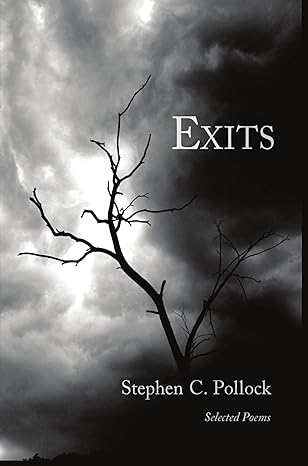

Exits is a collection of poems that moves in and out of nature, memory, and mortality with a sharp eye and an unflinching voice. Pollock balances images of birds, leaves, storms, and insects with meditations on illness, grief, and human cruelty. Each poem feels like an opening and a closing at once, a gesture toward beauty that never ignores the shadows pressing in around it. The artwork paired with the text deepens the mood, giving the reader both a visual and lyrical way to linger with themes of death, decay, and renewal.
I found myself pulled into the tension between delicacy and brutality. The spider spinning its web, the butterfly pinned by a child’s cruel hand, the leaves clinging through winter, these images stayed with me. Pollock’s language is careful, yet it carries an undercurrent of urgency, as if each word knows it has little time left. Some poems made me pause and reread, not because they were obscure, but because they struck me with a sudden intensity. Others, like “Steve’s Balloons,” were so unexpected that I had to smile even while feeling the melancholy underneath.
At times, the heaviness of the book pressed down hard. Illness, biopsy, syringe, tube, the clinical intrudes often, and it brought me back to my own brushes with hospitals and fear. That familiarity made the reading even more raw, and I appreciated Pollock’s honesty. He doesn’t romanticize suffering, but he does find ways to trace light through it. There is also a musicality to his lines that reminded me of older poets, the kind whose rhythm stays in your body long after the words leave your mouth. That mix of craft and emotion gave the book both polish and heart.
I would recommend Exits to readers who like poetry that doesn’t look away. If you’re drawn to reflections on life and death, or if you find comfort in nature as a mirror for human experience, this book will speak to you. It’s not an easy read, but it’s a meaningful one, and I think anyone who values honesty wrapped in artful language will find something to hold onto here.
Pages: 45 | ASIN : B0BXVJB79N

365 Sonnets: Celebrating Each Day with a “Little Song”
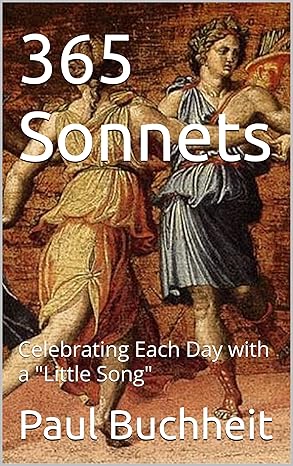
Paul Buchheit’s 365 Sonnets is an ambitious and heartfelt celebration of the calendar year, offering a daily dose of poetic reflection tied to holidays and observances, both whimsical and solemn. Each poem, crafted in the timeless sonnet form, is a compact meditation on themes ranging from joy and love to war, injustice, memory, and the simple beauty of nature. The book is structured like a poetic almanac, giving readers a lyrical “little song” each day, grounded in history, emotion, or observation.
Reading through this hefty volume felt like wandering through an immense museum of emotions and ideas, each room dedicated to a different day and theme. Some sonnets shimmered with beauty, quiet mornings in forests, birdsong, a grandchild’s laughter, while others struck hard, tackling war, greed, and injustice with fire and grit. I was particularly moved by the range of references, from Dante and Milton to civil rights leaders and ancient myths, all woven into the poetic form with a thoughtful, often musical rhythm. The mix of Shakespearean and Miltonian style gave the collection a classic feel while keeping the voice fresh and personal.
Some felt deeply meaningful. Others, though still well-crafted, felt more like poetic exercises than emotionally urgent reflections. I found myself craving a little variety in form, not in rhyme or structure, which Buchheit handles skillfully, but in pacing and tone. Still, it’s hard not to admire the dedication it took to write a sonnet for every single day of the year.
365 Sonnets is a labor of love best enjoyed in small bites. I’d recommend it to readers who love formal poetry, who enjoy mulling over a single, well-crafted thought with their morning coffee. It’s a perfect companion for teachers, poetry lovers, or anyone looking for a moment of daily reflection. It made me pause, think, and feel, which is all I could ask of poetry.
Pages: 387 | ASIN : B0F94CSM5L
Theoryland

Theoryland is a sprawling and satirical poem that unspools across five cantos. It tells the story of an ambitious academic who dives headfirst into the world of highbrow theory, hungry for status and recognition. Along the way, we see his rise, his arrogance, his hollow victories, and finally his collapse into disillusionment. Price borrows from Eliot in both structure and tone, weaving in echoes of The Waste Land and Prufrock, but he flips the solemnity on its head with biting humor. What emerges is a tragicomic portrait of academia itself, skewered with wit and laced with despair.
I found myself laughing at the sheer absurdity of it all, then moments later shaking my head with a kind of weary sadness. The writing is sharp, playful, and full of little surprises. Sometimes the language feels like it’s making fun of itself, which I think is the point. Price clearly has no patience for pretension, and he doesn’t mind calling it out. But behind the jokes, there’s real anger too, a kind of disappointment in what education has become. I felt that frustration come through, even in the most outrageous lines. It’s funny, but it’s also a little heartbreaking.
The constant twisting of phrases can feel overwhelming. I admired the daring of it. It seemed deliberate, like I was being dragged through the very confusion and emptiness that the poem is mocking. And when the humor hit, it really hit. I caught myself grinning at lines that felt like inside jokes between the author and anyone who’s ever sat through a dull seminar full of jargon.
I’d say this book is best for readers who like satire that cuts deep and doesn’t pull its punches. If you’ve ever been frustrated by academic doublespeak, or if you simply enjoy a work that blends humor with despair, Theoryland delivers. It’s clever and raw and oddly moving. I’d recommend it to people who like poetry with a bite, or anyone who wants to laugh at the madness of academia. If you like long poems, then read this book, because finding one that’s both lengthy and enjoyable is almost impossible.
Pages: 28 | ISBN : 144148986X
Resonance of the Soul -Flowers and Harmonics
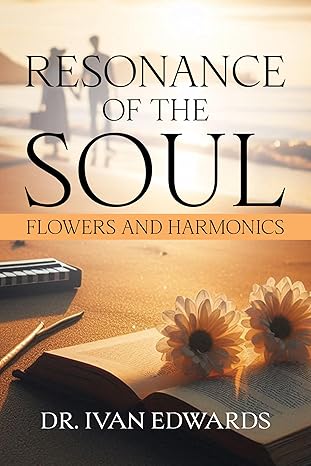
Dr. Ivan Edwards’ Resonance of the Soul – Flowers and Harmonics is a heartfelt and unfiltered collection of poems that dives into love, identity, culture, struggle, healing, and faith. Each section is like a room in a house built on raw emotion and lived experience. The poems weave together the intimate and the universal, from first love lost too soon to biting political commentary, from cultural pride to spiritual survival. It’s a spiritual map made of pain, joy, humor, and truth, written with a clarity that cuts and a tenderness that soothes.
Reading this book made me feel a range of things. Hopeful, angry, nostalgic, and sometimes just quiet. I loved the groundedness of it. Edwards doesn’t pretend to float above reality. He rolls around in it. His words hit you because they come from somewhere real. The poem about the mango, for example, starts sweet and ends as a bitter lament for what greed and corruption can destroy. There’s beauty, but also a sharp awareness that beauty is fragile. I was especially moved by “My Lioness,” which read like a love song with teeth. He writes women with deep reverence, and that matters. Some poems could feel a bit sermon-like, but even when he preaches, it’s from a place that feels earned, not lofty.
I also found his writing incredibly rhythmic and easy to feel, even when the topics were hard to face. The language is warm, clear, and full of music. No line feels accidental. He plays with structure, short bursts, long breaths, and questions that hang in the air. Sometimes it’s angry, sometimes forgiving. Sometimes it’s tired, then suddenly it’s dancing. There’s wisdom here, not just in ideas but in form. His poems about disability and struggle are some of the most honest I’ve read this year.
If you’ve ever loved someone deeply, if you’ve ever lost your way, if you’ve ever been underestimated, or if you just like poetry that speaks from the gut, this book is for you. It’s good for people who want their reading to feel like conversation, prayer, and protest all in one. I’d give this to artists, parents, students, wanderers, or anyone looking to feel seen.
Pages: 122 | ASIN : B0FJ8KLFTQ

Literary Titan Book Award: Poetry

The Literary Titan Book Award recognizes poets who demonstrate exceptional artistry and proficiency and push the boundaries of language and expression. The recipients are poets who excel in their technical skills and evoke deep emotional responses, challenge thoughts, and illuminate new perspectives through their work. The award honors those who contribute to the literary landscape with their unique voices and powerful words.
Award Recipients
Visit the Literary Titan Book Awards page to see award information.
A Snapshot of a Moment

Stories Heard from the Heart’s Whisper is a collection of lyrical free verse giving readers a raw, poetic mosaic of memory, pain, love, and spiritual reckoning. What inspired you to write this particular collection of poems?
I think the origins can be traced back to when I released my first book ‘Marching with a Broken Shadow’. I put a lot of emphasis on releasing that book within the parameters of being thematically linked and conceptually realised; a work that wasn’t just a collection of poems, but that told a story from start to finish. When considering ‘Stories Heard from the Heart’s Whisper’ I wanted to chase something more ambitious – something that still existed as more than just a collection of poems, and that tapped into storytelling… almost in a cyclical nature… but that was grander and more of a risk in terms of style. I think this was what eventually led to the idea of having chapters, and focalising the storytelling through the mode of epic poetry; but then still using some shorter punchy poems to kinda of capitalise on the overarching narrative. I think mostly it was probably a symptom of reacting against what I perceive to be a very boring environment in the contemporary poetry world… where there is this battle between highly emotional poetry that is of poor quality vs overly sophisticated and patronising poetry that is just a weapon for a guy with a moustache sipping a latte with a poodle at his feet. Hopefully I at least created something unique.
Can you share a bit about your writing process? Do you have any rituals or routines when writing poetry?
For this particular collection I found songs and music to be very inspiring. Everything was hand written first. Apart from that I wouldn’t say there were any particular rituals or routines. Perhaps what made this collection more challenging in that context was the fact that I had to write specifically for certain chapters/themes, so there wasn’t as much scope to write on pure whim – which is perhaps why I released two shorter poetry collections, ‘Wings’ and ‘Fists in the Eye that Blinks on a Pin’, whilst writing ‘Stories Heard from the Heart’s Whisper’.
Did you write these poems with a specific audience in mind, or was it a more personal endeavor?
I’m glad this question was raised. I really appreciated the review by Literary Titan, and in particular the realisation that is portrayed by the line “Russell doesn’t write to impress; he writes to bleed. There’s an unpolished sincerity here that I admire”. This endeavour was certainly aimed to challenge myself, and to create something unique… something that broke convention. I don’t see a point in writing to be palatable to a specific audience, or writing to meet a reader’s expectations… I think poetry as an art form should be aiming to challenge readers, and to invoke questions and doubts. I remember studying poetry at school and it being so highly analytical; looking into the structures of poem, the syllables in the lines, the double meanings, the plays on language etc. To me, poetry isn’t just supposed to be something to read and garner a brief emotional reaction, it is meant to be something that you unpack, and solve… It was funny, I got a very poor review from someone who said that I had overlooked the patience of the 21st century reader… and I thought, what a funny criticism; I’m not tying anyone up forcing them to read it – this was the mode of artistic expression that I wanted to convey, fully aware that most people aren’t going to want to read 1000 word poems… but why should anyone, following any artistic pursuit, be beholden to the comfort zones of people who’s main endeavour is to criticize.
What was the biggest challenge you faced in putting together this poetry collection?
Certainly the editing process was the biggest challenge with this collection. Given the sheer lengths of the epic poems, it was very difficult to sit down and ensure that there was consistency with my reading and interpretations; and even concentration level. I did so many rounds of editing, and if I didn’t release it when I did I would probably still be making adjustments now… but that is the beauty of art I think, is that it is a snapshot of a moment… imperfect, but perhaps perfect in what it reflects of that moment in time.
Author Links: GoodReads
In what memories would your soul live, if only it had a choice?
In Dyson Russell’s second anthological collection of poetry, he seeks to gift the power of words to the heart and soul… Allowing for dramatic exploration of the depths of human emotion and experience through the guise of the unconscious – the inner spirit. Uniquely structured, and broken into ten chapters, Russell uses his penchant for poetic narrative to tell a story that is truly whispered from the secrets of the heart. Take the quest, and walk side by side your soul, as you uncover ‘Stories Heard From the Heart’s Whisper’
Stories Heard From the Heart’s Whisper


In Stories Heard from the Heart’s Whisper, Dyson Russell gives us a raw, poetic mosaic of memory, pain, love, and spiritual reckoning. The book is a sweeping collection of lyrical free verse that reads like a long, emotional dream. Each chapter unfolds like a new season in a soul’s life, with themes of youth, mourning, rage, wonder, and healing weaving in and out like whispers caught in the wind. The poetry is divided into ten chapters, structured with recurring imagery like nature, dreams, brokenness, and celestial light. It pulls readers through reflections on identity, loss, trauma, and a hope that flickers but never quite dies out.
The writing is intense. It’s visceral in a way that made me pause and breathe before moving on. Russell doesn’t write to impress; he writes to bleed. There’s an unpolished sincerity here that I admire. The metaphors come fast and layered. Sometimes overwhelming, sometimes perfect. I loved how certain poems slipped into my memory as if I’d read them in a dream before. “The Breeze as a Name” and “Mourning in Morning” left knots in my chest.
Russell doesn’t tie up pain with a ribbon. He lets sadness sit beside you like a guest who isn’t leaving soon. And still, there’s hope. There’s tenderness, especially in how the poet talks to his past selves, his ghosts, his fading memories. At times, it reminded me of late-night conversations with someone you trust, where everything spills out and nothing has to make perfect sense. Some poems wandered a bit, sure, and the repetition of certain motifs occasionally dulled their impact, but it didn’t take away from the heart of the book. The voice here is honest.
I’d recommend Stories Heard from the Heart’s Whisper to anyone who’s ever sat with heartbreak long enough to name it. It’s not for those in a rush or looking for clean answers. But for readers who want to feel, who don’t mind getting a little lost in beauty and sorrow, this book will resonate.
Pages: 226 | ASIN : B0FB8DRM44
Inspiration Isn’t So Straightforward

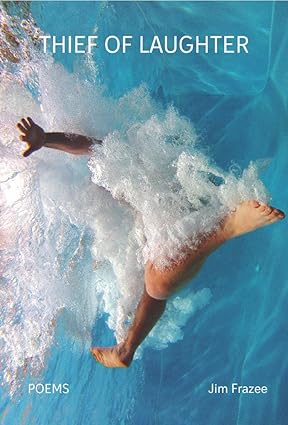
Thief of Laughter is an intimate and evocative collection of poetry that lays bare the fragility of identity, memory, and family while embodying faith in humanity that struggles to make sense of everyday carnage, yet manages to find solace in spite of it. What inspired you to write this particular collection of poems?
I wish I could answer this question the way Rachmanioff did about what inspired him to write one of his piano concertos: “I wanted to buy a car.” But for me, inspiration isn’t so straightforward (or humorous), partly because I don’t really need inspiration to write. I need time, early mornings, when everyone is asleep, when there are no interruptions. These poems were written over 50 years. Many are short narratives – some autobiographical, some not, and some a blending of the two. Sometimes I can’t avoid writing about something seen or experienced. It can be a single word, a casual remark, or an event that hounds me until I have to sit down and work on it and find out why.
How did you decide on the themes that run throughout your poetry book?
No decision was ever made. The various themes of the book arrived on their own, and told me where to go with them.
Were there any poets or other writers who influenced your work on this collection?
Dozens of them. I was very fortunate to have great teachers and colleagues along the way. A lot of generosity, kindness, humor and smarts. I think all of these people come through in these poems. If there were one book though that guided me through all these years, it was Nabokov’s SPEAK MEMORY.
How has this poetry book changed you as a writer, or what did you learn about yourself through writing it?
I learned why it’s necessary to be a good person. That you don’t really have a choice, because living the alternative is a form of self-destruction. By writing, you begin to see things more clearly – it documents perception, understanding, and temperament. Over years, you not only see who you were, but how you got to where you are now.
Author Links: GoodReads | Website



 LITERARY TITAN