Blog Archives
Literary Titan Book Award: Poetry

The Literary Titan Book Award recognizes poets who demonstrate exceptional artistry and proficiency and push the boundaries of language and expression. The recipients are poets who excel in their technical skills and evoke deep emotional responses, challenge thoughts, and illuminate new perspectives through their work. The award honors those who contribute to the literary landscape with their unique voices and powerful words.
Award Recipients





Visit the Literary Titan Book Awards page to see award information.
Thief of Laughter
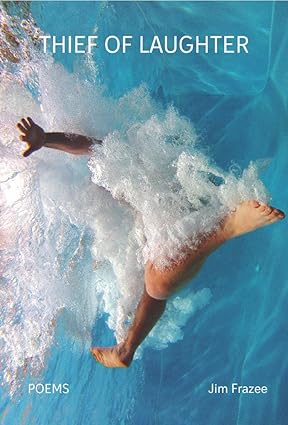

Jim Frazee’s Thief of Laughter is an intimate and evocative collection of poetry that scrapes raw nerves and lays bare the fragility of identity, memory, and family. The book weaves through a lifetime of emotional collisions. Fathers and sons, adolescent cruelty, war and its ghosts, spiritual betrayals, and fleeting moments of tenderness. Frazee captures these with a poet’s sharp eye and a survivor’s haunted voice, his language pulling no punches and never hiding behind pretense.
Frazee’s style is straightforward, sure-footed, but packed with layers. What struck me hardest was how many of the poems felt like emotional snapshots. The kind you can’t put back in the album once you’ve touched them. The violence of silence in “My Father’s Lesson,” the unspeakable grief tucked into “Elegy for E,” or the nearly unbearable self-loathing and regret that pulses through “Jell-O,” these pieces didn’t ask for sympathy. They earned it.
And yet, Frazee doesn’t let the darkness smother you. There’s a strange grace to his honesty. The title poem, “Thief of Laughter,” might be one of the most potent explorations of intergenerational pain I’ve read in a long time. It’s unflinching. Still, there’s beauty in the precision of his images and a kind of quiet rebellion in his insistence on remembering. Even when he writes about cruelty towards himself, others, or from the world at large, there’s a current of compassion, sometimes bitter, sometimes soft, running beneath it all.
If you’ve ever grappled with your past, questioned the people who raised you, or wondered what ghosts still rattle around in your own head, this book might sting, but it’ll also speak to you. I’d recommend Thief of Laughter to anyone who’s lived long enough to lose something important.
Pages: 156 | ASIN : B0F3KNLJ3P

Scandals

Scandals is a visceral, disjointed, and poetic collection of prose poems and microfiction by Alex Osman. Each piece crackles with a mix of grotesque surrealism and dirty realism, pulling readers through a dreamscape of broken childhoods, addiction, failed relationships, dead-end jobs, and backyard Americana. With titles like “Fistful of Farmapram” and “Coneheads 2,” Osman captures the absurdity and horror of ordinary life gone sideways. These stories don’t follow arcs or plotlines so much as they explode, flash, and leave behind a strange aftertaste.
Reading Scandals felt like watching a dozen televisions all playing static-soaked reruns of your worst memories. The writing is jagged and violent, but there’s heart underneath all the madness. Osman’s voice is sharp, funny, and sad. He stitches vulgarity to vulnerability, making you laugh in one line and feel genuinely sick to your stomach the next. Some pieces veer into the surreal and almost cartoonish, while others ache with emotional weight and quiet desperation. The writing sometimes reads like a confession, other times like a dare, and it never once apologizes for itself.
This isn’t a book that plays nice. It’s chaotic. But even when it falters, it’s never boring. Osman knows how to make ugliness sing, and that’s not something every writer can do. I often felt like I was eavesdropping on a stranger’s fever dream or watching a VHS tape recorded over too many times, distorted, but oddly personal.
I’d recommend Scandals to readers who appreciate raw, experimental writing and don’t mind a little dirt under their nails. Fans of Harmony Korine, Dennis Cooper, or Lydia Lunch will feel right at home. If you like your art loud, weird, and soaked in equal parts sorrow and wonder, this book might just floor you.
Pages: 78 | ASIN: B0D23TZ3NL
Sundays with Jenny
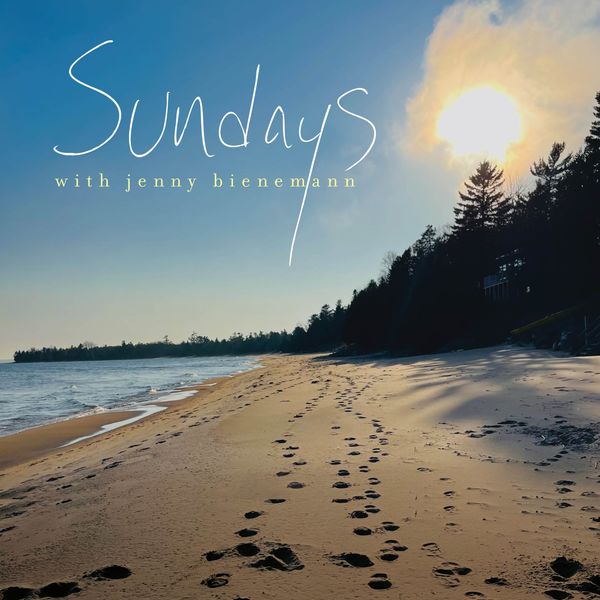
Sundays with Jenny by Jenny Bienemann is a luminous collection of haikus, thoughtfully paired with photographs and distinctive haiku art. Featuring nearly 150 poems, over 100 images, and close to three dozen pieces of haiku-inspired artwork, the book offers a multi-sensory experience. While most haikus follow the traditional three-line form, others unfold across multiple verses, inviting deeper reflection. The themes span a wide emotional and philosophical spectrum, love, resilience, serenity, hope, transformation, compassion, and the subtle nuances of human connection.
Reading this book felt like stepping into a quiet, contemplative space. I was especially drawn to its unique structure, which organizes the content by time of day, from the stillness of dawn to the hush of night. Each section carries a mood, allowing the reader to move through emotional and visual shifts as naturally as the progression of sunlight. The creative use of varying font styles throughout the book added a layer of visual interest, making each page feel curated and intentional.
What stood out most were the moments when text and image merged seamlessly. Instead of simply placing haikus next to photos, Bienemann sometimes integrates the verse directly into the visual composition. One poignant example: a haiku beginning with “Open up your door” appears written on the very surface of a door left slightly ajar, light streaming through the narrow opening, evocative and metaphorically rich.
Bienemann has a keen eye for everyday wonder. A basket of laundry, a pair of reading glasses, even a plate of strawberries, each becomes poetic under her lens. She elevates the ordinary, revealing hidden beauty in small, often overlooked details: a heart-shaped leaf on a sidewalk, a natural heart embedded in a tree stump. The vibrancy of some photographs, particularly those rich in color, is breathtaking. One personal favorite is the city skyline rendered in hues of purple and blue, the first image in the Dawn section. It set the tone with quiet grandeur.
The haiku art adds a unique and creative dimension to the book, with many pieces, particularly the watercolor-inspired ones, resonating deeply and beautifully enhancing the accompanying verses. While some artworks leaned into a more abstract or minimalist style, offering space for personal interpretation, others stood out more subtly, inviting the viewer to pause and reflect. This variety in artistic approach contributes to the book’s eclectic charm, even if a few pieces felt more understated compared to the vividness of the photographs.
Sundays with Jenny is a meditative and visually engaging collection. It invites the reader to slow down, notice more, and find poetry in the everyday.
Pages: 212 | ISBN 978-0-1234-6578-8
Garden Tools: Poems
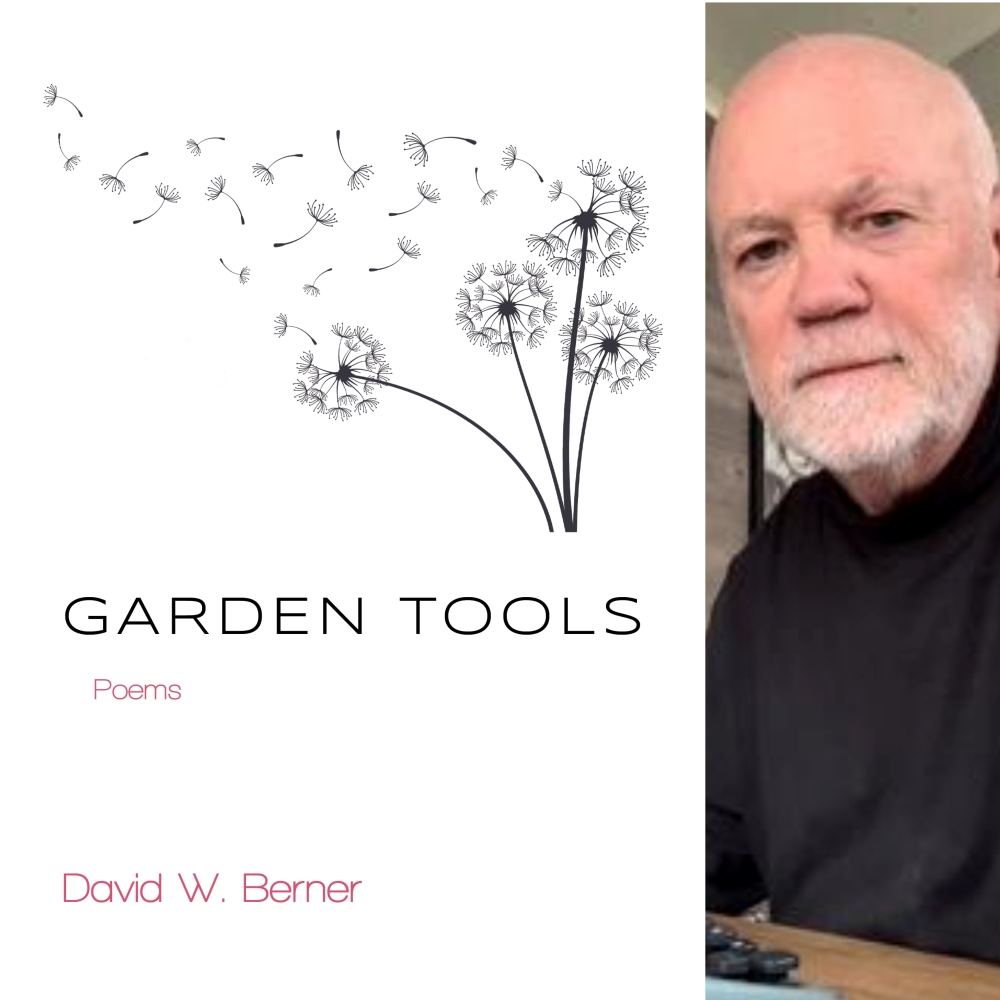
David W. Berner’s Garden Tools is a tender, unfiltered look at life’s quietest, most intimate moments through a collection of personal poems. These verses unfold like a walk through a familiar neighborhood—each turn uncovering memories, losses, questions, and the simple grace of being alive. Whether Berner is remembering his father’s workshop, holding a sick dog in the middle of the night, or watching clouds hover like smoke, he invites readers into his world with open arms and a poet’s soul. The book is divided thematically—“Landscape,” “Love,” and “Longing”—and each section gently pulls at different emotional threads, yet they all speak to the same universal truths: impermanence, connection, and the raw, fleeting beauty of daily life.
I found myself genuinely moved, not just by the content, but by Berner’s voice. It’s plainspoken and warm, never showy. He doesn’t try to impress; he just tells the truth. That humility gives his poetry its strength. Take “Dog Dreams” or “At the Window”—they’re simple but heartbreaking. He sees life like a worn photograph: faded, yes, but still holding onto light. His reflections on aging and memory hit especially hard. There’s a lived-in honesty here, like he’s writing from a shed in the backyard with a dog at his feet and time running out. And the humor slips in at just the right moments—dreaming of Scarlett Johansson or pondering a half-moon with quiet affection. It doesn’t try too hard. It just works.
The tone is relentlessly nostalgic. Some might find the sentimentality a bit thick in places. But to me, it never felt forced. There’s something brave about writing plainly, without armor. And it’s not all wistful. There’s wisdom tucked between the lines—about fatherhood, forgiveness, even the weight of an old omelet pan. His poems act like mirrors. You read one and suddenly remember the smell of your dad’s garage or the way your grandmother’s cane thudded on the floor. That kind of recognition is rare, and it stayed with me.
Garden Tools is for readers who want to slow down and feel something real. It’s for anyone who’s ever stared out a window and wondered about the past, or watched the sky and hoped for some kind of sign. I’d recommend it to lovers of Mary Oliver, Billy Collins, or even Thomas Merton, whose spirit quietly haunts a few pages here.
Pages: 61
Garden Tools: Poems
David W. Berner’s Garden Tools is a poignant collection of poems that gently draws readers into a world where nature, memory, and mortality weave together. The book is split into thematic sections—Landscape, Love, and Longing—each capturing slices of life, both subtle and grand. Berner finds meaning in the smallest details: a dog’s gaze, a neighbor’s new presence, the quiet pause before a storm. He treats ordinary moments with reverence, like a gardener turning the soil of memory and reflection. With language both plainspoken and lyrical, Berner celebrates life’s impermanence, urging us to notice, to feel, and to remember.
What struck me most was the honesty of Berner’s voice. These poems are not dressed up or hiding behind metaphor. Instead, they walk beside you, like an old friend, whispering memories you forgot you had. The poem “Thinking of My Death,” where the speaker drives around with his sister’s ashes in the backseat, wrecked me in the best way. It’s morbid and funny and tender all at once. And that’s the magic here—Berner balances grief and joy like they’re siblings. Nothing feels forced. His images—like cleaning dirt-caked garden tools or watching squirrels tease a dog—are simple but loaded.
A few poems felt light, like sketches not fully painted. Maybe that was the point—to leave space for the reader—but there were moments when I wanted a little more grit or tension. Still, those quieter pieces often served as breathers between more emotionally heavy poems. And by the end, I found myself grateful for that rhythm. The understated ones gave the more powerful verses room to bloom. And when Berner is at his best—as in “If a Father Cries” or “The Last Tulip”—he delivers emotional punches that feel both personal and universal.
Garden Tools is for anyone who’s ever looked out a window and felt a little ache in their chest. It’s for people who remember childhood smells and the way a parent’s voice could rise or fall like a season. I’d recommend this book to lovers of thoughtful poetry. This collection won’t shout for your attention, but if you listen, it will sing something tender and lasting.
Pages: 61
A Fight For My Survival

How to Find God on the Dance Floor is a moving collection of poetry centered around human emotion and the healing power of music and dance. What inspired you to write this particular collection of poems?
I had been going through a rough time in LA trying to get my independent films made which led to a long stretch of depression and isolation. Writing poetry makes me feel alive, almost as much as dancing. So I thought I’d write about what was literally a fight for my survival: getting back to the dance floor.
Can you share a bit about your writing process? Do you have any rituals or routines when writing poetry?
I have to get out of the house. I like to write at cafes because you can be ‘alone’ but around people. I start writing in my journal to excavate how I’m feeling in the deepest most vulnerable place. And then I start handwriting the poetry. It’s weird, poetry is more native to me than the english language. It flows like a river of unceasing word juxtapositions that I have to literally stop in order to function normally. If you saw me in the street, you’d see me talking to myself, saying words out loud to hear how they sound. I look like a crazy person.
Do you have a favorite selection in this collection? One that resonates with you?
My favorite pieces are the last one, because it intentionally sums up the mission of the book: coming out of isolated depression to find a greater sense of life on the dance floor – and – “Do You Have a Nice Ass?” because A) it’s funny and B) it was a weird experiment in breaking down the disappointment of online dating and finding your self worth again.
I also love the fake, funny reviews I put on the back cover.
What is one thing you hope readers take away from this book?
I really hope that readers (especially the underdogs out there) feel their own preciousness in the biggest way. That they see the power in vulnerability and are encouraged to grab life by the balls and do what they love like their life depends on it.
Author Links: X | Facebook | Website
Writing in the Moment

Always Something Heartfelt: Life, Love, and Heartbreak is a raw, vulnerable, and deeply personal collection of poetry and reflective prose exploring a myriad of human experiences. What inspired you to write this particular collection of poems?
Every piece in this collection was hand-stitched with everything I was feeling inside at the time of its inception. Growing up, it felt like the only time I was allowed to be sad, disappointed, hurt, etc. was at funerals. I started journaling when I was 17. It was a newfound outlet to what started to feel like a form of freedom to be able to communicate my raw emotions. Then, one near-fatal curveball in life, in the form of a car accident that physically propelled me from a vehicle, pushed me to open up to the world because life wasn’t promised. I gained the confidence to boldly articulate things I felt. Life became too short to be anything other than authentic. Through performing at spoken word events, I got feedback that showed me that my expressions were relatable. When I chose the poems from my collection to put together Always Something Heartfelt, I focused on providing my most genuine expressions. The goal was to expound on the notion that my experiences, though deeply personal, were relatable to others.
How do you approach writing about deeply personal or emotional topics?
I write what I feel in the moment with as much honesty as I can manage. I approach emotion the way I used to approach music—as therapy. Whether I’m hurting, reflecting, or just trying to understand something, I let the pen run freely. Free verse gives me the room to speak plainly and honestly, without worrying about form getting in the way of truth. I aim for clarity, and I hope that clarity resonates with people who’ve felt something similar.
Do you have a favorite poem in the book, and if so, why does it hold special meaning for you?
I do not have one particular favorite, but there are some poems I really like. That list includes poems like “She trusted Me”, “TV Failed Me”, “Maybe I never loved her”, “Windows”, “The next guy”, “Temporary insanity”, “I really wanted to”, and “Like you”. These are poems that are pivotal spaces and times in my life. To me, it’s like going through the pages of your life and marking them with a highlighter.
How has this poetry book changed you as a writer, or what did you learn about yourself through writing it?
Writing this book showed me that authentic emotions, though deeply personal, are very relatable beyond just the community that I’ve shared my expressions with over the years. These poems represent universal concepts that express how we all can feel at any given moment in life. That notion encourages me to keep writing and count myself as blessed to even have experiences to share. Though considered fleeting and temporary, emotions provide substance to your experiences and help you set, change, or stay the course in life.



 LITERARY TITAN