Blog Archives
Shadows Amongst the Threads


Shadows Amongst the Threads is a haunting, soul-baring collection of poetry that plunges headfirst into the murky depths of the human psyche. Written by J.A. Santana, the book explores the concept of the “shadow” — that darker half of our personality Carl Jung warned us not to ignore. The poems are a tapestry of anguish, longing, introspection, and myth. The collection moves through surreal landscapes—withered forests, shadowy corridors, dreamscapes, and apocalyptic ruins—while reflecting on fear, identity, sin, love, and collective moral decay. Santana threads together classical references, psychological insights, and raw emotion, pulling readers deep into a world where monsters wear familiar faces, often our own.
I enjoyed how immersive and atmospheric the writing is. Santana’s voice feels ancient and modern all at once—like a lost prophet speaking in riddles. The rhythm and word choice at times feel Shakespearean or Biblical, yet there’s also a grounded emotional rawness in many of the lines. Some pieces like “Darkness,” “Doppelgänger,” and “Rain I” are unsettling in their vivid imagery but unforgettable in their truths. You can feel the poet wrestling with shame, existential dread, and an aching thirst for meaning. And it isn’t just gloom for gloom’s sake. There’s an undeniable urgency behind the words—as if Santana is begging readers to confront their own shadows before they become monsters.
The language, though beautiful, is dense. I found myself needing to take breaks, reread stanzas, and sometimes simply sit with the weight of it all. A few poems are abstract or metaphor-heavy, and the emotional intensity sometimes overwhelms the clarity. But even when it was hard to follow, I never doubted the sincerity. There’s a strange kind of beauty in getting lost in Santana’s bleak, lyrical universe. It’s not for everyone, but for those who’ve stared down their own darkness, it will feel eerily familiar.
Shadows Amongst the Threads is a collection that rewards patience and introspection. I’d recommend it to anyone who loves poetry that digs deep into the soul and isn’t afraid of getting their hands dirty. It’s especially powerful for readers interested in shadow work, trauma, mythology, and the emotional weight of existence.
Pages: 94 | ASIN : B0BKGZ6L6V

Granted Several Miracles
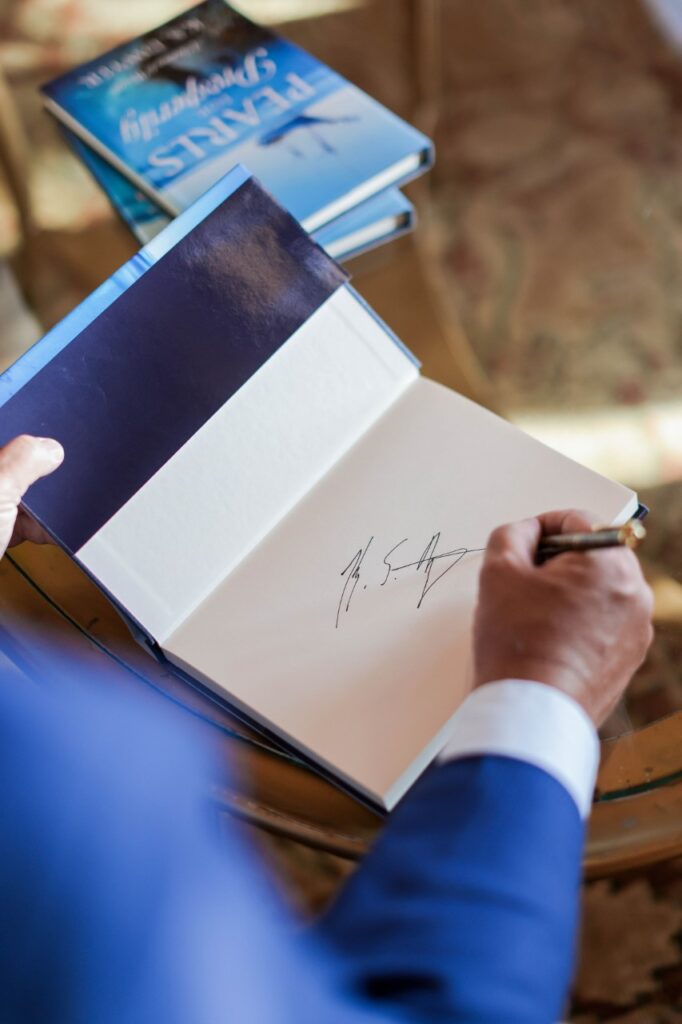
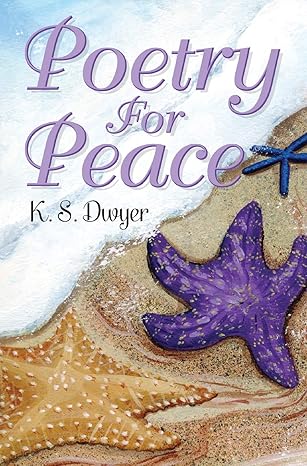
Poetry for Peace is a soulful collection of poems that gently nudges readers toward inner calm, healing, and reflection. It provides meditations on topics like prayer, loss, love, personal growth, and gratitude with prompts for reflection and aspiration. What inspired you to write this particular collection of poems?
At the time I began writing Poetry for Peace, I had a daughter who was having major health challenges and in helping her keep her focus on a brighter future, we would spend time in nature grounding and with animals and in prayer and meditation. After 7 years she was granted several miracles and went into remission. (Looking back, she was helping me realize what is truly important in this life.)My daughter’s name is Emily, I guess you could say that I was in, Emily’s school of Prayer, Love Loss, and Personal Growth & Gratitude.
I found the format of this collection intriguing. It resembles a workbook or reflection journal, allowing your readers to do more than just read the poems but actively engage with them. What inspired the format you created for this collection of poetry?
Initially, the book was published in just the Poetic format. After being contacted by Psychologists and individuals running stress clinics. As well as trauma counselors and in listening to their input on how the book was helping others I did some research and with some constructive feed-back turned the book into an interactive work-book. ( When the book was first published, I was contacted by a family who had adopted two daughters and recently lost one in an auto accident and they indicated to me they had been living in darkness ever since the accident. After they found Poetry For Peace, they could feel and see the light again, they asked me to never stop writing. This only motivated me more to turn Poetry For Peace into an interactive work or healing book.)
How did you decide on the themes that were important for you to explore in this collection?
The themes of the book were inspired by circumstances and a Higher Source and I can not take credit for them.
What is the next book that you are working on, and when will it be available?
I recently completed a book titled: Poems For Courage 52 short poetic stories to inspire and guide, this is also an interactive workbook to help inspire and guide others.
Author Links: Website | Amazon
Kevin and Shawnae Dwyer present a collection of inspirational and moving poems about life’s experiences and how one’s perspective can lead to peace.
Before the World Moves On

Nathaniel Terrell’s Before the World Moves On is a soul-bearing collection of poems that dig deep into themes of love, regret, faith, struggle, masculinity, and survival. Delivered in conversational free verse, the book reads like a personal diary cracked open for the world to see. Terrell shares moments of heartbreak, brushes with death, spiritual awakenings, and everyday reflections that pulse with honesty. Each poem feels like a snapshot of a lived experience, from backbreaking labor to falling in and out of love, from political disillusionment to spiritual resilience.
What really struck me was Terrell’s unfiltered voice. Some lines had me nodding, others hit me in the gut. There’s a sadness throughout the book, but also a sense of grit—like he’s been knocked down more times than he can count, but keeps getting back up. The poetry isn’t dressed up in metaphor or fancy language—it’s real, immediate, and often sounds like a man talking to himself in the mirror, wrestling with his past and daring to hope for better. The emotions are heavy, but the writing has rhythm and style. A few pieces, like “Dream catcher” and “Sequel,” resonated with me personally.
The collection is lengthy, and while not every piece resonated equally with me, that variety felt intentional. Some poems have the rawness of journal entries, which adds to their emotional depth, though it occasionally slows the momentum. Certain themes—like betrayal or self-doubt—echo throughout and gives the sense of someone working through their pain in real time. Terrell doesn’t shy away from the hard stuff, and that repeated reckoning feels honest.
I’d recommend Before the World Moves On to anyone who appreciates poetry that bleeds truth. Especially men trying to process pain in a world that often doesn’t let them. It’s not a book for those looking for tidy endings or polished sentiment. It’s for folks who’ve been through some stuff and are still standing.
Pages: 165 | ASIN : B0F7LWL7ML

We Belong Here
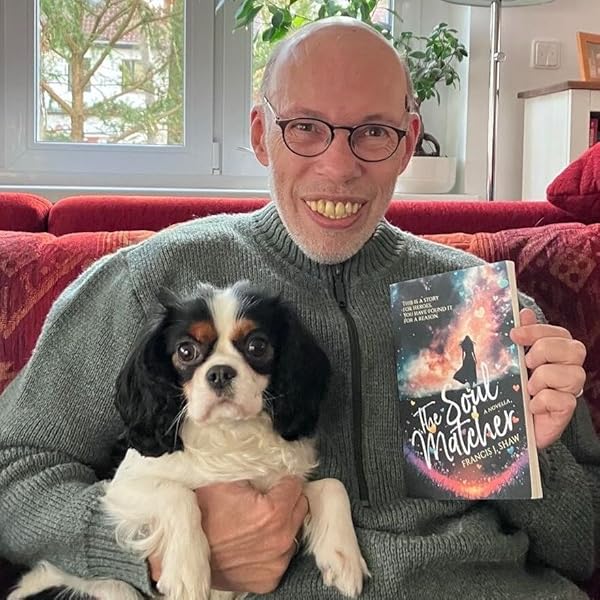
The Blessing Book is a collection of reflections that offers poetic insight and spiritual wisdom for anyone seeking meaning, comfort, and resilience in life’s messy moments. How did you choose which reflections to include?
I didn’t want to create a huge volume and chose the ones I thought would be the most impactful for readers.
Your metaphor about “almost” was especially powerful. Can you share how that idea came to you?
It came from a conversation with a friend who was born with parts of his brain not functioning correctly which resulted in learning difficulties and schizophrenia. This is the whole conversation.
“Do you know something?” he asked.
“What?”
“I love you.”
“Do you know something?” I asked.
“What?”
“I love you too.”
“Do you know something else?” he asked.
“What?”
“You are almost intelligent.”
“Yeah…almost,” I responded.
How do you balance vulnerability and structure in your writing without losing authenticity?
Vulnerability comes from the Latin meaning ‘wounded.’ It’s these wounds and the experience of loss which connect us all. The structure I use is to drive readers to question, to encourage readers to view their lives differently. To spark a new thought, idea.
What blessing or reflection from the book has personally stayed with you the most since writing it?
It’s the last reflection, 72. We need daily reminders to remind us that our lives are important and we belong here.
Author Links: GoodReads | X | Facebook | Website
No others touch the world with your light, except you
No others feel as your spirit feels, nor embrace another as you do
No others experience your journey through your eyes and with your heart
No others have the unique blessings waiting for you
Sundays with Jenny
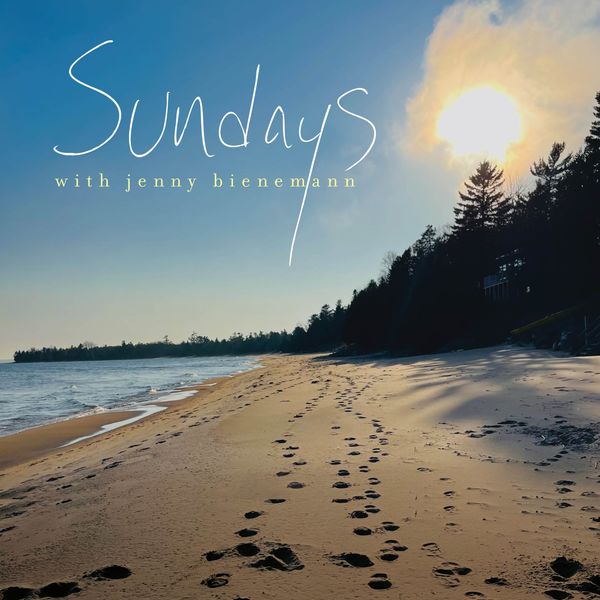
Sundays with Jenny, a collection of haiku and photographs by Jenny Bienemann, invites readers into a quiet, contemplative day filtered through the tender, unhurried gaze of a Sunday. The book unfolds in six thematic sections: Rejoyce, Rise, Renew, Reflect, Restore, and Rejuvenate. Each part marks a distinct time of day, tracing a gentle arc from dawn’s hush to the stillness of midnight. Along the way, it highlights the small, familiar rhythms of daily life.
The haiku, in true minimalist form, are concise yet resonant. Each one distills presence, healing, and wonder into just a few lines. There’s an emotional clarity in Bienemann’s verse, personal yet uncannily universal. Her images are spare but precise, offering a world that feels both intimate and expansive.
Reading Sundays with Jenny is like pausing at the top of a hill, letting out a breath you didn’t know you were holding. Bienemann captures the ephemeral, the half-thoughts and half-feelings we often brush aside, and honors them. Some haiku wrap around you like warmth on a cold morning. Others, such as “doubt magnifies faith, / asking the kinds of questions / only faith answers,” halt you mid-thought and hold you in silence.
One of the book’s quiet triumphs is its structure. The emotional progression echoes a soul’s gentle unfolding. With each chapter, readers drift from light and hope into self-reflection and eventual calm. The transitions are subtle but powerful, forming a seamless narrative of emotion rather than action.
Perhaps the most arresting quality is the immediacy it brings. These haiku do not merely observe, they awaken. Bienemann has a rare ability to locate grace in the unnoticed and pour reverence into the mundane. This book could be read in a single sitting, yet its resonance lingers. It’s especially evocative in autumn, when trees shed both leaves and memory, but its comfort endures in any season.
For those in search of stillness, or simply a companion for the quieter corners of life, Sundays with Jenny offers both presence and poetry in equal measure.
Pages: 212 | ISBN 978-0-1234-6578-8
Lovely and Suffering
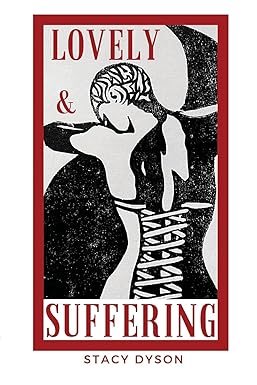
Lovely and Suffering is a searing collection of poetry from Stacy Dyson chronicling a year in the life of a Black woman navigating a pandemic, political upheaval, and unrelenting racial injustice. Spanning the deeply personal to the fiercely political, Dyson’s poems bear witness to grief, rage, resilience, and love. Written from March 2020 to March 2021, this book documents what it means to survive and speak when the world wants your silence. The poems are raw, unflinching, and achingly honest. Dyson blends lyricism and spoken-word fire in a narrative that is part journal, part manifesto, and all heart.
Reading this book knocked the wind out of me more than once. Dyson doesn’t just write poems, she lays down testimony. Her voice is unapologetically fierce, drenched in lived experience and spiritual grit. Whether she’s honoring Breonna Taylor or calling out white liberal performativity in “Karen, Your Mammy Done Left the Building,” Dyson never flinches. The writing is blunt, rhythmic, and stinging. Her mix of intimate grief and public fury creates a powerful dissonance. She doesn’t aim to make readers comfortable. She demands they feel what she feels, and she earns that demand.
What stuck with me most was the deep tenderness under the rage. Dyson’s tributes to community, family, and sisterhood are gorgeous. In “Je T’aime” and “Quieted Soul,” she reveals how healing hides in the laughter of a child or the memory of ancestors who “never run/ not unless it is toward the enemy…” These moments were breathtaking. But there’s a loneliness too, a poet aching for a better world, and exhausted by the work of building it. Sometimes, the poems felt like confessions. Sometimes, they roared like war drums.
I’d recommend Lovely and Suffering to anyone who wants to understand the emotional toll of being Black in America, especially Black women. It’s for people who want their art honest, loud, and bruising. She speaks with heat and clarity. And if you’re willing to listen, you’ll come out changed.
Pages: 146 | ISBN : 1955683018
Literary Titan Book Award: Poetry

The Literary Titan Book Award recognizes poets who demonstrate exceptional artistry and proficiency and push the boundaries of language and expression. The recipients are poets who excel in their technical skills and evoke deep emotional responses, challenge thoughts, and illuminate new perspectives through their work. The award honors those who contribute to the literary landscape with their unique voices and powerful words.
Award Recipients



Visit the Literary Titan Book Awards page to see award information.
Bare It All
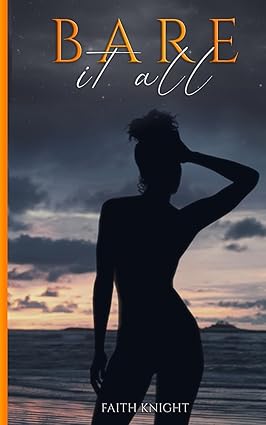
Bare It All is a raw, no-holds-barred poetry collection by Faith Knight that cracks wide open the journey to self-love, survival, and transformation. Acting as a prequel to her memoir Lay It Bare, the book reads like a series of intimate diary entries, each poem serving as a snapshot of the author’s emotional evolution. From stories of abuse, self-doubt, and motherhood to declarations of resilience, faith, and power, Knight strips back every layer of her identity with fearless honesty. The collection is deeply personal, guided by themes of trauma, identity, spiritual healing, and empowerment, written with a poetic style that’s conversational yet lyrical.
Reading this book felt like sitting across from a friend who’s finally ready to tell you everything. Faith Knight doesn’t wrap trauma in pretty metaphors or hide behind academic polish. Her words come in hard, fast, and sharp. You feel them. And that’s what makes this book so powerful—she owns every emotion and invites you to do the same. You can sense her cracking open but also finding wholeness again in the process. Her honesty is tough but necessary, especially in poems like “Misplaced Girl” and “The Man They Called Krypto”—they’re haunting, and they stay with you.
Stylistically, I loved the unfiltered, almost conversational rhythm of the writing. Knight doesn’t follow a traditional poetic form, and that’s the charm of it. She writes like she speaks, and it feels real. It’s messy, fierce, sometimes even funny in the middle of sadness. She flips between vulnerability and sass in the blink of an eye, which gives the collection a kind of emotional whiplash that works. One second she’s pulling you into a deep pool of despair, and the next, she’s telling the world she’s “an entire dessert table.” That mix of pain and power? That’s real life.
I’d recommend Bare It All to anyone who’s ever had to pick themselves up after being knocked flat, especially women who’ve been told they’re too loud, too broken, or too complicated. It’s also for survivors who are still figuring out how to heal. This isn’t a feel-good book in the traditional sense, but it’s deeply comforting. It tells you the truth, even when it hurts, and somehow makes you feel a little braver after reading it.
Pages: 46 | ASIN : B0F4MJ2B5T



 LITERARY TITAN