Blog Archives
Identities and Experiences

I Was, Am, Will Be is a collection of poetry, prose, dramatic pieces, letters, and visual art that reflects on identity, loss, love, race, mental health, family, and the meaning of creative expression. Your work draws from Black literary traditions, hip-hop, pop culture, teaching, and personal experience. How do these influences interact in your creative voice?
Imagine a nice-looking sponge, absorbing every nutrient and vitamin from each food morsel touched. The influences gained throughout the human experience are similar in that we absorb the influences from the world on a daily basis. In my case, I grew up in Oakland, and I don’t leave that voice at the door when I write. Langston Hughes is a major influence, especially the way he brings music into language. Then there’s Too Short, Keak da Sneak, E-40, and the cadence and humor of Bay Area hip-hop. Albert Camus gets me thinking about purpose, and what we do with the life we’ve been given. I like letting all of that sit together, even when it seems like an odd combination.
Spoken-Word, or performance poetry, helped me figure out what that mixture sounded like out loud. I was on the poetry slam team at Cal State Long Beach and later spent a lot of time competing around the Bay. You learn a lot about a line when you have to stand in front of strangers and say it. I brought that attention to sound into Broken Pencils, even though it’s a novel. Studying in Greece with George Crane also taught me to cut words I didn’t need. I still get attached to a line that probably needs to go.
As an English teacher in Oakland by day, I’m always thinking about how to make writing matter to somebody who didn’t ask to read it. I ask students to connect what we’re reading to their own identities and experiences. That keeps me thinking about the person on the other side of the page. Hosting my bi-weekly Get-Hype Open-Mic series at Discover Community Cafe in West Oakland keeps me listening, too. There are so many ways to tell a story, and I get to hear people finding theirs.
Now I’m carrying that experimentation into music and film for I Was, Am, Will Be, including the short film Affirmations (Why Write). A beat changes how I deliver a poem. A pause, an image, even the smallest sound bite, can hold something I might otherwise explain in another line. I’m still learning those forms, so give me grace. I’m enjoying being a beginner at something again.
Your writing moves quickly between humor, vulnerability, cultural commentary, and grief. How do you decide when humor belongs in an emotionally difficult piece?
Humor, jokes, and playing the dozens are woven into nearly everything I write. Comedy is also one of the ways I cope. I often make a joke before I’m ready to say what’s actually bothering me. Sometimes it helps me get through the moment, yet sometimes I’m avoiding something. So when humor shows up in my writing, I pay attention to what the character is doing with it. In “Good Sunday,” Jonah moves through a day that can look pretty carefree from the outside, but his past keeps interrupting him. He makes witty observations, including about people dealing with some of the same emotional stress he carries. The joke can be funny and still show how uncomfortable he is with himself.
Grief has strange timing. You can be laughing and then remember somebody who should be there laughing with you. That feels close to life as I know it. I don’t want every difficult piece to announce its seriousness from the first line and stay there. When I revise, I ask whether the humor helps us understand Jonah or keeps us too far away from what he’s feeling. If I’ve let a joke cover up something the reader needs to sit with, I give that feeling more room.
What do you hope readers who have experienced trauma, grief, or mental-health struggles see in your work?
I hope that readers take away a better sense of hope and understanding that we are beyond our pain. Our lives are not defined by damage. In spite of loss, we still have a future. I started writing poetry after losing my best friend in a car accident when I was thirteen. I didn’t have the language for everything I was feeling, and writing gave me somewhere to put it. I’ve also had to work through the loss of my father and my own struggles with bipolar disorder. I’ve written about purpose because there have been times when I had a hard time finding my own.
Broken Pencils took fifteen years to reach publication. There were rejections, long stretches when I put the manuscript away, and times when grief made it difficult to care about the dream. Looking back, I’m grateful I returned to it. In I Was, Am, Will Be, Jonah is twenty-five and traveling through Europe, carrying questions about identity, love, and loss into unfamiliar places. That grew out of my own time abroad. Distance can change your perspective, but the past still comes with you.
I’m proud of the books and the work I’m doing now, and I still have days when taking care of myself has to come first. Therapy and the people close to me have helped me get here. I hope somebody reading can feel less ashamed of needing that support, or feel that their own story is worth telling. We are what remains from damage, and what remains still deserves a chance.
Author Links: GoodReads | Amazon
Leaving behind the familiar confines of America, Jonah embarks on a three-month journey through Spain, Greece, France, and Amsterdam. As Jonah immerses himself in the rich European landscapes and cultures, will he confront the ghosts of his past or succumb to the uncertainties of his future?
I Was, Am, Will Be


J. R. Rice’s I Was, Am, Will Be is a collection of poetry, prose, dramatic scenes, letters, and visual compositions arranged as a journey through identity, grief, love, race, mental illness, family, and artistic purpose. Its seven chapters move from the compulsion to write through romance, cultural alienation, trauma, mortality, and remembrance, creating the shape of a coming-of-age narrative without relying on a conventional plot. Travel through Greece, France, Spain, and the Netherlands gives the speaker physical distance from Oakland, while memory keeps drawing him back to family, formative losses, and the experiences that made writing necessary. The result is an autobiographical work whose structure reflects its central concern: how a person gathers a coherent self from scattered places, relationships, and versions of the past.
Rice’s voice is energetic, exposed, and deliberately restless. He moves between formal allusion, conversational humor, spoken-word repetition, pop-culture references, and blunt confession, often allowing several registers to occupy the same poem. That flexibility suits a speaker who understands himself through many inheritances, including Black literary tradition, hip-hop, teaching, Oakland, family history, and European travel. In “Affirmations,” the repeated question “Why write?” develops into an account of writing as survival, witness, ancestry, and civic responsibility. Elsewhere, comic encounters in bars, museums, cafés, and bedrooms keep the book grounded in ordinary experience, even when its themes become philosophical. Rice’s strongest passages let wit and sorrow work together, so humor becomes part of the speaker’s endurance rather than a pause from serious material.
The collection’s emotional force grows as its recurring images gain meaning. Stairs, cliffs, flight, falling, trees, water, mirrors, and roads repeatedly place the speaker between danger and transformation. The line “You are what remains from damage” captures the book’s guiding insight: identity can contain injury without being reduced to it. The later chapters deepen that idea through accounts of bipolar disorder, suicidal thought, gun violence, childhood sexual abuse, pregnancy loss, and a father’s terminal illness. These subjects are handled with a directness that can be harrowing, yet the collection consistently searches for language capable of carrying pain toward understanding. Its repetitions sometimes feel incantatory and sometimes obsessive, accurately reflecting a mind returning to unresolved memories until they yield a different meaning.
The final movement toward family and remembrance gives the book its clearest sense of arrival. In “Depends,” the narrator’s care for his dying father transforms dependency, embarrassment, anger, and tenderness into a scene of difficult intimacy. Their exchange ends with the father’s answer, “Depends,” a modest conclusion that fits a book committed to uncertainty, choice, and continual becoming. I Was, Am, Will Be is ultimately a record of self-reclamation, one that treats writing as testimony, discipline, inheritance, and a reason to remain alive. Rice’s expansive form allows the collection to hold contradictions without smoothing them away, and its most enduring achievement is the portrait of a speaker learning that freedom comes through remembering, naming, forgiving, and choosing to live.
Pages: 34 | ISBN : 978-1088026465

A Mix of Emotions

Is There Not a Cause? is a raw and unapologetic collection of poetry, songs, stories, personal reflections, and scenes of life that explore faith, pain, and personal development in a way that leaves the reader feeling raw and alive. What inspired you to write this particular collection of poems?
This collection was initially published in 2021. This re-release has over twenty-five new poems. My inspiration to write this collection came from time and experiences, loss, growth, pain, love, social climate around the world, faith, and more.
How do you approach writing about deeply personal or emotional topics?
I approach it the same way I do most of my pieces. I also do spoken word, so the majority of my poems are written from the perspective of me speaking to an audience or myself. For whatever reason, that makes it easy for me to share and or express deeply personal or emotional topics.
How did you go about organizing the poems in the book? Was there a specific flow or structure you were aiming for?
The beauty of the book is that there is no form or structure. The poems/stories/songs flow almost at its own pace, creating a mix of emotions, thoughts, concerns, and anthems.
How has this poetry book changed you as a writer, or what did you learn about yourself through writing it?
I learned how to truly lock in. This past year was a challenge in many ways. All in all, it made me a better writer, speaker, and performer. Writing this book was a great challenge in not depending so much on rhyming and rhythm. Allowing me to put greater effort into storytelling and free verse.
Author Links: GoodReads | Facebook | X (Twitter) | Website | Amazon
Published in numerous magazines and online, esteemed poet and wordsmith Nathaniel Terrell re-releases his first collection of unapologetically raw and honest reflections. If you are someone who prefers to experience life and savor its moments – sacred, painful, and true – you will find favorites in this collection that you will return to. The works will touch your soul in the way poetry should.
IS THERE NOT A CAUSE? by Nathaniel Terrell is a collection best taken one page at a time and is a collection worth savoring and rereading. Each poem is replete with the wisdom and enlightenment gained from someone who experiences life and savor its moments. His words are sacred, painful, and true, and his works will touch your emotions and will find their way into your soul, just as good poetry should.
This re-release is a powerful debut collection containing songs, stories, personal reflections, and scenes of life, with some new poems highlighting growth and maturity. Written from the perspective of a passionate, creative black man working hard to share his voice with the world, each poem paints a vivid picture of the soul of an artist. It grapples with topics such as life and death, racism, faith, anger, social injustice, division in the nation, and getting up after failure. These poems are meant to encourage and to provoke and desire, and will take you on a journey that starts fast and hard and dives deeply into the human condition.
Contemporary culture seeks to define us and forge our identities. Things are never that black and white. The real human condition is a personal journey through pain and ignorance as we seek hope, inspiration, and enlightenment. Each poem conveys important messages about the capacity to pry open our hearts and be connected with our true nature. His warm, inspirational words will encourage and provoke you to take a journey that will start fast and dive deeper. It’s an invitation to mindful presence where the words and artistic expressions compel you to find peace with yourself and the world.
For more on Nathaniel Terrell’s works, visit him on social media at natej.story or at http://www.natejstory.com.
Is There Not A Cause? (2014-2025)

Reading Is There Not a Cause? felt like diving into eleven years of someone’s life all at once. The book moves through storms, heartbreak, faith, rage, pride, fear, temptation, joy, reflection, and rebirth. The poems hit like quick flashes of memory, then long moments of confession, then hard truths about a broken world. The author brings God, struggle, trauma, race, desire, loyalty, and self-accountability into view and spins them around until they blur into something raw and human. I finished it feeling like I had witnessed someone fight through their own darkness and keep getting back up, no matter how messy the fall.
As I worked through the poems, I kept feeling this heat in my chest. The writing is straight from the gut, no filter at all, and sometimes it shook me because the voice is so exposed. There are moments when the author talks about faith with steady hope, then in the next breath, he crumbles under frustration. That mix felt real to me. Life flips like that. I appreciated how he never pretended to be perfect and never tried to make his pain sound pretty. Some poems burned hot with anger. Others were soft in a way that caught me off guard. I liked that unpredictability. It made the book feel alive.
The book hits you with one emotion after another. I admired that intensity. It felt like the writer refused to hold anything back. The honesty gave the work its power. I also enjoyed the wide swing between personal reflection and social commentary. One page dives into relationships that fell apart. Another page calls out violence, corruption, and spiritual decay. It is chaotic at times, but the chaos felt intentional. It mirrors the world we live in.
I walked away feeling like this book is for readers who want truth more than comfort. It is for anyone who has battled themselves, prayed for change, fallen hard, gotten back up, and kept moving even when life hit them from every angle. If you like poetry that talks plain and feels heavy and relatable, this book will speak to you. And if you are in a season where you need to feel seen, this collection has plenty to offer.
Pages: 128 | ASIN : B0FP76VCCM
My Own Healing Journey

Bare It All is a raw, no-holds-barred poetry collection where you share your deeply personal and emotional journey with readers, one that leads to self-love, survival, and transformation. Why was this an important collection of poetry for you to write?
Writing Bare It All was important for me because it allowed me to share my journey of self-love and transformation without reservation. This collection serves as a testament to the healing power of vulnerability and the strength that comes from embracing one’s truth. It’s about shedding fears and acknowledging my experiences to inspire others to do the same.
Can you share a bit about your writing process? Do you have any rituals or routines when writing poetry?
I wouldn’t say I have any specific rituals, but I do like to pray and meditate before writing. This practice of self-reflection helps me connect with my emotions and understand what’s on my mind. I write whatever flows naturally, allowing my thoughts and feelings to shape the poetry.
Did you write these poems with a specific audience in mind, or was it a more personal endeavor?
Initially, I wrote Bare It All for myself, without considering an audience. It was a personal endeavor reflecting my own healing journey. However, if my words resonate with others and encourage them to share their truths, that would be a beautiful outcome.
How has this poetry book changed you as a writer, or what did you learn about yourself through writing it?
This poetry book has shown me the beauty and bravery of being an open book, no pun intended. I’ve learned that I am a deeply emotional person, and while I used to shy away from that, I now recognize it as a beautiful and important aspect of my identity. Embracing my emotions has not only enriched my writing but has also deepened my connection with myself.
Author Links: GoodReads | Amazon
Before the World Moves On

Nathaniel Terrell’s Before the World Moves On is a soul-bearing collection of poems that dig deep into themes of love, regret, faith, struggle, masculinity, and survival. Delivered in conversational free verse, the book reads like a personal diary cracked open for the world to see. Terrell shares moments of heartbreak, brushes with death, spiritual awakenings, and everyday reflections that pulse with honesty. Each poem feels like a snapshot of a lived experience, from backbreaking labor to falling in and out of love, from political disillusionment to spiritual resilience.
What really struck me was Terrell’s unfiltered voice. Some lines had me nodding, others hit me in the gut. There’s a sadness throughout the book, but also a sense of grit—like he’s been knocked down more times than he can count, but keeps getting back up. The poetry isn’t dressed up in metaphor or fancy language—it’s real, immediate, and often sounds like a man talking to himself in the mirror, wrestling with his past and daring to hope for better. The emotions are heavy, but the writing has rhythm and style. A few pieces, like “Dream catcher” and “Sequel,” resonated with me personally.
The collection is lengthy, and while not every piece resonated equally with me, that variety felt intentional. Some poems have the rawness of journal entries, which adds to their emotional depth, though it occasionally slows the momentum. Certain themes—like betrayal or self-doubt—echo throughout and gives the sense of someone working through their pain in real time. Terrell doesn’t shy away from the hard stuff, and that repeated reckoning feels honest.
I’d recommend Before the World Moves On to anyone who appreciates poetry that bleeds truth. Especially men trying to process pain in a world that often doesn’t let them. It’s not a book for those looking for tidy endings or polished sentiment. It’s for folks who’ve been through some stuff and are still standing.
Pages: 165 | ASIN : B0F7LWL7ML
Oceans of Thoughts Book One
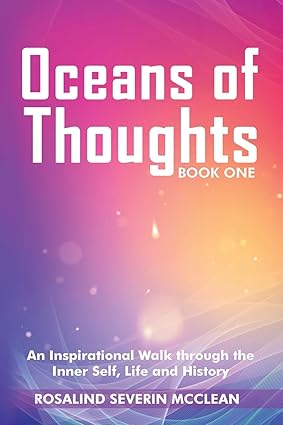
Rosalind Severin McClean’s Oceans of Thoughts: Book One is a soul-stirring collection of poems and reflections that journeys through loss, memory, identity, and spiritual awakening. Woven with rich cultural threads from the author’s Dominican roots and anchored in emotional honesty, the book moves through grief and resilience—most notably in the heartfelt tributes to her late sister Yvonne—and offers powerful insights into family, society, and selfhood. Each piece pulses with raw feeling, blending biblical, spiritual, and philosophical touchstones with vivid, everyday language. There are sections dedicated to homeland pride, family struggles, and poignant memories of Convent School days in Dominica, all wrapped in poetic sincerity.
Reading McClean’s work felt like stepping into someone’s journal. Her voice is unfiltered, brimming with emotion, sometimes aching, sometimes rejoicing. She doesn’t just describe her pain; she hands it to you, palms open. Her poems about Yvonne—especially the “Floods of Emotions” series—hit hard. They’re full of yearning and beauty and that special kind of ache that comes from love not lost, but changed. And the spiritual reflections? They’re raw, unguarded. She praises, questions, and obeys the divine call, all in the same breath. There’s something brave in how she lets her faith carry the reader through the peaks and valleys of her experience.
But the book isn’t just about grief or even poetry—it’s about memory and voice. The school recollections are rich and playful, filled with sensory delight and childhood charm. Her style doesn’t chase polish. It doesn’t try to be highbrow. It’s emotional and lyrical, but not pretentious. Some lines are jagged, others smooth. And that’s the beauty—it breathes. Her use of dialect in parts adds authenticity and flavor, keeping the text rooted in the real while reaching for the divine.
This is not a light read, nor is it something you breeze through. It’s reflective, spiritual, and often mournful—but healing too. I’d recommend Oceans of Thoughts: Book One to anyone grieving a loved one, anyone who feels the push and pull of family ties, and anyone curious about the sacred in everyday life. It’s especially meaningful for those with Caribbean roots or a love for memory-laced storytelling. You’ll find yourself pausing, rereading, and maybe even crying. It’s not just a book. It’s a heart cracked open.
Pages: 165 | ASIN : B08NSCFR8W

Bare It All
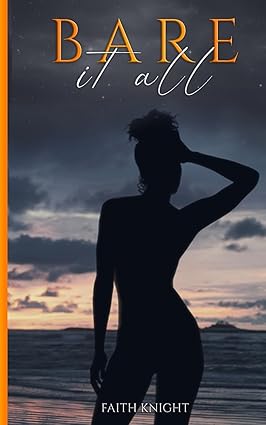
Bare It All is a raw, no-holds-barred poetry collection by Faith Knight that cracks wide open the journey to self-love, survival, and transformation. Acting as a prequel to her memoir Lay It Bare, the book reads like a series of intimate diary entries, each poem serving as a snapshot of the author’s emotional evolution. From stories of abuse, self-doubt, and motherhood to declarations of resilience, faith, and power, Knight strips back every layer of her identity with fearless honesty. The collection is deeply personal, guided by themes of trauma, identity, spiritual healing, and empowerment, written with a poetic style that’s conversational yet lyrical.
Reading this book felt like sitting across from a friend who’s finally ready to tell you everything. Faith Knight doesn’t wrap trauma in pretty metaphors or hide behind academic polish. Her words come in hard, fast, and sharp. You feel them. And that’s what makes this book so powerful—she owns every emotion and invites you to do the same. You can sense her cracking open but also finding wholeness again in the process. Her honesty is tough but necessary, especially in poems like “Misplaced Girl” and “The Man They Called Krypto”—they’re haunting, and they stay with you.
Stylistically, I loved the unfiltered, almost conversational rhythm of the writing. Knight doesn’t follow a traditional poetic form, and that’s the charm of it. She writes like she speaks, and it feels real. It’s messy, fierce, sometimes even funny in the middle of sadness. She flips between vulnerability and sass in the blink of an eye, which gives the collection a kind of emotional whiplash that works. One second she’s pulling you into a deep pool of despair, and the next, she’s telling the world she’s “an entire dessert table.” That mix of pain and power? That’s real life.
I’d recommend Bare It All to anyone who’s ever had to pick themselves up after being knocked flat, especially women who’ve been told they’re too loud, too broken, or too complicated. It’s also for survivors who are still figuring out how to heal. This isn’t a feel-good book in the traditional sense, but it’s deeply comforting. It tells you the truth, even when it hurts, and somehow makes you feel a little braver after reading it.
Pages: 46 | ASIN : B0F4MJ2B5T


