Blog Archives
Mortal Revenge


At its core, this is a crime thriller that blends family betrayal, corruption, and moral reckoning into a story driven by personal stakes. The book follows Alex Deltoro, a successful pharmaceutical executive in Mexico City, whose professional triumphs collide with a dark family crisis involving his mother, his brother, and a web of neglect, greed, and possible murder. Set against the early days of the COVID-19 pandemic, the novel moves between domestic abuse, corporate intrigue, and the broader rot of institutional corruption, all building toward a question that lingers throughout. How far can a decent person be pushed before justice turns into revenge?
What stayed with me most was how grounded the writing feels, even when the plot leans into high-stakes territory. The authors do not rush Alex’s inner life. We sit with his guilt, his exhaustion, and his instinct to care for others even when it costs him. The pacing reflects that choice. Some scenes stretch out, especially in hospitals or family spaces, and that patience pays off. It gives the story weight. The prose is clear and unflashy, which works well for a thriller rooted in realism rather than spectacle. Those details never feel decorative. They serve the story.
I also appreciated how the book handles power and corruption. No one twirls a mustache here. Harm happens through neglect, selfishness, and systems that reward the wrong behavior. The pandemic backdrop is especially effective. It adds urgency without feeling opportunistic, and it mirrors the novel’s larger concerns about who gets protected and who gets sacrificed. There were moments where I wished certain confrontations had been sharper or arrived sooner, but in hindsight, the slower burn fits the emotional logic of the story. Revenge, in this novel, is not impulsive. It is something that grows quietly, fed by love and frustration in equal measure.
Mortal Revenge felt less like a simple thriller and more like a meditation on responsibility. It sits comfortably in the crime thriller genre, but it also borrows from social realism and psychological drama. I would recommend this book to readers who like suspense grounded in character, especially those interested in morally complex stories set in real-world crises. If you enjoy thrillers that make you think about systems, family, and the cost of doing the right thing, this one is worth your time.
ISBN: 978-1-64456-875-0

Hang Fire


Hang Fire, by Anthony Mora, is a dark, satirical dive into the world of Hollywood’s desperate ambition, centering on the manipulations, lies, and insecurities of Jerry, an aspiring filmmaker. Set in a familiar yet unsettling Los Angeles, Jerry navigates shady dealings, obsessive therapy sessions, and Hollywood politics to achieve his dreams—regardless of who he steps on along the way. The book blends a sharp critique of the entertainment industry with personal psychological drama, all while keeping the reader on edge as they watch how far Jerry will go to fulfill his twisted ambitions.
From the book’s opening, where Jerry tests his therapist with loaded questions about murder, the tone is both darkly comedic and uncomfortable. The therapy scenes are some of the strongest in the book. Readers soon get a clear sense of Jerry’s manipulative nature, especially when he tries to turn a therapy session into a means to seduce his therapist or pitch her a role in his imaginary film. It’s both hilarious and tragic, showing how detached he’s become from reality.
I do feel that Jerry’s obsession with leveraging his relationship with his friend James, and then his creepy fixation on his therapist, can feel repetitive at times. The book thrives in moments where Jerry’s moral decay is laid bare but sometimes leans a little heavily on the same set of tools without evolving them much over time.
One of the highlights for me was Mora’s ability to capture the desperation and delusion that often fuels the Hollywood dream. The scenes where Jerry discusses potential meetings with high-profile actors and producers, all while manipulating those around him, really bring to life the cutthroat nature of the entertainment industry. There’s a palpable sense of ambition turned sour. I loved the way Mora didn’t shy away from the ugliness of Jerry’s character. He’s not a likable protagonist, but he’s certainly compelling in his ruthlessness.
I would recommend Hang Fire to readers who enjoy character-driven, psychological novels with a satirical edge. Fans of Hollywood insider stories and dark humor will find a lot to enjoy here. Just be prepared for a journey into the mind of a character whose ambition knows no bounds, even as he spirals deeper into his own self-made mess.
Ai:Opening


AI: Opening, by George St. Georges, is an intricately woven tale that follows the journey of Walt Walls and his friends during their last two semesters at Credence University. Set on the enigmatic island of Ai, the narrative oscillates between reality and mystery, intertwining themes of ancient rituals, the power of language, and the strange forces that govern the island and its inhabitants. The book challenges readers to decide what genre it falls under—psychological thriller, mystery, or literary fiction—making the experience both unique and puzzling.
I found the writing style particularly unconventional yet magnetic. St. Georges plays with language and formatting in a way that could easily seem chaotic, but here it is intentional, adding layers to the narrative. While some sections felt almost poetically inspired, others bogged down with over-explanation or cryptic messages that left me scratching my head. The thematic exploration of secrets and suppressed memories struck a nerve with me. The atmosphere at Credence University is brilliantly captured—part idyllic, part sinister, particularly in scenes like the football game, where Walt’s mental struggle contrasts sharply with the celebration around him. The book’s pace often ebbs and flows unpredictably, which can be both exhilarating and frustrating.
Harmony Duncan’s arc resonates deeply. Her experience of being photographed in a compromising way and the subsequent fallout showcases the emotional damage inflicted by social scrutiny and betrayal. Her struggle between being academically focused and suddenly becoming a campus pariah is heart-wrenching. The open forum scene, where Walt defends Harmony and Dean Squires looms ominously, exposes the hidden power dynamics within the school. Yet, I couldn’t help but feel that some secondary characters, like Dean Rhodebeaver, existed more as narrative devices than fully realized people. Still, the core friendships and the gravity of trauma were well-handled, evoking genuine empathy.
The conclusion leaves a lasting impression. The themes of sacrifice, the power of ancient texts, and the battle between light and darkness take on new dimensions as the mysteries of Ai begin to unravel. The book’s climax, involving rituals at the Farm and the unsettling dual identities of the cult members, left me both shocked and contemplative. The juxtaposition of everyday college life with something far more ominous keeps the reader in a constant state of suspense.
I would recommend AI: Opening to readers who appreciate literary puzzles and are patient with narratives that don’t spoon-feed answers. If you enjoy books that make you think and stories where not everything is as it seems, this will be right up your alley. Just be prepared for an immersive, sometimes perplexing ride.
Ai:Opening

AI: Opening is a riveting novel that blends elements of science fiction, psychological drama, and dark mystery. The story follows Walt Walls and his friends as they navigate their final semesters at Credence University, a fictional and somewhat surreal Christian college located on the mysterious island of Ai. With peculiar references to ancient texts like the 1611 King James Bible and a setting marked by bizarre occurrences, the novel weaves a layered tale of discovery, academic life, and chilling undercurrents.
What struck me first about AI: Opening was its willingness to take risks. From the unconventional start, with a chapter addressed directly to the reader, to the eccentric narrator who interjects at times with cryptic commentary, the book feels like it’s constantly breaking the fourth wall. The narrator even mentions quirks in spelling and formatting, urging the reader to stick with the story despite its peculiarities. At times, these choices felt playful, as when the narrator suggested reading with a friend, but other times, they pulled me out of the immersion. It’s not an easy read. It’s more like a puzzle you’re meant to untangle as you go. But I couldn’t help but feel that the odd format fit the story’s mysterious and cerebral tone.
The novel’s exploration of the island of Ai, where strange forces twist reality and even the mundane aspects of student life are shrouded in deeper meaning, felt fresh and engaging. The island itself is an eerie and almost living presence. For instance, the magnetic field generated by Mount Ai, which alters people’s memories and thoughts, reminded me of classic sci-fi settings where the environment is as important as the characters.
The writing is often cryptic and fragmented, with constant references to ancient texts and mythological ideas. While at times I found this to be a little over-the-top, it certainly worked to create a dense and thought-provoking narrative. A good example is the recurring theme of hidden meanings in words, such as when Walt reflects on cryptic biblical phrases or Shakespearean parallels. The novel has a tendency to digress into these linguistic explorations. The author clearly has a fascination with words and their multiple meanings, and this plays into the broader theme of the ambiguity of truth, which is something I appreciated but struggled with in longer stretches.
On the emotional side, the novel manages to convey deep isolation and internal conflict through its protagonist, Walt. His inner monologue about his desire to connect with others, coupled with the haunting voices that interrupt his thoughts, paints a poignant picture of loneliness. This kind of psychological turmoil is a running motif in the novel, and it adds layers of tension to Walt’s character. I found myself rooting for him.
AI: Opening is an ambitious novel that will appeal to readers who enjoy layered storytelling and are willing to puzzle through its peculiarities. The mix of psychological drama, dark mystery, and philosophical inquiry makes it a rich but challenging read. It’s not for everyone but for those who enjoy peeling back layers of meaning and diving into the strange and unsettling, AI: Opening is a thought-provoking journey worth embarking on.
But baby, you’re worth it!

But Baby, You’re Worth It! by Tamara Chavalle is a poignant exploration of a woman’s journey through the trials and triumphs of motherhood, specifically focusing on the harrowing experiences of birth trauma and the strength required to overcome such adversity. The book delves deep into the life of Tabitha, who faces life-threatening medical errors during childbirth, resulting in severe physical and emotional scars. As she navigates the aftermath, including the fight for her health, her job, and her family, the narrative is both heart-wrenching and inspiring, shedding light on issues that many women endure but seldom discuss.
From the very beginning, Chavalle’s writing is engaging and heartfelt. Her vivid descriptions and candid storytelling draw you into Tabitha’s world, making you feel her pain, fear, and determination. One of the book’s strengths lies in its ability to portray raw emotions authentically. The author’s ability to articulate the silent struggles many women face after traumatic births is commendable and offers a sense of solidarity to those who have been through similar experiences. Chavalle’s narrative is also filled with moments of resilience and hope. The portrayal of Tabitha’s fight to regain control of her life, her career, and her role as a mother is inspiring. The support from her friends and family and her own unyielding spirit are depicted beautifully, showing that even in the darkest times, there is light. The sections where Tabitha connects with other women who have suffered similar traumas are particularly moving, emphasizing the importance of community and shared experiences in the healing process.
But Baby, You’re Worth It! is a deeply moving and important read for anyone interested in the realities of childbirth and the often-hidden struggles that follow. Tamara Chavalle has crafted a story that is both an eye-opener and a tribute to the resilience of women. This book is especially recommended for mothers, healthcare professionals, and anyone who wishes to understand the profound impact of birth trauma. It serves as a reminder that, despite the challenges, the love for our children can give us the strength to overcome even the most daunting obstacles.
Pages: 208 | ISBN : 1923087223

A Cage for Magpie
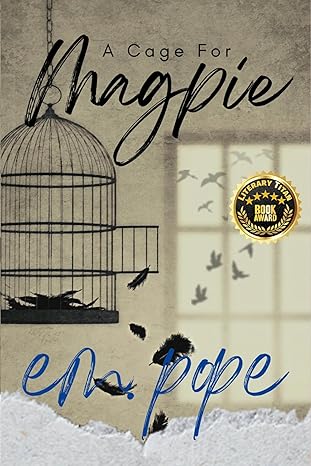
A Cage For Magpie by Eli Pope opens on a frigid day in Missouri, introducing us to a grief-stricken young girl named Maggie Mae DuVane, affectionately known as Magpie, as she attends her grandfather’s funeral. Magpie is in shock, struggling to cope with the sudden death of her beloved grandfather, David Duncan DuVane. David, an admired and rising fiction writer, had been descending into darkness before his untimely demise. His final novel, NEVER CAGE A MAGPIE, eerily seemed to foreshadow the events that unfolded, as if he had written it to hint at his tragic end. Connor, David’s closest friend, felt compelled to read on, seeking to uncover the causes of David’s madness. Meanwhile, David’s wife, Coraline, was left heartbroken and questioning the dark angels that plagued her husband’s mind. For Magpie, the loss was compounded by her desperate longing for the return of her mother, who had abandoned her.
Pope’s writing style is both intriguing and captivating. His premonition-like hints and deliberate word choices engage the reader, creating a mysterious and suspenseful atmosphere that keeps the pages turning. Like Connor, readers are driven to understand what led David to his tragic fate. The secrets haunting David’s mind and compelling his actions become a central focus, with readers eager to uncover the truth. The character development in A Cage For Magpie is commendable. Pope’s characters are realistic and relatable, each imbued with compassion and depth. As a reader, I felt a personal connection to Connor, Coraline, and young Magpie, with a particular empathy for Magpie’s plight.
A Cage For Magpie is a riveting and emotionally charged novel that showcases Eli Pope’s talent for creating suspenseful and meaningful fiction. The book’s intricate plot, rich character development, and poignant themes make it a standout read. It is a story that not only entertains but also invites readers to reflect on the complexities of the human psyche and the enduring power of love and resilience. Whether you are a fan of mystery and psychological drama or simply enjoy well-crafted literature, this book is a must-read.
Pages: 278 | ASIN : B0D8ZVMW1Y


