Blog Archives
Untangling the Lies

Anemone follows a sixteen-year-old boy living in the mid-60s who is unable to rescue his brother from a burning house fire and must find the real arsonist or be charged with homicide. What was the inspiration for the setup of your story?
In the mid-60s, a friend in my class, whom I knew had abuse issues at home, supposedly burned down his house and was never seen again. The mystery of his disappearance has stayed with me, and I wanted to use it as a starting point. After much back and forth, I also wanted ANEMONE to blur the lines between the personal and the elemental, to weave the inner turmoil of its characters with the larger forces of nature, creating an almost mystical connection between the two. Russell’s journey toward uncovering the truth about the fire—and, by extension, the truth about himself—mirrors the unpredictable, sometimes violent forces of the sea that surrounds him.
A lot of time was spent crafting the character traits in this novel. What was the most important factor for you to get right in your characters?
Probably the innocent naivete of the main characters, what these people were really like. Too many 16-year-olds in books over the years seem to have a social intelligence, maturity, and a use of language that betrays their youth. Yes, there are moments in my characters when they demonstrate a certain cleverness and knowledge, but I find that most of the time they are guided by their lack of experience and gut feelings – they make terrible mistakes, they see through things without even knowing it, and they have a directness and level of honesty that I think is refreshing, and I hope, moving.
What were some themes that were important for you to explore in this book?
Abuse, friendship/loyalty, loneliness, and forced isolation, the need to find out the truth, and the fact that we all have to spend a considerable part of our lives untangling the lies we are told.
What is the next book that you are working on and when can your fans expect it to be out?
My book of poems, THIEF OF LAUGHTER, will be published in early 2025.
Author Links: GoodReads | Website | Amazon
After his failed rescue of his brother Wyatt in a suspicious house fire, sixteen-year-old Russell Cobb wakes up from a coma, strangely mistaken for him and thrust into the middle of an arson investigation. Russell’s only hope, before his bandages come off, is to deduce the likeliest suspect in his troubled past or risk being charged with homicide. In view of his brother’s death, he begins to see his family, Wyatt’s enigmatic girlfriend Edie, and a school gang in a darker light, colored by deceit and possibly his own paranoia, until Edie turns the tables, tying his brother to an unimaginable crime.
Set against the idyllic backdrop of Aqua Verde, a mid-60s California beach town, ANEMONE addresses society at a moral crossroads when what went on behind closed doors was nobody’s business. Russell flees to a condemned seaside hotel where he joins a draft-dodging surfer, and later, a fugitive Edie, with whom he falls in love. Through a tangle of twists and traumatic revelations, and mentored by the surfer, Russell discovers more than he could have bargained for about her, his family, and the real target of the fire.
Brutal, gripping, and tragic, ANEMONE is a coming-of-age tale that deals with issues still relevant today. At its core is betrayal, emotional survival, and revenge within two ordinary families whose misdeeds bring about a reckoning from which no one emerges unscathed.
Oblivion Black


Oblivion Black, by Christa Wojciechowski, is a gritty, darkly compelling story of addiction, trauma, and the quest for redemption. It follows Ona Price, an art school dropout navigating the brutal realities of heroin addiction and the emotional spiral it causes. Set in the seedy underbelly of New York City and later in the rural calm of her aunt’s bed-and-breakfast, Ona’s journey is one of self-destruction, survival, and the long, painful process of trying to reclaim her life.
The book weaves vivid descriptions of withdrawal and heroin highs with Ona’s inner turmoil, delving into themes of love, obsession, and despair. What struck me first about this book was the raw, unapologetic portrayal of addiction. Wojciechowski doesn’t sugarcoat the experience. In fact, she plunges you straight into the darkness of it. The vivid, almost cinematic scenes made me feel like I was right there with her, suffocating under the weight of her choices.
The writing hits hard and fast, often as disorienting as the life Ona is living. I found myself both repulsed and captivated by her self-destruction, wanting to reach through the pages and shake her awake. Wojciechowski’s ability to depict inner conflict is stunning. Ona’s thoughts are chaotic yet painfully introspective, such as when she reflects on her artistic ambitions and how her addiction has derailed them. The way the narrative delves into Ona’s psyche made me both pity and admire her. Her contradictions make her feel incredibly real—she’s someone who knows she’s broken, but she can’t quite summon the strength to pull herself together.
The book’s pacing takes on a slower, more reflective tone in the middle. This shift allows the reader to truly immerse in the painstaking nature of the healing process, capturing the realistic ebb and flow of emotions. The portrayal of Ona’s daily struggle creates a sense of authenticity, highlighting the repetitive yet essential small victories and setbacks of recovery. And just when the routine starts to feel too settled, Wojciechowski injects powerful moments of raw emotion that reignite the intensity and keep the reader deeply engaged.
Oblivion Black is not for the faint of heart. It’s a gritty, disturbing, and often uncomfortable read, but it’s also beautifully crafted, with characters that linger long after the last page. I’d recommend this book to anyone who enjoys psychological fiction that doesn’t shy away from dark, complex themes. It’s perfect for readers who appreciate stories that explore the depths of human suffering and the possibility of redemption, even when the odds seem insurmountable.
Pages: 387 | ASIN : B09YWKRLG6

Different Biases at Different Stages

The Genesis of Change follows two alchemists on missions that test the foundations of their craft and humanity who begin to unravel secrets that have the power to change the direction of their world. What was the inspiration that created the fantastic journey these characters go on?
My main inspiration was the ability of speculative fiction to, redundant as it sounds, speculate over specific themes. Let me elaborate.
I’m quite attracted to using fantasy to tell stories from the point-of-views of non-human characters—and, in particular, characters whose ethics, morals, and mindset vastly differ from a human-like perspective. This ties up with the concept behind alchemists’ origins, which is what gave me the idea for a training montage of sorts. I won’t spoil anything from Genesis here, but alchemists are not born; they are “thoughts embodied” and held together by the core set of beliefs, thought patterns, and feelings of the being that became the “source” for the alchemist. Therefore, their training (to call it somehow) implies finding that core set, fostering a thorough and in-depth understanding, and stripping everything else… which is why alchemists are timeless. They are not “alive” they “exist”… which is something discussed very lightly in Genesis. Because the alchemists are divided into four Orders, each with affinity to different elements, I chose to focus on the Soul Transmuters—which are the alchemists that manipulate thought patterns, emotions, and consciousness.
Since The Genesis of Change is a prequel novella, I wanted to use the storyline to introduce the magic system—that philosophy-based alchemy, the three elements (alive, half-alive, and non-alive), and the four Orders. I also wanted to showcase some of the other concepts, such as The Towers, where the alchemists live, and their extreme grey morality caused by that non-human mindset, and that incredible power some hold. Verve has quite a scene towards the end, and if I must be honest, that’s just a shard of their true power. Likewise, another goal was to showcase how alchemists perceive humans and tease at how humans see alchemists.
I find the world you created in this novel brimming with possibilities. Where did the inspiration for the setting come from and how did it change as you were writing?
Philosophy is definitely one of my main inspirations. In particular, the alchemy of The Orders is loosely based on Kant’s transcendental idealism, but also on some elements of psychology. For example, transcendental idealism argues that space and time are features of our perception, and there is an entire scene in which Elan argues emotions are atemporal. Likewise, some of the Soul Transmuters abilities (this is a magic system after all), are loosely based on the interpretation that objects exist because we exist–hence, why through will and knowledge, some alchemists can create specific elements. Other ideas are based on Stoic philosophy; in particular, the dichotomy of control—which is why some characters argue that “to live is to struggle”.
There are also many other inspirations, but I can’t share some of them so as not to spoil elements of the wider universe. However, something I can share is that The Towers structure is partly inspired by two drawings from M.C. Escher: Relativity and Waterfall; trying to describe that in words was both baffling and curious. Likewise, Borges’ famous short story “The Library of Babel” did influence one particular room within The Towers, though—the Library!
What were some themes that were important for you to explore in this book?
In The Genesis of Change, one of the main themes I wanted to explore was bias, and the fact that no matter how old, intelligent (factually or emotionally), or keen we are… we are still biased. Bias is not something we can control; it is more of a constant through someone’s life. We may have different biases at different stages, but there is always going to be some degree of it.
Likewise, another important theme to touch on was the fact that all knowledge is, by definition, incomplete; knowledge is never static because it changes and evolves as a society does, effectively expanding or reducing. Related to this, and perhaps more related to the broader universe, was to enable a discussion on the consequences of an unrestricted pursuit of knowledge; doing anything for knowledge—which is what the alchemists do–may outright cause more damage than intended. After all, humanity has incurred (and continues to incur) in quite a few calamities just for the sake of knowledge (medical history can be quite enlightening in this regard).
Is this the first book in the series? If so, when is the next book coming out, and what can your fans expect in the next story?
Records of the Orders is actually a universe and will be composed of standalones and series. An interesting bit is that this universe is composed of books and books-with-choices—also known as interactive fiction. The books-with-choices will always be standalones and optional, but they’ll be part of the universe as well.
In particular, The Genesis of Change is a prequel novella, so book 0.5, and it focuses on introducing the magic system (alchemy and The Orders), as well as key characters—The Rector, Verve, and Elan. You can get the ebook for free by subscribing to my newsletter!
A standalone book-with-choices titled Mien is also available! It is free to read through the app Unearthed Stories (available for Android and iPhone/iPads); this is a full-sized standalone which happens 5 years after the events in The Genesis of Change. Several of the characters in Genesis make an appearance here, but the protagonist (as the title indicates) is Mien. Although it’s still quite philosophical, this one leans more towards a political fantasy (not ideological, though; it leans more towards political philosophy).
Now, the first trilogy (I won’t reveal the name yet) within Records of the Orders is estimated to arrive in September-October of 2025. Why the delay? Oh well, I’m plotting all three books to write them back to back; my goal is to release each book quite close to each other. There may be a surprise release before that, and the best way to get news before everyone else is my newsletter 👀
Author Links: GoodReads | X (Twitter) | Instagram | Threads | Website | Amazon
Élan; the chaos-tamer, the record-breaker. Verve; the one behind the rise and fall of thousands of civilisations. Two alchemists, each sent on a mission by the leader of The Orders—The Rector.
Élan must shatter their mentee’s humanity to train her as an alchemist, while Verve must define the unexplainable existing within a respected healer. When their missions reveal clues that could reformulate alchemy, they’ll edge closer to fathom The Rector’s goal while facing an endless conundrum—to remain as is, or to learn and adapt.
The genesis of change is near.
Finding Ricky
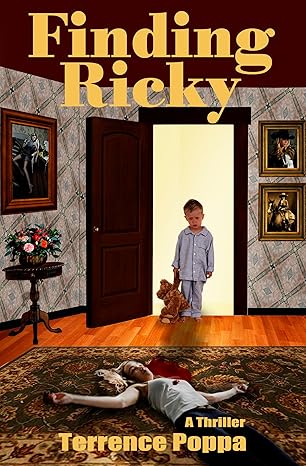

In Finding Ricky, author Terrence Poppa presents a gripping premise, Would you be willing to expose your innermost thoughts to a mysterious, high-ranking supervisor in order to find your missing 13-year-old son? Could you risk losing your grip on reality to save the boy taken from you after his mother’s tragic suicide? These are the haunting dilemmas Cowboy, the novel’s protagonist, must confront. Set against the backdrop of a life shattered overnight, this psychological thriller delves into Cowboy’s desperate quest to locate his son. Under the watchful eye of his enigmatic supervisor, known as The Soup, Cowboy is forced to comply with increasingly difficult demands, including working with a drug dealer named Awesome. Each task completed brings him one step closer to learning more about his son’s whereabouts. However, Cowboy is also battling his own mind. Struggling with blurred vision, headaches, and unsettling hallucinations, he finds it difficult to stay grounded. These symptoms coincidentally—or perhaps not—began after his dealings with The Soup, adding an eerie layer to his unraveling psyche.
The fast-paced storyline keeps readers moving quickly through Cowboy’s journey, making for an exciting read. While the novel leans more toward action than deep psychological exploration, it still offers moments of tension and suspense that engage the reader. One of the highlights is the dynamic between Cowboy and The Soup. The relationship’s evolving complexity and the growing dependence between the two add an interesting layer to the narrative. The glimpses into Cowboy’s traumatic past provide emotional depth and make the character’s motivations more relatable. The story moves at a brisk pace, and these elements show promise, suggesting there is much to build on in future works. Finding Ricky delivers an interesting mix of psychological drama and action, offering readers a quick, engaging escape into its world.
Pages: 285 | ASIN : B0D99MF696
Humans are Living Mysteries
Scars of The Heart is an influential collection of short stories that delve into the profound impacts of physical war and the psychological impact of violence on humanity. What made you write a story about this topic? Was anything pulled from your life experiences?
I have been a travel writer from 1990 to 2003 and wrote New Journalism texts about conflict zones in the world (contributions that report on events taking place, but in a literary, subjective way). I visited Somalia, Liberia, Bosnia, Sudan, Gaza, Iran, Iraq, Mozambique, Kosovo, Lebanon, and Myanmar… to name a few. I got very close to the atrocities of war, its physical but also its mental consequences. I thought I could handle them, but these days I have PTSD symptoms. They have become more bearable with time, but I can’t forget people’s suffering in war circumstances. In my eyes, I was a “war tourist” who shared their life for a couple of weeks and disappeared again while they were doomed to stay in hellish places. My anger, my shame, remorse, sadness, and despair fuel my stories.
What are some things that you find interesting about the human condition that you think make for great fiction?
When you think about it, humans are living mysteries: contradictory, unpredictable, chaotic. Great fiction tries to create a holistic image of our ambiguity. I believe no other art form is more proficient for this task. Great fiction asks the reader to feel what is hidden between the words so that the voyage into the depths of our being – the maze in our souls, if you like – is an honest, compelling exploration for the reader and the writer. Therefore, great care must be given to the choice of words, their ambiguity, and the rhythm of the sentences. This mixture is called style, and it is necessary to pick up glimpses of the hermetic, sometimes angelic, sometimes demonical, poetry that drives our lives. Great literature is a mixture of empathy, relentless challenges, and mighty victories, yet already tainted with the treason of our egos.
What themes were important for you to explore in this book?
Although they take place in different eras and countries, the background of the stories deals with violence, greed, sexual conquest, and our amazing capability to lie to others and ourselves. Probably you’re thinking now: “And love? Where is love?” Oh, it’s there, sometimes at the brink of obsession or tragedy, sometimes fueling our inner loneliness and addiction to happy dreams and delusions. It is said that readers like happy endings. So sorry to disappoint: when I wrote this collection, the tragic and sad endings even took their toll on me, so I want to advise the reader to read each story at intervals and not right after each other.
What is the next book that you are working on, and when can your fans expect it to be out?
“The Firehand File,” my next book, is set in Berlin in 1921. Let me give you the blurb of the Dutch mother version of the novel so you have the broad outline.
1921. Berlin is a city of extremes. Political violence plagues the streets during the day. A serial killer whom the media call “The Skinner” roams the streets at night. It is suspected that he is a rabid World War I veteran, but he remains untraceable. In this human pressure cooker, the relationship between the famous Flemish DADA poet Paul Van Ostaijen and his impetuous girlfriend Emma Clément is on edge. Like hundreds of thousands of others in Berlin, they live in poverty and are addicted to cocaine and other drugs.
When Van Ostaijen, on a high whim, steals the Feuerhand Obsession file in the apartment of the spy Elise Kraiser, the poet sets in motion a series of dramatic events that shed surprising light on a politician who is rapidly gaining influence: Herr Adolf Hitler.
Carly Rheilan, my translator, scores a fantastic – and poetic! – job. However, the novel’s second part is hard to translate because I tried to use the same manner of Van Ostaijen’s spoken language, a mixture of Antwerp dialect from the twenties with French and German words. “The Firehand File” is a literary suspense novel but also a homage to Paul Van Ostaijen, who revolutionized poetry in the Roaring Twenties. We hope to have the translation finished at the end of this year so that the novel can come out in 2025.
Author Links: GoodReads | X | Facebook | Website
Through ten stories set in different countries and eras, Van Laerhoven takes us through the destructive consequences of our passions as a common thread, from contemporary Syria to Algeria in the 1950s, and the civil war in Liberia to the uprising in Belgian Congo in the 1960s.
The ten stories in SCARS OF THE HEART highlight the dark side of love, which fuels our violence, inner loneliness, and greedy egos.
Scars 0f The Heart

Scars of The Heart by Bob Van Laerhoven is a compelling collection of short stories that delve into the profound impacts of war. The initial stories, set in various war eras, are particularly devastating, highlighting the unquantifiable effects of war on the human psyche. Through these narratives, Van Laerhoven transports readers to the shattered worlds of war-torn individuals, offering poignant glimpses into their lives and struggles.
The author takes a unique approach to representing human nature, weaving tales that feature a diverse cast of characters, including aliens, painters, friends, enemies, and exploring themes of betrayal, loyalty, greed, love, and revenge. This eclectic mix adds depth and variety to the collection, ensuring that each story is distinct and memorable. Van Laerhoven’s writing style is reminiscent of the macabre and powerful prose of Roald Dahl. His stories shock and captivate, blending mysticism with stark reality. Although fictional, these tales resonate with truths about the human condition. Not all stories are set on battlefields, but the sense of war—whether physical or psychological—permeates the collection. The settings range from the war-torn Middle East to World War II and Nazi Germany, bridging past and present to create relevant and relatable narratives. I finished the book with immense respect for the author’s raw and heartbreaking portrayals of reality. The non-war stories are equally compelling, showcasing Van Laerhoven’s versatility and skill in crafting riveting tales.
Fans of Roald Dahl or Edgar Allan Poe will appreciate the beautifully crafted stories in Scars of The Heart. For those who enjoy well-constructed plots and complex characters, this collection is a must-read. I highly recommend this book to anyone who can endure the psychological turmoil and pain depicted, as it offers profound insights into the atrocities and resilience of life.
Pages: 245 | ASIN : B0CX5S8NJZ
Stranger On This Earth
The Dream Collector: Book II: Sabrine and Vincent Van Gogh follows the relationship of Sabrine and van Gogh, who grow increasingly self-destructive, leaving Julie and Freud to find out why. What was the inspiration for the setup of your story?
The setup arose out of my passionate desire to understand why Vincent van Gogh, a genius of a painter, possessed his self-destructive impulses. I came to the conclusion that, in part, he perceived himself as a “stranger on this earth.” From childhood (in Biblical terms), a seed who fell by the wayside. Of course, for a more detailed (and explosive) explanation, one must read my novel. Sabrine, my fictional character, enabled me to mirror Vincent’s sense of abandonment and betrayal with her own backstory.
What experience in your life has had the biggest impact on your writing?
Hmm… another hard question. I remember, at age 14, the awe I felt after finishing Dostoevsky’s ‘The Brothers Karamazov’. It revealed to me the affective power of literature.
Can you tell us where the book goes and where we’ll see the characters in the next book?
This book reaches a definitive and (I will boast) a happy ending. There is no next book, but my ultimate plan has been a film in which to draw out more aspects of the characters in The Dream Collector.
Author Links: Facebook | Website
Sabrine, hospitalized for five years at the infamous Salpêtrière Asylum for Women, gains her release due to intervention of her sister Julie Forette and a young Sigmund Freud. The reunited sisters are introduced to the dazzling art milieu of 1886 Paris, and soon become close friends to the leading Impressionists. Sabrine attracts a cult following as a poetess, the enigmatic “Haiku Princess.” Seemingly cured by Freud of her Grand Hysteria, Sabrine soon enters into a tumultuous relationship with Vincent van Gogh.
Jule and Sigmund Freud, alarmed by the eerie parallels between the emotionally volatile couple and their self-destructive impulses, begin an urgent search to discover the root causes for Sabrine and Vincent’s growing psychoses. Julie, ‘The Dream Collector’ seeks their most unforgettable dream for Freud’s interpretation and revelations occur.
The Dream Collector is an exploration of the psychological consequences of betrayal, abandonment–and the redemptive power of art.
The Dream Collector: Sabrine & Vincent van Gogh – Book Two

In The Dream Collector: Book II: Sabrine and Vincent Van Gogh, RW Meek presents the captivating continuation of Sabrine’s journey, set against the rich backdrop of 1880s Paris. Following a prolonged stay at the Salpetriere Asylum for Women, Sabrine, now freed through the efforts of a young Sigmund Freud and her devoted sister Julie, delves into the vibrant Parisian art scene. Here, she meets the enigmatic Vincent van Gogh, and together, they embark on a passionate, albeit tumultuous, affair fueled by their shared artistic fervor and personal demons.
This sequel explores new dimensions of Sabrine’s character as she transitions from her intricate interactions with Freud to the equally complex Van Gogh. While the series blends historical fiction with elements of magical realism, it also evokes the adventurous spirit of “The Young Indiana Jones Chronicles” through its integration of historical figures and fictional narratives. Fans of art history will find much to admire here, as Meek vividly reimagines the lives of cultural icons such as Van Gogh and Freud. The portrayal of these figures is meticulously crafted, bringing an immersive authenticity to the narrative. Despite the larger-than-life personas surrounding her, Sabrine holds her own as a compelling protagonist. Her multifaceted personality—humorous yet fragile, unpredictable yet endearing—ensures that she resonates deeply with readers, making her more than just a mere adjunct to the historical luminaries she encounters.
Meek’s novel, The Dream Collector: Book II: Sabrine and Vincent Van Gogh, celebrates the turmoil of the creative process and offers a poignant exploration of identity and belonging through the eyes of an unforgettable heroine. This series promises to be a rewarding journey for those intrigued by the intersections of history, art, and human emotion.
Pages: 654 | ISBN : 1962465357



 LITERARY TITAN