Blog Archives
Entrepreneurship and Intrapreneurship

Advanced Career Intelligence is a far-reaching, no-nonsense guide for navigating the higher tiers of professional life by examining strategy, emotional intelligence, work culture, & ethical success. What were your goals when writing this companion guide to your first book?
My goal with Advanced Career Intelligence was to build directly upon the foundation established in General Career Intelligence, diving deeper into the more complex and nuanced challenges professionals face as they advance in their careers. While the first book focused on core principles—like personal integrity, foundational traits, decision-making, and soft skills—this second volume takes on the higher-order dimensions of leadership, entrepreneurship, ethical influence, managing diverse teams, and navigating cultural and organizational dynamics.
I wanted to deliver real-world, distilled insights—practical and immediately applicable—without unnecessary fluff, jargon, or abstract theory. The intent was to save readers the countless hours (and dollars) it would take to absorb the same knowledge from a full library of business books, articles, and case studies. This two-volume series is meant to serve as a comprehensive, soup-to-nuts career playbook for the modern professional—whether they’re stepping into management, leading a team, building a business, or simply striving to thrive in today’s fast-paced and often chaotic work environment.
Ultimately, I wrote Advanced Career Intelligence to empower readers with confidence, clarity, and the tools to grow with purpose—professionally and personally—while staying grounded in ethics, emotional intelligence, and long-term success.
What were some ideas that were important for you to share in this book?
Several core ideas were especially important for me to highlight in Advanced Career Intelligence. First, I wanted to challenge the myth that success at higher levels is all about technical skill or raw ambition. Instead, I emphasize that sustainable success depends on emotional intelligence, ethical leadership, cultural awareness, and the ability to manage complexity with clarity and integrity.
I also felt it was critical to tackle real-world issues that professionals often encounter but aren’t always trained to handle—things like navigating toxic work environments, leading diverse and inclusive teams, maintaining work-life balance, and building organizations that prioritize long-term value over short-term gains.
Entrepreneurship and intrapreneurship were other key themes. Whether someone is launching a business or innovating within an existing one, they need practical, grounded advice that goes beyond platitudes. I wanted to demystify those journeys and offer insights that are both strategic and deeply human.
Equally important was the message that it’s completely okay to fail, to stumble, or even to get laid off—because most of us do at some point in our careers. These moments don’t define us. What matters most is how we respond, what we learn, and how we grow. None of us are perfect, and none of us have all the answers. In fact, our greatest strengths often lie in our ability to reflect, to adapt, and to keep moving forward. Flexibility, nuance, and emotional resilience are powerful traits that shape not only what we achieve, but who we become—and they ultimately play a vital role in the fulfillment and meaning we find in our work and lives.
Finally, I wanted to encourage readers to see their careers not just as a ladder to climb, but as a platform to give back—to mentor others, influence positive change, and leave a meaningful legacy.
I really appreciated you sharing your stories about mentoring and role models, and how they played a part not just in your success, but also in how you viewed success. What advice do you have for leaders considering taking on a mentee?
Mentoring is one of the most meaningful and impactful responsibilities a leader can embrace. It’s not just a way to give back—it’s a powerful tool for shaping the next generation of thinkers, doers, and leaders. But in my experience, mentoring also holds up a mirror. It forces us to examine how we lead, how we listen, and whether we’re still growing ourselves.
One key piece of advice: stay humble. As people advance and succeed in their careers, it’s easy—almost natural—to fall into the trap of believing we have all the right answers. That mindset often gives rise to a rigid, command-and-control leadership style that slowly drains the enthusiasm, creativity, and initiative from otherwise exceptional teams. I’ve seen this happen time and again. Confidence is vital, but unchecked confidence can slide into arrogance—and when that happens, mentoring becomes a one-way transmission of information instead of a two-way exchange of growth and trust.
True mentorship is not about telling someone what to do. It’s about helping them uncover their own path, develop their voice, and build their judgment. It requires vulnerability, active listening, and a willingness to let others thrive—even surpass you. That kind of leadership transforms teams. A great team is always more than the sum of its parts, and when every individual is encouraged, equipped, and empowered to reach their true potential, something extraordinary happens. You get innovation. You get trust. You get momentum that can’t be manufactured through control—it has to be nurtured.
And here’s the beautiful paradox: while personal success may boost your self-esteem, it pales in comparison to the fulfillment that comes from seeing someone you mentored grow into their own greatness. Watching someone stretch beyond what they thought possible—knowing you played a small part in that—is one of the most rewarding experiences in any career.
So if you’re considering mentoring, don’t just do it out of duty. Do it because you believe in people. Do it to stay grounded. And do it because, at its best, mentoring doesn’t just change someone else’s trajectory—it changes yours too.
What is one thing that you hope readers take away from Advanced Career Intelligence?
If there’s one thing I hope readers walk away with, it’s the understanding that there’s nothing mystical, unreachable, or reserved about advanced roles like entrepreneurship, team leadership, project management, or even executive leadership. These roles aren’t reserved for the extraordinary few—they’re built on human qualities that we all possess in one form or another. Every one of us brings something valuable to the table. We may think and operate differently, but it’s that very diversity—in background, perspective, temperament, and life experience—that allows us to solve hard problems, lead effectively, and create progress in today’s fast-moving world.
You don’t need to be perfect or have every answer, or tick every box to succeed. In fact, emotional intelligence, strong behavioral ethics, a sense of purpose, and a can-do attitude can more than offset areas where experience or technical skills are still developing. Values matter. Empathy matters. Integrity matters. And more than anything, the willingness to learn, collaborate, and adapt is often what separates enduring leaders from short-lived ones.
I also want readers to walk away with a sense of peace—and purpose. Too many professionals get caught up in chasing validation, trying to meet someone else’s idea of success. But in the long run, what matters most is not what others think of you—it’s how you live, what you stand for, and how you impact the people around you.
Live in a way that serves as a positive example. Make the most of the gifts you’ve been given and the time you have. Use your position—whatever it may be—to lift others up, to make things better, and to leave a trail of encouragement, not exhaustion. We all have a role to play in shaping the world around us. Every day, we get to decide: Are we making things better—or worse?
The beauty of Advanced Career Intelligence is that it reminds us that our careers are not just vehicles for personal advancement, but platforms for human connection, contribution, and meaning. That’s the takeaway I hope stays with readers long after the final page.
Author Links: GoodReads | Facebook | Website

Advanced Career Intelligence
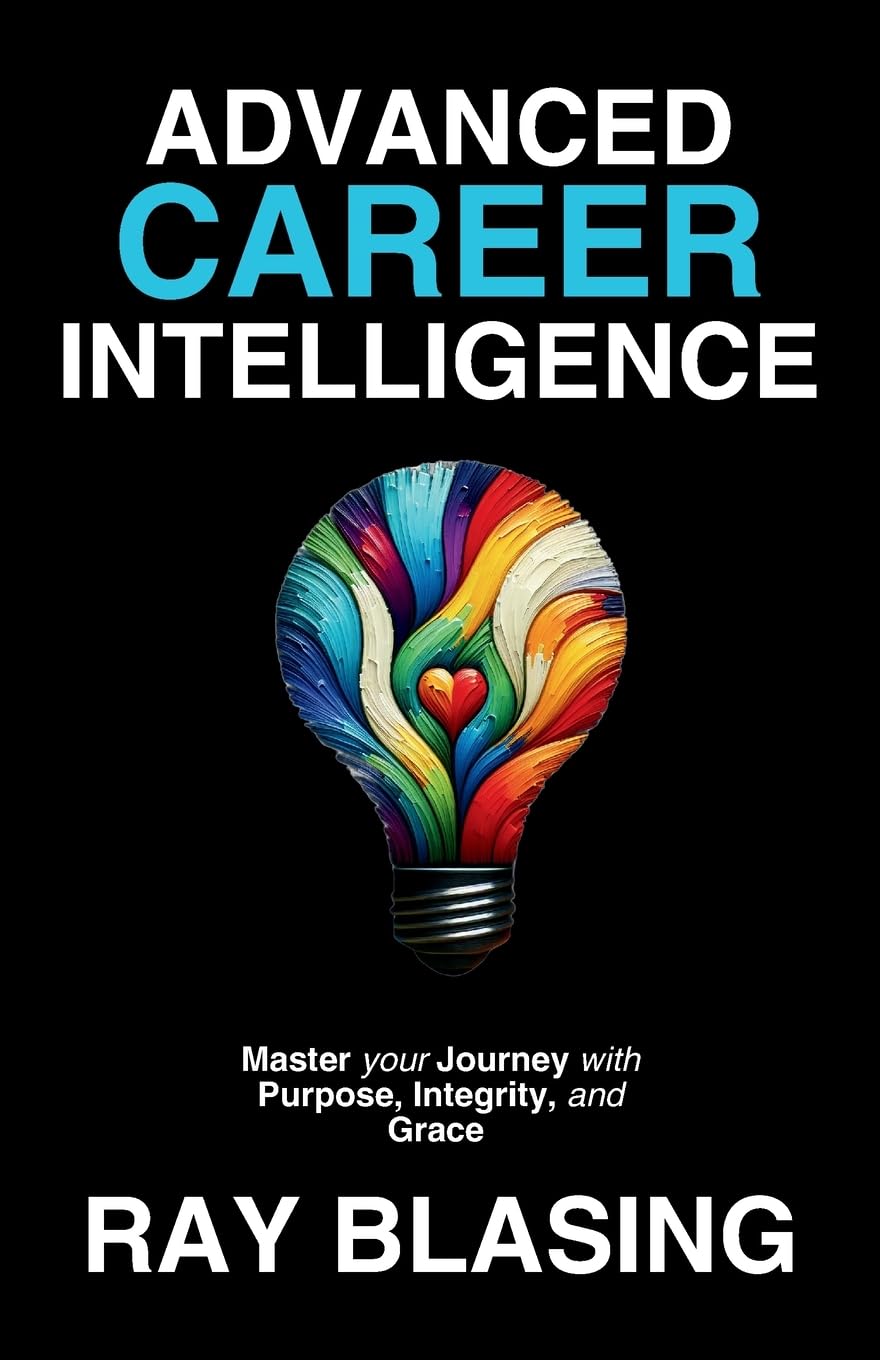

Ray Blasing’s Advanced Career Intelligence is a far-reaching, no-nonsense guide for navigating the higher tiers of professional life. From executive leadership and mentorship to innovation, entrepreneurship, and legacy-building, the book delivers a buffet of insights grounded in personal experience and extensive research. It’s the second volume in Blasing’s series, and it builds on foundational career advice by diving deep into the realms of strategy, emotional intelligence, work culture, and ethical success. It also challenges readers to think about fulfillment, retirement, and the meaning behind our work. The central themes—ambition with purpose, achievement with integrity, and legacy with grace—tie everything together with heart.
Blasing’s writing style is refreshingly clear and straight-shooting. He doesn’t try to impress you with jargon or fluff. Instead, he hits you with real talk about executive egos, toxic leadership, and the often overlooked importance of kindness. One chapter that stood out to me was on “Brutal CEOs”—he doesn’t excuse the Steve Jobses and Elon Musks of the world, but he doesn’t demonize them either. It’s a raw and thoughtful take that respects nuance. That kind of balance is rare. I found myself nodding along. It’s honest, it’s personal, and it doesn’t feel like corporate lip service.
What I appreciated most, though, was Blasing’s recurring theme of grace. So many business books preach about hustle, growth, and scaling. This one? It reminds you that success isn’t just about rising—it’s about lifting others as you go. His stories about mentoring, personal role models, and the joy of helping others gave the book a warmth I didn’t expect. There’s this genuine belief that workplaces can be both high-achieving and humane. And in a world where “grind culture” still dominates, that’s a powerful and necessary reminder.
I’d recommend Advanced Career Intelligence to mid-to-senior professionals who are climbing the ladder but want more than just promotions. It’s ideal for anyone leading teams, founding startups, or rethinking what their legacy might be. If you’re hungry for success but don’t want to lose yourself in the process, this book is for you. It’s sharp. It’s thoughtful. And it just might help you become the kind of leader people actually want to follow.
Pages: 435 | ASIN: B0FCPH5CM2




 LITERARY TITAN