Blog Archives
So You Want to Be a Police Officer


Linda Soules’s So You Want to Be a Police Officer is a visually rich career guide that gives young readers a surprisingly thoughtful look at what police work involves. The book spends most of its time on communication, judgment, community relationships, observation, de-escalation, and the everyday responsibility of being present when people need help. It walks readers through a typical workday, explains equipment and working environments, introduces the people officers work alongside, and explores both rewarding and difficult parts of the profession. The illustrations make the material approachable, while the short sections keep the book moving at a pace that fits its intended younger audience.
I appreciated the seriousness with which the book treats the human side of policing. Soules repeatedly returns to listening, fairness, trust, restraint, cultural knowledge, and the ability to stay calm under pressure. The discussion of mental health calls, crisis response, stress, and collaboration with social workers gives readers a broader understanding of what officers may encounter. The section on eyewitness testimony and wrongful convictions is especially notable because it introduces the idea that evidence and memory can be complicated, even when people feel certain about what they saw. That adds some welcome depth to a book written for children and helps connect police work with questions of responsibility and careful decision-making.
The handbook-style structure works well for the subject. Chapters on tools, qualities of a good officer, famous figures in policing history, fun facts, vocabulary, and practical exercises give readers several ways into the material. I especially liked the activities that encourage observation, active listening, learning about one’s neighborhood, hearing both sides of a disagreement, and talking to a police officer about the realities of the work. These exercises turn the book from something a child simply reads into something they can respond to and practice. The author’s closing note also gives the book a clear moral center by emphasizing that authority belongs to the community and carries an obligation to act with fairness, honesty, and accountability.
I’d recommend So You Want to Be a Police Officer most strongly for curious readers around the upper-elementary and middle-school years who are interested in policing, public service, criminal justice, or community safety. It would also work well for parents, teachers, librarians, and career-exploration programs because it gives adults plenty of openings for conversations about authority, trust, stress, ethics, and service. The book’s combination of colorful illustrations, straightforward explanations, career information, and reflective questions makes it especially suited to kids who like nonfiction that helps them imagine themselves in a future role. Soules describes the broader series as being designed primarily for ages 10 to 14, and this volume feels well matched to readers who are old enough to appreciate both the appeal and the responsibility of the profession.
Pages: 38 | ISBN : 978-1972766170

So You Want To Be A Zookeeper
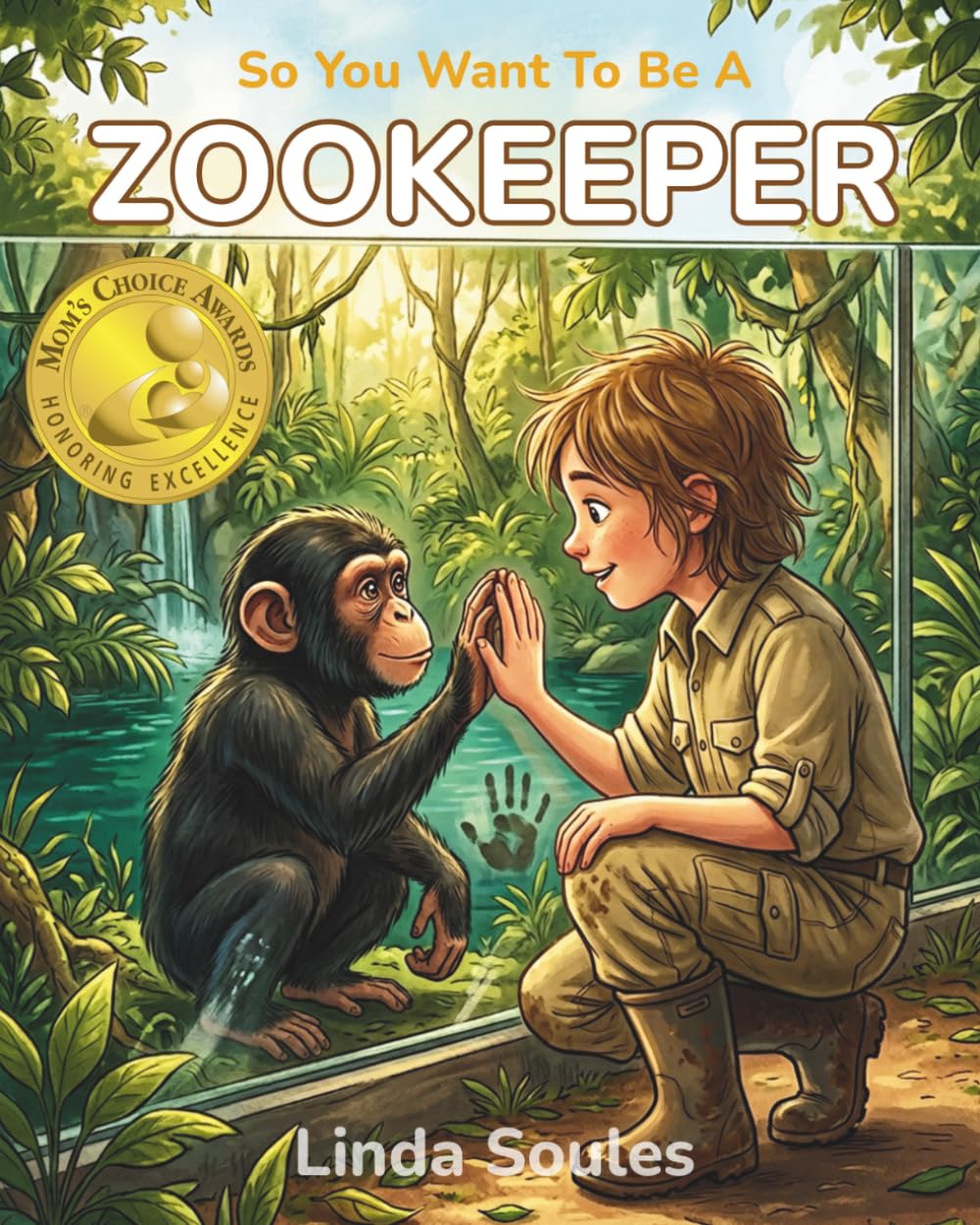
So You Want To Be A Zookeeper by Linda Soules is an engaging and informative nonfiction book that gives young readers an honest look at a career many children dream about. Rather than presenting zookeeping as simply spending time with animals, Soules explains that the profession requires scientific knowledge, patience, responsibility, and dedication. Written for readers ages 10–14, the book follows the daily work of a zookeeper, including early-morning feeding rounds, habitat cleaning, health checks, behavioral observations, enrichment activities, and detailed record-keeping.
I loved the way the book explains the science behind animal care in clear, age-appropriate language. Readers learn how keepers recognize signs of stress or illness in animals that cannot describe how they feel. They also discover how carefully prepared diets, positive-reinforcement training, and enrichment activities help animals remain physically and mentally healthy. Soules shows that successful zookeepers must be observant, trustworthy, physically capable, and willing to work in difficult weather and during unsociable hours.
The book also broadens readers’ understanding of modern zoos by showing their important role in wildlife conservation. Zookeepers work alongside veterinarians, nutritionists, biologists, and conservation specialists to protect endangered species, support breeding programs, conduct research, and educate the public. Soules does not avoid the emotional challenges of the profession, including caring for sick or aging animals and coping with their loss. This honesty makes the book more meaningful because it respects young readers enough to show both the rewards and the difficulties of the job.
Colorful, detailed illustrations help bring the animals, habitats, tools, and daily routines to life. The pictures complement the straightforward writing and make the information easy to understand without oversimplifying it. So You Want To Be A Zookeeper is an excellent introduction to animal-care and conservation careers. It is highly recommended for animal lovers, curious young scientists, and any child who has ever wondered what happens behind the scenes at a zoo.
Pages: 38 | ASIN : B0GX34T2GW
So You Want To Be A Veterinarian

Linda Soules’s So You Want To Be A Veterinarian is an engaging and informative career guide for children ages ten to fourteen. The book introduces veterinary medicine through its central challenge: animal patients cannot explain where they hurt or describe their symptoms. Veterinarians must therefore act as doctors, detectives, and animal translators, using scientific knowledge, careful observation, diagnostic tests, and conversations with animal caregivers to discover what is wrong. Soules explains these ideas clearly without talking down to young readers.
The book is honest about the difficult parts of the profession. Veterinarians may work long hours, handle frightened or powerful animals, deliver upsetting news, and face medical problems they cannot solve. At the same time, the book includes humorous stories, surprising animal facts, and colorful illustrations that keep the subject enjoyable. Brief biographies of notable figures such as James Herriot, Aleen Cust, and Temple Grandin add inspiration, while the glossary, reading suggestions, organizations, and practical activities give interested children useful ways to begin exploring the field.
The book’s strength is its detailed look at the many forms veterinary work can take. Readers learn about veterinarians who care for household pets, farm animals, zoo animals, exotic species, and wildlife. The book also introduces less familiar career paths in research, pathology, public health, and specialized fields such as cardiology and dermatology. Descriptions of physical examinations, imaging, laboratory work, surgery, emergency care, and unusual veterinary tools help readers understand the skill and training required to treat many different species.
So You Want To Be A Veterinarian is a well-researched, appealing, and realistic introduction to veterinary medicine. It shows that loving animals is important, but success also requires compassion, emotional courage, scientific accuracy, physical stamina, and a willingness to keep learning. By presenting both the rewards and the challenges of the work, Soules helps children decide whether veterinary medicine might be right for them. This book is highly recommended for young animal lovers, as well as for parents and educators seeking a thoughtful career resource.
Pages: 38 | ASIN : B0GX32267V
So You Want To Be A Librarian

So You Want To Be A Librarian is an engaging and informative introduction to the world of librarianship. Written for children, the book challenges the outdated stereotype of librarians as stern people who only shelve books and tell visitors to be quiet. Instead, it shows librarians as teachers, researchers, problem-solvers, and champions of free access to information. Young readers learn that librarians work in many places, including schools, hospitals, archives, bookmobiles, children’s rooms, and digital information systems.
I loved the way the book explains the importance of libraries in everyday life. Librarians do more than help people find books; they listen carefully, answer questions, connect visitors with useful resources, and teach people how to recognize reliable information. The book’s focus on critical thinking and misinformation is especially valuable for children growing up in a digital world. It also presents the library as a living organization that must change and grow along with the community it serves.
The book is well organized and includes sections about the best, hardest, and most surprising parts of the job, as well as a typical day in the life of a librarian. Warm illustrations, fun facts, historical profiles, career questions, and a glossary make the information easy and enjoyable to explore. Readers are introduced to inspiring figures such as Pura Belpré, S. R. Ranganathan, and the Pack Horse Librarians, who carried books into remote areas of Kentucky. One minor weakness is that the book could explain more clearly that librarians are only some of the many important people who work in libraries.
So You Want To Be A Librarian is a fun, appealing, and educational book for elementary and middle-grade readers. It would be an excellent choice for classrooms, homeschool collections, family read-alouds, and children who enjoy career-exploration books such as the Who Was? series. Even readers who do not plan to become librarians will gain a greater appreciation for libraries as welcoming places of knowledge, comfort, connection, and community. Most importantly, the book encourages curiosity, kindness, critical thinking, and a lifelong love of reading and learning.
Pages: 40 | ASIN : B0H9PCQPGY
So You Want To Be A Teacher

So You Want To Be A Teacher, by Linda Soules, is an engaging and informative career guide for children ages eight to fourteen. The book begins with a powerful reminder that every doctor, astronaut, chef, engineer, and leader was once taught by someone. From there, Soules presents teaching as the profession behind every other profession. The author gives young readers an honest look at the patience, preparation, flexibility, and care required to help students learn and grow.
One of the book’s greatest strengths is its realistic portrayal of a teacher’s daily life. Readers follow a teacher from the quiet classroom early in the morning through lessons, classroom challenges, and evening grading at home. The book celebrates the rewarding moment when a struggling student finally understands something, but it also discusses tiring days, disrupted lessons, and the work teachers complete outside school hours. This balanced approach helps children understand that teaching can be difficult while still being deeply meaningful.
The book is also filled with practical and age-appropriate information. Young readers learn about lesson plans, manipulatives, classroom management, teacher training, and the importance of asking thoughtful questions. They are introduced to many different teaching careers, including kindergarten, high-school science, special education, and robotics coaching. Profiles of influential educators such as Anne Sullivan, Jaime Escalante, Maria Montessori, and Confucius add historical interest, while the glossary, fun facts, and career-readiness questions make the book especially useful for home or classroom learning.
Soules writes in a conversational tone that respects young readers and never talks down to them. The colorful illustrations make the information approachable, although a few visual details may appear inconsistent or oddly shaped. Even so, the strong writing and thorough research make this an excellent introduction to education as a career. So You Want To Be A Teacher is highly recommended for children who enjoy helping others understand new ideas, as well as for parents and educators who want to encourage thoughtful career exploration. It is both a practical guide and a sincere tribute to the teachers who shape lives one lesson, question, and encouraging word at a time.
Pages: 42 | ASIN : B0H9CNJM5W
So You Want To Be A Psychotherapist

So You Want To Be A Psychotherapist, by Linda Soules, is another excellent addition to the So You Want To Be A… series. Rather than focusing on vehicles, technology, or specialized equipment, this career guide introduces children to a profession in which the most powerful tool is the ability to listen. Soules explains how psychotherapists help people understand their emotions and heal through careful, honest conversation. Written for readers ages ten to fourteen, the book treats children as thoughtful equals while presenting mental health and therapy in a warm, approachable, and respectful way.
The book offers a thorough look at what psychotherapists actually do, where they work, and what a typical day might involve. Young readers learn about the familiar two chairs, the tissue box, the fifty-minute hour, and the surprising “doorknob moment,” when a client reveals something important just as a session is ending. Soules also explores settings beyond the traditional office, including schools, hospitals, video appointments, and barns where therapists work alongside horses. Fun facts, practical listening exercises, a self-assessment quiz, and a kid-friendly glossary make the material informative and engaging.
One of the book’s greatest strengths is its honesty. Soules doesn’t sugarcoat the educational requirements, licensing process, ethical responsibilities, emotional strain, or risk of burnout that can accompany this career. At the same time, these challenges are presented without discouraging readers. The book emphasizes the importance of empathy, curiosity, emotional steadiness, self-awareness, and self-care. It also introduces influential figures such as Carl Rogers, Mamie Phipps Clark, Virginia Satir, Marsha Linehan, Anna Freud, and Derald Wing Sue, showing how different people and ideas have helped shape the profession.
The warm, inviting illustrations and straightforward language make So You Want To Be A Psychotherapist accessible to younger readers while offering valuable insights for teenagers, parents, and adults. It’s especially well suited to the child whose friends naturally turn to them, the quiet listener who offers patience rather than judgment. The book may also reassure young people who feel nervous about attending therapy by showing that psychotherapists are caring professionals trained to listen and help. Realistic, encouraging, and deeply compassionate, this career guide invites readers to consider whether one of those two chairs in a quiet room might someday be theirs.
Pages: 40 | ASIN : B0H7GJDPJV
So You Want To Be A Journalist

So You Want To Be A Journalist, by Linda Soules, is an engaging and informative introduction to the demanding work behind every headline. Written for curious readers ages 10–14, the book moves beyond the glamour of television news to show journalism as a profession built on patience, courage, and persistence. Soules explains how reporters search for reliable information, ask difficult questions, verify facts, and communicate the truth clearly. By emphasizing that journalism can change laws, protect communities, and give a voice to people who might otherwise go unheard, the book presents the profession as both admirable and essential.
One of the book’s greatest strengths is its clear explanation of what journalists actually do. Readers learn about different careers, including beat reporters, investigative journalists, foreign correspondents, science reporters, and sportswriters. Soules also describes the daily rhythm of a newsroom, from the morning news scan and pitch meeting to interviews, fact-checking, revisions, and an unmovable deadline. Practical details about notebooks, recorders, public documents, source protection, and Freedom of Information requests give children a realistic understanding of the tools and responsibilities involved. The book is honest about the difficult parts of journalism while still conveying the excitement of uncovering an important story.
Soules’ writing is accessible, inspiring, and well suited to young readers with short attention spans. She explains unexpected skills journalists need, such as understanding statistics, scientific studies, percentages, and community issues. The historical profiles of Ida B. Wells, Nellie Bly, Edward R. Murrow, and Gordon Parks show how determined reporters have helped change the world. Fun sidebars about carrier pigeons, the mistaken “Dewey Defeats Truman” headline, and Watergate’s secret source add humor and variety. The detailed, colorful illustrations reinforce the text and help readers imagine everything from a busy newsroom to a reporter covering City Hall.
So You Want To Be A Journalist encourages children to ask whether something is true rather than simply accepting what they hear. It promotes accuracy, fairness, curiosity, and unbiased reporting while showing the importance of both local journalism and major international news organizations. Young readers are also given practical ways to begin preparing now, including reading the news, practicing clear writing, following community events, and asking thoughtful questions. This is an excellent resource for school libraries, home bookshelves, and middle school writing classes. It offers a complete and honest look at journalism while inspiring future writers and researchers to approach the world with courage, grit, and a commitment to the truth.
Pages: 39 | ASIN : B0H72BCNWV
Education and Adventure

So You Want To Be A Treasure Hunter takes young readers inside the world of archaeology, focusing on the tools and dating methods in reader-friendly terms children can understand. Did you learn anything that surprised you in your research?
The biggest surprise was learning that the most responsible thing an archaeologist can do is sometimes nothing at all. I had assumed the discipline was about digging more, finding more, knowing more. It turns out the professional consensus today is to leave most sites untouched — because every excavation destroys the very context it studies, and the scientists who will read these sites 50 years from now will have tools no one alive today has imagined. That kind of restraint, that quiet deference to the future, struck me as profoundly humble in a way I hadn’t expected from a field I associated with adventure.
The other surprise was how many of the most famous discoveries were complete accidents. The Rosetta Stone was found by a French officer digging a fort foundation. The Terracotta Army was found by farmers digging a well. Mary Leakey’s hominid footprints arose from a paleontologist ducking a flying piece of elephant dung. The myth of the methodical archaeologist cracking ancient mysteries is partly true, but the messier truth is that the past has a habit of stepping out and waving.
Why do you think so many children are naturally fascinated by buried objects and ancient history?
Children haven’t yet been trained out of believing the world holds secrets. An adult walks past a patch of disturbed dirt; a child crouches down. An adult sees a rusted button in the gutter; a child wonders who lost it. That instinct — to suspect that the ordinary world is hiding something magical — is exactly the instinct archaeology rewards. It is one of the few fields where the question that comes most naturally to a seven-year-old (“what’s under there?”) is also the question that drives world-class research, and where the answer is uncertain until somebody picks up a brush and finds out.
I also think children are drawn to the past because they can sense, without anyone explaining it, that someone else has lived here before. The idea that another child once played in this field, dropped this clay marble, scratched their name into this brick — it doesn’t feel abstract to them. It feels like a friend they haven’t met yet. Archaeology gives them the tools to reach back and say hello. It tells them they are part of a very long line of people who have wondered what the world is and tried to leave it slightly more interesting than they found it.
There is one more piece, and it might be the most important. Children live in a world where almost everything has already been explained to them by an adult. Archaeology is one of the rare subjects where the adults openly admit they don’t know — where a Bronze Age civilization can vanish without explanation, where a script can sit undeciphered for centuries, where a sealed tomb might still hold a queen no one has ever heard of. To a child, the existence of genuine mystery — mystery that even grown-ups haven’t solved yet — is electrifying. It means there’s still room. It means the work isn’t finished. And it means that the curious child reading the book in their bedroom tonight might, one day, be the person who finally figures out what nobody else could.
The book balances education with adventure very well. How important was it that learning still felt exciting and imaginative?
Essential — but I don’t think of education and adventure as needing to be balanced like flour and sugar in a recipe. The adventure is already inside the truth. The writer’s job is to find it and get out of its way.
Archaeology is a vivid example. The trowel really does strike something a thousand years lost. The first human eyes on an object in fifteen centuries really are yours. A pollen grain trapped in a clay pot really can tell you what someone ate for dinner during the reign of an emperor. None of that needs dressing up. The excitement isn’t a decorative element a writer sprinkles on top of dry information to make it palatable — it is embedded in the actual work, woven into how the discoveries are made and what they reveal.
What I try to do is find the moments where the truth itself is already astonishing and let those moments carry the explanation. The point of the writing is to choose, out of everything that could be said about a profession, the details that already carry the charge — and then to render those details cleanly enough that the charge actually reaches the reader.
The other half is not to flatten what’s already vivid. I think children’s nonfiction often goes wrong by trying to make work sound easier, simpler, or safer than it really is. Kids see through that instantly. They can tell when a book trusts them and when it’s hedging. What I aim for, in every title in this series, is to meet a child eye to eye — to give them the real texture of a job, including the hard parts, and trust that the wonder will hold. It almost always does. The world is more interesting than the watered-down version of it, and children, more than anyone, already suspect this.
If you could take young readers to one archaeological site anywhere in the world, where would you choose and why?
Pompeii. Not because it’s the most beautiful site in the world, but because it’s the one where archaeology’s central insight lands with the most force: every life mattered.
When Vesuvius erupted in AD 79, it sealed an entire ordinary morning in volcanic ash. Bread still sat in the oven. Dogs were still leashed in their courtyards. A child had set down a wooden toy minutes before the world ended. None of these people made the history books. They weren’t emperors or generals. But 2,000 years later, archaeologists know what they had for breakfast, what they wrote on their walls, who they loved, who owed them money. Pompeii is the proof that ordinary lives are not lost — they are simply waiting for someone patient enough to read them.
I would want a child to stand on those streets and feel, in their own bones, that one day someone might walk where we walk and wonder about us with the same tenderness. That, more than anything, is what I hope archaeology teaches the next generation to carry forward.
Author Links: GoodReads | Website | Amazon
So You Want To Be A Treasure Hunter takes young readers inside the real world of archaeology — not the movie version with booby traps and rolling boulders, but something far more fascinating. This is the story of how actual treasure hunters work: the years of study, the painstaking science, and the moment when a fragment of something ancient emerges from the earth and rewrites everything we thought we knew.
What does a real archaeologist do all day? How do they know where to dig? What happens when they uncover an artifact that has been buried for centuries — and how do they keep it from crumbling the moment it touches open air? This book answers those questions honestly, with vivid illustrations and writing that never talks down to its readers.
Inside, you will discover how ground-penetrating radar and remote sensing let scientists see beneath the surface before a single shovelful of soil is moved. You will learn how stratigraphic layers — the earth’s own timeline — help archaeologists read thousands of years of history recorded in the ground itself. You will explore the careful science of artifact conservation, the physical demands of fieldwork, and the intellectual detective work that turns a broken pottery shard into a window on a lost civilization.
This is also a book about careers — what it actually takes to become an archaeologist, from the geology and history you study in school to the fieldwork, laboratory analysis, and scholarly research that fill a working scientist’s life. It covers the history of archaeology itself, from the early days of treasure hunting to the rigorous science it has become, and the remarkable people who made that transformation happen.
But most of all, this is a guide for the kid who picks up every arrowhead, every old coin, every fragment of something mysterious — and feels not just curiosity but a deep hunger to know the story behind it. The kind of kid who looks at an ancient civilization and wants to understand the people who lived there, not just the objects they left behind.
The past is not gone. It is buried. And the next great archaeological discovery is still out there, waiting beneath the ground for someone who knows how to look.


