Blog Archives
Walking Wounded

From Depression to Contentment: A Self-Therapy Guide is a book that provides help for readers who are experiencing depression and desire an alternative to outside therapy. It presents well-researched techniques and methods that are straightforward to implement. Why was this an important book for you to write?
Actually, the book title addresses depression because my publisher is very firm: each book should seem to limit itself to one problem. However, psychotherapy doesn’t actually work like that. With suitable modification, essentially the same tools will provide a path out of chronic anxiety, addictions, anger… basically, human suffering. This is because, as I say in the book, classifications like in the Diagnostic and Statistical Manual are basically science fiction.
Second, the therapy bit is only halfway, from ongoing agony to “normal,” which is the walking wounded. Then the tools of positive psychology and Buddhist psychology allow you to rise WAY above that.
This book is the distillation of decades of my personal experience, study, and therapeutic practice. I wrote it to be of service to as many people as possible, then a few more.
How much research did you undertake for this book and how much time did it take to put it all together?
In a way, no research at all — specifically for this book. When I started university, I decided not to go into Medicine because it was a 6-year course, then at least 4 more years of training. Then, overall I spent 14-and-a-half years as a student. And in my profession, you don’t ever stop learning. A condition of being registered is continuous study. And even though I retired in 2013, I have kept up with new research, just from interest.
So, while this research and study were not for the book, all that information and knowledge is in there. Well, it is, up to the publication date. It’s annoying, but when I sent my time machine in for service, they returned it to an alternative universe. What’s happened since is only marginal, but it doesn’t matter all that much, because therapy, including self-therapy, will work if three conditions are present, as Carl Rogers has described. These are empathy, love of the kind Buddha, Jesus and many other sages have told us to give to everyone, and genuineness. That last one is that it has to be honest.
What were some ideas that were important for you to share in this book?
• Chronic emotional suffering beyond what the situation warrants is always due to the interaction of
several factors. One of them is childhood trauma, as seen through the child’s eyes.
• Depression, chronic anxiety and the like are not due to faulty brain chemistry.
• Using the tools I teach in the last part of the book, you can live a contented life in any situation.
What is one thing that you hope readers take away from From Depression to Contentment?
The more you give, the more you get, and also the more you grow.
Author Links: GoodReads | Twitter | Facebook | Linkedin | Mastodon | Website
Every tool in this book is based on research, but presented in an easy to understand, easy to apply manner.
With homework assignments, you will find your inner strengths, uncover the true source of happiness and develop great resilience.
Learn how to put the philosophies of all great religions to practical use, even if you are an atheist.
This program can help you start a new life – one of meaning, positivity and purpose.
Unlike instructional books, this book is not only useful but also enjoyable.
The Heir of the Dynasty


The Heir of the Dynasty, by Sezgin, weaves a tale of familial intricacies, tradition, and the pursuit of succession within an ancient lineage. Set against the backdrop of the Reinburg family’s ancestral castle, the narrative unfolds with an enigmatic allure, drawing readers into a world brimming with secrets and the weight of age-old responsibilities.
The author’s adeptness in storytelling is evident through rich descriptions and meticulous attention to detail, crafting a tapestry of complex family dynamics and societal expectations. Within the walls of the Reinburgs’ castle, every room resonates with echoes of the past and whispers of the future, immersing readers in a realm where tradition and modernity collide. Dialogue crackles with tension and emotion, providing insight into the inner conflicts and desires of the characters. As the plot unfurls, intrigue and suspense abound as Mrs. Reinburg orchestrates a reality show to determine the worthy successor among their grandchildren.
Themes of power, privilege, and the enduring impact of past decisions are deftly explored, enriching the narrative with layers of depth and complexity. The climax of the story resonates with poignancy and introspection as Mr. and Mrs. Reinburg confront their regrets and seek redemption in the twilight of their lives. The emotional depth of the conclusion lingers, prompting contemplation on the bonds of family and the enduring legacy we leave behind.
The Heir of the Dynasty is a masterfully crafted saga that seamlessly blends drama, mystery, and familial dynamics. With its compelling narrative and evocative prose, it promises to enthrall readers from start to finish, leaving a lasting impression on those who embark on its journey.
Pages: 149 | ASIN : B0CWY8B1KN

Your REAL Life: Get Authentic, Be Resilient, Make it Count

In Your REAL Life: Get Authentic, Be Resilient, Make it Count, Nathan Andres delves into the essence of authenticity and resilience, drawing upon the iconic words of Shakespeare’s Hamlet, “To thine own self be true.” Andres’s work emerges as a compelling guide, not unlike a modern-day manual, exploring the necessity of resilience in confronting life’s challenges.
The narrative is rooted in Andres’s personal experiences, lending it an authenticity that resonates deeply with the reader. He skillfully intertwines these experiences with a broader examination of universal challenges, providing a lens through which the omnipresence of adversity and the lurking shadow of impostor syndrome are viewed. The book emphasizes how one’s response to life’s “little bumps” can dictate the trajectory of their journey, either propelling them forward or holding them back. Andres lays out the multifaceted nature of challenges in a candid, matter-of-fact manner, compelling readers to confront and understand these difficulties. This clarity, combined with a holistic grasp of the subject, establishes the book as both insightful and accessible.
The author offers not just narrative and theory but also practical exercises and reflective prompts. These tools underscore his commitment to aiding personal growth and highlight the importance of authenticity in a world where the term is often used superficially. Andres’s writing style is noteworthy for its simplicity, yet it never compromises the depth and richness of the content. The book strikes a fine balance between being relatable and inspiring, intertwining personal anecdotes with valuable lessons. It guides readers through various life scenarios, from mundane daily decisions to significant career choices, underscoring the transformative power of resilience and self-awareness.
In essence, Nathan Andres has crafted a work that goes beyond mere literature. It stands as a tool for personal growth, offering readers not only insights but also practical methods to navigate through life’s complexities with authenticity and resilience at their core.
Pages: 260 | ASIN : B0C3DSMKSK

From Depression to Contentment: A self-therapy guide
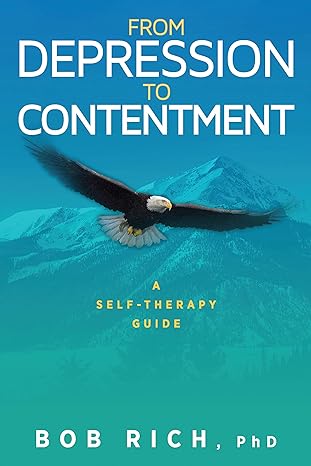
From Depression to Contentment: A Self-Therapy Guide, by Bob Rich, is an enlightening and approachable book that tackles the complex topic of depression. Rich’s book is not just a clinical discourse but a practical guide filled with empathy that draws from the author’s own experiences and psychological expertise.
Rich’s writing style is both engaging and easy to understand, a breath of fresh air in the often technical world of psychological self-help books. His personal anecdotes add a level of authenticity that’s both relatable and inspiring. The book’s approach of viewing depression not just as a medical issue but as a perspective on life is a refreshing angle. It challenges readers to rethink their own views on depression, making it an engaging read for anyone interested in mental health.
The book is skillfully structured, guiding the reader through various strategies, from basic self-care to deep psychological work. Particularly impressive is the chapter on “Controlling Depression,” where Rich introduces practical methods to reframe negative thoughts, encouraging a proactive stance in dealing with depressive thoughts. It is worth noting that some readers may find the chapter on spirituality less applicable, depending on their personal beliefs.
The conclusion of the book underscores a crucial message – the importance of actively applying these strategies in one’s life. This is where Rich’s guide distinguishes itself; it’s not just informative but also motivational.
From Depression to Contentment is a highly recommended read for anyone who is struggling with depression or has an interest in mental health. It’s particularly suited for readers seeking a blend of professional insight and practical, easy-to-implement strategies.
Pages: 157 | ASIN : B07PGQMP4Q
Proactive Not Reactive

The Time-Optimized Life explores the perception of time management and introduces readers to the concept of Time-Optimization, teaching them a holistic, proactive approach to managing their time. Why was this an important book for you to write?
As I began to collect data from my work with clients, I found that people are generally very reactive when it comes to their use of time. There is not a lot of time invested in planning for and anticipating future events. I want to be able to change that attitude and help people be more proactive time managers to create flexibility to do more activities in their life.
How much research did you undertake for this book, and how much time did it take to put it all together?
I reviewed dozens of articles and research papers as well as my library of extensive productivity and time management books. In addition, I was able to draw on data collected from hundreds of Time Management Analysis (TMA) assessments that I use with my clients. The TMA actually became the outline for the book. Trying to practice what I preach, I gave myself a goal to write at least 750 words a day. I was able to get into a grove and had the manuscript done in about 100 days.
What is one piece of advice you wish someone had given you when you were younger to help you build better time optimization skills?
I would have liked to have heard more of the phrase, “Be more patient.” I know that is the last thing younger people want to hear. However, I tell my clients (and I do it for myself) is to use the 20% rule. If you going to work on something that is important, allocate the time you think it will take, and then add at least 20% on top of that. Significant activities usually take more time than we think.
What is one thing that you hope the readers take away from The Time-Optimized Life?
I want people to be more proactive in their planning and use of time. If they are able to improve using 10% of their “awake time”, they will find they have “found” an additional 12 hours in their life to do amazing things.
Author Website
People manage their time, but they continue to manage it poorly. Life is populated with a series of reactive responses to personal priorities and professional needs. Individuals do not control their calendar; the calendar controls them. Until there is a clear understanding that true productivity begins when the narrative is switched to a proactive mindset, 82% will continue to wallow in time managed obscurity.
The Time Optimized Life reframes the reactive nature of time management and replaces it with a proactive method of time optimization. Drawing from exclusive data captured by a tool called the Time Management Analysis (TMA), the book walks the reader through a comprehensive system that is easily adaptable to a particular personality or experience level.
Using it as a complete time overhaul, The Time Optimized Life allows the reader the flexibility to create a time optimization plan that meets their essential needs. Operating with tools readily available to them today, the book will change perceptions of the individual and their approach to the use of their time, without having to invest in new gadgets or software.
Time is a commodity and resource that does not stop. It can’t be reversed, and you can’t go back and get more. Investing time reading and applying the content in The Time Optimized Life will help the reader make the future feel more infinite.
Descending Angels, How to Escape Abuse: The Many Types of Abuse, The Angels of My Story, Tricks Learned for Escape
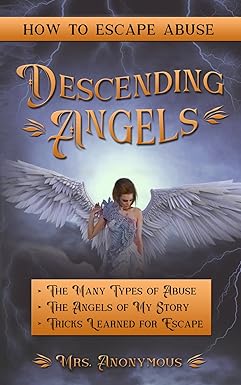
Descending Angels, How to Escape Abuse by Mrs. Anonymous offers an insightful exploration of the psychological impacts of abuse through the lens of spiritual metaphors and personal experiences. This work uniquely combines angelic symbolism with practical advice, providing a valuable resource for individuals recovering from abusive relationships. The book begins by shedding light on the subtle yet damaging forms of abuse, including emotional and economic, along with their warning signs. Mrs. Anonymous then shares her own story, starting with her summoning of an angelic figure, symbolizing the initiation of her journey toward liberation from her abuser.
Mrs. Anonymous’s narrative is deeply personal, recounting her journey through the support of Alcoholics Anonymous and a compassionate therapist, whom she affectionately terms as the ‘medicine man’. These experiences are presented as pivotal in her healing process, offering readers a raw and intimate glimpse into her soul. Her writing style is notably approachable and empathetic, resonating with those facing similar challenges. She consistently promotes resilience and faith, encouraging readers to persevere through difficult times. A significant aspect of the book is its practical guidance for those seeking to extricate themselves from narcissistic relationships. Mrs. Anonymous outlines strategic steps and resources for a safe exit, emphasizing the importance of self-worth and professional assistance.
Descending Angels, How to Escape Abuse is a compelling read, not only for those navigating the journey from victim to survivor of abuse but also for individuals supporting others in such circumstances. It’s a testament to the strength found in vulnerability and the power of seeking and accepting help.
Pages: 55 | ASIN : B0CS19HPLK
The Time-Optimized Life

The Time-Optimized Life, co-authored by David Buck and Rev. Dr. Susan Rose, presents a practical and insightful guide to effective time management. This book distinguishes itself from other titles in the self-help genre by adopting an approachable and relatable tone, making it accessible to a broad audience. The authors combine their professional expertise with spiritual insights and personal experiences, creating a narrative that resonates across various cultural backgrounds.
One of the book’s key features is the Time Management Analysis (TMA) tool, which provides a structured and scientifically grounded framework for understanding and applying time management principles. Buck’s engaging writing style, which includes anecdotes and personal insights, complements the technical aspects of the TMA tool, making the content both informative and enjoyable to read. A significant portion of the book is dedicated to exploring the three pillars of time optimization: Preparation, Execution, and Control (PEC). This thorough and insightful exploration offers readers practical strategies for each component. Additionally, the book acknowledges and addresses common challenges in time management, providing actionable checklists and solutions. Rev. Dr. Susan Rose’s contribution is particularly noteworthy as she delves into the often-overlooked topic of women’s perspectives on time management. Her insights add a valuable dimension to the discussion, broadening the book’s appeal and relevance.
The Time-Optimized Life is characterized by its holistic approach to time management. It goes beyond mere goal-setting and efficiency, emphasizing self-care and personal growth. The book is inclusive and adaptable, encouraging readers from various walks of life, including corporate employees, students, and others, to tailor the principles to their individual needs and circumstances. Buck and Rose’s book is more than just a guide; it’s a journey towards transforming one’s relationship with time, offering readers the tools to turn their finite time into meaningful and productive experiences.
Pages: 230 | ISBN: 163698262X
See Listen Play

See Listen Play by Anna Kuk offers a thoughtful and engaging exploration into the intricate connections between music and everyday life. Kuk’s book presents a unique perspective on how music mirrors and influences the complexities of personal and professional interactions.
Kuk’s narrative is both philosophical and introspective, inviting readers to consider the symphonic qualities inherent in their daily lives. She adeptly uses metaphors and analogies to draw parallels between the harmony of musical notes in an orchestra and the dynamics of human relationships. This approach allows Kuk to delve deeply into the concept of individuals as both participants and creators in the vast symphony of existence. Her writing is characterized by eloquent prose and insightful analysis, illuminating the metaphorical relationship between life’s rhythms and orchestral music. Kuk’s vivid descriptions and poignant anecdotes provide a deeply emotional and resonant experience for the reader, making complex ideas accessible and relatable.
See Listen Play is more than just an informative guide; it is an invitation to a deeply expressive and emotive journey. Kuk encourages self-awareness and introspection, urging readers to consider their actions’ impact in the various roles they play in life. This book is an excellent resource for anyone interested in exploring the depths of their relationship with music and its profound influence on life’s journey.
Pages: 180 | ASIN : B0CPMP7MJZ



 LITERARY TITAN