Blog Archives
A Different Kind of Awareness

In Compass & Grit, you help readers rebuild their lives using two concepts centered around a clear sense of direction and disciplining themselves to keep showing up even when their confidence wanes. Why was this an important book for you to write?
This book, in many ways, came out of my own experience. There was a point where I felt like I was doing everything I was supposed to be doing. I had goals, I had direction on paper, and I was showing up each day and putting in the work. From the outside, it would have looked like things were moving forward in the right way. But underneath that, there was a different feeling that kept coming up. I couldn’t quite ignore the question of what all of it was for. Not in a dramatic sense, but in a quieter, more persistent way. Why this path, why these goals, and where was it all actually leading? There wasn’t a clear answer, and that was the part that stayed with me. It felt less like a problem to solve and more like something you keep returning to over time. A kind of ongoing search rather than something you figure out once and move on from. The more I sat with that, the more I realized that a lot of men experience something similar, even if they don’t always put it into words. That’s where the idea for the book began. I wanted to write something that could meet a man in that space without overwhelming him. Not with big claims or the idea that he needs to start over, but with something steady and practical. A way to think about direction, and a way to keep moving even when the answers aren’t fully clear yet.
The book speaks directly to men in midlife facing loss or disorientation. Why did you choose to focus on that audience?
It’s a stage of life that doesn’t get talked about much, even though many men quietly go through it. When you’re younger, there’s a sense that everything is about discovery. In your twenties, you feel like you know what you want. You set goals, you move toward them, and there’s a kind of forward momentum that feels clear and natural. But as time goes on, that certainty starts to shift. You begin to realise that some of the things you once thought you wanted don’t quite fit anymore. Priorities change, perspectives change, and the path that once felt obvious becomes less defined. Then midlife brings a different kind of awareness. You start to lose people or things that you love. You start to see change happening around you in a more permanent way. And with that comes a clearer sense that time is not unlimited. That’s usually when the questions become harder to ignore. Not just what you’re doing, but why you’re doing it, and whether it still matters in the way you once thought it did.
What I’ve noticed, both in my own life and in the people around me, is that while we may not always know exactly what we want at this stage, we become very clear on what we don’t want. And for many men, one of those things is the feeling of moving through life without a real sense of purpose. It’s something I’ve seen in friends, in colleagues, and in people I’ve known for years. On the surface, everything can look fine. But underneath that, there’s often a quiet question of whether this is all there is. That’s the space I wanted to write into. Not to provide perfect answers, but to give some structure to that experience, and a way to start making sense of it without feeling lost in it.
You emphasize small, concrete actions over grand reinvention. Why is that approach so effective?
I think most people have big goals at some point. You want to make a certain amount of money, get into great shape, travel more, and build something meaningful. There’s nothing wrong with that. In fact, having something to aim for matters. But the challenge is that those goals are often so big that they feel far away. I remember when I was younger, we had to run 2.4 kilometres for a fitness test. That’s six rounds on a standard track. At the start, you feel fine. You go out strong, your energy is high, and everything feels manageable. Then you hit the third round, and it starts to feel different. By the fourth, you’re not just running anymore, you’re thinking about how much further you still have to go. Each stretch feels longer than it actually is. The distance ahead starts to feel heavier than the distance you’ve already covered. And that’s what big goals can feel like. They’re so far out in front of you that your focus shifts from moving forward to thinking about how far away you still are. Small actions change that. Instead of trying to cover the entire distance in your head, you focus on what’s in front of you right now. The next step, the next rep, the next decision. It’s the same with something like getting in shape. You don’t get there all at once. It comes down to what you do each day. What you choose to eat, what you choose to avoid, how consistently you show up, even when it feels routine. Or even something as simple as saving. A small amount, done consistently, builds over time into something meaningful.
These things seem minor on their own, but they add up. And more importantly, they give you a sense of progress that you can actually feel. You begin to see that you can follow through, that you can build something step by step. That creates a different kind of momentum. It no longer feels like a huge leap that you may or may not reach. It becomes a series of manageable steps that you can continue taking. And that shift matters. It gives you a sense of control and a sense that change is not out of reach. It’s something you’re already in the process of doing. In the end, it really does come back to something simple. You begin with one step, and then you take the next.
What is one thing you hope readers take away from Compass & Grit?
If there’s one thing I hope stays with them, it’s that they don’t need to have everything figured out before they begin moving forward. I think a lot of us, myself included, spend a lot of time looking for certainty. We want to know that the step we’re about to take is the right one. That if we do this, it will lead to exactly what we want. That there’s some kind of guarantee behind our decisions. But the truth is, there isn’t. You can feel sure in a moment, but in reality, none of us fully knows how things will turn out. Life doesn’t really work that way. There are too many variables, too many things outside our control. And at some point, especially in midlife, that becomes very clear. You start to realise that time is finite. Things can change without warning. And that waiting for perfect clarity can keep you stuck longer than you expect. So part of what this book is about is learning to move forward even when things feel uncertain. To rebuild your footing, to find your direction again, and to stay with it, even when it’s uncomfortable. Because uncertainty is uncomfortable. Most people don’t like it. But it’s also part of being alive. There’s a kind of discovery in that, if you’re willing to step into it.
On a personal level, I’ve had my own moments of being knocked down, of not knowing what comes next, of having to start again without a clear answer in front of me. And what I’ve come to understand is that it’s not about avoiding those moments. It’s about how you respond to them. You take the hit, and you keep moving forward. You adjust, you learn, you keep going. That’s where direction starts to come back. That’s where you rebuild your sense of self. So if there’s one thing I hope readers take with them, it’s this. You don’t need perfect clarity to begin. You just need to take the next step and be willing to keep going from there.
Author Links: GoodReads | Instagram | TikTok | Website | Amazon
You keep showing up. You keep going.
But you are no longer certain where you are heading.
If you have been asking what comes next, without a clear answer, this book was written for you.
Compass & Grit is a grounded guide for men in midlife who feel capable but off course. It is not about motivation or fixing yourself. It is about restoring direction when pushing harder no longer works.
Drawing from lived experience and practical frameworks, this book helps you:
Rebuild discipline in a way that is sustainable
Clear mental noise when life feels crowded
Create simple habits that actually hold
Reconnect with purpose in a way that fits your real life
This is not advice from a finish line.
It is written from the middle, where most men actually are.
If you have been carrying a quiet weight, or moving through your days while sensing that something underneath has shifted, you are not alone. Direction does not return all at once. It returns through steady steps, honest reflection, and consistent action.
This book gives you a place to begin.
Compass & Grit


Compass & Grit is a book about rebuilding a life after it has quietly, or catastrophically, fallen apart. Author Wolfgang Nelson frames rebuilding around two linked ideas: “compass,” meaning a clear sense of direction and purpose, and “grit,” meaning the steady, unspectacular discipline to keep showing up even when confidence has collapsed. The book is aimed largely at men in midlife, especially those reeling from divorce, job loss, physical decline, or a more private erosion of self, and it moves from immediate triage into identity repair, habit formation, emotional work, relationships, the body, and finally legacy.
What I liked most was how often the book insists on small, concrete acts over grand reinvention, whether that’s the image of the author sitting numb in his car outside the gym, Greg’s seven-day post-divorce triage of sleep, walking, and one honest text, or the later push toward a modest but meaningful “legacy project” like a mentorship circle for men in midlife.
I appreciated that the book has real emotional sincerity beneath its coaching-manual structure. Nelson writes in a voice that feels authentic, and the strongest parts of the book come from that bruised intimacy. When he describes identity collapse not as melodrama but as a man slowly ceasing to feel useful, legible, or necessary to his own life, the book sharpens. I also liked that he doesn’t romanticize stoicism. The sections on “identity bankruptcy,” shame-driven isolation, and the difference between rewriting your story and merely denying your pain are among the most compelling in the book. His idea of the “compact origin story,” reducing the next step to something as plain as “I lost X, I learned Y, and I will try Z for 90 days,” is simple, yet it has a bracing honesty to it.
I found the book to be persuasive in its practical wisdom. Nelson leans on frameworks, studies, checklists, and coined phrases like “micro-sovereignty,” “body as anchor,” and the warning against “brutalist grit.” He argues that discipline without adaptation can become another form of self-harm, and he ties recovery to sleep, strength training, daily walks, and the unglamorous dignity of keeping promises small enough to keep. The book wants to turn every human struggle into a named model. Even so, I never found it cynical. The ideas are earnest, grounded, and often useful, particularly in the chapters on emotional work and relationships, where he urges men toward tactical journaling, better apologies, trust rebuilt through consistency, and support networks that are neither macho pantomime nor group-therapy parody. The book’s real strength is that it understands recovery as rhythm, not revelation.
I came away feeling that Compass & Grit is a generous and deeply felt book. It has the slightly rough-edged conviction of something written because the author needed it to exist, and that gives it a seriousness I respected. I would recommend it for its steadiness, its compassion, and its refusal to confuse healing with hype. I’d especially recommend it to men in their forties and beyond who feel disoriented after loss, and to readers who want reflective, actionable guidance. It’s a book for someone trying to put themself back together.
Pages: 191 | ASIN : B0GF8MXGQM

Step-By-Step Framework

Mastering Emotions for Men is a direct, honest, and refreshingly human guide to emotional intelligence designed specifically for men who feel stuck, overwhelmed, or just plain numb, that walks readers through reclaiming control over their emotions in a way that feels more like a conversation with a tough-love friend than a clinical self-help manual. Why was this an important book for you to write?
In short, because I lived it. For a long time, I did what so many men do: I pushed through. I kept my emotions on lockdown, focused on success, and told myself that strength meant silence. But underneath the surface, I was burnt out, disconnected, and constantly battling this sense that something was missing. The truth is, no one ever handed us a playbook for emotional resilience. We were told to be strong, but not how to be whole.
Mastering Emotions for Men was born out of that tension, the gap between what we’re taught and what we actually need to thrive. I wrote it because I was tired of seeing good men stuck in patterns that were silently destroying their confidence, their relationships, and their health. And I didn’t want to write another polished, overly academic book that talks about emotions without helping readers do something with them.
This book is personal. It’s raw. It’s direct. But more than anything, it’s practical. I wanted it to feel like the reader is sitting down with someone who won’t let them off the hook…but also won’t let them fall apart. Because we don’t need more theory. We need tools that work in the heat of real life.
Men are craving MORE than survival. We want a deep, honest, and loving connection with others. Purpose. Control over our own minds and emotions. This book gives men permission and a proven path to develop that emotional strength without sacrificing their identity. That’s why it matters. That’s why I had to write it.
What is the RESPONSE method that you have developed, and how does this help men develop emotional intelligence?
The RESPONSE method is a step-by-step framework I created to help men move from emotional reactivity to emotional mastery. For so many of us, emotions either feel like something to avoid or something that hijacks us. We either shut down, blow up, or numb out. RESPONSE gives men a new way to examine what it means to be both masculine and emotional.
Each letter in RESPONSE stands for a key moment in that process:
R – Righting the Societal Wrong
Challenges the outdated narratives that have taught men to suppress emotion. This chapter reframes masculinity and sets the foundation for why emotional intelligence is essential.
E – Emotional Intelligence 101
Introduces the core components of emotional intelligence: self-awareness, self-regulation, empathy, motivation, and social skills. It explores how men can develop and practice them.
S – Science Behind the Emotions
Explores the neuroscience and physiology of emotion, explaining how feelings are formed and why they affect the body and brain the way they do.
P – Pause for Self-Reflection
Equips men with tools to stop reacting on autopilot. It focuses on identifying emotions as they arise and learning to reflect before responding.
O – Overcoming the Urge to React
This is where self-regulation comes into play: learning how to manage intense emotions and avoid impulsive or destructive responses.
N – Navigating Relationships with Empathy
Applies emotional intelligence to interpersonal dynamics, such as how to listen, relate, and respond with empathy to deepen trust and strengthen connection.
S – Self-Care for Stress Relief
Teaches men to protect their emotional bandwidth by building healthy coping strategies: stress management, physical well-being, and emotional replenishment.
E – Effective Communication and Conflict Management
Wraps it all together by guiding men to express emotions clearly, set healthy boundaries, and resolve conflict with strength and clarity.
It’s not therapy jargon. It’s a battle-tested framework built for real life, whether you’re in an argument with your partner, facing pressure at work, or just feeling that vague sense of frustration or numbness you can’t name.
This method trains men to respond instead of react. It creates space between what you feel and what you do. And in that space, you get your power back. You gain clarity. You build self-respect. Over time, you rewire your default settings. So, instead of anger, avoidance, or self-doubt, you respond with strength, awareness, and confidence.
That’s emotional intelligence in action, not just knowing what you feel, but using it in a way that moves your life forward.
What is one thing that people point out after reading your book that surprises you?
One of the most surprising things readers tell me is how much the book feels like a conversation with someone who gets it—not like a lecture or a therapy manual. That wasn’t something I intentionally set out to do at first—but it’s become one of the book’s most powerful strengths.
Men will say things like, “I felt like you were in my head,” or “Finally, someone put words to what I’ve been carrying for years.” And that means a lot to me. Because most guys aren’t walking around saying, “I need more emotional intelligence.” They’re walking around saying, “I’m tired of snapping at the people I love,” or “I don’t know why I feel so numb.” This book speaks to that guy.
Another thing that surprises people—and honestly, it’s one of my favorite reactions—is how the science lands. Guys have told me, “The chapter on how the brain fills in bad data based on perceived threats during emotional stress? That blew my mind.” Once they understand why they react the way they do, the shame starts to lift. And that’s huge. Because when you stop beating yourself up, you finally have the freedom to grow.
But what probably surprises readers most is how doable it feels. They come in expecting a bunch of abstract advice—and what they get is real tools. Quick wins. Micro-habits. Stuff that actually fits into real life. And when they see that even small shifts—like saying their emotions out loud or doing a two-minute check-in—can change how they show up in their relationships, that’s when they start to believe, “Maybe I can do this after all.”
And that? That’s the spark that makes all my research and writing worth it.
What is one thing that you hope readers take away from Mastering Emotions for Men?
I hope they walk away knowing this: you can be emotionally strong without losing your masculinity.
For too long, men have been taught that emotion is the enemy, that strength means silence, and that vulnerability equals weakness. Those lies have cost us our relationships, our health, and our peace of mind.
Emotional intelligence isn’t about becoming soft. It’s about becoming sharp—clear, calm, and in control. It’s about reclaiming your power without letting your emotions drive you off a cliff.
If a man finishes this book and says, “I finally understand what I’m feeling and I know what to do with it,” then I’ve done my job.
This isn’t about perfection. It’s about progress. And if they take that first step then everything can start to change.
Author Links: GoodReads | X (Twitter) | Facebook | Website | Amazon
This is your turning point.
In Mastering Emotions for Men, you’ll discover the key to unlocking the emotional awareness and control you’ve always been capable of. No fluff, no endless psycho-babble—just practical, proven steps to take you from emotionally disconnected to powerfully in-tune with yourself and those around you.
This book equips you with the RESPONSE method, a game-changing approach that transforms emotional reactions into healthy, confident responses. Through clear, actionable guidance and real-world stories, you’ll learn how to break down emotional barriers and step into a new level of personal power and connection. Here’s what awaits you:
From confusion to clarity: Learn to identify and manage your emotions with ease so you can handle stress, frustration, and conflict like a pro.
From isolated to empowered: Rebuild your self-worth and experience a sense of belonging by learning how to trust and express yourself authentically.
From distant to deeply connected: Strengthen your relationships by mastering the art of empathy and assertive communication.
From stalled to unstoppable: Create momentum in your career by applying emotional intelligence to your leadership, decision-making, and problem-solving.
By the end of this book, you’ll go from feeling frustrated and disconnected to being emotionally grounded and thriving, equipped to handle life’s challenges without feeling overwhelmed.
In just a few minutes each day, you’ll discover how to:
Reconnect deeply with the people who matter most, reigniting your relationships.
Handle high-stress situations with emotional intelligence and control.
Turn emotional vulnerability into your greatest strength for lasting success in both personal and professional life.
Ready to transform the way you connect, communicate, and live? Start your journey now—and become the man who not only understands his emotions but turns them into productive tools building the life, relationships, and destiny that you desire.
Mastering Emotions for Men


Jack Wolf’s Mastering Emotions for Men is a direct, honest, and refreshingly human guide to emotional intelligence designed specifically for men who feel stuck, overwhelmed, or just plain numb. Built around a framework called RESPONSE, the book walks you through reclaiming control over your emotions in a way that feels more like a conversation with a tough-love friend than a clinical self-help manual. Each chapter breaks down a different part of the emotional puzzle, from societal pressures to self-awareness, self-regulation, and even how to handle tough conversations without blowing up or shutting down.
What struck me most right away was the voice. Wolf doesn’t mince words. He opens with his own story, admitting he lived most of his life bouncing between “fine, discouraged, or angry.” That resonated with me. I’ve been there. The chapter “Righting the Societal Wrong” dives deep into the emotional straightjacket a lot of men are raised in. The anecdote about Doug—successful on paper, emotionally distant in real life—was painfully relatable. The part where he tries to reconnect with his family but doesn’t know how? Yeah. Been there. It’s not preachy, just real. And that’s what makes the message land.
I appreciated how Wolf balances personal stories with science without ever sounding like a textbook. The “Science Behind Emotions” chapter actually explains why we feel the way we do, not just what we should do about it. He breaks down how your brain predicts threats and how those emotional overreactions are often just misfires from a brain doing its best with bad information. I’ll be honest, this part blew my mind a little. It helped me stop shaming myself for snapping at small things—I understood the why, and that opened the door to changing the how.
But what really hooked me was how actionable the book is. This isn’t a bunch of feel-good fluff. Each chapter ends with reflection questions, “quick wins,” and micro-habits. Stuff you can actually do, like saying your emotions out loud or writing them in a journal. It sounds simple, maybe even cheesy, but I tried it, and I started noticing how often I feel frustrated without knowing why. That little shift in awareness helped me avoid snapping at my partner one night when I was tired and irritable. Small win? Maybe. But for me, that’s progress.
Overall, this book is a great fit for men who are tired of being ruled by emotions they don’t understand or can’t name. If you’ve ever felt like something’s off but didn’t know where to start—or if you’re tired of hearing “man up” as advice—this book might just be the permission slip and toolkit you need. I’d recommend it for any guy who wants to grow but doesn’t want to lose his edge doing it. You’ll come away stronger, not softer.
Pages: 231 | ASIN : B0DS992267

Everydayness: Intentional Practices for Seeing, Being, and Doing in a Post-Pandemic World
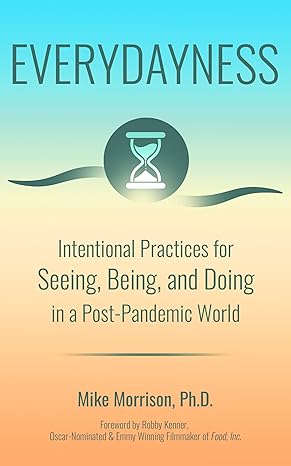
Everydayness by Mike Morrison offers a compelling exploration of how to discover meaning in our daily lives. Tackling concepts like appreciation, purpose, and sensemaking, the author invites readers into a thoughtful conversation inspired by the pandemic’s impact on our collective sense of purpose. Morrison crafts his narrative to guide people in realizing that true meaning can be found not just in grand achievements but also in life’s smaller, everyday moments.
One of the book’s standout features is its practical approach to mindfulness and intentional living. Morrison emphasizes the power of taking pauses, discussing how stepping back from the busyness of life can transform our perception of time and enrich our appreciation for the present. His insights on this topic feel fresh and actionable, giving readers the tools to create natural pauses in their routines and experience life with greater presence. Initially, Everydayness might feel familiar, especially in the chapter on appreciation, where it treads territory common to many self-help books. However, the narrative soon pivots, offering a unique and nuanced perspective on purpose. Morrison makes it clear that the path to finding meaning is deeply personal and non-linear, a concept that reassures readers and affirms that differences in our journeys are not only expected but essential. His discussion of purpose is both illuminating and relatable. The author weaves in additional insights on creating intentional routines and living with purpose, sparking reflection and making the book more than just a guide—it becomes a source of inspiration. Morrison’s ability to balance philosophical depth with practical advice ensures that readers are not only engaged but also equipped to implement meaningful changes in their lives.
I’d recommend Everydayness to anyone feeling trapped in the mundane or yearning for more meaning in their daily routine. It’s a thoughtful, refreshing read that prompts reflection and encourages a deeper connection with the small moments that make life truly meaningful.
Pages: 122 | ASIN : B0DFX7N6BF


